Best Teaching Strategies

Classroom Activities

Fron Our Resource

Assessment & Data-Driven Instruction Classroom Management Student Development & Well-being

Psychoanalysis: A Framework for Understanding Student Behavior and Development in the Classroom

Psychoanalysis offers educators a lens for understanding the hidden emotional forces that shape student behavior, resistance to learning, and relationship patterns in the classroom. Rather than diagnosing or treating students, teachers can use psychoanalytic concepts like defense mechanisms, transference, and unconscious motivation to recognize why a student might suddenly withdraw, lash out during transitions, or repeatedly sabotage their own success. These insights don’t replace behavioral strategies or academic interventions. They add depth, helping you respond to the whole child instead of just managing surface behaviors.
…

Uncategorized

What Is Social Emotional Learning for Autism (and How Does It Work)?

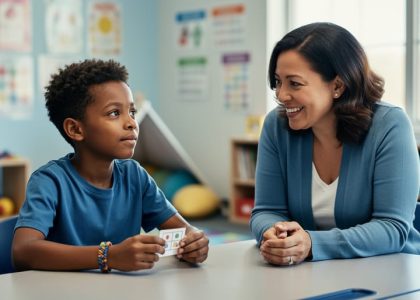
Social emotional learning for autism is a specialized approach to SEL instruction that recognizes and accommodates the distinct ways autistic students process emotions, interpret social cues, and build relationships. Unlike traditional SEL programs designed for neurotypical learners, this framework adapts teaching methods, pacing, and content to align with autistic communication styles, sensory needs, and learning patterns.
If you’re an educator supporting autistic students in your classroom, you’ve likely witnessed the gap between standard SEL curriculum and what actually resonates with these learners. A typical lesson …

Uncategorized

K-12 Mental Health: Building Mental Health Literacy to Support Every Student

Mental health literacy in K-12 education means equipping students with the knowledge to recognize mental health challenges, the language to talk about them, and the skills to seek help when needed. This isn’t an abstract wellness concept. It’s a structured approach that gives young people the same fundamental understanding of mental health they receive about physical health, delivered in age-appropriate ways from kindergarten through graduation.
The case for prioritizing this work has never been clearer. Students today face unprecedented stress, anxiety, and emotional challenges that directly impact their ability to …

Uncategorized

Pacific Marine Environmental Laboratory: How It Advances Ocean Science and What Educators Need to Know

The Pacific Marine Environmental Laboratory (PMEL) is a federal research facility operated by NOAA that sends scientists on ocean expeditions worldwide to study climate, ecosystems, and ocean chemistry, and you can bring this real-world research directly into your classroom through accessible data, visualizations, and educational resources designed for K-12 learners.
For educators looking to connect students with authentic marine science, PMEL offers something rare: access to the same data and tools professional oceanographers use, translated into formats that work for young learners. When PMEL scientists deploy underwater robots to…

Critical Thinking & Cognitive Development Student Development & Well-being Teaching Strategies

Why CJC-1295 (No DAC) Peptide Doesn’t Belong in K-12 Classrooms

CJC-1295 Ipamorelin no DAC is a synthetic peptide designed to stimulate growth hormone release in the body. As an educator, you may have heard students discussing it in conversations about fitness, athletics, or body enhancement. Understanding what this substance is and how it works equips you to respond thoughtfully when these topics surface in your school community.
CJC-1295 without DAC (Drug Affinity Complex) acts on the pituitary gland to increase production of growth hormone for short, controlled periods. Students might encounter information about it …

Assessment & Data-Driven Instruction Critical Thinking & Cognitive Development Interactive & Game-Based Learning

Safe Learning Through Play: Transform Math Lessons Without Risk

Transform your classroom into an engaging learning environment through strategic gamification in education. While platforms like poker games demonstrate gaming’s motivational power, educators can harness these mechanics responsibly for academic success.
Create achievement-based progression systems that reward mastery of mathematical concepts with digital badges, unlockable content, and special classroom privileges. Design collaborative quests …

Classroom Activities

What Are Class Review Games?

Classroom review games are interactive and engaging activities designed to help students review and reinforce the material they have learned in class, and with the advent of technology, many of these games can now be played online. The ability to play classroom review games online has expanded the accessibility and variety of these activities, making the review process even more enjoyable and effective. Online platforms offer a wide range of games that can be tailored to various subjects and learning objectives, providing an engaging way for students to prepare for…

Teaching Strategies

8 Game Based Learning Examples

In the interest of transparency, we earn a commission on some purchases made through links on this site.

Game-based learning is a teaching strategy that uses games to teach to help students learn. Students play games instead of just reading or listening to learn a topic. Game-based learning happens inside a game framework where we have clear lessons to teach and can see how well they’re learned. Educational games make learning fun and engaging. Examples of game-based learning include hybrid games, …

Professional Development

Tips for Strengthening Working Memory when Teaching

Enhancing your working memory holds the key to unlocking more efficient learning retention. Working memory, which is often likened to a mental sticky note, is a cognitive function critical for reasoning, decision-making, and formulating strategies. 
Harnessing the power of current research-based strategies, educators can optimize the learning process and empower students with the ability to process and retain information effectively…

Classroom Activities Classroom Management

Empowering Young Minds by Teaching Conflict Resolution to Young Teens

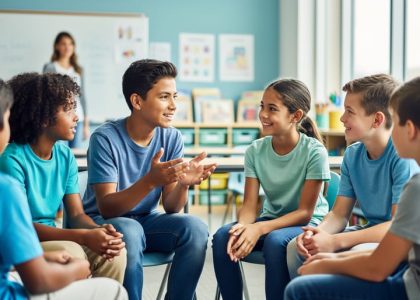
Conflict management is a crucial skill that helps people navigate disagreements effectively. In classrooms, workplaces, and life in general, conflicts can arise, making it important for students to learn how to handle these situations constructively.
Why Conflict Management Matters for Middle and High School Students
Middle and high school students often experience conflicts due to …

Teaching Strategies

Fostering Civic Engagement with English and Math Learning

Civic engagement lets students help their communities by getting involved in different ways. They can join their school’s student government to make improvements, or they can volunteer to clean up their neighborhood. 
Both formal and informal actions make a positive difference and teach students about the world around them.
What Makes it Important?
Fosters Empathy
Getting involved in civic engagement helps …