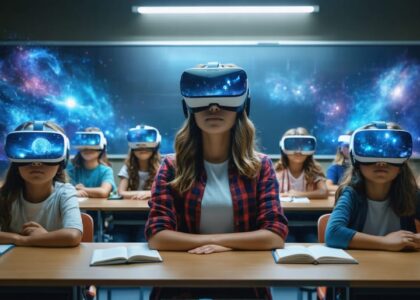
Virtual & Adaptive Learning

Virtual & Adaptive Learning

Your Students’ Data Is More Exposed Than You Think in Virtual Classrooms

Every time your students log into an adaptive learning platform, that system collects data—everything from wrong answers and time spent on tasks to behavioral patterns and learning gaps. You have both the responsibility and the power to protect this sensitive information while still leveraging technology’s benefits for personalized instruction.
Start by auditing the digital tools already in use in your classroom. Request data privacy policies from vendors and look specifically for what student information they collect, how long they retain it, who has access to it, and whether they sell data to third parties. The Family …

Virtual & Adaptive Learning

How Emotion-Aware Technology Is Transforming Your Classroom Right Now

Imagine a classroom where technology can recognize when a student feels frustrated with a math problem, sense when another child’s attention is drifting during a reading lesson, or detect the quiet confidence building as a learner masters a new concept. This is affective computing: technology designed to recognize, interpret, and respond to human emotions. For educators navigating today’s digital learning landscape, understanding this emerging field isn’t just about keeping pace with innovation—it’s about harnessing tools that can genuinely support how you teach and how your students learn.
Affective …

Virtual & Adaptive Learning

AI Tutors Transform K-12 Learning: What Teachers Need to Know

As AI is revolutionizing K-12 classrooms, intelligent tutoring systems are transforming the way students learn, offering personalized instruction at a scale previously unimaginable. These adaptive platforms analyze student responses in real-time, adjusting difficulty levels and learning paths to match individual needs, while providing educators with detailed insights into student progress and areas requiring intervention.
Modern AI tutoring systems represent a significant leap forward from traditional …

Technology & Digital Integration Virtual & Adaptive Learning

5 Game-Changing Examples of Virtual Reality Transforming K-12 Education

Virtual Reality (VR) is revolutionizing education, transforming how students learn and engage with course material. By immersing learners in interactive 3D environments, VR technology enables experiential learning that brings abstract concepts to life. From exploring ancient civilizations to conducting virtual science experiments, VR applications span all subjects and grade levels. This powerful tool captures student attention, boosts knowledge retention, and develops critical thinking skills in ways traditional …