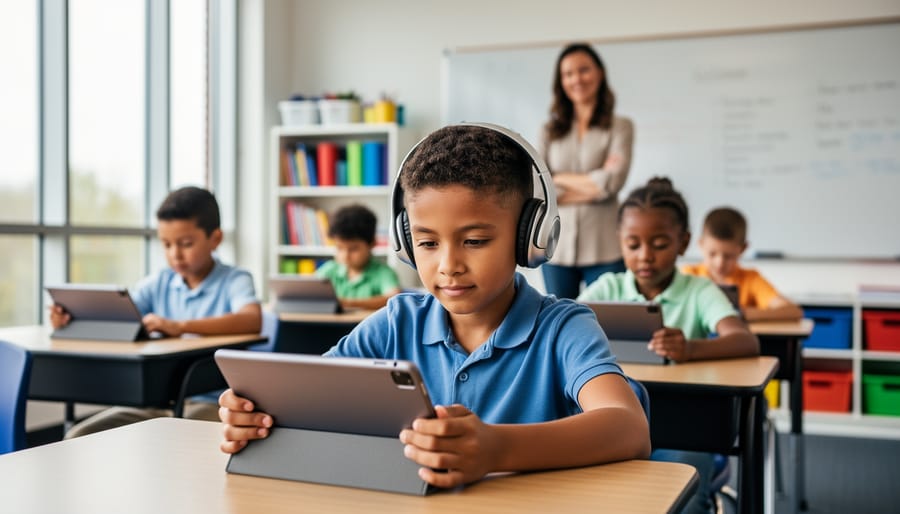
Imagine a classroom where technology can recognize when a student feels frustrated with a math problem, sense when another child’s attention is drifting during a reading lesson, or detect the quiet confidence building as a learner masters a new concept. This is affective computing: technology designed to recognize, interpret, and respond to human emotions. For educators navigating today’s digital learning landscape, understanding this emerging field isn’t just about keeping pace with innovation—it’s about harnessing tools that can genuinely support how you teach and how your students learn.
Affective computing combines facial recognition, voice analysis, and behavioral patterns to give adaptive learning technology an emotional awareness component. Rather than simply adjusting content difficulty based on right or wrong answers, these systems can identify when a student needs encouragement, a break, or a different instructional approach based on their emotional state. The technology aims to complement your professional judgment, not replace it, by providing insights that might be difficult to gather when managing a full classroom.
As with any educational technology, affective computing raises important questions about student privacy, data security, and equitable access. This article explores both the promising applications and the legitimate concerns, equipping you with the knowledge to make informed decisions about whether and how these tools might fit into your teaching practice. Your expertise remains central; technology simply offers new ways to extend your reach and responsiveness.
What Affective Computing Actually Means for Your Students

The Technology Behind the Emotions
At its core, affective computing uses artificial intelligence to recognize and respond to human emotions, much like you naturally read your students’ moods during class. These systems analyze multiple signals to build a picture of how a student is feeling and engaging with their learning.
Facial recognition technology serves as one primary method. Built-in webcams capture subtle expressions like furrowed brows indicating confusion or smiles suggesting understanding. The software identifies patterns in facial movements without storing actual images, similar to how your phone recognizes your face to unlock.
Typing patterns offer another emotional window. The system notices when students pause frequently, suggesting uncertainty, or type rapidly with confidence. Even mouse movements matter—erratic clicking might signal frustration while smooth navigation suggests flow and engagement.
Voice analysis examines tone, pace, and energy levels during audio interactions. A monotone response might indicate boredom, while enthusiastic vocal patterns suggest active participation. This works particularly well in virtual classrooms where voice is a primary communication channel.
Engagement metrics round out the emotional picture by tracking how long students focus on content, when they rewatch material, and which resources they access repeatedly. These behavioral patterns help systems distinguish between productive struggle and genuine confusion.
The beauty of this technology lies in its combination approach. Rather than relying on one signal, affective computing weaves together multiple data points to create accurate emotional assessments. This helps you identify which students need support before they fall behind, even in large virtual classrooms where reading every face becomes challenging.
Why Student Emotions Matter More Than You Think
Research consistently shows that emotions aren’t just background noise in learning—they’re fundamental to how students absorb and retain information. When students feel anxious, frustrated, or disengaged, their working memory capacity actually decreases, making it harder to process new concepts. Conversely, positive emotional states like curiosity and confidence create optimal conditions for learning.
A landmark study from the Yale Center for Emotional Intelligence found that students who received emotionally supportive learning environments showed 11% higher academic achievement compared to control groups. The connection is neurological: emotional centers in the brain directly influence memory formation and retrieval. When students experience positive emotions during learning, they’re more likely to remember that content later.
For educators, this research has profound implications. Understanding your students’ emotional states helps you time interventions more effectively, adjust pacing when frustration builds, and celebrate moments of breakthrough. In virtual and adaptive learning environments, where you can’t always read facial expressions or body language, having tools that surface emotional indicators becomes even more valuable. This is where affective computing enters the picture, offering new ways to maintain that crucial emotional connection with every learner.
Real Ways Affective Computing Supports Virtual Learning
Spotting Frustration Before Students Give Up
Emotion-detection systems work like an extra set of eyes in your classroom, continuously monitoring subtle signals that a student might be approaching the giving-up point. These AI-powered tools analyze facial expressions, body language captured through webcams, typing patterns, mouse movements, and even how long students pause before answering questions. When the system detects signs of frustration—like repeated wrong answers, decreased interaction speed, or confused expressions—it can respond in two valuable ways.
First, it can immediately notify you through a simple dashboard alert, allowing you to check in with that student before they disengage completely. This is particularly helpful in virtual learning environments where reading the room becomes challenging. Second, the system can automatically trigger supportive interventions, such as offering hint videos, simplifying problem sequences, or suggesting a short brain break. These responses happen in real-time, maintaining student engagement during critical learning moments.
The goal isn’t to replace your intuition but to extend your reach, especially when managing larger classes or hybrid learning situations where some students might slip through the cracks.
Personalizing Pace and Content Delivery
Affective computing systems can transform how educational content reaches students by responding in real-time to their emotional states. When a student shows signs of frustration—perhaps through facial expressions, prolonged hesitation, or repeated incorrect answers—the system can automatically adjust by simplifying explanations, providing additional scaffolding, or offering encouraging feedback. Conversely, when sensors detect boredom or disengagement, the platform might introduce interactive elements, increase challenge levels, or vary the presentation format.
These adaptive responses help maintain what educators call the “zone of proximal development,” where learning is challenging yet achievable. For instance, an adaptive math program might slow down and provide step-by-step video tutorials when detecting confusion, but accelerate through review material when a student demonstrates confidence and quick comprehension.
Presentation styles can also shift based on emotional feedback. A student showing anxiety might receive content through calming visual designs and supportive audio narration, while an engaged learner might experience gamified elements and competitive challenges. Some platforms even adjust reading complexity, switching between text-heavy explanations and visual diagrams depending on detected engagement patterns.
The goal is creating a responsive learning experience that feels personalized and supportive, much like an attentive teacher naturally adjusts their approach based on student reactions in a traditional classroom setting.
Building Connection in Digital Spaces
One of the greatest challenges in remote teaching is maintaining the emotional connection that naturally occurs in physical classrooms. Affective computing bridges this gap by helping you recognize and respond to student emotions even through a screen. These technologies can detect signs of confusion, frustration, or disengagement during online lessons, allowing you to adjust your approach in real time.
In virtual learning environments, affective computing tools analyze subtle cues like typing patterns, response times, and participation levels to give you insights into student engagement. For example, if a student consistently takes longer to respond or shows patterns indicating confusion, the system can alert you to check in with them personally.
These technologies work particularly well when combined with your professional judgment. Rather than replacing your intuition, they provide additional data points that help you identify students who might need extra support but aren’t comfortable speaking up. This is especially valuable for shy or struggling learners who may hide their difficulties in virtual settings.
Community forums and interactive tools enhanced with affective computing can also help you foster peer connections, creating supportive digital spaces where students feel seen and understood, strengthening the overall classroom community despite physical distance.
Adaptive Learning Gets Smarter With Emotional Intelligence
Moving Beyond Right and Wrong Answers
Traditional assessment methods focus primarily on whether students arrive at the correct answer, but affective computing invites us to consider a richer picture of learning. These emotion-aware systems recognize that two students might both solve a math problem correctly, yet have vastly different learning experiences. One student might feel confident and engaged throughout, while another struggles with frustration before finding success.
By monitoring indicators like facial expressions, typing patterns, or response times, affective computing tools help you understand the emotional journey behind each answer. When a student consistently answers correctly but shows signs of stress, the system can flag this disconnect. Similarly, when incorrect answers come with genuine effort and engagement, you gain insight that a simple red “X” would never reveal.
This approach empowers you to intervene more thoughtfully. Perhaps a student needs encouragement despite getting answers right, or maybe someone who answers incorrectly would benefit from affirmation of their problem-solving process. Emotion-aware systems don’t replace your professional judgment; they enhance it by providing a more complete view of each learner’s experience, helping you support not just academic achievement but also the development of healthy learning attitudes and resilience.
Creating Feedback That Actually Motivates
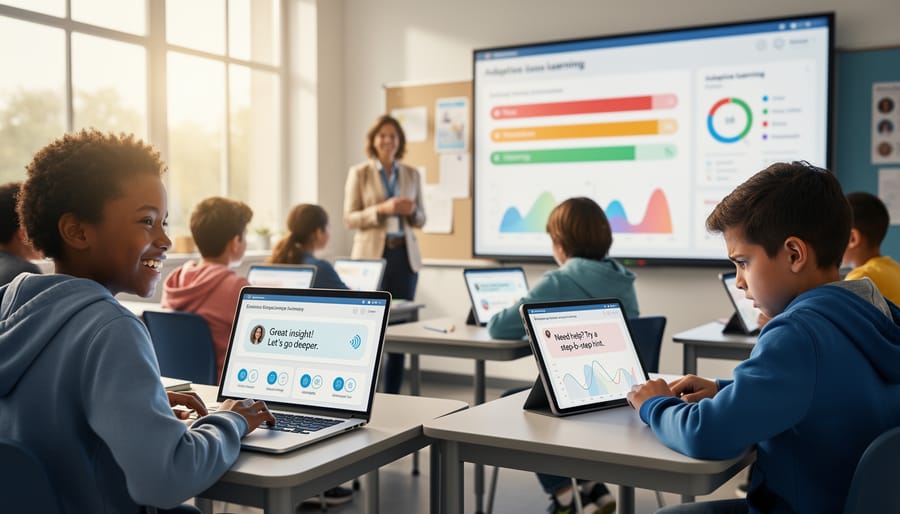
Imagine a learning platform that recognizes when a student is struggling and adjusts its approach accordingly. Rather than delivering generic praise or criticism, emotionally-intelligent feedback systems read emotional cues and respond appropriately. When a student shows signs of frustration after multiple incorrect attempts, the system might offer encouragement with a gentler tone: “You’re working through a challenging concept—let’s try breaking this into smaller steps.” Conversely, when sensors detect confidence and engagement, feedback becomes more challenging and celebratory.
These adaptive systems go beyond personalizing content delivery by adjusting timing too. Research shows that immediate feedback works well for confident learners, while anxious students benefit from delayed responses that reduce pressure. Some platforms now incorporate this understanding, waiting strategic moments before providing corrections.
Consider platforms like those used in language learning apps that detect confusion through hesitation patterns and webcam analysis. When uncertainty is high, they might offer hints before the student submits an answer. When enthusiasm is detected, they introduce bonus challenges. This emotional responsiveness creates a supportive learning environment where students feel understood, reducing anxiety and building intrinsic motivation to persist through difficulties.
Supporting Different Learning Personalities
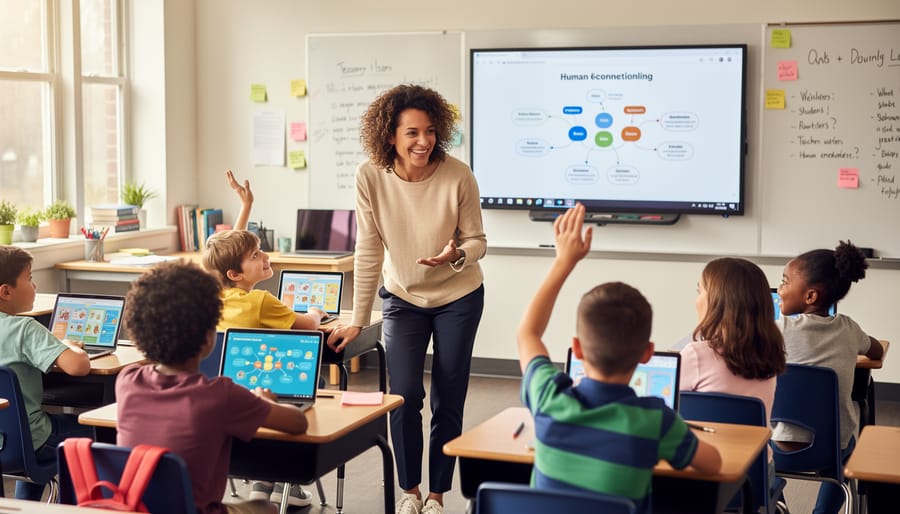
Every student brings a unique emotional learning profile to your classroom, and affective computing systems are increasingly sophisticated at recognizing these differences. For students who experience test anxiety, these systems can detect stress markers through typing patterns or extended hesitation times, then respond by offering encouraging feedback or suggesting a brief pause. Similarly, when technology identifies signs of distraction through wandering attention patterns, it can adjust by shortening lesson segments or introducing interactive elements to re-engage the learner.
This personalized approach extends to supporting students with diverse needs. A student who thrives on quick wins might receive more frequent positive reinforcement, while a methodical learner gets space to work through problems thoroughly without rushed prompts. The technology essentially creates multiple pathways through the same material, acknowledging that emotional states directly impact learning capacity.
As educators, you can use insights from these systems to better understand your students’ learning patterns. When the technology flags that several students consistently struggle emotionally with specific content types, it signals an opportunity to adjust your instructional approach. This partnership between human expertise and affective computing creates a more responsive, inclusive learning environment where every student’s emotional needs receive appropriate attention.
What This Looks Like in Your Classroom Tomorrow
Tools You Can Start Using Now
You don’t need to wait for the future to explore affective computing in your classroom. Several platforms already incorporate emotion-aware features designed with student learning in mind. Many learning management systems now include engagement tracking tools that monitor student participation patterns and flag when learners might be struggling or disengaging.
Adaptive learning platforms like DreamBox and Khan Academy use algorithms that respond to student frustration levels by adjusting difficulty and providing encouragement at strategic moments. These systems analyze response patterns and time spent on tasks to gauge emotional states indirectly.
Video conferencing tools such as Zoom and Microsoft Teams have begun integrating attention indicators and engagement metrics that can help you understand when students need breaks or re-engagement strategies during virtual lessons.
Classroom management applications like ClassDojo incorporate positive behavior reinforcement with visual feedback systems that students find motivating. While not explicitly emotion-sensing, these tools create emotional awareness frameworks in your classroom.
Before implementing any tool, review your district’s privacy policies and involve families in conversations about data collection. Start small by piloting one feature with a single class, gathering student feedback about their experience. Consider forming a study group with colleagues to share discoveries and troubleshoot challenges together. Remember, these tools work best when they enhance rather than replace your professional judgment about student emotional needs.
Simple Steps to Get Started
Ready to explore emotion-aware technology in your classroom? You don’t need to be a tech expert to get started. Begin by observing your current virtual or blended learning environment with fresh eyes. Notice when students seem disengaged during video lessons or struggle silently with assignments. These moments reveal opportunities where affective computing tools could provide support.
Start small by testing one free or low-cost tool that aligns with your immediate needs. Many learning management systems now include basic engagement analytics that track participation patterns and completion times. Explore these built-in features first before investing in specialized software. You might also pilot a short survey tool that checks in on student emotional well-being at the start or end of class sessions.
Connect with colleagues who have experimented with similar technologies through online community forums dedicated to educational innovation. Their experiences can help you avoid common pitfalls and discover unexpected benefits. Consider forming a small pilot group of interested teachers at your school to share insights and troubleshoot together.
Remember to communicate transparently with students and families about any emotion-tracking tools you introduce. Explain how the data will be used to support learning and what privacy protections are in place. Start with a trial period, gather feedback, and adjust your approach based on what works best for your unique classroom community.
Addressing the Concerns Every Teacher Should Consider

Protecting Student Privacy and Data
When implementing affective computing tools in your classroom, protecting student privacy isn’t just a legal requirement—it’s fundamental to maintaining trust and creating a safe learning environment. Start by thoroughly reviewing any emotion-tracking platform’s privacy policy before adoption, paying special attention to how student data is collected, stored, and shared.
Best practices include obtaining informed consent from both parents and students, using age-appropriate language to explain what data the technology captures and why. Ensure that any vendor you work with complies with FERPA and COPPA regulations, and confirm that student emotional data remains anonymized whenever possible.
Consider limiting data collection to what’s genuinely necessary for educational purposes. For instance, you might use aggregated classroom mood trends rather than individual emotional profiles. Store data securely with encryption, restrict access to authorized personnel only, and establish clear protocols for data retention and deletion.
Transparency is key—regularly communicate with families about how affective computing supports learning goals while safeguarding their children’s information. Create opportunities for students to understand and control their own data, fostering digital citizenship skills. Remember, these tools should enhance student wellbeing, never compromise it through inadequate privacy protections.
Ensuring Access for All Students
Implementing affective computing in your classroom brings important equity concerns that deserve careful consideration. Not all students have equal access to the devices, reliable internet, or updated technology required for emotion-sensing features to work effectively. Before adopting these tools, assess your school’s technology infrastructure and develop strategies to ensure every student can participate fully.
Cultural differences in emotional expression also matter significantly. Students from different backgrounds may express feelings in varied ways, and emotion-detection algorithms trained primarily on one demographic might misinterpret others. When selecting affective computing tools, ask vendors about diverse training data and cultural adaptability features.
For students with disabilities, affective computing offers promising opportunities but also challenges. Some students on the autism spectrum or with specific learning differences may display emotions differently than typical recognition patterns expect. Work with your special education team to identify tools that can be customized for individual needs. The good news is that many developers are increasingly incorporating accessibility features and customization options. Engage your school community through forums and collaborative discussions to share experiences and solutions that promote truly inclusive implementation of these technologies.
Keeping the Human Touch Central
The most important thing to remember is that affective computing exists to enhance your teaching, not diminish your irreplaceable role in students’ lives. Think of these tools as sophisticated assistants that handle data monitoring while you focus on what you do best: building meaningful connections and making nuanced instructional decisions. When technology flags that a student seems frustrated, you bring the professional judgment to understand the context, whether it’s a difficult home situation, a learning challenge, or simply a bad day. Your emotional intelligence, cultural awareness, and deep knowledge of each student’s unique story cannot be replicated by algorithms. Use affective computing to gain insights that inform your teaching strategies, but trust your instincts and relationships as the foundation of effective education. The goal is creating a partnership where technology provides valuable information and you provide the compassionate, adaptive response that truly makes the difference in student success.
As you continue your journey with affective computing, remember that this technology exists to support and amplify the expertise you already bring to your classroom every day. You understand your students in ways that no algorithm can replicate—their unique learning styles, their personal challenges, and the subtle cues that signal when they need extra support. Affective computing simply provides additional data points to inform the decisions you’re already making with skill and compassion.
Think of these tools as extensions of your professional toolkit, similar to how grade books and learning management systems enhanced rather than replaced your teaching methods. The goal isn’t to automate the human connection that makes education meaningful, but to give you more time and insight to deepen those connections. When emotion recognition software flags a student who might be struggling, you’re the one who determines the best response. When adaptive systems suggest adjustments, your professional judgment guides implementation.
We encourage you to explore this technology at your own pace and within your comfort zone. Start small—perhaps with one emotion-aware feature in a learning platform you already use. Share your experiences with colleagues and learn from their discoveries too. Our platform offers interactive tools where you can experiment with affective computing applications in low-stakes environments, and our community forums connect you with fellow educators navigating these same questions. Together, we can shape how affective computing evolves in education, ensuring it truly serves the needs of teachers and students alike.