
Mental health literacy in K-12 education means equipping students with the knowledge to recognize mental health challenges, the language to talk about them, and the skills to seek help when needed. This isn’t an abstract wellness concept. It’s a structured approach that gives young people the same fundamental understanding of mental health they receive about physical health, delivered in age-appropriate ways from kindergarten through graduation.
The case for prioritizing this work has never been clearer. Students today face unprecedented stress, anxiety, and emotional challenges that directly impact their ability to learn, build relationships, and develop into healthy adults. When schools embed mental health literacy into their culture and curriculum, students learn to identify warning signs in themselves and peers, reduce stigma through open conversation, and access support before small struggles become crises.
What makes mental health literacy different from traditional health education is its focus on three interconnected components: understanding mental health as part of overall wellness, developing emotional regulation and coping strategies, and knowing when and how to reach out for help. A second-grader learning to name feelings builds the same foundational skills as a high school junior exploring stress management techniques, just at different developmental levels.
The challenge many educators face isn’t recognizing the importance of this work. It’s knowing where to start, especially when you’re managing full classrooms, diverse student needs, and limited time. You don’t need to be a mental health expert to make a meaningful difference. What you need is a clear framework that breaks down mental health literacy by grade band, practical teaching strategies that fit into your existing schedule, and support from your school system to make this work sustainable.
This guide walks you through exactly that, from foundational concepts to classroom-ready activities you can implement starting tomorrow.
Why Mental Health Literacy Matters in K-12 Schools

Students who understand mental health concepts are better equipped to recognize when they or their peers are struggling, communicate their needs effectively, and access help before small challenges escalate into crises. This foundational literacy creates a protective framework that supports academic achievement, social development, and emotional resilience throughout their school years and beyond.
The connection between mental health and academic performance is well-documented. When students feel emotionally safe and supported, they are more present in the classroom, better able to concentrate, and more engaged in learning. Conversely, unaddressed mental health challenges manifest as declining grades, increased absenteeism, difficulty completing assignments, and withdrawal from classroom participation. By teaching students the language and concepts to understand their mental health, educators give them tools to navigate these challenges rather than suffer silently or act out in ways that disrupt their education.
Current challenges facing K-12 students are significant and growing. Anxiety, depression, and stress-related difficulties affect students across all grade levels, from elementary school children experiencing separation anxiety and social pressures to high schoolers dealing with academic stress, identity development, and uncertainty about their futures. Social media, academic competition, family instability, and global events like the pandemic have intensified these pressures. Many students lack the vocabulary to name what they are experiencing or the knowledge that what they feel is valid and treatable.
Educators are uniquely positioned to recognize early warning signs because they see students daily in various contexts. A teacher who understands mental health literacy can spot changes in behavior, mood, or academic performance that might signal a student needs support. Equally important, educators who model healthy attitudes toward mental health and create classrooms where emotional struggles can be discussed openly reduce stigma and encourage help-seeking. This does not mean teachers become therapists, but rather that they become informed allies who can connect students with appropriate resources and support their well-being as part of the whole educational mission.
When schools prioritize mental health literacy, they invest in prevention rather than crisis response. Students learn coping strategies, develop emotional regulation skills, and build the resilience they need to handle life’s inevitable challenges both during their school years and as adults.
Core Components of Mental Health Literacy for Students
Emotional Awareness and Vocabulary
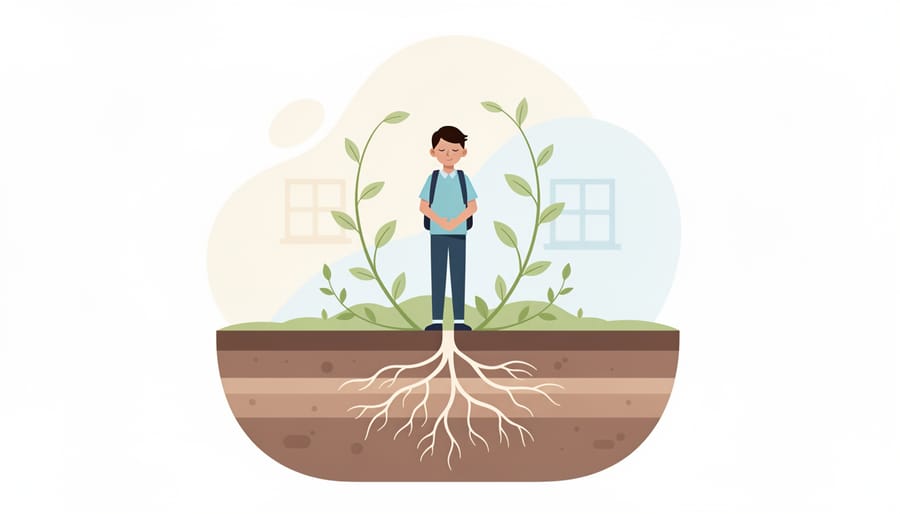
Students can’t manage emotions they can’t name. Building emotional vocabulary starts in the earliest grades and grows more sophisticated as children develop. In kindergarten through second grade, introduce a basic palette, happy, sad, scared, angry, excited, using picture books, emoji charts, and daily mood check-ins. Label emotions as they happen: “I notice you’re frustrated because the blocks keep falling.”
By third through fifth grade, expand the vocabulary to include proud, embarrassed, anxious, disappointed, and jealous. Use a feelings wheel or emotion thermometer to help students distinguish between similar feelings and recognize intensity levels. Prompt them to connect emotions to body sensations: “Where do you feel nervousness in your body?”
Middle schoolers benefit from nuanced terms like overwhelmed, insecure, envious, or relieved. High schoolers can explore the difference between shame and guilt, or learn that several emotions can coexist. Journaling, small group discussions, and reflective writing assignments give older students safe practice naming complex emotional states. This vocabulary becomes the foundation for all mental health conversations that follow.
Understanding Mental Health vs. Mental Illness
Students often hear “mental health” and assume it means something is wrong. This misconception creates unnecessary fear and keeps kids from talking about their emotional experiences. Teaching the spectrum of mental health helps students understand that everyone has mental health, just like everyone has physical health.
Think of it as a continuum. On one end, students experience optimal mental wellness, feeling capable, connected, and resilient. In the middle, many navigate temporary struggles like stress before exams or sadness after losing a friend. On the other end, some face diagnosable mental illnesses that require professional support, such as depression or anxiety disorders.
Help students grasp this by drawing parallels to physical health. Everyone has physical health, whether they’re training for sports, recovering from a cold, or managing diabetes. Similarly, mental health exists on a spectrum where we all land in different places at different times.
Normalizing this understanding means students see taking care of their mental health as routine maintenance, not crisis management. They learn that having a tough week doesn’t make them “broken,” and seeking support shows strength. This framework reduces stigma and opens honest conversations about emotions, coping strategies, and when extra help makes sense.
Help-Seeking Skills and Resources
Knowing when to reach out is just as important as knowing how. Students need clear signals: persistent sadness lasting more than two weeks, difficulty concentrating that affects schoolwork, withdrawal from friends and activities they once enjoyed, significant changes in sleep or appetite, or thoughts of self-harm all warrant seeking support. But many students struggle to take that first step. Teaching help-seeking skills means naming specific adults students can approach, a trusted teacher, school counselor, nurse, or coach, and practicing the words they might use: “I’m struggling with something and need help.” Provide students with concrete resources: the school counselor’s office hours, a mental health crisis text line, and information to share with parents about community services. Role-playing these conversations reduces the intimidation factor and normalizes asking for support as a sign of strength, not weakness.
Practical Strategies for Teaching Mental Health Literacy
Embedding Mental Health in Existing Curriculum
Mental health themes fit naturally into existing lessons without requiring entirely new curriculum. In English and language arts, character analysis offers ready-made opportunities, when students examine a protagonist’s motivations or reactions, guide them to identify underlying emotions and coping strategies. Discussions about conflict resolution in stories become springboards for exploring healthy versus unhealKitt responses to stress.
Social studies lessons on historical events or current issues can incorporate questions about how circumstances affected people’s mental well-being and what support systems existed or were missing. When studying different cultures or time periods, examine how communities understood and addressed emotional health.
Science classes covering the brain, nervous system, or human development provide concrete entry points for discussing how thoughts, feelings, and physical health interconnect. Health education naturally aligns with mental wellness topics, but even math classes can integrate brief check-ins about frustration tolerance and growth mindset when students face challenging problems.
The key is asking intentional questions that prompt reflection rather than treating mental health as a separate add-on. These small integrations normalize mental health as part of everyday learning while reinforcing that emotional awareness matters across all contexts.
Using Stories and Real-World Connections
Stories provide a natural bridge to mental health conversations because students already connect emotionally with characters and real-life scenarios. When a character in a classroom novel struggles with anxiety before a big game or feels isolated after moving to a new school, you can pause and name what’s happening: “This sounds like anxiety, have you ever felt your heart race before something important?” These moments transform abstract concepts into lived experiences students recognize.
Current events and age-appropriate news stories work similarly. A discussion about athletes speaking openly about their mental health gives students permission to do the same. You might ask, “Why do you think it’s important that public figures share these experiences?” This connects mental health literacy to social-emotional skills students are already developing.
Student experiences matter most. When appropriate, invite students to share anonymous examples through journal prompts or “situations box” submissions. Read these aloud, “Someone wrote about feeling left out at lunch”, and explore healthy responses together. This validates their reality while building collective understanding of common struggles and coping strategies.
Creating a Mentally Healthy Classroom Culture
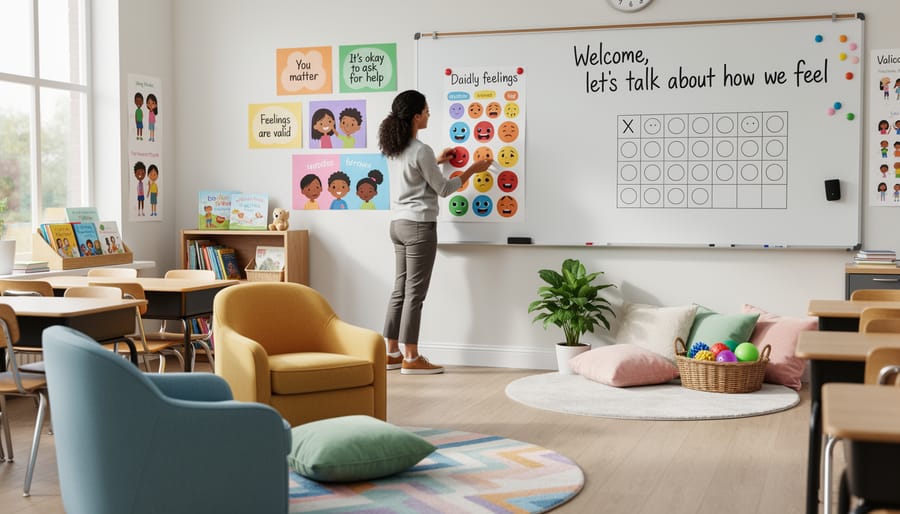
Creating a mentally healthy classroom starts with the small, consistent actions you take every day. Begin each morning with a brief check-in that gives students permission to acknowledge how they’re feeling, whether through a thumbs-up scale, a feelings chart, or a simple round of sharing. This ritual signals that emotions matter in your space and that it’s safe to be honest about them.
Build routines that reduce uncertainty and stress. Post clear schedules, explain transitions before they happen, and create predictable structures for challenging tasks. When students know what to expect, their nervous systems can relax enough to learn and connect.
Normalize struggle as part of growth. When you make a mistake, acknowledge it aloud. When a lesson feels hard, validate that difficulty instead of rushing past it. Model the language you want students to use: “I’m feeling frustrated, so I’m going to take a breath” or “This is challenging, and that’s okay.”
Integrate brief mindfulness in class moments throughout the day, not as add-ons but as transitions between activities. Even thirty seconds of focused breathing before a test can shift the emotional temperature of your room and teach students they have tools to manage their inner experiences.
Building Educator Capacity and School-Wide Support
Building educator confidence in mental health literacy starts with accessible, ongoing professional development that goes beyond a single workshop. Teachers need practical training that covers recognizing signs of distress, facilitating supportive conversations, understanding boundaries between classroom support and clinical intervention, and knowing when to refer students to specialized help. Effective programs include scenario-based learning, role-play opportunities, and follow-up sessions that allow educators to share experiences and refine their approach over time.
Collaboration between classroom teachers, school counselors, psychologists, and social workers creates a safety net that no single educator can provide alone. Regular team meetings, even brief check-ins, allow staff to share observations about students, discuss concerns in a confidential setting, and develop coordinated support plans. Teachers bring daily insights about student behavior and engagement, while mental health professionals offer clinical expertise and intervention strategies. This partnership works best when roles are clearly defined: teachers create supportive classroom environments and make initial observations, while counselors and specialists handle assessments and therapeutic support.
Administrative backing makes the difference between isolated teacher efforts and genuine school well-being transformation. Leaders demonstrate commitment by allocating professional development time, building mental health education into strategic plans, and protecting staff capacity to engage in this work. This means scheduling collaboration time, providing coverage when teachers need to consult with specialists, and securing funding for quality training and resources. Administrators also set the tone by openly prioritizing mental health alongside academic achievement and modeling the language and practices they want to see schoolwide.
Building capacity also requires acknowledging educator stress and burnout. Teachers can’t effectively support student mental health if their own well-being is neglected. Schools should extend mental health resources to staff, normalize conversations about educator stress, and create systems that prevent compassion fatigue. When teachers feel supported and equipped rather than overwhelmed and underprepared, they’re far more effective in fostering mental health literacy among their students.
Partnering with Families and Communities

Mental health literacy becomes far more effective when it reaches beyond school walls into homes and communities. Parents and caregivers are partners in supporting student well-being, but they often need guidance on how to recognize mental health concerns and where to find help.
Start by communicating proactively about the mental health initiatives happening in your classroom or school. Send home newsletters or emails that explain what students are learning about emotions, stress management, or help-seeking skills. Frame mental health education as a strength-based approach that benefits all students, not just those experiencing challenges. This messaging helps reduce parental anxiety and builds buy-in.
Host family education events that demystify mental health topics. Evening workshops, virtual sessions, or resource fairs give parents practical tools they can use at home. Focus on accessible topics like recognizing signs of anxiety or depression, starting conversations with children about feelings, or understanding the difference between normal developmental struggles and concerns that need professional support. Providing these opportunities positions the school as a trusted resource and extends learning beyond the school day.
Connect families with community mental health services when additional support is needed. Maintain an updated list of local providers, crisis hotlines, and sliding-scale options. Many families don’t know where to start when their child needs help, and you can reduce barriers by offering clear pathways to care. Partner with school counselors to create simple referral processes and follow-up protocols.
Build relationships with community organizations that support youth mental health, such as nonprofit agencies, youth centers, or faith-based groups. These partnerships expand the network of support available to students and create continuity between school, home, and community settings. When everyone shares a common language around mental health, students receive more consistent, coordinated care that reinforces the literacy skills they’re building in your classroom.
Common Questions About K-12 Mental Health Literacy
Educators naturally have questions when beginning to integrate mental health literacy into their practice. These concerns are valid and worth addressing thoughtfully before you dive in.
What if a student discloses a mental health concern to me?
Listen without judgment, thank them for trusting you, and follow your school’s protocol for connecting them with a counselor or mental health professional. Your role is to provide immediate support and facilitate access to appropriate resources, not to diagnose or provide therapy.
How do I handle parents who worry that talking about mental health will make things worse?
Share research showing that mental health education reduces stigma and increases help-seeking behavior without causing harm. Frame conversations around building life skills all students need, emphasizing that mental health literacy supports resilience and academic success for everyone.
What content is age-appropriate for different grade levels?
Elementary students benefit from emotion vocabulary and basic coping strategies, middle schoolers can explore the mental health spectrum and peer support, while high schoolers are ready for deeper discussions about mental illness, treatment options, and advocacy. Match complexity to developmental stage rather than avoiding topics entirely.
How do I measure whether my mental health literacy efforts are working?
Look for increased student comfort discussing emotions, more frequent appropriate help-seeking, reduced mental health stigma in classroom conversations, and feedback from students and families. Formal measures might include pre- and post-surveys about mental health knowledge or tracking referrals to school counselors.
Many teachers worry about saying the wrong thing or handling a crisis they are not trained for. Remember that you don’t need to be a mental health expert to promote mental health literacy. Your expertise lies in creating safe learning environments and facilitating meaningful conversations. When you encounter situations beyond your scope, knowing when and how to connect students with trained professionals is itself a valuable skill.
Some educators hesitate because they feel their own mental health knowledge is limited. That’s a strength, not a weakness. Learning alongside your students models curiosity and growth. You might say, “I don’t know the answer to that, but let’s explore it together,” which teaches students that mental health is a subject worth investigating rather than something to handle in silence.
The most common implementation concern is time. You already have full curriculum demands. The good news is that mental health literacy does not require adding another subject. Short check-ins, emotion vocabulary woven into morning meetings, and mental health themes embedded in existing lessons create impact without overwhelming your schedule. Start small with one strategy, then build from there as you gain confidence.
Building mental health literacy in K-12 schools isn’t just about supporting students who are struggling. It’s about giving every student the language, awareness, and skills to understand their own mental health and support others. When you normalize conversations about emotions and mental wellness in your classroom, you create an environment where all students can thrive academically and personally.
You don’t need to be a mental health expert to make a difference. Start small. Add a feelings check-in to your morning routine. Choose a book that opens conversations about anxiety or friendship challenges. Use the language of emotions consistently. These manageable steps build momentum and model for students that mental health matters just as much as physical health.
The work you’re doing as an educator extends far beyond academics. By teaching students to recognize their emotions, reduce stigma, and know where to find help, you’re equipping them with tools they’ll carry into adulthood. You’re helping create a generation that views mental health as something to understand and support rather than something to hide.
This work is easier when you’re not alone. Connect with other educators facing similar challenges and questions. Explore interactive tools designed specifically for classroom use. Share what’s working in your school and learn from colleagues across the country. Your experience matters, and the community you join will help you continue growing as a mental health literacy champion for your students.