Best Teaching Strategies

Classroom Activities

Fron Our Resource

Digital Tools for Inclusive Education

How AI Personalization Could Be Failing Your Most Vulnerable Students

Examine your current AI tools for hidden bias patterns by testing them with diverse student names, cultural references, and learning scenarios before classroom implementation. When an AI writing assistant suggests different feedback quality for “Juan” versus “John,” or when an adaptive math program assumes all students celebrate the same holidays in word problems, you’re witnessing algorithmic bias that can undermine your inclusive classroom goals.
Establish a personal AI evaluation checklist that includes questions about data sources, algorithmic transparency, and customization options. Before adopting…

Core Teaching Resources & Development

The Instructional Core: Where Teaching, Learning, and Content Actually Meet

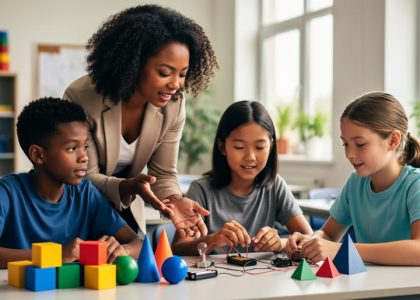
Focus your coaching conversations on the three interconnected elements that define the instructional core: the teacher’s knowledge and skill, the student’s engagement with content, and the rigor of the academic task itself. When you understand how these components work together, you unlock the most powerful lever for improving student learning in any classroom.
Observe each element systematically during classroom visits. Notice not just what the teacher is doing, but how deeply students are thinking about meaningful content. A teacher may be delivering an engaging lesson, yet if students are completing low-level tasks …

Indigenous Knowledge & Practices in Education

Why Traditional Assessment Fails Indigenous Students (And What Actually Works)

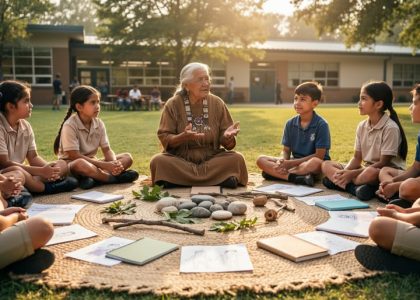
Indigenous evaluation frameworks center Indigenous knowledge systems, worldviews, and community voices in assessing student learning and program effectiveness. Rather than applying Western evaluation methods that may misrepresent Indigenous students’ strengths and growth, these frameworks honor cultural protocols, incorporate Indigenous pedagogies, and recognize learning that occurs beyond standardized metrics.
The stakes are significant. When evaluation approaches ignore cultural context, they risk perpetuating deficit thinking and undervaluing the rich knowledge Indigenous students bring to classrooms. Traditional assessment…

Educational Access & Equity

Pass Your GACE Special Education Exam While Building a More Equitable Classroom

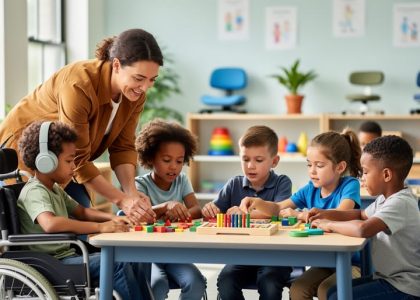
Focus your GACE Special Education General Curriculum exam preparation on the three core domains: understanding exceptional learners and their diverse needs, designing inclusive instructional strategies, and implementing legally compliant assessment practices. This certification represents more than a credential – it’s your gateway to advocating effectively for students with disabilities and creating classrooms where every learner can thrive.
Structure your study timeline around the exam’s weighted content areas, dedicating the most time to instructional planning and delivery, which comprises roughly 50% of test …

Critical Thinking & Cognitive Development Student Development & Well-being Teaching Strategies

Why CJC-1295 (No DAC) Peptide Doesn’t Belong in K-12 Classrooms

CJC-1295 Ipamorelin no DAC is a synthetic peptide designed to stimulate growth hormone release in the body. As an educator, you may have heard students discussing it in conversations about fitness, athletics, or body enhancement. Understanding what this substance is and how it works equips you to respond thoughtfully when these topics surface in your school community.
CJC-1295 without DAC (Drug Affinity Complex) acts on the pituitary gland to increase production of growth hormone for short, controlled periods. Students might encounter information about it …

Assessment & Data-Driven Instruction Critical Thinking & Cognitive Development Interactive & Game-Based Learning

Safe Learning Through Play: Transform Math Lessons Without Risk

Transform your classroom into an engaging learning environment through strategic gamification in education. While platforms like poker games demonstrate gaming’s motivational power, educators can harness these mechanics responsibly for academic success.
Create achievement-based progression systems that reward mastery of mathematical concepts with digital badges, unlockable content, and special classroom privileges. Design collaborative quests …

Classroom Activities

What Are Class Review Games?

Classroom review games are interactive and engaging activities designed to help students review and reinforce the material they have learned in class, and with the advent of technology, many of these games can now be played online. The ability to play classroom review games online has expanded the accessibility and variety of these activities, making the review process even more enjoyable and effective. Online platforms offer a wide range of games that can be tailored to various subjects and learning objectives, providing an engaging way for students to prepare for…

Teaching Strategies

8 Game Based Learning Examples

In the interest of transparency, we earn a commission on some purchases made through links on this site.

Game-based learning is a teaching strategy that uses games to teach to help students learn. Students play games instead of just reading or listening to learn a topic. Game-based learning happens inside a game framework where we have clear lessons to teach and can see how well they’re learned. Educational games make learning fun and engaging. Examples of game-based learning include hybrid games, …

Professional Development

Tips for Strengthening Working Memory when Teaching

Enhancing your working memory holds the key to unlocking more efficient learning retention. Working memory, which is often likened to a mental sticky note, is a cognitive function critical for reasoning, decision-making, and formulating strategies. 
Harnessing the power of current research-based strategies, educators can optimize the learning process and empower students with the ability to process and retain information effectively…

Classroom Activities Classroom Management

Empowering Young Minds by Teaching Conflict Resolution to Young Teens

Conflict management is a crucial skill that helps people navigate disagreements effectively. In classrooms, workplaces, and life in general, conflicts can arise, making it important for students to learn how to handle these situations constructively.
Why Conflict Management Matters for Middle and High School Students
Middle and high school students often experience conflicts due to …

Teaching Strategies

Fostering Civic Engagement with English and Math Learning

Civic engagement lets students help their communities by getting involved in different ways. They can join their school’s student government to make improvements, or they can volunteer to clean up their neighborhood. 
Both formal and informal actions make a positive difference and teach students about the world around them.
What Makes it Important?
Fosters Empathy
Getting involved in civic engagement helps …