Cultural immersion experiences transform education from passive learning into vibrant, lived understanding. When students step beyond textbook pages and into authentic cultural exchanges, they develop critical global competencies that shape their worldview and future success. Today’s interconnected classrooms demand more than traditional teaching methods – they require immersive experiences that bridge cultural divides and foster genuine cross-cultural understanding.
As educators, we have the unique opportunity to create these transformative moments within our school communities. Whether through virtual exchanges with international classrooms, local cultural festivals, or community partnerships with diverse organizations, cultural immersion provides students with authentic contexts for developing empathy, cultural sensitivity, and real-world communication skills.
This shift from theoretical to experiential learning doesn’t just enhance academic outcomes; it prepares students for success in our increasingly multicultural world. By embedding cultural immersion into our educational practices, we equip learners with the intercultural competencies they need to thrive as global citizens, while creating inclusive learning environments that celebrate and honor diverse perspectives and experiences.
The power of cultural immersion lies in its ability to make abstract concepts tangible, challenge preconceptions, and create lasting impact through personal connection and shared human experience.
What Makes Cultural Immersion Different from Traditional Cultural Learning
Beyond Textbooks: The Real-World Connection
Cultural immersion moves learning beyond traditional textbook approaches by creating authentic, meaningful connections to real-world experiences. When students engage in experiential learning activities, they develop a deeper understanding of cultural concepts through direct interaction and personal discovery.
Instead of simply reading about cultural traditions or practices, students actively participate in them, creating lasting memories and genuine cultural connections. For example, learning about Japanese tea ceremonies becomes more impactful when students practice the ritual themselves, understanding the significance of each movement and the cultural values embedded within the tradition.
These hands-on experiences help students develop empathy, cultural sensitivity, and real-world problem-solving skills. When students prepare traditional recipes, participate in cultural celebrations, or engage with community members from different backgrounds, they gain practical insights that textbooks alone cannot provide. This authentic learning approach not only enhances retention but also builds bridges between classroom knowledge and real-world application, preparing students for success in our increasingly interconnected global society.
Building Emotional Intelligence Through Cultural Connections
Cultural immersion experiences provide powerful opportunities for students to develop crucial emotional intelligence skills that extend far beyond traditional classroom learning. When students engage with different cultures, they naturally develop empathy by seeing the world through others’ perspectives and understanding different ways of life.
Through guided cultural interactions, students learn to recognize and appreciate diverse emotional expressions, cultural values, and social norms. This awareness helps them develop stronger social skills and cultural sensitivity that they can apply in various situations throughout their lives.
Teachers have observed significant growth in students’ ability to navigate complex social situations after participating in cultural immersion activities. Students show increased patience, better listening skills, and greater appreciation for different viewpoints. They become more adept at reading non-verbal cues and understanding cultural context in communications.
The emotional growth extends to self-awareness as well. When students encounter different cultural practices, they naturally reflect on their own beliefs and biases, leading to greater emotional maturity and cultural competence. This self-reflection process helps students develop a more nuanced understanding of their own emotional responses and cultural assumptions.
Practical Implementation Strategies
Virtual Cultural Exchange Programs
In today’s interconnected world, technology offers powerful tools for creating meaningful cultural connections without leaving the classroom. Virtual exchange programs leverage digital platforms to connect students with peers from different cultural backgrounds, fostering authentic cross-cultural dialogue and understanding.
Video conferencing platforms enable face-to-face interactions between classrooms across the globe, allowing students to engage in real-time conversations, collaborative projects, and cultural sharing activities. These virtual meetings can be structured around specific themes, such as traditional celebrations, daily life routines, or local customs, providing students with firsthand insights into different cultures.
Digital pen pal programs offer another effective approach, where students exchange regular messages, photos, and videos with international partners. This ongoing correspondence helps develop deeper cultural understanding while improving communication skills and digital literacy.
Educational platforms specifically designed for cultural exchange provide structured activities, discussion prompts, and virtual field trips. These resources often include pre-planned lessons that align with curriculum standards while promoting cultural competency.
To maximize the impact of virtual cultural exchanges:
– Establish clear communication guidelines and expectations
– Prepare students with basic cultural awareness training
– Include reflection activities after each interaction
– Use asynchronous tools to overcome time zone differences
– Document experiences through digital portfolios
– Incorporate parent and community involvement when possible
These virtual experiences serve as valuable supplements to traditional cultural immersion, making global connections accessible to all students regardless of geographic or economic constraints.

Local Community Partnerships
Building strong partnerships with local community organizations is essential for creating authentic real-world learning experiences. Start by identifying cultural organizations, heritage centers, and community groups in your area that align with your educational objectives. These partnerships can provide valuable resources, expertise, and opportunities for students to engage with different cultures meaningfully.
Consider reaching out to local museums, cultural centers, and ethnic associations that offer educational programs. Many of these organizations have established educational outreach initiatives and are eager to work with schools. They can provide guest speakers, arrange cultural demonstrations, or host interactive workshops that bring authentic perspectives into your classroom.
Parents and family members from diverse backgrounds are also invaluable resources. Create a volunteer network of cultural ambassadors who can share their traditions, stories, and experiences with students. This approach not only enriches the learning experience but also helps build stronger connections between school and home.
Don’t overlook local businesses owned by people from different cultural backgrounds. Many are willing to participate in educational initiatives by hosting field trips, demonstrating traditional crafts, or sharing their business journey. These connections help students understand how cultural heritage influences various aspects of community life while supporting local entrepreneurs.
Remember to maintain regular communication with your community partners and involve them in planning cultural activities. This collaborative approach ensures that experiences remain authentic, respectful, and meaningful for all participants.
Cross-Curricular Integration
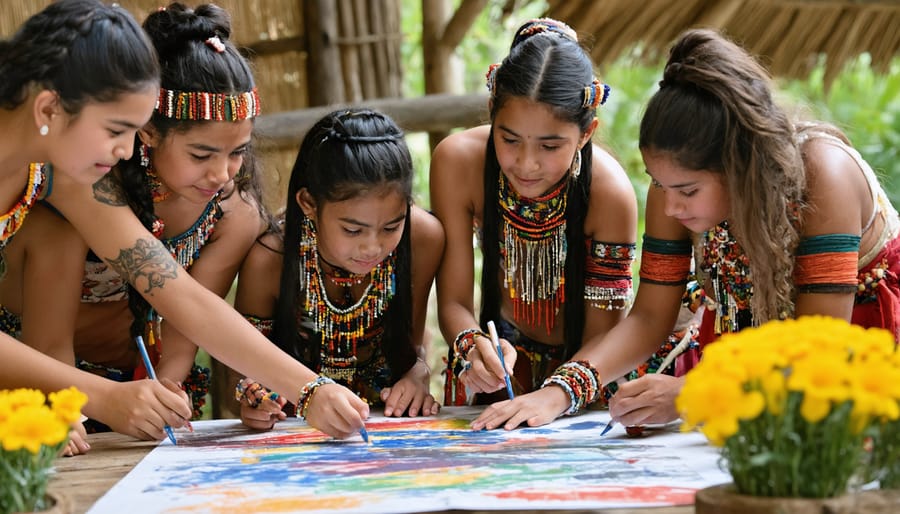
Cultural immersion experiences can be seamlessly woven into various subject areas, creating rich, interdisciplinary learning opportunities. In language arts, students can explore literature from different cultures while practicing traditional storytelling methods. Mathematics classes can incorporate cultural counting systems, patterns in traditional art, and real-world problem-solving scenarios based on global contexts.
Science teachers can integrate cultural perspectives on environmental conservation, traditional farming methods, and indigenous knowledge of local ecosystems through engaging outdoor activities. Social studies naturally lends itself to cultural exploration through historical perspectives, geography, and current events analysis.
Art and music classes can feature hands-on experiences with traditional crafts, instruments, and performance styles. Physical education can incorporate games and sports from around the world, teaching students about different approaches to movement and competition. Even STEM subjects can benefit from examining how different cultures approach technology and engineering challenges.
Consider creating themed units that span multiple subjects, allowing students to examine a single culture or region through various lenses. This approach helps students develop a more comprehensive understanding while reinforcing learning across different areas. Collaborate with fellow teachers to coordinate lessons and projects that build upon each other, creating a more cohesive and meaningful learning experience.
Measuring Success and Student Growth

Observable Outcomes
Successful cultural immersion experiences yield several observable outcomes that educators can use to measure program effectiveness. Students who participate in well-designed student engagement strategies through cultural immersion typically demonstrate increased cultural awareness and sensitivity in their daily interactions.
Key indicators of success include improved cross-cultural communication skills, demonstrated through more thoughtful and respectful interactions with peers from different backgrounds. Students often show enhanced empathy and curiosity about other cultures, actively seeking to learn more about different traditions and perspectives.
Observable behavioral changes may include:
– More inclusive language choices
– Increased participation in multicultural activities
– Greater willingness to collaborate with diverse groups
– Enhanced conflict resolution skills
– Improved self-reflection abilities
– More nuanced understanding of cultural contexts
Academic improvements are also common, with students showing stronger critical thinking skills and more sophisticated analysis of global issues. Many educators report that students who participate in cultural immersion experiences demonstrate better problem-solving abilities and show more creativity in their approach to learning.
These outcomes can be documented through student portfolios, reflection journals, peer assessments, and formal evaluations. Regular observation and documentation of these indicators help educators refine their cultural immersion programs and ensure meaningful learning experiences for all students.
Long-Term Impact Assessment
Measuring the long-term effects of cultural immersion experiences requires both systematic data collection and thoughtful observation over time. Educators can implement various assessment strategies to track how these experiences shape students’ worldviews, academic performance, and social interactions.
Regular student surveys and reflection journals provide valuable insights into how cultural understanding evolves. Teachers should conduct initial assessments before the immersion experience, followed by periodic check-ins at three, six, and twelve-month intervals. This longitudinal approach helps identify sustained behavioral changes and attitude shifts.
Look for indicators such as increased empathy in daily interactions, improved cross-cultural communication skills, and greater engagement with diverse perspectives in classroom discussions. Academic projects that demonstrate cultural awareness and sensitivity can serve as tangible evidence of lasting impact.
Parent feedback forms and classroom observations also play crucial roles in understanding how students apply their cultural learning beyond school walls. Document instances where students independently seek out multicultural experiences or demonstrate leadership in promoting inclusive environments.
Consider creating digital portfolios where students can showcase their ongoing cultural learning journey. These portfolios might include video reflections, collaborative projects, and evidence of community engagement. This documentation not only helps measure impact but also encourages students to remain actively engaged in cultural learning long after the initial immersion experience.
Remember that meaningful assessment should focus on both quantitative metrics and qualitative observations to paint a complete picture of student growth and development.
Overcoming Common Challenges
While cultural immersion experiences offer tremendous educational value, educators often face several challenges when implementing them. Let’s explore practical solutions to these common obstacles.
Limited resources and budget constraints needn’t prevent meaningful cultural experiences. Consider virtual exchange programs, which connect students with peers worldwide at minimal cost. Local community partnerships can also provide rich cultural interactions without extensive travel expenses. Reach out to cultural organizations, immigrant communities, or international student groups at nearby universities.
Time constraints within the academic calendar pose another frequent challenge. Integration is key – weave cultural elements into existing lesson plans rather than treating them as separate activities. For example, incorporate international literature into language arts or study global mathematical concepts in math class. Short, regular exposure can be more effective than occasional large events.
Language barriers may initially seem daunting, but they present opportunities for creative learning. Utilize translation tools, visual aids, and non-verbal communication activities. Consider implementing a buddy system where students with different language backgrounds support each other’s learning.
Gaining stakeholder support requires clear communication about benefits and outcomes. Share research-based evidence of cultural immersion’s positive impact on academic achievement and social-emotional development. Document and showcase student growth through portfolios, presentations, or digital storytelling projects.
Managing diverse student reactions and potential cultural sensitivity issues requires preparation. Create a supportive classroom environment by establishing clear guidelines for respectful interaction. Address misconceptions proactively and use any challenges as teachable moments for developing cultural competency.
Remember that perfection isn’t the goal – start small and build gradually. Each successful experience provides valuable learning for both students and educators. Regular reflection and adjustment of approaches ensure continuous improvement in your cultural immersion program.
Cultural immersion experiences offer transformative opportunities for both educators and students to develop deeper understanding, empathy, and global awareness. By implementing these experiences in your classroom, you’re not just teaching about different cultures – you’re creating meaningful connections that can last a lifetime.
Remember that successful cultural immersion starts with careful planning and clear objectives. Focus on creating authentic experiences that respect and celebrate diversity while engaging students in active learning. Whether through virtual exchanges, community partnerships, or classroom activities, every small step toward cultural understanding makes a difference.
The strategies and approaches we’ve explored can be adapted to fit your specific classroom needs and resources. Start small if needed, perhaps with a single cultural exchange project or virtual partnership, and gradually expand your program as you gain confidence and experience.
Most importantly, maintain an open mind and embrace the learning journey alongside your students. Cultural immersion is not just about teaching others – it’s about growing together as a community of learners. Share your experiences with colleagues, seek feedback from students and families, and continuously refine your approach.
By incorporating cultural immersion experiences into your teaching practice, you’re helping prepare students for success in our increasingly interconnected world while fostering a more inclusive and understanding school environment. Take that first step today – your students’ educational journey will be richer for it.