Best Teaching Strategies

Classroom Activities

Fron Our Resource

Inclusive & Culturally Responsive Education Inclusive Learning Environments

6 Essential Strategies to Empower Multilingual Students in Your Classroom

Provide bilingual glossaries and visual aids to help multilingual learners connect new vocabulary to their existing language knowledge. Offer opportunities for cooperative learning where students can practice language skills in a supportive environment. Implement strategies to empower multilingual learners by differentiating instruction based on language proficiency levels. Explicitly teach academic language and provide ample time for guided and independent practice across all domains – listening, speaking, …

Technology & Digital Integration Virtual & Adaptive Learning

5 Game-Changing Examples of Virtual Reality Transforming K-12 Education

Virtual Reality (VR) is revolutionizing education, transforming how students learn and engage with course material. By immersing learners in interactive 3D environments, VR technology enables experiential learning that brings abstract concepts to life. From exploring ancient civilizations to conducting virtual science experiments, VR applications span all subjects and grade levels. This powerful tool captures student attention, boosts knowledge retention, and develops critical thinking skills in ways traditional …

Core Teaching Resources & Development

7 Transformative Teacher Collaboration Strategies to Supercharge Student Success

Set clear goals and expectations for collaborative work to align efforts and ensure productivity. Establish structured collaboration time, whether in-person or virtual, to facilitate regular communication and teamwork. Leverage digital collaboration tools to streamline co-planning, resource sharing, and progress tracking for effective collaboration practices. Engage in…

Student Development & Well-being

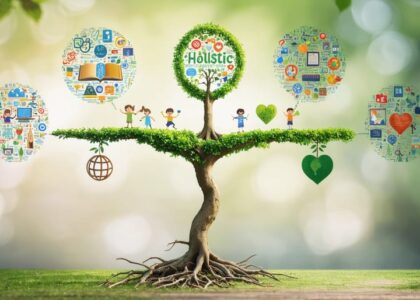
7 Pillars of Holistic Student Development: Nurturing the Whole Child

Embrace a holistic approach to education that nurtures the whole child – intellectually, socially, emotionally, physically, culturally, and ethically. By fostering growth across all domains, we empower students to reach their full potential and thrive in an ever-changing world.
Holistic student development recognizes that learning extends far beyond academics. It acknowledges the interconnectedness of a child’s experiences, relationships, and environments, and seeks to cultivate a strong sense of self, resilience, empathy, and purpose.
Through intentional practices and supportive learning communities, educators …

Critical Thinking & Cognitive Development Student Development & Well-being Teaching Strategies

Why CJC-1295 (No DAC) Peptide Doesn’t Belong in K-12 Classrooms

CJC-1295 Ipamorelin no DAC is a synthetic peptide designed to stimulate growth hormone release in the body. As an educator, you may have heard students discussing it in conversations about fitness, athletics, or body enhancement. Understanding what this substance is and how it works equips you to respond thoughtfully when these topics surface in your school community.
CJC-1295 without DAC (Drug Affinity Complex) acts on the pituitary gland to increase production of growth hormone for short, controlled periods. Students might encounter information about it …

Assessment & Data-Driven Instruction Critical Thinking & Cognitive Development Interactive & Game-Based Learning

Safe Learning Through Play: Transform Math Lessons Without Risk

Transform your classroom into an engaging learning environment through strategic gamification in education. While platforms like poker games demonstrate gaming’s motivational power, educators can harness these mechanics responsibly for academic success.
Create achievement-based progression systems that reward mastery of mathematical concepts with digital badges, unlockable content, and special classroom privileges. Design collaborative quests …

Classroom Activities

What Are Class Review Games?

Classroom review games are interactive and engaging activities designed to help students review and reinforce the material they have learned in class, and with the advent of technology, many of these games can now be played online. The ability to play classroom review games online has expanded the accessibility and variety of these activities, making the review process even more enjoyable and effective. Online platforms offer a wide range of games that can be tailored to various subjects and learning objectives, providing an engaging way for students to prepare for…

Teaching Strategies

8 Game Based Learning Examples

In the interest of transparency, we earn a commission on some purchases made through links on this site.

Game-based learning is a teaching strategy that uses games to teach to help students learn. Students play games instead of just reading or listening to learn a topic. Game-based learning happens inside a game framework where we have clear lessons to teach and can see how well they’re learned. Educational games make learning fun and engaging. Examples of game-based learning include hybrid games, …

Professional Development

Tips for Strengthening Working Memory when Teaching

Enhancing your working memory holds the key to unlocking more efficient learning retention. Working memory, which is often likened to a mental sticky note, is a cognitive function critical for reasoning, decision-making, and formulating strategies. 
Harnessing the power of current research-based strategies, educators can optimize the learning process and empower students with the ability to process and retain information effectively…

Classroom Activities Classroom Management

Empowering Young Minds by Teaching Conflict Resolution to Young Teens

Conflict management is a crucial skill that helps people navigate disagreements effectively. In classrooms, workplaces, and life in general, conflicts can arise, making it important for students to learn how to handle these situations constructively.
Why Conflict Management Matters for Middle and High School Students
Middle and high school students often experience conflicts due to …

Teaching Strategies

Fostering Civic Engagement with English and Math Learning

Civic engagement lets students help their communities by getting involved in different ways. They can join their school’s student government to make improvements, or they can volunteer to clean up their neighborhood. 
Both formal and informal actions make a positive difference and teach students about the world around them.
What Makes it Important?
Fosters Empathy
Getting involved in civic engagement helps …