K-12 art standards empower educators to cultivate creative thinking and cultural understanding while fostering essential skills across all grade levels. Modern arts integration frameworks now emphasize the vital connection between visual arts, critical thinking, and core academic subjects. These standards serve as a comprehensive roadmap, guiding teachers in developing age-appropriate artistic skills while nurturing students’ ability to interpret, create, and respond to diverse forms of artistic expression.
The National Core Arts Standards provide a unified structure that aligns with current educational best practices, focusing on four fundamental artistic processes: Creating, Performing/Presenting/Producing, Responding, and Connecting. This framework ensures students develop both technical artistic abilities and deeper understanding of how art reflects and shapes culture, history, and personal identity.
For educators implementing these standards, the emphasis lies not just in teaching artistic techniques, but in fostering an environment where creativity flourishes alongside academic achievement. These standards recognize art as an essential component of a complete education, providing students with tools for self-expression, cultural awareness, and innovative problem-solving skills that extend far beyond the art classroom.
Core Art Standards Framework

Creating, Performing, and Responding
The three artistic processes – Creating, Performing/Presenting, and Responding – form the foundation of comprehensive arts education in K-12 settings. Creating encompasses students’ ability to generate original artistic ideas and work, encouraging imagination and innovative thinking. This process allows students to explore various materials, techniques, and concepts while developing their unique artistic voice.
Performing and Presenting focus on interpreting and sharing artistic work. Students learn to refine their technical skills, develop performance techniques, and understand how to effectively communicate their artistic intentions to an audience. This process helps build confidence and promotes collaborative learning opportunities.
Responding involves understanding and evaluating artistic work, including both personal creations and those of others. Students develop critical thinking skills as they analyze artwork, consider different interpretations, and make informed judgments about artistic choices. This process encourages cultural awareness and helps students recognize the role of art in various contexts.
These processes work together to create a dynamic learning environment where students can develop both technical proficiency and creative expression while building essential life skills like problem-solving and self-reflection.
Grade-Level Standards
K-12 art standards are thoughtfully structured across grade levels to ensure age-appropriate skill development and creative growth. In elementary school (K-5), standards focus on exploration and foundational skills, introducing students to various art materials, basic techniques, and simple art vocabulary. Students learn color theory, shape recognition, and begin developing fine motor skills through hands-on projects.
Middle school standards (grades 6-8) build upon these foundations, introducing more complex artistic concepts and techniques. Students explore different artistic styles, cultural influences, and begin developing their unique creative voice. The curriculum emphasizes critical thinking skills through art analysis and interpretation while advancing technical abilities in various mediums.
High school standards (grades 9-12) prepare students for advanced artistic expression and potential career pathways in the arts. These standards incorporate sophisticated techniques, in-depth art history, and contemporary art practices. Students engage in portfolio development, learn about art careers, and explore advanced concepts like artistic philosophy and social commentary through their work. Throughout all levels, standards emphasize the integration of technology, cultural awareness, and cross-curricular connections to create a comprehensive arts education experience.
Implementing Art Standards Across Subjects
Mathematics and Visual Arts
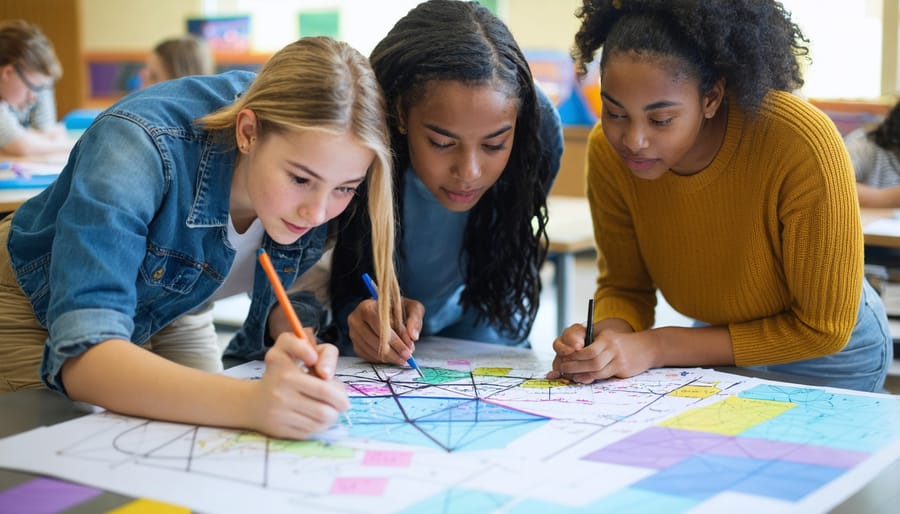
The integration of mathematics and visual arts creates powerful opportunities for cross-curricular instruction that deepens student understanding in both subjects. Art standards naturally align with mathematical concepts through geometry, spatial relationships, patterns, and proportions.
Students exploring geometric shapes through drawing and sculpture develop a tactile understanding of mathematical properties. For example, elementary students creating mandala designs practice rotational symmetry and fraction concepts, while middle school students working with perspective drawing apply principles of scale and proportion.
Color theory activities incorporate mathematical ratios when mixing pigments, offering hands-on experience with percentages and proportions. Pattern-based art projects, such as tessellations and Islamic geometric designs, reinforce concepts of repetition, transformation, and spatial reasoning.
Three-dimensional art projects provide excellent opportunities to explore volume, surface area, and architectural principles. High school students designing and constructing sculptures must calculate dimensions, consider balance, and apply geometric concepts to bring their visions to life.
Assessment strategies can include having students explain the mathematical principles present in their artwork, creating mathematical models of their artistic designs, or solving related math problems through visual representation. This integrated approach helps students see the natural connection between mathematical thinking and artistic expression while meeting standards in both disciplines.
Language Arts and Performance
The integration of dramatic arts with literacy standards creates powerful learning opportunities that enhance both artistic expression and language development. Through performance-based activities, students naturally strengthen their reading comprehension, speaking skills, and creative writing abilities while engaging with artistic concepts.
Teachers can incorporate dramatic readings, reader’s theater, and digital storytelling to bring literature to life while meeting both arts and language arts standards. These activities help students develop critical skills such as character analysis, plot development, and emotional interpretation while building confidence in public speaking.
Performance-based projects might include adapting classic literature into short plays, creating spoken-word poetry performances, or developing original dramatic works based on historical events. These activities naturally integrate reading, writing, speaking, and listening standards while fostering artistic expression and creative thinking.
Assessment strategies can include rubrics that evaluate both artistic elements (such as voice modulation, gesture, and stage presence) and literacy components (including vocabulary usage, narrative structure, and comprehension). This dual focus ensures students develop both artistic and academic skills simultaneously.
By connecting language arts and performance standards, educators create engaging learning experiences that support multiple learning styles and help students see the natural connections between artistic expression and academic achievement.
Social Studies and Cultural Arts
Art education plays a vital role in helping students understand and appreciate diverse cultures, historical perspectives, and social contexts. Through integrating social studies with arts education, students develop a deeper understanding of how art reflects and shapes society across time and cultures.
Teachers can facilitate meaningful connections by incorporating cultural artifacts, historical artworks, and contemporary pieces that represent diverse communities. For example, students might study Native American pottery while learning about indigenous cultures, or explore Renaissance art while studying European history. These cross-disciplinary approaches help students understand how art serves as a primary source for historical understanding.
Project-based learning opportunities allow students to create art that reflects their own cultural heritage while learning about others. Students might research traditional art forms from their family’s background or collaborate on murals that celebrate their school’s diverse community. These experiences foster cultural competency and empathy while developing artistic skills.
When implementing these standards, educators should emphasize the importance of respectful cultural representation and avoid stereotyping. Invite local artists and cultural representatives to share their perspectives and expertise with students. This authentic engagement helps students understand art’s role in preserving cultural heritage and promoting social understanding.
Consider creating virtual galleries or cultural exhibitions where students can showcase their work and share the historical and cultural significance behind their artistic choices. This approach not only reinforces learning but also builds bridges between different communities within the school environment.
Assessment Strategies
Portfolio Assessment
Portfolio assessment in K-12 art education provides a comprehensive way to evaluate student growth and artistic development over time. A well-structured portfolio should include both finished artworks and preliminary sketches, demonstrating the student’s creative process and technical progression.
When developing portfolio guidelines, educators should establish clear criteria that align with grade-level expectations. Consider including:
– Artist statements explaining creative choices
– Process documentation through photographs or sketches
– Self-reflection pieces
– Examples of skill development across different media
– Evidence of art history and cultural influences
Regular portfolio reviews help students develop critical thinking skills and artistic vocabulary. Teachers can implement a rubric system that evaluates:
– Technical proficiency
– Creative problem-solving
– Understanding of art elements and principles
– Growth in artistic expression
– Connection to cultural and historical contexts
Encourage students to curate their portfolios actively, selecting pieces that best represent their artistic journey. Digital portfolios can complement traditional formats, allowing students to document three-dimensional works and time-based projects effectively.
Assessment should be ongoing and formative, with opportunities for peer feedback and self-evaluation. This approach helps students develop metacognitive skills while building confidence in their artistic abilities. Remember to celebrate progress and provide constructive feedback that motivates continued artistic exploration.
Performance-Based Evaluation
Performance-based evaluation in K-12 art education moves beyond traditional grading methods to assess students’ artistic growth and understanding holistically. This approach focuses on both the creative process and final outcomes, providing meaningful feedback that encourages artistic development.
Effective assessment strategies include student portfolios, which document progress over time through sketches, finished works, and written reflections. These collections allow educators to track technical skill development while gaining insight into students’ creative decision-making processes.
Rubrics play a vital role in establishing clear expectations and assessment criteria. Well-designed rubrics evaluate multiple aspects of artistic work, including technique, creativity, presentation, and cross-subject connections. They should be shared with students beforehand to guide their artistic process and self-assessment.
Project-based assessments offer opportunities to evaluate how students apply artistic knowledge across different subjects. For example, students might create visual representations of scientific concepts or use art to interpret historical events. These interdisciplinary projects demonstrate understanding of both art techniques and core subject matter.
Peer critique sessions encourage students to develop critical thinking skills while learning to give and receive constructive feedback. These discussions help students articulate their artistic choices and understand different perspectives on art creation.
Documentation through photographs, videos, or digital portfolios provides evidence of student growth and helps communicate artistic achievement to parents and administrators. This approach creates a comprehensive picture of each student’s artistic journey and understanding.
Professional Development Resources
Professional development in arts education is essential for successful implementation of K-12 art standards, and numerous resources are available to support educators in this journey. The National Art Education Association (NAEA) offers comprehensive online courses and workshops that focus on standard-aligned instruction and assessment strategies. These professional learning opportunities help teachers develop confidence in delivering arts education while incorporating cross-disciplinary strategies into their teaching practice.
Digital platforms like ArtsEdge and The Art of Education University provide educators with ready-to-use lesson plans, assessment tools, and interactive resources aligned with current art standards. These platforms often include video demonstrations, downloadable rubrics, and student exemplars that help teachers visualize successful implementation.
Many state arts organizations offer mentorship programs connecting experienced art educators with those new to teaching or implementing standards. These relationships provide personalized guidance and support while building professional networks within the arts education community.
Professional learning communities (PLCs) focused on arts education have become increasingly popular, allowing teachers to collaborate, share best practices, and solve common challenges together. These communities often maintain active online forums where educators can seek advice, share resources, and discuss innovative teaching approaches.
Local museums and cultural institutions frequently provide teacher workshops and curriculum resources that align with art standards while incorporating local artistic traditions and contemporary practices. These partnerships often result in enriched learning experiences that connect classroom instruction to real-world applications.
Free webinars and virtual conferences have made professional development more accessible than ever, allowing educators to learn from experts worldwide while managing busy schedules. These online events often include interactive elements and opportunities for real-time collaboration with fellow educators.
Remember to document your professional development activities, as many districts require evidence of ongoing learning for certification renewal. Most importantly, apply what you learn immediately in your classroom to reinforce new skills and strategies while they’re fresh in your mind.
Implementing K-12 art standards brings transformative benefits to both students and educators, creating a more vibrant and engaging learning environment. These standards provide a structured framework that supports creative expression while ensuring measurable educational outcomes. By incorporating these guidelines into their teaching practice, educators empower students to develop critical thinking skills, cultural awareness, and innovative problem-solving abilities.
The success of art standards implementation relies heavily on teacher participation and enthusiasm. When educators embrace these standards and integrate them across subjects, they create meaningful connections that enhance student learning in all areas. This collaborative approach not only enriches the educational experience but also helps students develop a deeper appreciation for the arts and their role in society.
We encourage all educators to take an active role in implementing these standards, whether through professional development opportunities, collaborative planning sessions, or sharing successful teaching strategies with colleagues. Remember that you don’t need to be an art specialist to effectively incorporate these standards into your classroom. Start small, experiment with different approaches, and build your confidence gradually.
By working together and supporting one another, we can create a robust arts education program that benefits all students. Your participation in this endeavor is invaluable, and every step you take toward implementing these standards contributes to the broader goal of comprehensive arts education in our schools.