
Examine your current grading rubrics for hidden cultural assumptions—are you valuing individual achievement over collaborative learning, penalizing non-standard dialects in verbal assessments, or marking down students whose communication styles differ from dominant cultural norms? These seemingly neutral criteria often systematically disadvantage students from marginalized communities, creating achievement gaps that reflect bias rather than ability.
Replace point deductions with growth-oriented feedback that recognizes each student’s cultural strengths and linguistic assets. When a student demonstrates understanding through storytelling rather than linear analysis, or draws on community knowledge instead of textbook examples, these aren’t deficits to correct—they’re cognitive resources to build upon. Document progress from each student’s starting point rather than measuring everyone against a single standard that privileges specific cultural capital.
Diversify your assessment methods to honor multiple ways of demonstrating mastery. Offer choices between written essays, oral presentations, visual projects, or community-based applications. Students who struggle with timed tests might excel when explaining concepts through creative expression or peer teaching. This isn’t lowering standards—it’s removing barriers that prevent students from showing what they genuinely know.
Create feedback loops that include student voice in the assessment process. Ask learners to reflect on their growth, identify their strengths through their cultural lens, and set goals that matter to their communities. When students from diverse backgrounds see their identities and values reflected in how you measure success, engagement and achievement rise naturally.
The shift toward culturally-responsive grading isn’t about making things easier—it’s about making them fairer. Every student deserves assessment practices that reveal their true capabilities rather than measuring their proximity to a narrow cultural ideal.
What Makes a Classroom Culturally Responsive?

Beyond Representation: The Three Pillars
Creating a culturally-responsive classroom requires more than good intentions or surface-level recognition of diversity. Effective culturally responsive approaches rest on three interconnected pillars that work together to transform learning environments.
The first pillar establishes high expectations for all students, regardless of their cultural background or prior academic performance. This means believing deeply that every student can achieve rigorous learning goals when provided appropriate support. Rather than lowering standards, we adjust pathways to success, offering multiple ways for students to demonstrate mastery while maintaining challenging academic targets.
The second pillar focuses on validating students’ cultural identities within the learning process. This goes beyond celebrating heritage months or displaying multicultural posters. It means intentionally connecting curriculum content to students’ lived experiences, incorporating diverse perspectives into lessons, and recognizing the cultural knowledge students bring as valuable assets rather than deficits to overcome.
The third pillar emphasizes creating equitable learning opportunities through thoughtful instructional design. This involves examining how classroom practices, including grading and feedback systems, may unintentionally privilege certain cultural norms while disadvantaging others. By recognizing that fairness doesn’t always mean treating everyone identically, you can design learning experiences that give each student genuine access to success.
Together, these three pillars create classrooms where all students feel seen, supported, and capable of achieving at high levels.
The Connection Between Culture and Assessment
Traditional grading systems weren’t designed with cultural diversity in mind. They often reflect the values, communication styles, and learning preferences of dominant cultural groups, which can inadvertently disadvantage students from different backgrounds. For example, standard assessments may prioritize individual achievement over collaborative learning, favor written expression over oral demonstration, or assume background knowledge that not all students have had equal opportunity to acquire.
When we assess students using a one-size-fits-all approach, we risk measuring their familiarity with mainstream academic culture rather than their actual understanding or potential. A student who demonstrates mastery through storytelling, hands-on projects, or group discussion might score poorly on traditional paper-and-pencil tests, not because they haven’t learned, but because the assessment format doesn’t align with their cultural way of knowing and sharing knowledge.
This doesn’t mean lowering standards. Instead, it means recognizing that intelligence and learning manifest in diverse ways across cultures. By understanding these connections, you can create assessment practices that more accurately capture what all students know and can do, leading to fairer, more meaningful evaluation of their growth and achievement.
Rethinking What We Grade
Separating Learning from Behavior
One of the most powerful shifts you can make in creating a culturally-responsive classroom is learning to separate academic mastery from behavioral expectations. Traditional grading often conflates the two, penalizing students whose culturally-influenced behaviors don’t align with mainstream classroom norms, even when they’ve demonstrated strong academic understanding.
Consider how participation grades often favor students from cultures that encourage individual assertiveness and speaking up, while students from cultures that value collective harmony or respect through listening may be unfairly disadvantaged. Similarly, docking points for late work might not accurately reflect a student’s grasp of content, especially when family responsibilities or different cultural approaches to time management are factors.
To implement this separation effectively, start by asking yourself: Does this grade reflect what the student knows and can do, or does it reflect compliance with my behavioral preferences? Create distinct categories in your gradebook for academic achievement versus work habits. When you notice a behavioral concern, address it through conversation and support rather than grade penalties.
For example, a student who submits exceptional work but struggles with deadlines demonstrates clear content mastery. Rather than lowering their grade, explore what support they need with time management while accurately reporting their academic achievement. This approach honors diverse cultural backgrounds while maintaining high expectations for learning.
Remember, the goal isn’t to excuse behaviors but to ensure grades accurately represent academic growth. Use your classroom community forum to share strategies with colleagues about supporting different learning styles while maintaining clear academic standards.
Focusing on Mastery, Not Compliance
When we prioritize what students know and can do over when and how they complete assignments, we create more accurate and equitable measures of learning. Traditional grading systems that heavily weight punctuality and compliance can inadvertently penalize students who face transportation challenges, work to support their families, care for siblings, or navigate unstable housing situations.
Shifting to mastery-focused grading means separating academic achievement from behavior. Instead of docking points for late work, consider implementing a system where students can demonstrate understanding within extended timeframes. This doesn’t mean lowering standards; it means recognizing that learning doesn’t happen on identical schedules for everyone.
Start by distinguishing between formative and summative assessments. Use formative work to guide instruction rather than calculate final grades. When assessing mastery, focus on whether students have met learning objectives, not whether they followed every procedural step exactly as outlined. For instance, if a student demonstrates comprehension through an alternative format that aligns with their cultural communication style, that evidence matters more than strict adherence to your initial assignment template.
Consider implementing retake opportunities and revision processes that honor the learning journey. Culturally affirming assessment practices recognize that students bring different strengths and may need various pathways to demonstrate mastery.
Communicate clearly with students about what mastery looks like using rubrics and exemplars. When they understand the destination, they can navigate their own routes to get there, making learning more meaningful and sustainable.
Feedback That Honors Every Student
Building Asset-Based Language
The words we choose when providing feedback can either build students up or reinforce deficit thinking. Shifting to asset-based language is one of the most powerful culturally responsive teaching strategies you can implement immediately.
Before: “This essay lacks organization and proper grammar.”
After: “Your ideas show creative thinking. Let’s work on organizing these strong points so your reader can follow your excellent insights more easily.”
Before: “You didn’t follow directions.”
After: “I see you took a different approach. Can you walk me through your thinking? Let’s discuss how to align your creative process with the assignment goals.”
Before: “Your participation is too disruptive.”
After: “You bring energy and enthusiasm to our discussions. I’d love to help you channel that into ways that ensure everyone gets a chance to share.”
Before: “This work is incomplete.”
After: “You’ve made a solid start here. What support do you need to build on this foundation?”
Notice how the revised examples acknowledge what students bring to the table while still addressing areas for growth. This approach validates student effort and cultural ways of knowing while maintaining high expectations. It also opens dialogue rather than shutting it down, creating space for students to reflect on their learning journey. When students feel seen and valued, they’re more likely to engage meaningfully with feedback and persist through challenges.

Personalizing Feedback Delivery
Effective feedback becomes truly impactful when it aligns with how students naturally communicate and process information. In a culturally-responsive classroom, recognizing that students have diverse preferences for receiving feedback can transform your assessment approach from one-size-fits-all to genuinely supportive.
Start by offering multiple feedback channels. While written comments work well for some students, others may benefit more from brief one-on-one conversations where they can ask clarifying questions and engage in dialogue. Visual feedback, such as annotated examples or digital recordings explaining your thought process, can bridge language barriers and support visual learners. Consider incorporating peer-based feedback sessions where students share constructive input with classmates, which can feel less intimidating than teacher-directed feedback for students from collectivist cultures.
Cultural communication styles significantly influence how students receive and interpret feedback. Some cultures value direct, explicit communication, while others prefer indirect approaches that preserve harmony and save face. Students from high-context cultures may read between the lines and interpret tone as much as content. Pay attention to whether your students respond better to private feedback or appreciate public recognition of their growth.
Building student choice into your feedback system demonstrates respect for individual preferences. Try surveying students early in the year about their preferred feedback methods, or create a simple choice board where they can select how they’d like to receive input on major assignments. This small adjustment signals that you value their voice and are committed to meeting them where they are, fostering trust and openness to growth.
Practical Strategies You Can Implement Tomorrow
Retakes and Revisions: Building a Growth Mindset
Students deserve multiple opportunities to demonstrate their learning, especially when cultural and linguistic differences may initially mask their true understanding. Implementing retake and revision policies signals to students that growth matters more than a single moment in time.
Consider offering different formats for demonstrating mastery. A student who struggles with written English might excel in an oral presentation, visual project, or collaborative demonstration. This flexibility acknowledges that assessment methods themselves can create barriers unrelated to actual content knowledge.
Structure your retake policy with clear guidelines. Students might complete a reflection on what they’ve learned since the first attempt, attend additional support sessions, or demonstrate their understanding through a different modality. This process transforms assessment into a learning experience rather than a final judgment.
Communicate that revisions aren’t about lowering standards but recognizing that students arrive with different starting points. English language learners, students navigating cultural transitions, or those with limited access to resources outside school may need additional time to process and demonstrate learning.
Track progress over time rather than averaging all attempts. When students see that their final grade reflects their achieved understanding, they’re more likely to persist through challenges and engage authentically with feedback.
Collaborative Grading Conversations
Inviting students into the assessment process transforms grading from something done to them into a collaborative learning experience. When you engage students in conversations about their work and progress, you honor their voices while building critical self-reflection skills.
Begin by introducing structured self-assessment opportunities where students evaluate their own work using clear criteria. Ask guiding questions like “What part of this project shows your strongest thinking?” or “Where did you face challenges, and how did you work through them?” These prompts help students develop metacognitive awareness while revealing cultural assets and learning approaches you might otherwise miss.
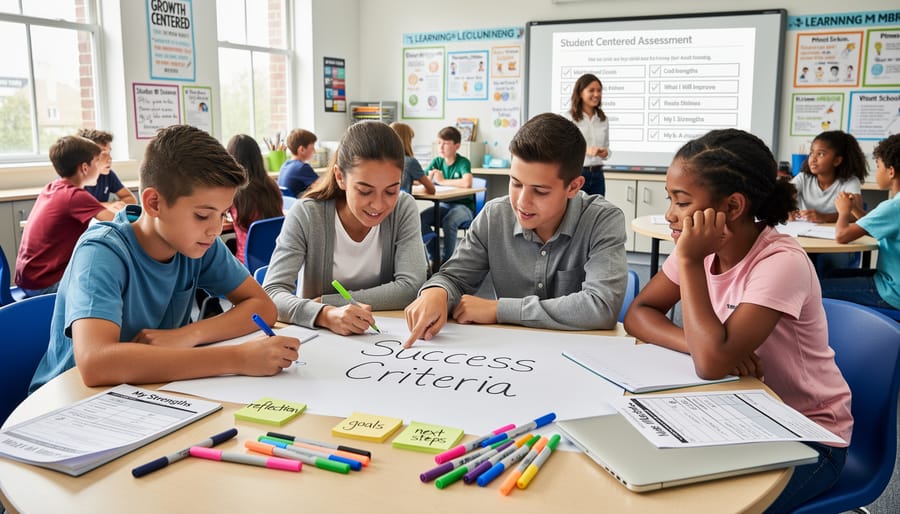
Co-creating rubrics with students ensures assessment criteria reflect diverse ways of demonstrating knowledge. Before a major assignment, facilitate a class discussion about what quality work looks like. Students often identify success indicators that align with their cultural backgrounds and strengths, such as storytelling, collaborative elements, or community connections. Document their ideas and integrate them into your rubric, making the final version a shared document.
Consider implementing assessment conferences where students present evidence of their learning and discuss their growth. These conversations reveal student perspectives on their progress and allow you to understand cultural contexts that inform their work. This approach shifts power dynamics, positioning students as active participants in determining how their learning is recognized and valued.
Creating Culturally Inclusive Rubrics
Creating rubrics that honor diverse cultural backgrounds starts with recognizing that excellence can look different across communities. Begin by identifying the core skills or knowledge you’re assessing, separate from how students might demonstrate them. For instance, if you’re evaluating persuasive writing, students might excel through storytelling traditions, direct argumentative styles, or community-centered appeals—all valid approaches.
Next, build multiple pathways into your rubric. Instead of requiring one specific format, offer choices: students could demonstrate understanding through written essays, oral presentations, visual projects, or collaborative work. This flexibility acknowledges that cultural backgrounds shape how we best communicate and learn.
Review your language for bias. Replace vague terms like “professional” or “appropriate” with specific, culturally-neutral descriptors. What exactly makes work high-quality in this context? Define it clearly so all students understand expectations.
Involve students and families in the process. Share draft rubrics and ask: “Does this allow you to show your best work? Are there barriers we haven’t considered?” Their insights will reveal blind spots you might miss.
Finally, pilot your rubric with past student work from diverse backgrounds. If certain groups consistently score lower, investigate whether the rubric itself creates barriers. Adjusting these tools is an ongoing practice, not a one-time fix.
Overcoming Common Challenges
Communicating Changes to Stakeholders
Successfully communicating with parents and colleagues about grading changes requires clear messaging and genuine dialogue. Start by focusing on shared values: everyone wants students to succeed and demonstrate their true abilities.
When speaking with parents, use specific examples rather than educational theory. Try: “I’m adjusting my grading to better show what your child truly knows. Instead of averaging all attempts, I’ll focus on their most recent work to show growth.” Acknowledge that this differs from their school experience while emphasizing the benefits for their child’s learning.
For administrators, connect changes to school goals around equity and student achievement. Prepare data showing how traditional grading may have masked student understanding or created barriers. Offer to pilot approaches and share results.
With colleagues, invite conversation rather than presenting a finished plan. Share your reasoning and concerns openly, creating space for their questions. Consider forming a study group to explore culturally-responsive grading together.
In all conversations, listen actively to concerns, validate hesitations, and remain open to feedback. Building support takes time, but transparent communication creates stronger partnerships around equitable assessment practices.
Transforming your classroom through culturally responsive grading and feedback is not an overnight journey, but rather a meaningful process of continuous growth and reflection. The good news is that you don’t need to overhaul your entire grading system tomorrow. Starting small with even one practice, whether it’s incorporating student self-assessment, diversifying your feedback methods, or examining your rubrics for bias, can create ripples of positive change for your students.
Remember that every step you take toward more equitable assessment practices honors the diverse identities and experiences your students bring to your classroom. When students see their cultures reflected and valued in how they are assessed, they develop stronger academic identities and deeper engagement with learning. This isn’t just about changing grades; it’s about changing lives.
As you move forward, make space for regular reflection. What’s working? Where are you seeing growth in student confidence and achievement? What challenges are emerging, and how might your colleagues or community help you navigate them? The journey is richer when shared with others who are committed to educational equity.
We invite you to connect with fellow educators who are also embracing culturally responsive practices. Through Teach Find’s interactive tools, you can access ready-to-use resources that make implementation easier. Join our community forums to share your experiences, ask questions, and learn from teachers who have walked this path before you.
Your commitment to equity matters. Your students are waiting. Take that first step today.