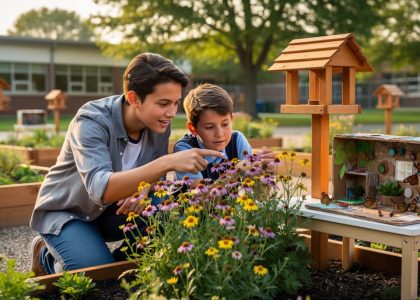
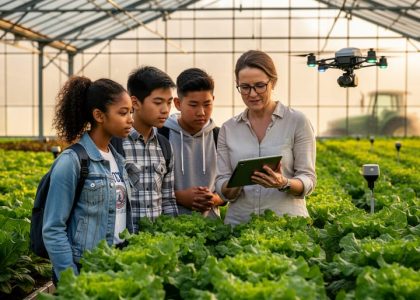
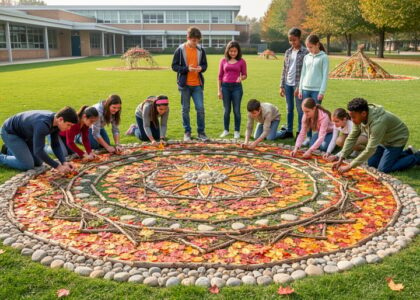
Transform your outdoor education curriculum by integrating essential wilderness survival skills – a powerful approach that delivers both experiential learning benefits and critical life competencies. Students who master basic survival techniques develop heightened self-reliance, improved problem-solving abilities, and a deeper connection to the natural world.
In today’s screen-dominated environment, wilderness survival education offers a unique opportunity to engage students through hands-on learning while meeting core academic standards in science, mathematics, and social studies. From calculating safe drinking water needs to understanding local ecosystems, these practical skills seamlessly integrate with traditional subject matter.
Research shows that students who participate in wilderness survival training demonstrate improved leadership capabilities, enhanced risk assessment skills, and stronger team collaboration – essential competencies that extend far beyond the classroom. By incorporating these fundamental outdoor skills into your curriculum, you’ll create memorable learning experiences that resonate with students long after the lesson ends.
Let’s explore how to effectively implement these vital survival skills while maintaining educational rigor and ensuring student safety in outdoor learning environments.
Creating Safe Learning Environments for Outdoor Skills
Indoor vs. Outdoor Teaching Spaces
Effective wilderness survival instruction requires a thoughtful balance between classroom preparation and hands-on experience in outdoor learning environments. Start by introducing basic concepts in the classroom, where you can use visual aids, diagrams, and interactive demonstrations to establish foundational knowledge. The controlled indoor environment allows students to practice techniques like knot-tying and first-aid skills before applying them outdoors.
Once students grasp the basics, transition to outdoor spaces where they can engage with real-world scenarios. Consider creating a progression from school grounds to local parks before moving to more remote locations. This gradual approach helps build confidence while maintaining safety. Use the classroom for pre-activity briefings and post-activity reflections, making connections between theory and practice.
Remember to maintain clear sight lines and establish boundaries in outdoor settings. Keep group sizes manageable and ensure adequate supervision ratios. Weather conditions should always factor into your planning, with indoor spaces serving as backup locations when needed. This dual-environment approach maximizes learning opportunities while prioritizing student safety and comfort.
Safety Protocols and Equipment
Before leading any wilderness survival activities, establish clear safety protocols and ensure access to essential equipment. Start with a well-stocked first aid kit that includes bandages, antiseptic wipes, and basic medications. Keep emergency contact information readily available and establish a clear communication system, including walkie-talkies or whistles for group activities.
Required safety equipment includes weather-appropriate clothing, sturdy hiking boots, and protective gear such as work gloves and safety glasses when necessary. Each participant should carry a basic survival kit containing a reliable compass, emergency blanket, waterproof matches, and a multi-tool.
Create detailed safety guidelines that outline procedures for different scenarios, including weather changes, injuries, or separation from the group. Maintain appropriate student-to-instructor ratios (recommended 8:1 for wilderness activities) and always implement a buddy system.
Consider any student medical conditions or physical limitations when planning activities. Have backup plans ready and ensure all equipment is regularly inspected and maintained. Remember to review and practice emergency protocols with students before beginning any outdoor activities.
Always check local regulations and obtain necessary permits for outdoor educational activities in your area.
Core Survival Skills for Student Workshops
Shelter Building Basics
Building a shelter is one of the most crucial survival skills you can teach your students. Start by demonstrating the basic A-frame shelter, which is both simple to construct and effective. Have students work in pairs to gather straight branches approximately 6-8 feet long for the main structure. Guide them in selecting a location that’s slightly elevated and protected from wind.
Encourage students to use the natural environment wisely. A fallen tree or large rock can serve as a ready-made wall, saving time and energy. Show them how to create a framework by leaning smaller branches against a central support beam at a 45-degree angle. This hands-on activity reinforces concepts of geometry and structural stability.
Incorporate STEM principles by discussing why certain angles work better than others and how different materials provide varying levels of protection. Have students experiment with natural materials like leaves, pine needles, and grass for insulation. This presents an excellent opportunity to discuss local ecosystems and sustainable resource use.
Safety tip: Always check that the structure is stable before adding the covering materials. Create a classroom challenge where teams evaluate each other’s shelters using a student-developed checklist that includes criteria like weather resistance, stability, and efficient use of materials. This promotes critical thinking and peer assessment skills while ensuring safety standards are met.

Water Safety and Collection
Finding safe drinking water is a critical survival skill that students can learn through hands-on activities. Begin by teaching students to locate water sources like streams, rivers, and natural springs. Emphasize that running water is generally safer than stagnant water, and water at higher elevations typically contains fewer contaminants.
Demonstrate the universal rule that all water from natural sources must be purified before drinking, regardless of how clean it appears. The most reliable purification method is boiling water for at least one minute at sea level, adding an extra minute for every 1,000 feet of elevation. This creates an excellent opportunity to integrate science concepts into the lesson.
Show students how to create simple water collection systems using plastic sheets or bags to capture morning dew or transpiration from vegetation. Explain how to construct a basic solar still using a plastic sheet, a container, and a small rock – a perfect demonstration of the water cycle in action.
For water transportation, teach students about using food-grade containers and the importance of keeping collection vessels clean. Consider incorporating a water testing activity where students can compare water samples from different sources using basic testing kits, making the learning experience both interactive and memorable.
Remember to discuss the signs of waterborne illness and emphasize that proper water treatment is non-negotiable in survival situations. This knowledge not only supports wilderness safety but also reinforces environmental science concepts in your curriculum.
Navigation Fundamentals
Navigation is a fundamental skill that students can master through hands-on practice and guided exploration. Start by teaching map reading basics, focusing on understanding topographic symbols, contour lines, and scale. Encourage students to identify landmarks and relate map features to their real-world surroundings, making the connection between two-dimensional representations and three-dimensional landscapes.
When introducing compass use, begin with the basic parts: magnetic needle, direction of travel arrow, and rotating bezel. Create engaging activities where students practice taking bearings and following simple routes within the school grounds. This builds confidence before moving to more complex navigation challenges.
A practical teaching approach is the “pace counting” method, where students learn to estimate distances by counting their steps. This technique helps them develop spatial awareness and provides a reliable backup when visibility is poor.
Incorporate team exercises where students work together to solve navigation challenges. For example, create a simple orienteering course where teams must find checkpoints using both map and compass skills. This not only reinforces learning but also develops communication and collaboration skills.
Remember to emphasize the importance of having multiple navigation methods. While modern technology is helpful, traditional navigation skills remain essential for wilderness survival. Always teach students to carry both map and compass, and regularly practice these skills in various conditions and terrains.

Emergency Signal Methods
Teaching students how to signal for help in wilderness situations can be a lifesaving skill. Start by introducing the universal distress signal: three of anything (whistles, fires, or flashes). Have students practice the “SOS” whistle pattern: three short blasts, three long blasts, followed by three short blasts.
For visual signals, demonstrate how to create an “X” or “SOS” on the ground using bright-colored materials, such as clothing or backpack items. The letters should be at least 10 feet tall to be visible from above. Encourage students to place these signals in open areas where they’re most likely to be spotted by rescue aircraft.
Ground-to-air signals can be created using reflective materials like mirrors, metallic blankets, or even the bottom of a soda can. Practice aiming reflected sunlight by holding up two fingers in a “peace sign” and directing the reflection through the gap between them toward the target.
Fire signals are particularly effective at night. Teach students to prepare three separate fire sites in a triangle formation, approximately 100 feet apart. These should only be lit when aircraft are heard nearby to conserve resources.
Remember to emphasize the importance of staying in one location once distress signals are deployed. Moving around reduces the chances of being found by rescue teams who may have spotted the initial signals.
Integrating Survival Skills with Academic Standards
Science Connections
Wilderness survival skills offer excellent opportunities to demonstrate scientific principles in action. When students learn about fire-making, they’re actually exploring chemical reactions, combustion, and the transfer of energy. The process of finding safe drinking water introduces concepts in biology (understanding bacterial contamination) and chemistry (filtration and purification methods).
Weather prediction skills connect directly to meteorology and atmospheric science. Students learn to read cloud formations, understand air pressure changes, and recognize weather patterns. These observations reinforce scientific methodology through practical application.
Building shelters incorporates physics concepts such as heat transfer, insulation, and structural engineering principles. When students learn about angle and support in shelter construction, they’re applying geometric concepts and engineering basics.
Navigation skills integrate geography, astronomy, and mathematics. Using the sun and stars for direction teaches celestial mechanics, while map reading reinforces spatial awareness and mathematical scaling concepts.
Finding edible plants combines biology and botany, teaching students about plant identification, ecosystem relationships, and basic taxonomy. This knowledge connects to broader ecological concepts and environmental science.
These real-world applications make scientific principles tangible and memorable for students. By framing survival skills within scientific contexts, educators can meet curriculum requirements while teaching practical life skills, creating an engaging and multidisciplinary learning experience.
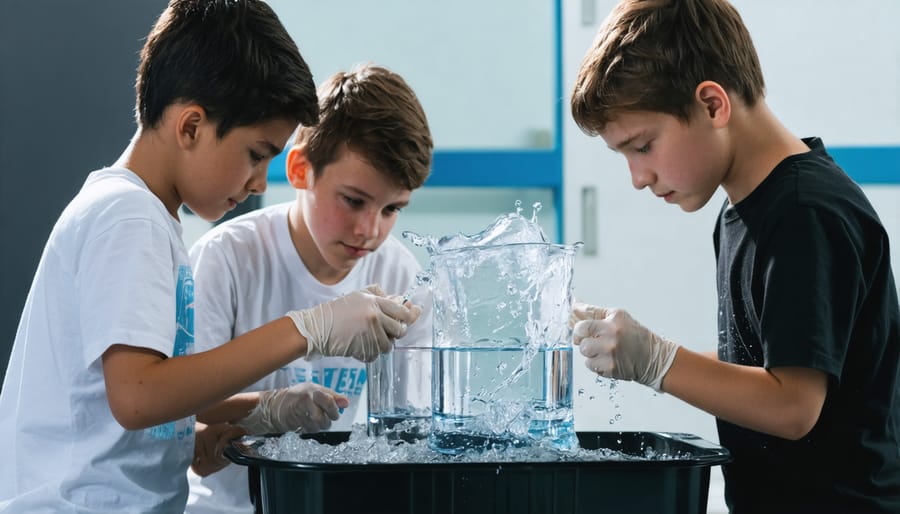
Math Applications
Wilderness survival scenarios provide excellent opportunities for integrating mathematical concepts into real-world applications. Students can calculate the angle of the sun using shadow stick methods to determine direction, measure the safe distance from wildlife using proportional reasoning, and estimate the remaining daylight hours using basic geometry.
Distance calculations become meaningful when students determine safe water collection points or establish camp boundaries. They can practice measurement by creating scaled maps of their surroundings, calculating areas for shelter construction, and determining the volume of water needed per person per day.
Resource management offers rich mathematical problem-solving opportunities. Students can calculate food rations, estimate firewood needs based on burn time and temperature requirements, and determine the most efficient shelter dimensions using geometric principles. Time-based calculations help in planning travel distances and establishing daily routines.
For younger students, simple counting and basic arithmetic come into play when gathering materials or setting up camp. Older students can engage with more complex concepts like trigonometry when measuring tree heights for shelter building or calculating safe climbing angles.
These practical applications make mathematical concepts tangible and demonstrate their real-world relevance. Teachers can adjust the complexity of calculations to match grade-level requirements while maintaining student engagement through the exciting context of survival skills.
Assessment and Student Engagement
To effectively assess wilderness survival skills learning, educators should employ a combination of practical demonstrations, written assessments, and peer evaluations. Create rubrics that measure both technical proficiency and safety awareness, allowing students to track their progress through clear benchmarks. Observation checklists can help document student performance during hands-on activities like shelter building or fire starting.
Interactive assessment methods, such as scenario-based challenges, not only evaluate student knowledge but also engage students through adventure while reinforcing critical thinking skills. Consider implementing a points-based system where students earn “survival badges” for mastering specific skills, creating healthy competition and motivation.
Maintain student engagement by incorporating regular reflection sessions, where learners discuss their experiences and challenges. Group projects, such as creating survival guides or instructional videos, provide opportunities for collaborative learning and peer teaching. Digital portfolios can showcase student progress through photos and videos of their practical achievements.
For formative assessment, use quick knowledge checks through outdoor scavenger hunts or survival scenario cards. End-of-unit assessments should combine practical demonstrations with written components to accommodate different learning styles. Remember to celebrate student achievements and progress, fostering a supportive learning environment that encourages continuous improvement and skill development.
Wilderness survival workshops offer invaluable opportunities for students to develop critical thinking, teamwork, and self-reliance while fostering a deeper connection with nature. By implementing these programs in your educational setting, you’re not just teaching survival skills – you’re building confidence, environmental awareness, and problem-solving abilities that transfer to everyday life. The hands-on nature of these workshops naturally supports experiential learning and creates memorable experiences that students carry with them long after the lesson ends. Consider starting with small-scale activities and gradually expanding your program based on student engagement and success. Remember, every step toward wilderness education is an investment in your students’ personal growth and safety awareness. Take the first step today by incorporating these essential skills into your curriculum and watch as your students discover their own resilience and capability in the natural world.