Observe your classroom interactions for the next week and note when students’ responses surprise or confuse you—these moments often reveal where your cultural lens differs from theirs. Document specific instances: a student who avoids eye contact during praise, a family that doesn’t respond to multiple emails, or a child who shares materials differently than expected. These aren’t deficiencies; they’re invitations to understand different cultural frameworks.
Identify three classroom practices you’ve always assumed were “standard” and research their cultural origins. Your communication style, discipline approach, and classroom management techniques likely reflect specific cultural values—often Western, individualistic norms. When you recognize that concepts like “speaking up shows engagement” or “independence is the goal” aren’t universal truths, you create space for students whose cultures prioritize collective harmony, respectful listening, or interdependence.
Replace deficit language in your thinking and speech immediately. Instead of viewing a student as “lacking parent involvement,” consider what family engagement looks like in their culture—perhaps they demonstrate respect by trusting your professional judgment rather than questioning it. When you catch yourself thinking “they don’t value education,” challenge that assumption by exploring how their culture expresses educational commitment differently.
Create regular opportunities for students and families to educate you about their cultural practices, celebrations, and communication preferences. Send brief, optional surveys asking families how they prefer to be contacted, what traditions matter most to them, and what you should know to support their child best. Position yourself as a learner, not an expert, in their cultural experiences.
Building cultural responsiveness isn’t about perfection—it’s about developing curiosity, recognizing your biases, and taking consistent action toward creating classrooms where every student’s cultural identity is valued and understood.
Understanding Cultural Bias in Your Classroom
What Cultural Bias Really Looks Like
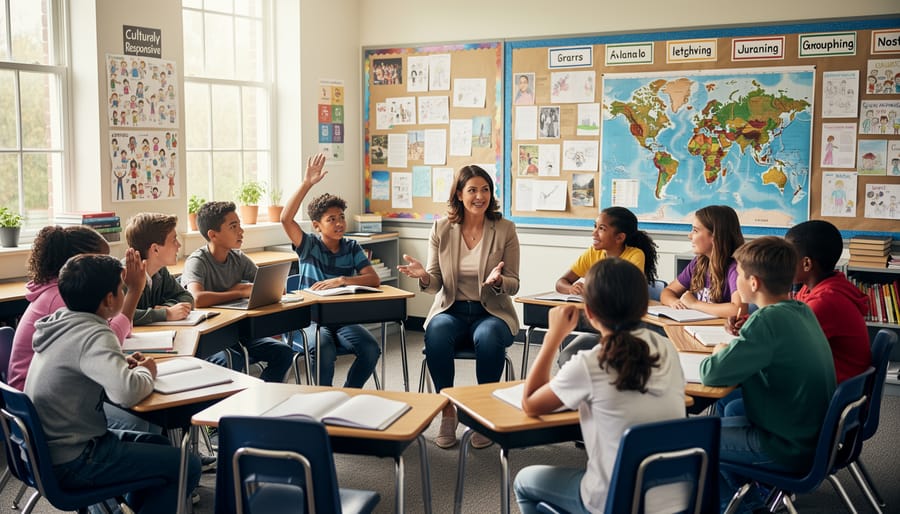
Cultural bias in the classroom isn’t always obvious. While overt bias might involve explicitly discriminatory statements or policies, the subtle forms are far more common and often go unnoticed, even by well-intentioned educators.
Consider communication styles. In some cultures, students are taught to wait for direct invitations before speaking, viewing unsolicited contributions as disrespectful. Meanwhile, Western classrooms often reward students who jump into discussions without prompting. When we interpret quietness as disengagement or lack of knowledge, we’re applying a cultural lens that may not fit all students.
Participation expectations reveal similar patterns. You might value eye contact as a sign of attentiveness, but students from cultures where averting eyes shows respect toward authority figures may seem inattentive when they’re actually being respectful. Cold-calling on students can feel supportive in one cultural context and deeply uncomfortable in another where individual recognition causes embarrassment.
Learning preferences also carry cultural dimensions. Group harmony might take precedence over individual achievement for some students, making competitive classroom structures feel alienating. Students accustomed to learning through observation and practice may struggle in environments that emphasize verbal explanation and immediate performance.
Discipline approaches, too, reflect cultural values. A direct conversation about behavior might work well for some students while feeling confrontational to others who come from cultures where indirect communication preserves relationships. What looks like defiance might actually be cultural discomfort with the approach itself.
Recognizing these patterns is the first step toward creating genuinely inclusive classrooms where every student can thrive.
The Hidden Impact on Student Success
When cultural differences go unrecognized or unaddressed in our classrooms, the consequences extend far beyond awkward moments or misunderstandings. Research consistently shows that students who don’t see their cultural identities reflected and valued in educational settings experience measurable declines in engagement, academic performance, and overall wellbeing.
Consider what happens when a student’s cultural communication style differs from classroom expectations. A child raised in a culture that values collective decision-making and group consensus might hesitate to speak up individually, appearing disengaged when they’re actually demonstrating deeply ingrained values. Without understanding this context, we might misinterpret their silence as lack of interest or ability, potentially lowering our expectations and inadvertently limiting their opportunities.
The impact on belonging is particularly profound. Students who regularly experience cultural disconnection in school report feeling invisible, misunderstood, or like they need to choose between their home identity and school success. This psychological burden doesn’t just affect their emotional state—it directly impacts cognitive function and learning capacity. When students expend mental energy navigating cultural mismatch, less remains available for academic tasks.
The good news is that these patterns are reversible. Studies demonstrate that when educators actively work toward creating a culturally responsive classroom, student outcomes improve dramatically. Achievement gaps narrow, participation increases, and students report stronger connections to school. Even small shifts in recognition and validation can spark significant positive changes.
Understanding these hidden impacts isn’t about adding guilt to your already full plate. Rather, it’s about recognizing the powerful role you play in shaping whether cultural differences become barriers or bridges to student success.
Recognizing Your Own Cultural Framework
Self-Assessment Questions to Start With
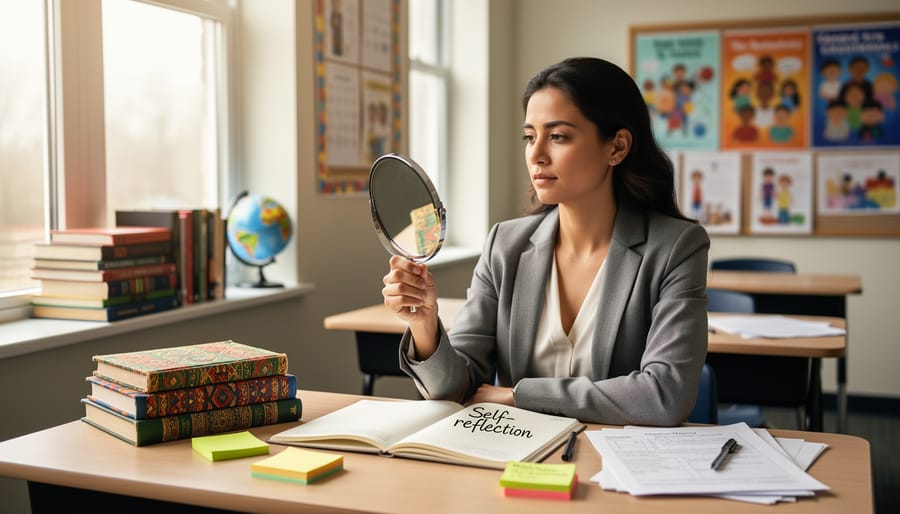
Before you can effectively navigate cultural differences in your classroom, it’s essential to understand your own cultural lens and how it shapes your teaching. These reflection questions will help you identify areas where cultural assumptions might be influencing your practice—not to judge yourself, but to grow your awareness and effectiveness.
Start by examining your classroom norms: What behaviors do you reward or correct? Consider whether students who speak up frequently receive more recognition than those who process quietly, or if you value individual achievement over collaborative success. These preferences often reflect cultural values rather than universal standards of good learning.
Next, reflect on your communication patterns. Do you expect direct eye contact as a sign of respect? How do you interpret silence—as confusion, defiance, or thoughtful consideration? Understanding that empathy in teaching requires recognizing diverse communication styles can transform your interactions with students.
Think about your curriculum and materials: Whose stories are centered in your lessons? Which historical perspectives are presented as objective truth? When students see themselves reflected in what they learn, engagement naturally increases.
Finally, consider your assumptions about family involvement. Do you expect parents to communicate in specific ways or attend events at certain times? Cultural and economic factors significantly influence how families engage with schools.
These questions aren’t meant to overwhelm you but to open doorways to deeper understanding. Honest self-reflection is the foundation for creating truly inclusive learning environments where every student can thrive.
Common Assumptions That Need Questioning
As educators, we naturally bring our own cultural frameworks into the classroom, often without realizing it. These unexamined assumptions can create barriers for students whose cultural backgrounds differ from our own. Let’s explore some common beliefs that deserve closer examination.
Eye contact during conversations is often considered a sign of respect and attentiveness in Western classrooms. However, in many Asian, African, and Indigenous cultures, direct eye contact with authority figures is actually viewed as disrespectful. A student who looks down while you’re speaking may be showing deep respect, not disinterest.
Similarly, we frequently celebrate students who speak up quickly and assertively, associating verbal participation with engagement and understanding. Yet many cultures value thoughtful silence, collective processing, and observing before contributing. Students from these backgrounds aren’t disengaged—they’re participating in ways their culture has taught them.
Family involvement often gets measured by attendance at school events or quick responses to emails. This overlooks families who show support differently, perhaps through ensuring homework completion, emphasizing education’s importance at home, or respecting teachers by not questioning their authority. Different doesn’t mean absent.
Our emphasis on punctuality and rigid scheduling can conflict with cultures that prioritize relationship-building and flexibility. Similarly, rewarding individual achievement over collaborative success can alienate students from collectivist cultures where group harmony matters most.
These aren’t flaws to correct in students—they’re invitations for us to expand our teaching approaches and create truly inclusive learning environments where all students can thrive authentically.
Practical Strategies for Creating Culturally Responsive Classrooms
Diversifying Your Communication Approaches
Effective communication in diverse classrooms requires flexibility and intentionality. By offering multiple ways for students to receive information and demonstrate their understanding, you create more equitable learning opportunities that honor varied cultural communication norms.
Start by balancing your verbal and written communication. Some cultures prioritize oral traditions and verbal exchanges, while others value written documentation and reflection time. Provide instructions both verbally and in writing, giving students the option to process information in their preferred mode. Consider recording important announcements or lessons so students can revisit them as needed.
Recognize that directness varies across cultures. While some students thrive with explicit, straightforward feedback, others may find it uncomfortable or disrespectful. Practice offering feedback through multiple approaches: direct one-on-one conversations, written comments that allow for private processing, or indirect methods like providing model examples. Pay attention to how individual students respond and adjust accordingly.
Visual supports benefit all learners but are particularly valuable in culturally diverse settings where language barriers may exist. Incorporate diagrams, images, graphic organizers, and demonstrations alongside verbal explanations. These tools create additional entry points for understanding that transcend linguistic differences.
Most importantly, diversify how students can show what they know. Move beyond traditional tests and essays to include presentations, projects, discussions, artwork, or multimedia demonstrations. When you offer choice in assessment methods, you acknowledge that competence looks different across cultures and that multiple pathways to demonstrating mastery are equally valid. This approach doesn’t lower standards; it removes unnecessary barriers that may prevent students from showing their true capabilities.
Redesigning Participation Structures
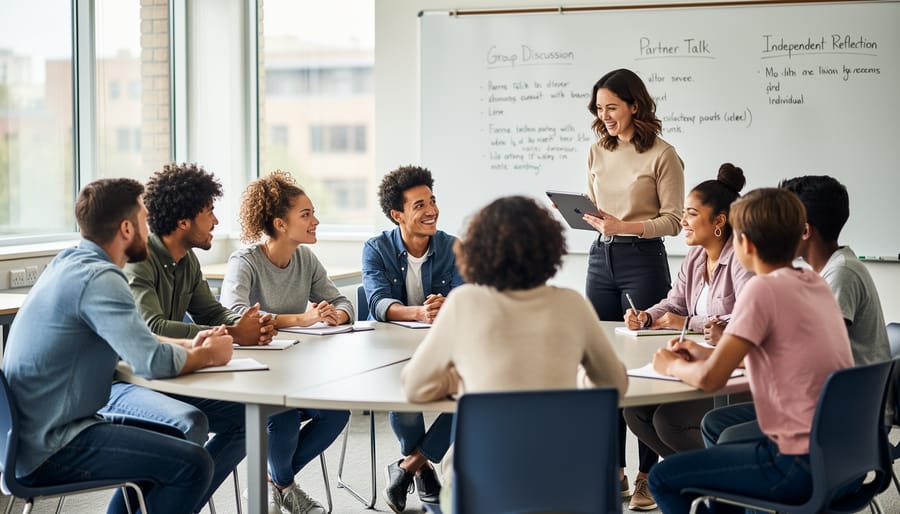
Not every student feels comfortable speaking up in a traditional classroom setting, and cultural backgrounds significantly influence how students engage with learning. When you redesign participation structures to honor diverse communication styles, you create space for all voices to be heard.
Think-pair-share offers a graduated approach that respects students who need processing time before contributing to large groups. Students first think independently, then discuss with a partner, and finally share with the class. This structure particularly supports students from cultures that value reflection and consensus-building over immediate individual responses.
Written responses provide an alternative entry point for participation. Consider using exit tickets, response journals, or digital platforms where students can share ideas without the pressure of public speaking. Many students from collectivist cultures or those still developing English language proficiency express themselves more confidently through writing.
Small group discussions create safer spaces for students who find whole-class settings intimidating. Rotate group compositions to build community while allowing students to develop their voices with different peers. These inclusive classroom strategies honor the reality that meaningful participation looks different across cultures.
Culturally responsive wait time is essential. Research suggests extending wait time to 5-7 seconds after asking questions, rather than the typical 1-2 seconds. This adjustment acknowledges that students from some cultures are taught to carefully consider responses before speaking, and English language learners may need additional processing time. Remember, silence isn’t empty—it’s often where deep thinking happens.
Building Cultural References Into Your Curriculum
Building cultural references into your curriculum doesn’t require a complete overhaul of your existing materials. Instead, start by examining the examples, images, and stories you currently use. When teaching mathematical word problems, vary the names and scenarios to reflect diverse family structures, celebrations, and daily experiences. In literature, expand beyond the traditional canon to include authors from various cultural backgrounds who write authentically about their communities.
Science and history lessons offer natural opportunities to highlight contributions from diverse cultures. When discussing innovations, include inventors and scientists from underrepresented groups. Geography lessons can explore contemporary cultural practices rather than focusing solely on stereotypical elements like food and festivals.
The key to avoiding tokenism lies in integration rather than isolation. Rather than having a single “diversity day,” weave multiple perspectives throughout your year-long curriculum. When selecting classroom materials, ask yourself: Do these resources show cultural groups in varied, contemporary contexts? Are people from different backgrounds portrayed as experts and everyday people, not just in relation to their cultural identity?
Collaborate with colleagues through community forums to share resources and strategies. Invite families to contribute their expertise and stories, creating authentic learning experiences. Remember, building cultural competence is an ongoing journey. Start small by adding one new diverse resource per unit, and gradually expand as you discover what resonates with your students. Your willingness to adapt demonstrates to students that all perspectives matter in the learning process.
Navigating Challenging Situations
When Cultural Practices Seem to Conflict With Classroom Norms
When cultural practices appear to clash with your classroom expectations, approach the situation with curiosity rather than immediate correction. These moments present valuable opportunities for growth and understanding, both for you and your students.
Start by asking yourself whether the behavior truly disrupts learning or simply differs from your own cultural norms. A student who avoids direct eye contact, for example, may be demonstrating respect based on their cultural background, not defiance. Similarly, collaborative work styles that appear as “talking out of turn” might reflect cultural values around collective learning.
Before addressing a potential conflict, do your homework. Research the student’s cultural background or reach out to cultural liaisons in your school community. This preparation helps you approach conversations from an informed, respectful position.
When meeting with students or families, frame discussions around shared goals rather than rule enforcement. Open with phrases like, “I’ve noticed that in our classroom…” followed by, “Can you help me understand…?” This approach invites dialogue rather than defensiveness. Listen actively to families’ perspectives and acknowledge their cultural values as strengths, not obstacles.
Seek middle ground solutions together. Perhaps a student who needs to pray during class time could use a quiet corner, or you might adjust participation expectations to honor different communication styles while still meeting learning objectives.
Document these conversations and accommodations to create consistency and show families you’re committed to honoring agreements. Remember, flexibility isn’t lowering standards—it’s recognizing that there are multiple pathways to achieving educational goals while respecting the rich cultural identities students bring to your classroom.
Addressing Bias Between Students
When students display cultural bias toward their peers, your response matters tremendously. These challenging moments, while uncomfortable, offer powerful teaching opportunities that can shape how young people understand and respect diversity for years to come.
First, intervene immediately to ensure safety. Use calm, clear language: “We don’t speak about people that way in our classroom.” Your swift action demonstrates that bias isn’t acceptable while modeling respectful correction.
Next, address the incident thoughtfully. Depending on the severity and student age, you might facilitate a private conversation, circle discussion, or whole-class dialogue about stereotypes and their impact. Ask open-ended questions that encourage reflection: “What do you know about this culture? Where did you learn that?” These questions help students examine their assumptions without shaming them.
Create space for the affected student to share their feelings if they’re comfortable, but never force disclosure. Some students may need time to process privately or prefer speaking with a counselor.
Follow up by incorporating lessons that celebrate the cultures involved and explore common humanity across differences. Use literature, guest speakers, or collaborative projects that build genuine connections between students from different backgrounds.
Document incidents appropriately and communicate with families when necessary, framing conversations around growth and learning rather than punishment alone. Remember, addressing bias is ongoing work that requires patience, consistency, and your commitment to creating an inclusive environment where every student belongs.
Building Ongoing Cultural Competence
Learning From Your Students and Families
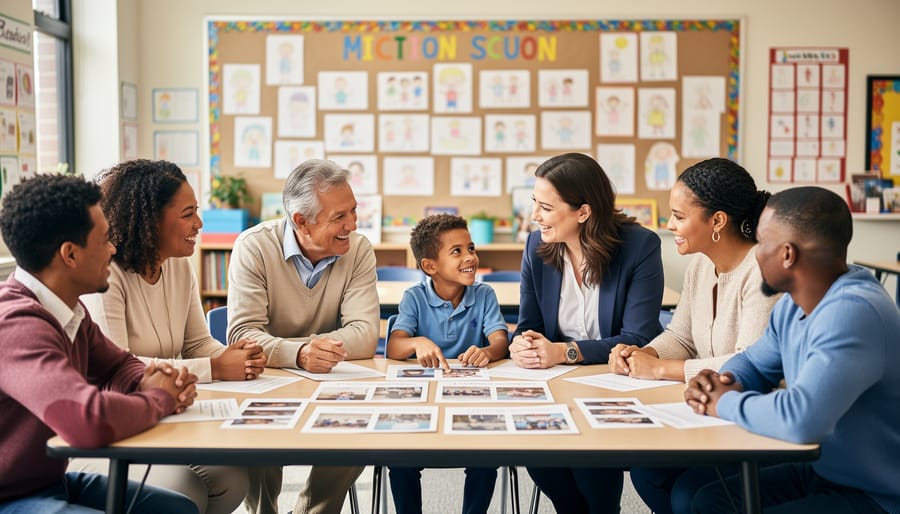
Your students and their families are your greatest resource for understanding cultural perspectives authentically. Rather than relying solely on professional development or secondhand information, position families as partners and students as experts in their own cultural experiences.
Start by creating multiple pathways for family engagement that respect different communication preferences and schedules. Some families may prefer face-to-face conversations, while others feel more comfortable with written communication or phone calls. Offer translation services and materials in home languages, and remember that participation looks different across cultures—silence doesn’t always indicate disengagement.
In the classroom, invite students to share their cultural knowledge through low-pressure activities. This might include teaching peers a word in their home language, sharing a family tradition, or explaining how holidays are celebrated in their household. These moments position students as contributors rather than subjects of curiosity.
Ask open-ended questions like “How does your family approach this?” or “What would this look like in your community?” This signals that you genuinely value diverse perspectives rather than assuming a single correct approach.
Document what you learn and reflect regularly on how these insights shape your teaching practices. Keep a cultural learning journal to track new understandings and adjust your strategies accordingly.
Professional Development and Community Resources
Navigating cultural differences is an ongoing journey that requires continuous learning and reflection. Fortunately, numerous resources can support your growth in this essential area of teaching.
Consider exploring foundational books like “Culturally Responsive Teaching and The Brain” by Zaretta Hammond or “For White Folks Who Teach in the Hood” by Christopher Emdin. These texts offer research-backed insights and practical frameworks for creating more inclusive classrooms.
Professional development opportunities provide valuable structured learning experiences. Look for workshops, webinars, and courses focused on cultural competency, implicit bias, and inclusive teaching practices. Many districts offer these programs, and organizations like Teaching Tolerance provide free resources specifically designed for educators.
Your colleagues are invaluable learning partners. Create collaborative spaces where teachers can share experiences, discuss challenges, and exchange strategies. Regular professional learning communities focused on cultural responsiveness help normalize these important conversations and build collective expertise.
Community forums offer another powerful resource for ongoing support. Connecting with educators facing similar challenges provides fresh perspectives and practical solutions. These platforms allow you to ask questions, share successes, and learn from diverse teaching contexts.
Remember that building cultural competency is not a destination but a continuous process. Each conversation, resource, and reflection deepens your understanding and strengthens your ability to support every student effectively. Start with one resource today and build from there.
Navigating cultural differences in your classroom doesn’t require perfection—it requires intention. The strategies we’ve explored aren’t about eliminating mistakes or achieving some idealized standard. They’re about making small, meaningful adjustments that help every student feel valued and understood. When you pause to consider different communication styles, adjust your materials to reflect diverse perspectives, or simply ask a student about their experience, you’re creating ripples of positive change that extend far beyond a single lesson.
This work is ongoing, and that’s exactly as it should be. Cultural responsiveness isn’t a destination you reach and check off your list. It’s a continuous practice of learning, reflecting, and growing alongside your students and their families. Some days you’ll get it right, and other days you’ll stumble—and both experiences offer valuable lessons. What matters most is your commitment to showing up with openness and a willingness to do better.
You don’t need to overhaul your entire teaching practice tomorrow. Start with one strategy that resonates with you. Maybe it’s incorporating diverse perspectives into your next unit, or reaching out to learn more about a student’s cultural background. Build from there at your own pace.
Remember, you’re not alone in this journey. Teach Find’s community offers ongoing support, resources, and a space to share experiences with fellow educators who are walking the same path. Together, we can create classrooms where cultural differences aren’t just acknowledged—they’re celebrated as strengths that enrich everyone’s learning experience.