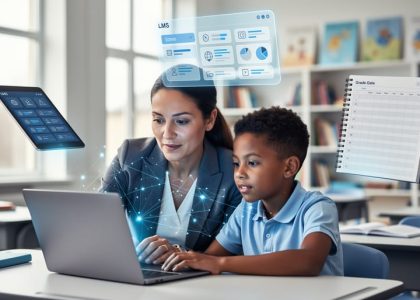
In today’s dynamic educational landscape, Learning Management Systems (LMS) have become the backbone of K-12 digital education, revolutionizing how teachers deliver content and students engage with learning materials. Modern LMS platforms, enhanced by AI-powered learning strategies, transform traditional classrooms into interactive, data-driven learning environments that adapt to individual student needs.
The rapid evolution of educational technology has made LMS platforms indispensable for K-12 schools, offering comprehensive solutions for curriculum delivery, student assessment, and parent communication. These systems not only streamline administrative tasks but also provide powerful tools for personalized learning, real-time feedback, and collaborative education experiences.
As schools navigate the complexities of hybrid and digital learning environments, choosing and implementing the right LMS has become a critical decision that impacts student success, teacher effectiveness, and overall school performance. Modern platforms integrate seamlessly with existing educational tools while providing robust analytics that help educators make data-informed decisions about student progress and instructional strategies.
The future of K-12 education lies in leveraging these sophisticated systems to create engaging, accessible, and personalized learning experiences for every student. Whether managing daily assignments, tracking student progress, or facilitating communication between stakeholders, LMS platforms serve as the central hub for modern educational excellence.
The Evolution of K-12 Learning Management Systems
Traditional LMS vs. AI-Enhanced Platforms
Traditional learning management systems have served as digital hubs for classroom organization, assignment distribution, and grade tracking. However, the emergence of AI-enhanced platforms has revolutionized how educators approach these innovative online teaching tools. While conventional LMS platforms excel at basic administrative tasks, AI-powered systems take learning to the next level by offering personalized learning paths, real-time student progress monitoring, and adaptive assessments.
AI-enhanced platforms stand out with their ability to analyze student performance patterns and automatically adjust content difficulty, provide targeted recommendations, and identify learning gaps. Unlike traditional systems, which typically offer one-size-fits-all solutions, AI-powered platforms can differentiate instruction automatically, saving teachers valuable time while ensuring each student receives appropriate support.
Another key distinction is the interactive feedback capability. Traditional LMS platforms generally provide basic right-or-wrong feedback, whereas AI-enhanced systems can offer detailed explanations, suggest alternative learning approaches, and even predict potential challenges before they arise. This proactive approach helps teachers intervene early and provide more effective support to their students.

Key Benefits for Teachers and Students
AI-enhanced learning management systems offer transformative benefits for both teachers and students in K-12 education. For teachers, these platforms streamline administrative tasks through automated grading, attendance tracking, and progress monitoring, freeing up valuable time for meaningful instruction. The systems provide real-time insights into student performance, enabling educators to identify struggling learners quickly and adjust their teaching strategies accordingly.
Students benefit from personalized learning paths that adapt to their individual pace and learning style. The interactive elements keep them engaged while providing immediate feedback on their work. This instant response system helps build confidence and maintains motivation throughout the learning process.
These platforms also facilitate better communication between teachers, students, and parents through integrated messaging and progress reporting features. The ability to access learning materials anytime, anywhere supports flexible learning environments and accommodates different learning schedules.
Additionally, collaborative features like discussion boards and group projects foster a sense of community in virtual learning spaces. Teachers can easily share resources with colleagues, while students develop essential digital literacy skills that prepare them for future academic and professional success.
Core AI Features Reshaping Classroom Management
Automated Assessment and Grading
Modern learning management systems are revolutionizing the assessment process through AI-powered grading tools that save teachers valuable time while providing consistent, objective evaluations. These automated systems can instantly grade multiple-choice questions, mathematical problems, and even analyze written responses for basic grammar and structure.
Teachers can create custom rubrics and assessment criteria that the system uses to evaluate student work automatically. This allows for immediate feedback, helping students understand their performance right away and enabling them to make timely improvements. For standardized assignments, the system can track common mistakes across classes, giving teachers insights into areas where students might need additional support.
The automation extends beyond simple grading. These systems can generate detailed progress reports, identify learning gaps, and suggest personalized intervention strategies. They can also adapt assessment difficulty based on student performance, ensuring each learner is appropriately challenged.
While automated grading assists with routine tasks, it’s important to note that it works best as a complement to teacher judgment rather than a replacement. Teachers can override automated grades and add personalized comments, maintaining the crucial human element in student assessment while benefiting from technological efficiency.
Personalized Learning Pathways
Modern learning management systems leverage artificial intelligence to create dynamic, individualized learning experiences for K-12 students. Through sophisticated algorithms and data analysis, these systems can adapt to each student’s pace, preferences, and learning style. By implementing personalized learning approaches, educators can ensure that every student receives targeted support and appropriate challenges.
These AI-driven systems continuously monitor student performance, identifying knowledge gaps and adjusting content delivery in real-time. When a student struggles with a concept, the system automatically provides additional resources, simplified explanations, or alternative teaching methods. Conversely, students who grasp concepts quickly can access more challenging material to maintain engagement and foster growth.
The personalization extends beyond academic content to include customized feedback, adaptive assessments, and tailored learning paths. Students can progress through material at their own pace while teachers receive detailed insights into individual and class-wide learning patterns. This data-driven approach enables educators to make informed decisions about instruction and intervention strategies, ultimately creating a more effective and inclusive learning environment for all students.

Real-time Progress Monitoring
Real-time progress monitoring powered by AI analytics has revolutionized how educators track and support student learning in K-12 environments. These intelligent systems continuously collect and analyze data from student interactions, providing teachers with immediate insights into performance, engagement levels, and learning patterns.
Modern LMS platforms use sophisticated algorithms to track various metrics, including assignment completion rates, time spent on tasks, participation in online discussions, and assessment scores. This comprehensive monitoring helps teachers identify struggling students early and celebrate those who are excelling.
The system generates easy-to-understand visual reports and dashboards that highlight trends and patterns in student performance. Teachers can quickly spot knowledge gaps, adjust their teaching strategies, and provide targeted support where needed. For instance, if several students struggle with specific math concepts, the system flags this trend, allowing for timely intervention.
Importantly, these monitoring tools support personalized learning by automatically adjusting content difficulty based on student performance. They also send proactive alerts when students fall behind or show significant changes in engagement levels, enabling educators to maintain a supportive learning environment for every student.
Behavioral Pattern Recognition
Modern learning management systems are becoming increasingly sophisticated in their ability to recognize and respond to student behavior patterns. Through AI-powered analytics, these systems can identify when students are struggling with specific concepts, experiencing engagement issues, or showing signs of potential learning difficulties.
The pattern recognition capabilities work by analyzing various data points, including login frequency, time spent on assignments, submission patterns, and interaction with course materials. This comprehensive analysis helps teachers spot early warning signs and provide timely interventions. For example, if a student consistently struggles with math problems involving fractions, the system can alert teachers and suggest targeted resources.
These intelligent systems also identify positive patterns, such as optimal learning times for individual students and preferred learning styles. Teachers can use these insights to personalize instruction and create more effective learning experiences. The system might notice that a particular student performs better with visual content in the morning hours, allowing educators to adjust their teaching approach accordingly.
By combining behavioral pattern recognition with responsive teaching strategies, educators can create more supportive and effective learning environments that adapt to individual student needs.
Implementation Strategies for Success

Professional Development Requirements
Successful implementation of K-12 learning management systems requires a well-structured professional development program that empowers educators to make the most of these digital tools. Teachers and staff need ongoing training opportunities that build confidence and competence in using the system effectively.
Initial training should focus on fundamental features like creating courses, uploading content, and managing student assignments. This foundation helps educators feel comfortable with basic navigation and daily tasks. As users gain confidence, advanced training can introduce more sophisticated features such as analytics tools, differentiated learning paths, and interactive assessment options.
Professional development should be flexible and accessible, offering multiple learning formats including:
– Live workshops and hands-on sessions
– Self-paced online tutorials
– Quick reference guides and video demonstrations
– Peer mentoring opportunities
– Regular refresher sessions
School administrators should establish a support network of tech-savvy teachers who can serve as system champions and provide peer assistance. This creates a collaborative learning environment where educators can share best practices and troubleshoot challenges together.
Regular feedback sessions help identify areas where additional training may be needed and ensure the professional development program evolves with teachers’ needs. Schools should also consider providing dedicated time for educators to explore and practice with the system, acknowledging that building proficiency requires both structured learning and experiential practice.
Remember that professional development isn’t just about technical skills – it should also address pedagogical strategies for effectively integrating the LMS into teaching and learning. This comprehensive approach ensures educators can leverage the system to enhance student engagement and achievement while maintaining instructional quality.
Best Practices for Integration
Successful integration of a K-12 learning management system requires careful planning and a systematic approach. Start by forming a dedicated implementation team that includes teachers, IT staff, and administrators to ensure diverse perspectives are represented. This team should develop a clear timeline and set realistic goals for the rollout process.
Professional development is crucial for ensuring staff comfort and competency. Schedule regular training sessions that cater to different skill levels, and consider creating a mentorship program where tech-savvy teachers can support their colleagues. As outlined in our practical AI implementation guide, starting with a pilot program can help identify potential challenges before full-scale deployment.
Communication is key throughout the integration process. Keep all stakeholders informed through regular updates, and establish clear channels for feedback and support. Create easily accessible resources such as quick-start guides, video tutorials, and FAQ documents to support independent learning.
Consider implementing the system in phases, starting with core features like assignment submission and gradebook management before introducing more advanced tools. This approach prevents overwhelming users and allows for proper adjustment periods.
Monitor adoption rates and collect user feedback regularly to address concerns promptly. Celebrate small wins and share success stories to maintain momentum and enthusiasm. Remember that successful integration is an ongoing process that requires continuous support and refinement based on user needs and experiences.
Maintain strong partnerships with your LMS provider and utilize their support resources. Many providers offer specialized training and community forums where educators can share best practices and solutions to common challenges.
As we look to the future of K-12 education, AI-powered learning management systems are poised to revolutionize how we teach, learn, and manage educational processes. These systems have already demonstrated their ability to personalize learning experiences, reduce administrative burdens, and provide valuable insights into student performance. The impact extends beyond simple automation, creating more engaging and effective learning environments that adapt to individual student needs.
The integration of AI in K-12 LMS platforms has shown promising results in supporting teachers’ decision-making processes and enabling data-driven instruction. By analyzing learning patterns and student progress in real-time, educators can make informed adjustments to their teaching strategies and provide targeted support where it’s needed most.
Looking ahead, we can expect to see even more sophisticated AI features emerging in K-12 LMS platforms. These may include advanced predictive analytics for early intervention, more nuanced personalization capabilities, and enhanced collaboration tools that foster stronger learning communities. The potential for AI to support inclusive education and address diverse learning needs is particularly exciting for educators committed to ensuring every student succeeds.
While challenges remain in terms of implementation and adoption, the future of AI-powered LMS in K-12 education is bright. As these systems continue to evolve, they will become increasingly essential tools in creating more effective, efficient, and engaging learning environments for all students. The key to success lies in embracing these innovations while maintaining a focus on pedagogical best practices and student-centered learning approaches.