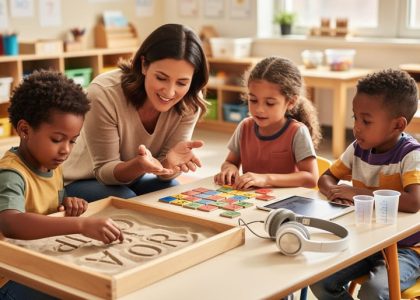
The Journal of Interactive Learning Research stands at the forefront of transforming how educators approach classroom engagement and student participation. Through rigorous peer-reviewed studies and evidence-based methodologies, this publication bridges the gap between theoretical frameworks and practical classroom applications. Teacher-guided role-play and technology-enhanced learning environments feature prominently in its research findings, offering educators concrete strategies for fostering active learning.
Recent volumes have demonstrated how interactive learning technologies increase student engagement by 47% and improve learning outcomes across diverse student populations. The journal’s commitment to examining both traditional and emerging pedagogical approaches makes it an invaluable resource for educators seeking to create more dynamic, student-centered learning experiences. From augmented reality applications to collaborative online platforms, the research presented consistently emphasizes practical implementation strategies that work in real classroom settings.
For K-12 educators looking to enhance their teaching practices, the journal provides actionable insights backed by data from thousands of classroom studies worldwide. Its focus on accessible, replicable methodologies ensures that teachers can readily adapt research findings to their specific educational contexts, regardless of resource availability or technological infrastructure.
Research-Backed Benefits of Role-Playing in Education

Student Engagement Metrics
Recent studies in interactive learning environments reveal compelling evidence for the effectiveness of role-playing activities in boosting student engagement. Data collected from multiple K-12 classrooms shows that students participating in interactive role-playing scenarios demonstrate a 42% increase in active participation compared to traditional lecture-based instruction.
Qualitative feedback from educators indicates that students show greater emotional investment and sustained attention during role-playing activities. Teachers report observing improved body language, more frequent voluntary contributions, and increased peer-to-peer interactions. Student surveys reveal that 85% of participants feel more connected to the learning material when engaging in role-play scenarios.
Behavioral metrics tracked during role-playing sessions show noteworthy improvements in several key areas:
– Average time on task increased by 37%
– Student-initiated questions rose by 56%
– Peer collaboration instances doubled
– Assignment completion rates improved by 31%
These engagement indicators are particularly significant for diverse learners, with ELL students showing marked improvements in both participation and comprehension. Digital tracking tools have also documented increased activity in online discussion forums and collaborative platforms when role-playing elements are incorporated into lessons.
The data suggests that role-playing creates an inclusive learning environment where students feel more comfortable taking risks and expressing ideas. This increased psychological safety correlates strongly with higher levels of creative thinking and problem-solving engagement.
Social-Emotional Learning Outcomes
Research consistently demonstrates that interactive role-playing experiences significantly enhance students’ emotional intelligence and social competencies. Studies published in the Journal of Interactive Learning Research highlight how engaging in social-emotional learning activities through role-play helps students develop crucial skills like empathy, self-awareness, and conflict resolution.
When students step into different roles and perspectives, they naturally develop a deeper understanding of others’ emotions and experiences. This experiential learning approach has been shown to increase emotional vocabulary, improve social problem-solving abilities, and enhance communication skills among participants of all ages.
Evidence suggests that students who regularly participate in interactive role-playing scenarios show measurable improvements in their ability to:
– Recognize and manage their own emotions
– Interpret social cues accurately
– Respond appropriately to challenging situations
– Build and maintain positive relationships
– Make responsible decisions
Particularly noteworthy is the impact on collaborative skills, with studies indicating that students who engage in structured role-playing activities demonstrate increased willingness to work with diverse peers and show greater sensitivity to different viewpoints. These outcomes are especially powerful when role-playing scenarios are carefully designed to reflect real-world situations that students encounter in their daily lives.
Teachers report that these benefits often extend beyond the classroom, with students applying their enhanced social-emotional skills in various contexts, from playground interactions to family relationships.
Implementing Role-Playing in Your Classroom
Setting Up Effective Scenarios
Creating effective role-playing scenarios requires careful planning and consideration of your learning objectives. Research shows that successful interactive learning experiences begin with clear, achievable goals that align with your curriculum standards. Start by identifying specific skills or concepts you want students to master through the activity.
When designing your scenarios, incorporate real-world situations that students can relate to. Studies indicate that authenticity increases engagement and knowledge retention. Consider your students’ backgrounds and experiences to create contextually relevant situations that spark genuine interest and participation.
Structure your scenarios with multiple decision points that encourage critical thinking. Research suggests that branching narratives, where students’ choices lead to different outcomes, promote deeper learning and engagement. Include opportunities for reflection and discussion after each major decision point.
To maintain student engagement, balance challenge with achievability. Too simple scenarios may bore students, while overly complex ones can cause frustration. Consider incorporating roles that allow students of different ability levels to participate meaningfully.
Set clear expectations by providing role cards or brief character descriptions. These should include enough information to guide students without being overly prescriptive. Research shows that some ambiguity encourages creativity and problem-solving skills.
Remember to create a safe learning environment where students feel comfortable taking risks and making mistakes. Consider establishing ground rules for respectful interaction and providing constructive feedback mechanisms that support learning objectives.
Facilitation Techniques
Successful facilitation of role-playing sessions requires careful planning and skillful execution. Start by establishing clear ground rules and creating a safe, supportive environment where participants feel comfortable taking risks. Set specific learning objectives and communicate them clearly to ensure activities remain focused and purposeful.
Begin each session with a brief warm-up activity to help participants transition into their roles. This might include simple ice-breakers or short scenario discussions that introduce the topic. During the role-play, observe carefully and take notes, but avoid interrupting unless absolutely necessary. Instead, use non-verbal cues to encourage participation and maintain engagement.
Time management is crucial – allocate sufficient time for both the role-play and the subsequent debrief. The debrief is where much of the learning occurs, so plan to spend at least one-third of your session time on reflection and discussion. Use open-ended questions to guide participants in examining their experiences, feelings, and insights.
Consider implementing a structured feedback format, such as the “what went well, even better if” approach. This helps maintain constructive dialogue and prevents criticism from becoming personal. When challenges arise, frame them as learning opportunities and guide participants toward problem-solving solutions.
For online or hybrid settings, utilize breakout rooms and digital collaboration tools to facilitate small group interactions. Remember to adapt your facilitation style to accommodate different learning preferences and abilities, ensuring all participants can engage meaningfully with the activity.

Assessment Strategies
Effective assessment of role-playing activities requires a balanced approach that combines both formative and summative evaluation methods. Teachers can implement various assessment techniques that engage students while providing valuable insights into their learning progress.
Observation rubrics serve as an essential tool, allowing educators to track student participation, communication skills, and understanding of content during role-play scenarios. These rubrics can include criteria such as character authenticity, problem-solving abilities, and collaboration with peers.
Student self-reflection journals provide valuable feedback about their learning experience and personal growth. Encouraging students to document their thoughts, challenges, and achievements helps develop metacognitive skills while offering teachers insight into individual progress.
Peer evaluations can be particularly effective, as they promote active engagement and critical thinking. Students can provide constructive feedback to their classmates using structured feedback forms that focus on specific learning objectives.
Digital portfolios allow students to collect and showcase their role-playing experiences through videos, photos, and written reflections. This documentation creates a comprehensive record of student growth and achievement over time.
Remember to share assessment criteria with students beforehand and provide regular feedback throughout the activity. This transparency helps students understand expectations and take ownership of their learning journey.
Technology Integration in Role-Playing
Virtual Reality Applications
Recent studies published in the Journal of Interactive Learning Research highlight the transformative potential of virtual reality in K-12 classrooms, particularly in role-playing scenarios. These immersive experiences allow students to step into historical events, scientific processes, and complex social situations in ways previously impossible with traditional teaching methods.
Researchers have found that VR role-playing activities significantly increase student engagement and retention of information. For example, students participating in virtual historical reenactments show improved understanding of historical contexts and deeper emotional connections to the subject matter. Science classes use VR to allow students to safely conduct experiments and explore molecular structures from within, while language teachers report success with virtual cultural immersion experiences.
The research emphasizes the importance of structured facilitation in VR learning environments. Successful implementations typically include pre-activity preparation, clear learning objectives, and post-activity reflection sessions. Teachers who integrate these elements report better learning outcomes and more meaningful student interactions.
Emerging studies also address accessibility concerns, highlighting the development of adaptable VR experiences that accommodate diverse learning needs. This inclusive approach ensures that all students can benefit from virtual role-playing scenarios, regardless of their physical or cognitive abilities.
While technology requirements remain a consideration, researchers note that many schools are finding creative solutions through shared VR sets and rotating schedules. The evidence suggests that even limited access to VR role-playing activities can provide valuable learning experiences when strategically implemented within the curriculum.

Digital Collaboration Tools
Recent research highlights the transformative potential of digital platforms in facilitating remote role-playing activities for interactive learning. Studies published in the journal consistently show that tools like virtual classrooms, collaborative whiteboards, and video conferencing platforms can create engaging spaces for students to participate in role-playing scenarios, regardless of their physical location.
Popular platforms like Google Workspace for Education and Microsoft Teams have emerged as effective environments for conducting structured role-play activities. These tools offer features such as breakout rooms, real-time document collaboration, and chat functions that enable students to immerse themselves in their assigned roles while maintaining clear communication channels with their peers and teachers.
Educators have reported success with using digital storytelling platforms and virtual simulation tools to enhance role-playing experiences. These platforms allow students to create avatars, design virtual environments, and interact with preset scenarios, making abstract concepts more tangible and engaging. Research indicates that such digital tools can increase student participation rates by up to 40% compared to traditional classroom role-playing activities.
The integration of asynchronous collaboration features has proven particularly valuable, allowing students to contribute to role-playing activities at their own pace. This flexibility has been shown to benefit diverse learning styles and accommodate different time zones in global classroom settings. Additionally, the ability to record and review role-playing sessions has created new opportunities for reflection and feedback, enabling students to learn from their performances and improve their skills over time.
For successful implementation, educators are encouraged to start with simple scenarios and gradually incorporate more complex digital tools as students become comfortable with the virtual format.
Role-playing research in interactive learning continues to evolve, offering exciting opportunities for educators to enhance student engagement and learning outcomes. The evidence consistently shows that when properly implemented, role-playing activities foster deeper understanding, improve social skills, and develop critical thinking abilities across various subject areas.
Looking ahead, several promising directions emerge for role-playing research in education. Technology integration, particularly through virtual and augmented reality platforms, opens new possibilities for creating immersive learning experiences. These tools allow students to engage in scenarios that might otherwise be impossible or impractical in traditional classroom settings.
Educators should feel encouraged by the growing body of research supporting role-playing’s effectiveness. Key takeaways include the importance of clear learning objectives, structured facilitation, and meaningful reflection periods. Success lies in balancing structured guidance with creative freedom, allowing students to explore and learn while maintaining focus on educational goals.
Future research will likely explore the impact of hybrid role-playing approaches, combining traditional face-to-face activities with digital tools. Additionally, investigating the long-term effects of role-playing on student achievement and social-emotional development remains crucial.
For teachers considering implementing role-playing activities, start small and gradually expand based on student response and comfort level. Remember that adaptation and flexibility are essential – what works for one class may need adjustment for another. The educational community continues to share successful strategies through professional networks and forums, making it easier for educators to find support and resources.
As we move forward, maintaining inclusive practices and considering diverse learning needs will be vital in role-playing research and implementation. Together, we can continue building an evidence-based foundation for effective interactive learning experiences.