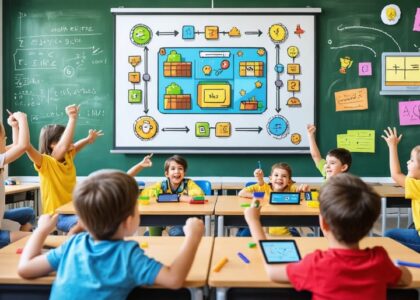
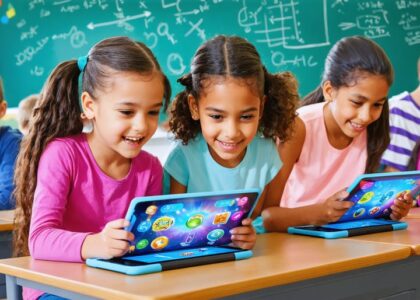
Virtual reality and augmented reality are transforming traditional classrooms into immersive learning environments, offering educators powerful new tools to engage students and deepen understanding across all subject areas. From virtual field trips to ancient civilizations to interactive 3D models of complex molecular structures, these technologies break down the physical limitations of conventional teaching methods, making the impossible possible within classroom walls.
What was once considered science fiction is now an accessible reality for many schools. VR and AR technologies have become more affordable, user-friendly, and educationally focused, enabling teachers to create experiential learning opportunities that appeal to diverse learning styles and abilities. Students can now dissect virtual frogs, walk through the solar system, or practice public speaking in front of a simulated audience – all while developing critical thinking skills and maintaining high levels of engagement.
As we navigate this educational revolution, the key challenge lies not in the technology itself but in its thoughtful implementation. Successful integration requires a balanced approach that combines innovative tools with sound pedagogical principles, ensuring that these immersive technologies serve as powerful enhancers of learning rather than mere digital distractions. For educators ready to embrace this transformation, the potential to revolutionize student learning experiences has never been more promising or more achievable.
Making Sense of Virtual and Augmented Reality in Education
Virtual Reality: Complete Digital Immersion
Virtual Reality (VR) technology transforms the learning experience by creating fully immersive digital environments where students can explore, interact, and learn in three-dimensional space. Using VR headsets and controllers, learners step into virtual worlds that can range from historical reconstructions to scientific simulations, making abstract concepts tangible and experiential.
The educational benefits of VR are particularly compelling. Students can conduct virtual dissections, walk through ancient civilizations, or explore the solar system – experiences that would be impossible or impractical in traditional classroom settings. This immersive learning approach enhances retention and understanding by engaging multiple senses and creating memorable, interactive experiences.
Research shows that VR can increase student engagement and motivation while providing safe spaces for experimentation and repeated practice. For example, chemistry students can safely mix virtual chemicals, while medical students can practice procedures without risk. The technology also supports differentiated learning, allowing students to progress at their own pace and revisit complex concepts as needed.
While VR requires initial investment in equipment, many affordable options are now available for schools, making this powerful educational tool increasingly accessible to diverse learning communities.

Augmented Reality: Blending Digital and Physical Learning
Augmented reality brings a new dimension to learning by overlaying digital content onto the physical world, creating an interactive and engaging classroom experience. Through AR, students can explore 3D models of historical artifacts, visualize complex scientific concepts, or practice mathematical problems using virtual manipulatives – all while maintaining awareness of their real environment.
Using just a tablet or smartphone, teachers can transform traditional lessons into immersive learning experiences. For example, students studying astronomy can point their devices at the sky to identify constellations, while biology classes can examine virtual dissections that overlay anatomical details onto textbook diagrams. These applications make abstract concepts tangible and help visual learners better understand complex topics.
AR’s accessibility is one of its greatest strengths in education. Many free educational AR apps are available, making implementation possible even with limited resources. Teachers can start small by incorporating simple AR activities, such as scavenger hunts with QR codes or interactive wall displays, and gradually expand their use as comfort levels increase. This technology not only enhances student engagement but also promotes collaborative learning as students work together to explore and interact with AR content.
Practical Applications Across K-12 Subjects
Science and Math Visualization
VR and AR technologies offer powerful tools to help students visualize and understand complex scientific and mathematical concepts that are often challenging to demonstrate through traditional methods. When educators transform classroom learning through VR, abstract concepts become tangible experiences.
In chemistry, students can explore molecular structures in 3D, watching atomic bonds form and break in real-time. Biology classes benefit from virtual dissections and detailed explorations of human anatomy, where learners can zoom in to examine cellular structures or step inside a beating heart. Physics concepts come alive as students manipulate forces, observe wave patterns, and experiment with gravity in virtual environments.
Mathematical modeling takes on new meaning when students can walk through geometric shapes, visualize algebraic equations, and manipulate graphs with their hands. AR applications allow learners to overlay geometric shapes onto real-world objects, helping them understand concepts like volume, surface area, and spatial relationships.
These immersive experiences not only enhance understanding but also boost engagement and retention. Students can repeat complex demonstrations as often as needed, adjust variables to see immediate effects, and interact with scientific phenomena in ways previously impossible in traditional classroom settings. The ability to scale molecules to human size or shrink down to explore microscopic worlds creates memorable learning experiences that stick with students long after the lesson ends.

Social Studies and Historical Experiences
Virtual reality and augmented reality are transforming how students experience historical events and geographic locations, making social studies more engaging and memorable. Through VR field trips, students can walk through ancient civilizations, explore historical landmarks, or witness pivotal moments in history firsthand.
Imagine students stepping into the streets of ancient Rome, examining the architecture of the Colosseum, or observing daily life in a medieval village. These immersive experiences help students develop a deeper understanding of historical contexts and cultural perspectives that traditional textbooks simply cannot provide.
Geographic exploration becomes more dynamic with AR applications that overlay information onto real-world maps and locations. Students can visualize topographical features, climate patterns, and population distributions in three dimensions, making complex geographic concepts more accessible and engaging.
Teachers report increased student engagement when using VR for historical reenactments. For example, students can experience significant moments like the signing of the Declaration of Independence or join virtual museum tours of world-renowned institutions. These experiences are particularly valuable for schools with limited field trip budgets or those in remote locations.
AR applications also enable students to interact with historical artifacts by projecting 3D models into their classroom space. This hands-on approach allows for detailed examination of objects that would otherwise be inaccessible, fostering curiosity and critical thinking about historical materials and their significance in human development.
Language Arts and Creative Expression
Virtual reality and augmented reality are revolutionizing how students engage with literature and express their creativity in language arts classrooms. These technologies transform traditional storytelling into engaging learning experiences where students can step into the worlds of their favorite books or create immersive narratives of their own.
Students can explore classic literature by virtually walking through Shakespeare’s Globe Theatre, experiencing the cramped conditions of Anne Frank’s hiding place, or navigating the streets of Charles Dickens’ London. These experiential encounters help students develop deeper emotional connections to the text and better understand historical contexts.
For creative writing projects, AR apps allow students to bring their stories to life by overlaying digital elements onto their physical environment. They can create interactive storyboards, design virtual book covers, or develop multimedia presentations that blend text, audio, and 3D elements. This multi-sensory approach particularly benefits visual learners and students who struggle with traditional writing formats.
Teachers can use VR tools for collaborative storytelling exercises where students work together in virtual spaces to develop narratives, characters, and dialogue. Poetry comes alive when students can create virtual environments that match their verses, while dramatic performances gain new dimensions when practiced and recorded in virtual settings.
Implementation Strategies for Teachers

Getting Started with Limited Resources
Getting started with VR and AR doesn’t have to strain your school’s budget. While the proven benefits of VR in education are clear, there are numerous cost-effective solutions available for educators eager to introduce these technologies to their classrooms.
Start with Google Expeditions, a free platform that transforms smartphones into VR viewers using affordable cardboard headsets. These viewers cost as little as $5-15 each and can be reused across multiple classes. Many schools have successfully implemented class sets through donor programs or parent-teacher associations.
Free AR apps like Quiver and Merge Cube offer engaging educational experiences with minimal investment. Students can use their own devices or shared classroom tablets to bring learning materials to life. The Merge Cube, typically under $20, serves as a physical anchor for numerous free AR applications across various subjects.
Take advantage of web-based VR platforms like Mozilla Hubs and CoSpaces Edu, which offer free basic versions. These platforms allow students to create and explore virtual environments using standard computers or tablets, no specialized equipment needed.
Consider partnering with other teachers or schools to share resources and equipment costs. Many educational technology lending libraries also provide VR/AR equipment for short-term use, allowing you to test different tools before making investments.
Remember to explore educational technology grants and crowdfunding platforms specifically designed for teachers. Organizations like DonorsChoose have helped numerous educators fund VR/AR initiatives, making innovative technology accessible to schools with limited resources.
Managing the Virtual Classroom
Managing a virtual classroom with VR and AR technology requires thoughtful planning and clear protocols. Start by establishing basic rules for device handling and safety, ensuring students understand the importance of proper care and responsible use of the equipment. Create a buddy system where students work in pairs, with one student using the VR/AR device while the other acts as a spotter for safety.
Develop clear signals for starting and stopping VR/AR activities. Consider using a simple countdown or a specific sound cue that students can hear even while wearing headsets. Set time limits for device use – typically 15-20 minutes per session – to prevent eye strain and maintain student engagement.
Organization is key to smooth transitions. Create a charging station and develop a system for device distribution and collection. Label devices clearly and maintain a check-out log to track usage and identify any maintenance needs. Keep sanitizing wipes nearby and establish cleaning protocols between users.
Monitor student engagement by walking around the classroom and using teacher-monitoring tools when available. Many VR/AR platforms offer dashboard features that let you track student progress and participation in real-time. Have backup activities ready in case of technical difficulties.
Remember to provide clear learning objectives before each VR/AR session. Brief students on what they should focus on during the experience and how it connects to your lesson goals. After each session, facilitate group discussions to help students process their experiences and connect them to the curriculum.
Consider creating a student tech team to help with basic troubleshooting and peer support. This not only builds leadership skills but also helps manage the practical aspects of using VR/AR technology in the classroom.
Addressing Common Challenges
Technical Considerations
When implementing VR and AR in your classroom, several technical aspects require attention. First, ensure your school’s Wi-Fi network can support multiple devices simultaneously – most VR/AR applications need stable internet connections. Consider having a backup internet solution, like a mobile hotspot, for essential lessons.
Device compatibility is crucial. Many AR applications work on standard tablets and smartphones, making them a cost-effective starting point. For VR, standalone headsets like the Oculus Quest are becoming popular in schools due to their ease of use and minimal setup requirements. Remember to factor in device storage space for educational apps and content.
Regular maintenance is essential. Establish cleaning protocols for shared devices, especially VR headsets, and keep charging stations organized. It’s helpful to have a troubleshooting guide handy for common issues like app crashes or connectivity problems.
Consider creating a tech support system within your classroom, perhaps designating tech-savvy students as “digital helpers.” This not only addresses minor technical issues quickly but also develops leadership skills among students.
Student Safety and Access
When implementing VR and AR technologies in education, student safety and equitable access must be top priorities. Physical safety considerations include ensuring proper spacing between students using VR headsets, maintaining clean and sanitized equipment, and establishing clear guidelines for movement within virtual spaces. It’s crucial to limit VR sessions to age-appropriate durations to prevent eye strain and motion sickness.
Accessibility concerns should address both physical and economic barriers. Schools must provide alternative learning methods for students who cannot use VR/AR due to medical conditions like epilepsy or motion sensitivity. Additionally, consider adapting experiences for students with different physical abilities or learning needs.
To ensure equitable access, schools can implement device-sharing schedules, explore more affordable AR options that work with existing tablets or smartphones, and seek educational technology grants. Creating a balanced approach where VR/AR supplements rather than replaces traditional learning helps maintain inclusive education practices.
Regular monitoring of student well-being during VR/AR sessions and maintaining open communication with parents about technology use helps create a supportive and safe learning environment for all students.
Virtual reality and augmented reality are transforming education, offering unprecedented opportunities to engage students and enhance learning outcomes. By incorporating these technologies into your classroom, you can create immersive experiences that bring abstract concepts to life and cater to diverse learning styles. Remember that starting small with simple AR applications or basic VR tools can help build confidence before expanding to more complex implementations. The growing availability of affordable devices and free educational content makes this technology increasingly accessible to schools of all sizes. As we continue to prepare students for an increasingly digital future, embracing VR and AR isn’t just an option – it’s an exciting opportunity to revolutionize how we teach and learn. Take the first step by exploring available resources, connecting with other educators who are using these tools, and gradually introducing these technologies into your lesson plans. Your students’ enthusiasm and improved engagement will make the journey worthwhile.