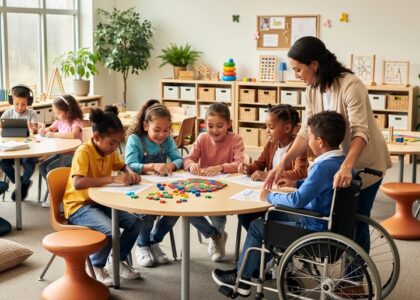
Integrate culturally relevant texts, materials, and examples into your lessons to make content relatable and engaging for all students. Use culturally responsive teaching strategies like connecting curriculum to students’ lived experiences, validating their cultural identities, and promoting critical thinking about diversity issues. Create inclusive learning experiences by representing diverse perspectives, incorporating multicultural art and music, and providing opportunities for students to share their cultural knowledge and traditions. Continuously reflect on your own biases and cultural lenses, and seek feedback from students and families to ensure your curriculum is truly responsive to their needs and backgrounds.
Language Arts: Multicultural Literature Circles

Book Selection Tips
When selecting books for literature circles, prioritize texts that represent a wide range of cultures, identities, and experiences. Look for books written by diverse authors who can authentically portray their characters’ lives. Evaluate each book for stereotypes, biases, or misrepresentations, and opt for stories that challenge dominant narratives and promote empathy. Consider your students’ backgrounds and interests to choose relatable, engaging titles that spark meaningful discussions. Aim for a balance of classic literature and contemporary works, ensuring protagonists from various racial, ethnic, and cultural groups are included. By thoughtfully curating inclusive texts, you create opportunities for all students to see themselves reflected in the curriculum and develop critical perspectives.
Discussion Prompts
Here are some thought-provoking discussion prompts to engage students with culturally responsive themes in the curriculum:
1. How do the characters’ cultural backgrounds shape their perspectives and choices? Can you relate to their experiences?
2. What cultural traditions or values are important to the characters? How do they influence the story?
3. Have you ever faced a challenge similar to the one the protagonist overcomes? How did your cultural identity impact your approach?
4. In what ways does the setting reflect the characters’ culture? How might the story change if it took place in a different cultural context?
5. What can we learn from the characters’ interactions across cultural differences? How can we apply these lessons to our own lives?

Social Studies: Community Heritage Project
Project Components
The community heritage project comprises several key components that celebrate local history and traditions. Students conduct oral history interviews with community elders, recording their stories and experiences to preserve valuable cultural knowledge. They also research and document important local traditions, such as festivals, art forms, and culinary practices, to understand their significance and evolution over time. Additionally, students explore and create presentations about local landmarks, including historical sites, cultural centers, and natural wonders, highlighting their importance to the community’s identity. By engaging with these elements, students develop a deeper appreciation for their heritage and contribute to the preservation of their community’s cultural richness.
Sharing Strategies
After students complete their heritage projects, consider organizing a multicultural fair where they can share their work with the school community. Encourage students to create engaging displays, give presentations, or even prepare traditional dishes to offer a multisensory experience. To extend the learning, have students visit each other’s exhibits and engage in respectful discussions about the diverse cultures represented. This exchange fosters cross-cultural understanding and appreciation among students. Additionally, consider showcasing the projects on a dedicated page on the school website or on social media to celebrate the students’ efforts and share their learning with a wider audience.
Math: Ethnomathematics Exploration
Example Activities
Here are some engaging ethnomathematics activities that celebrate cultural diversity in the classroom:
Analyze patterns in traditional textiles, pottery, or architecture from various cultures. Have students identify geometric shapes, symmetry, and repetition. Discuss how these patterns reflect the culture’s values and aesthetics.
Explore different measurement systems used around the world, such as the Mesopotamian base-60 system or the Mayan vigesimal system. Compare them to the metric and imperial systems commonly used today. Have students convert measurements between systems to appreciate their unique features.
Study the mathematics behind cultural games like Mancala (Africa), Nine Men’s Morris (Europe), or Yut Nori (Korea). Analyze the strategies and probability involved. Play the games in class to make learning interactive and culturally relevant.
By incorporating ethnomathematics, you validate the mathematical contributions of diverse cultures and help all students feel represented in the curriculum. These activities foster critical thinking, cultural awareness, and a deeper understanding of math’s real-world applications.

Science: Traditional Ecological Knowledge
Elders as Guest Teachers
Inviting elders from the community to serve as guest teachers is a powerful way to incorporate traditional ecological knowledge into the curriculum. These respected individuals can share their wisdom and experiences related to topics like sustainability, natural resource management, and the interconnectedness of all living things. By listening to stories and participating in hands-on activities led by elders, students gain a deeper understanding and appreciation for the environment and their role in preserving it for future generations. This approach not only enhances the curriculum but also strengthens the bond between the school and the community, fostering a sense of belonging and cultural pride among students.
Conclusion
In conclusion, the culturally responsive curriculum examples provided in this article illustrate the diverse ways educators can create an inclusive classroom that celebrates and validates all students’ cultural identities. By incorporating multicultural literature, community-based projects, and culturally relevant assessments, teachers can engage students in meaningful learning experiences that reflect their lived realities. However, it is essential to remember that developing a culturally responsive curriculum is an ongoing process that requires continuous reflection, adaptation, and growth. We encourage educators to use these examples as a starting point and to tailor them to the unique needs and contexts of their students and communities. By embracing culturally responsive teaching practices, we can foster more equitable and empowering learning environments that enable all students to thrive academically, socially, and emotionally. Together, we can work towards a more just and inclusive education system that celebrates the rich diversity of our students and prepares them to be active, compassionate citizens in an increasingly interconnected world.