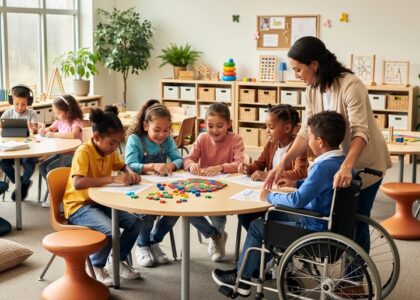
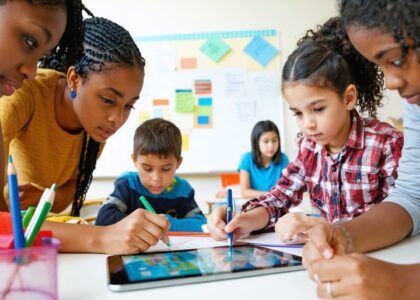
Empower students with special needs by embracing these 6 core principles of special education:
1. Individualize instruction to meet each student’s unique learning needs, strengths, and challenges. Develop personalized education plans (IEPs) that set clear, achievable goals.
2. Create an inclusive learning environment that welcomes diversity and fosters a sense of belonging for all students. Promote social interaction and peer support.
3. Collaborate closely with parents, specialists, and support staff to ensure a consistent, coordinated approach to each child’s education and well-being.
4. Adapt curriculum, teaching methods, and assessments to accommodate different learning styles, abilities, and paces. Use multi-sensory strategies and assistive technology.
5. Emphasize the development of functional life skills alongside academic content. Teach self-advocacy, communication, and independence to prepare students for adulthood.
6. Maintain high expectations for achievement while providing the scaffolding and accommodations necessary for success. Celebrate progress and build self-confidence.
By adhering to these guiding principles, educators can unlock the potential in every student and help them thrive academically, socially, and emotionally.
Principle 1: Individualized Education

Developing Individualized Education Plans (IEPs)
Individualized Education Plans (IEPs) are the cornerstone of effective special education. A well-crafted IEP should be tailored to each student’s unique needs, strengths, and goals. Key components include present levels of performance, measurable annual goals, accommodations and modifications, and progress monitoring. Collaboration among the IEP team, including teachers, specialists, parents, and the student, is essential. Best practices involve using data-driven decision making, setting high expectations, and regularly reviewing and revising the plan. By developing comprehensive, personalized IEPs, educators can ensure that students with disabilities receive the support they need to thrive academically, socially, and emotionally.
Differentiated Instruction Strategies
Adapting teaching methods is crucial for supporting diverse learners in special education. Differentiated instruction involves tailoring content, process, and assessment to meet individual student needs. By providing multiple means of representation, such as visual aids, audio resources, and hands-on activities, teachers can engage students with various learning styles. Offering choices in how students demonstrate their knowledge, like written reports, oral presentations, or creative projects, allows them to showcase their strengths. Flexible grouping strategies, including small groups, peer tutoring, and one-on-one support, provide targeted instruction and foster collaboration. Technology can also enhance differentiated instruction strategies by offering personalized learning paths and accommodations. By embracing these approaches, educators create an inclusive environment where all students can thrive.
Principle 2: Least Restrictive Environment
The Least Restrictive Environment (LRE) principle ensures that students with disabilities are educated alongside their non-disabled peers to the maximum extent appropriate. This integration fosters social development, peer modeling, and a sense of belonging. Educators should consider each student’s unique needs and abilities when determining the most suitable learning environment. While some students may thrive in a general education classroom with minimal support, others may require more intensive interventions in a specialized setting. The key is to strike a balance between providing necessary support and maximizing inclusion. Collaboration among general and special education teachers, as well as related service providers, is essential for successful implementation of LRE. By utilizing differentiated instruction, adaptive technologies, and individualized accommodations, educators can create an inclusive classroom that meets the diverse needs of all learners. Regular progress monitoring and data-driven decision making help ensure that students are placed in the most appropriate setting and receive the support they need to succeed academically and socially. Ultimately, the LRE principle empowers students with disabilities to reach their full potential while fostering a culture of acceptance and understanding within the school community.

Principle 3: Inclusion and Collaboration
Co-Teaching Models
Co-teaching partnerships between special education and general education teachers are essential for ensuring that students with special needs receive high-quality, inclusive instruction. Effective co-teaching involves both teachers working together to plan lessons, deliver instruction, and assess student learning. By combining their expertise, co-teachers can differentiate instruction, provide individualized support, and create a more inclusive classroom environment. Common co-teaching models include parallel teaching, station teaching, alternative teaching, and team teaching. Regular communication, shared responsibility, and mutual respect are key to successful co-teaching partnerships that benefit all students.
Peer Support Programs
Peer support programs foster a positive and inclusive learning environment by encouraging students to learn from and support one another. These programs pair students with and without disabilities, promoting empathy, understanding, and friendship. Through structured activities and informal interactions, students develop social skills, communication abilities, and problem-solving strategies. Peer mentors serve as role models, offering guidance and encouragement to their partners. By participating in these programs, students gain a deeper appreciation for diversity and learn to value the unique strengths and contributions of each individual. Educators play a crucial role in facilitating these interactions, providing training and supervision to ensure meaningful and beneficial experiences for all students involved. Understanding the difference between empathy and sympathy can further support these interactions.
Principle 4: Evidence-Based Practices
Effective special education relies on instructional practices that have been rigorously tested and validated through research. Evidence-based practices (EBPs) are teaching methods, interventions, and strategies that have consistently demonstrated positive outcomes for students with disabilities across multiple high-quality studies. By utilizing EBPs, educators can feel confident that they are providing their students with the most effective and efficient instruction possible.
To identify EBPs, researchers conduct systematic reviews of the available literature, applying strict criteria to evaluate the quality and quantity of evidence supporting each practice. Once identified, EBPs are often compiled into user-friendly resources, such as the What Works Clearinghouse or the National Professional Development Center on Autism Spectrum Disorder’s EBP matrix, to help educators easily access and implement them in their classrooms.
Examples of EBPs in special education include explicit instruction, peer-mediated interventions, and functional behavior assessments. By staying up-to-date with the latest research and incorporating EBPs into their teaching, special educators can ensure they are providing their students with the highest quality instruction and support, ultimately leading to improved academic, social, and behavioral outcomes for students with disabilities.
Principle 5: Ongoing Assessment and Evaluation
Ongoing assessment and evaluation are crucial components of effective special education. By regularly monitoring student progress, educators can make data-driven decisions to inform instruction and support individual learning needs. This involves using a variety of assessment tools, such as formative assessments, observations, and student work samples, to gather comprehensive data on each student’s strengths, challenges, and growth over time. Collaborating with students, families, and other professionals to set measurable goals and track progress ensures that instruction remains targeted and responsive. Educators should also use assessment data to reflect on their own teaching practices and make adjustments as needed to maximize student outcomes. By embracing a continuous cycle of assessment, evaluation, and adaptation, special educators can create dynamic learning environments that empower all students to reach their full potential.
Principle 6: Family and Community Involvement
Parental and community involvement is a vital component of successful special education programs. By actively engaging parents and fostering strong partnerships, educators can create a supportive network that empowers students to reach their full potential. Regular communication between teachers and families ensures that everyone is working towards the same goals and provides opportunities for collaboration in problem-solving and decision-making. Educators should also tap into community resources, such as local organizations, support groups, and mentorship programs, to provide additional support and enrichment opportunities for students with special needs. By building a strong sense of community and shared responsibility, educators can create an inclusive environment that celebrates diversity and promotes the success of all learners. Ultimately, the involvement of families and the broader community is essential in ensuring that students with special needs receive the comprehensive support they need to thrive both academically and personally.

Conclusion
The six principles of special education—individuality, goal-oriented learning, inclusion, collaboration, meaningful assessment, and high expectations—form the foundation for effective teaching practices that support diverse learners. By embracing these principles, educators can create inclusive environments where every student has the opportunity to thrive academically, socially, and emotionally. When teachers prioritize individualized instruction, set clear goals, foster a sense of belonging, work collaboratively with families and professionals, use assessments to guide instruction, and maintain high expectations for all students, they have the power to transform lives and help every child reach their full potential. As we move forward in special education, let us continue to champion these principles and work together to ensure that every student receives the support they need to succeed.