manuel

Multicultural Classroom Strategies

The Cultural Blind Spots That Could Be Holding Your Students Back

Observe your classroom interactions for the next week and note when students’ responses surprise or confuse you—these moments often reveal where your cultural lens differs from theirs. Document specific instances: a student who avoids eye contact during praise, a family that doesn’t respond to multiple emails, or a child who shares materials differently than expected. These aren’t deficiencies; they’re invitations to understand different cultural frameworks.
Identify three classroom practices you’ve always assumed were “standard” and research their cultural origins. Your communication …

Alternative & Non-Traditional Education Models

What Educational Democracy Really Means in Your Classroom (And Why It Matters Now)

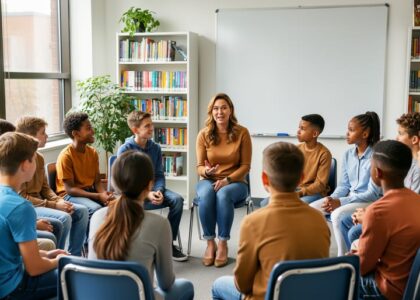
Picture a classroom where students help establish the rules they follow, where they have genuine input into what and how they learn, and where their voices carry weight in decisions that affect their educational experience. This isn’t a utopian fantasy—it’s educational democracy in action, and it’s transforming schools across the globe.
Educational democracy represents a fundamental shift in how we structure learning environments. Rather than maintaining traditional top-down hierarchies where adults hold all decision-making power, democratic education distributes authority, invites student participation in …

Assessment & Data-Driven Instruction

Why Your Assessment Data Might Be Wrong (And How to Fix It)

Examine your classroom assessments through three reliability lenses: consistency across time (would students score similarly if tested next week?), consistency across items (do multiple questions measuring the same skill yield comparable results?), and consistency across raters (would another teacher grade the same work identically?). Document patterns by tracking which questions produce wildly different results from one administration to the next, as these variations signal measurement problems that undermine your …

Educational Neuroscience Insights

The Movement System Your Students Need for Learning Success

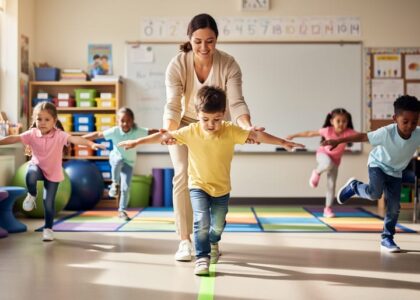
Every time a student rocks in their chair, spins during recess, or tilts their head while listening, their vestibular system is at work. This often-overlooked sensory processing system controls movement, balance, and spatial orientation—and it plays a surprisingly critical role in classroom learning. Located in the inner ear, the vestibular system detects changes in head position and motion, sending constant signals to the brain about where the body is in space. When this system functions smoothly, students can sit upright at their desks, navigate hallways without bumping into peers, and maintain focus during instruction. When it …