
Every day in your classroom, students carry invisible weights—anxiety about tests, stress from social pressures, grief from loss, or confusion about emotions they can’t name. Mental health literacy gives young people the language and tools to understand these experiences, recognize when they or their peers need support, and take meaningful steps toward wellness. Just as we teach students to read words on a page, we must teach them to read the signals of their emotional landscape.
The statistics demand our attention: one in five children experiences a mental health challenge, yet fewer than half receive help. This gap exists partly because students lack the foundational knowledge to identify what they’re experiencing or how to seek support. When we integrate mental health literacy into our classrooms, we don’t just educate—we create lifelines. Students learn that mental health exists on a spectrum, that challenges are common and treatable, and that asking for help demonstrates strength rather than weakness.
Teaching mental health literacy transforms classroom culture. Students develop empathy for peers facing invisible struggles. They learn to distinguish between everyday stress and symptoms requiring professional support. They discover coping strategies that build resilience. Most importantly, they internalize that mental wellness deserves the same attention and care as physical health.
This article provides you with age-appropriate frameworks, curriculum integration strategies, and practical tools to build mental health literacy across grade levels. You’ll discover how to open conversations that matter, create psychologically safe learning environments, and connect students with resources that support their journey toward emotional wellness. Your classroom can become a place where mental health is understood, valued, and supported every single day.
What Mental Health Literacy Really Means for Your Classroom

The Four Pillars Every Student Needs
Building mental health literacy in your classroom starts with understanding its core components. Think of these four pillars as the foundation that supports every student’s wellbeing journey.
The first pillar, knowledge and understanding, involves helping students recognize what mental health actually means. This goes beyond memorizing definitions to genuinely understanding that mental health exists on a spectrum and affects everyone differently. When students can identify emotions, understand stress responses, and recognize warning signs in themselves and peers, they’re better equipped to navigate challenges.
Stigma reduction forms the second pillar. Many students hesitate to discuss mental health concerns because of misconceptions or fear of judgment. By creating open conversations in your classroom and normalizing mental health as part of overall wellness, you help dismantle these barriers. This connects naturally with teaching social emotional skills, which provide students with practical tools for emotional regulation.
The third pillar, help-seeking efficacy, empowers students to know when, where, and how to access support. This means teaching them about available resources, from trusted adults in school to community mental health services, and giving them confidence to reach out when needed.
Finally, self-care strategies provide students with actionable techniques they can use daily. These include mindfulness practices, healthy coping mechanisms, sleep hygiene, and stress management tools. When students have their own toolkit of strategies, they develop resilience and agency over their mental wellbeing.
Together, these four pillars create a comprehensive approach that transforms mental health from an abstract concept into practical, accessible knowledge.
Age-Appropriate Expectations Across K-12
Understanding what students can realistically grasp at different ages helps you set appropriate goals and avoid overwhelming them. Mental health literacy should grow alongside cognitive and emotional development.
In elementary school (K-5), focus on building foundational emotional vocabulary and recognition. Young students can learn to identify basic feelings like happy, sad, angry, and worried. They benefit from concrete examples, storytelling, and activities that normalize talking about emotions. Simple concepts like “everyone has hard days” and “asking for help is brave” lay essential groundwork without introducing complex clinical terminology.
Middle school students (6-8) are ready for deeper exploration. They can understand the difference between everyday stress and more serious concerns, recognize warning signs in themselves and peers, and learn basic coping strategies. This age group benefits from discussions about how mental health affects daily life, relationships, and school performance. They’re developing abstract thinking, making it appropriate to introduce concepts like anxiety disorders or depression in age-appropriate language.
High school students (9-12) can engage with nuanced content, including specific mental health conditions, treatment options, and systemic factors affecting wellbeing. They’re capable of critical thinking about stigma, accessing resources independently, and supporting peers thoughtfully. Discussions can include real-world applications like recognizing burnout, managing academic pressure, and understanding when professional help is necessary.
Meeting students where they are developmentally ensures mental health literacy becomes a natural, integrated part of their education rather than an intimidating topic.

The Warning Signs Most Teachers Miss
When ‘Acting Out’ Is Actually a Cry for Help
That student who constantly disrupts class, the one who seems defiant, or the child who suddenly withdraws from group activities—these behaviors often mask deeper struggles. When we approach behavioral challenges through a mental health literacy lens, we begin to recognize that acting out isn’t always about rebellion or attention-seeking. Often, it’s a student’s way of communicating distress they don’t yet have words for.
Anxiety might appear as restlessness or refusal to participate. Depression can manifest as irritability or academic decline rather than visible sadness. Trauma may show up as hypervigilance, aggression, or emotional numbing. By developing empathy and understanding for these underlying causes, you create space for genuine support rather than punitive responses.
This doesn’t mean excusing inappropriate behavior or abandoning classroom expectations. Instead, it means asking “What’s happening for this student?” before jumping to consequences. Consider keeping simple observation notes: When does the behavior occur? What precedes it? Are there patterns related to specific subjects, times, or social situations?
Small adjustments can make significant differences. Offering a quiet break space, checking in privately, or providing alternative ways to demonstrate learning shows students you see them as whole people, not just behaviors to manage. When students feel understood, they’re more likely to develop trust and eventually open up about their struggles, creating pathways to appropriate support and intervention.
Building Mental Health Literacy Into Your Existing Curriculum
Morning Check-Ins That Actually Work
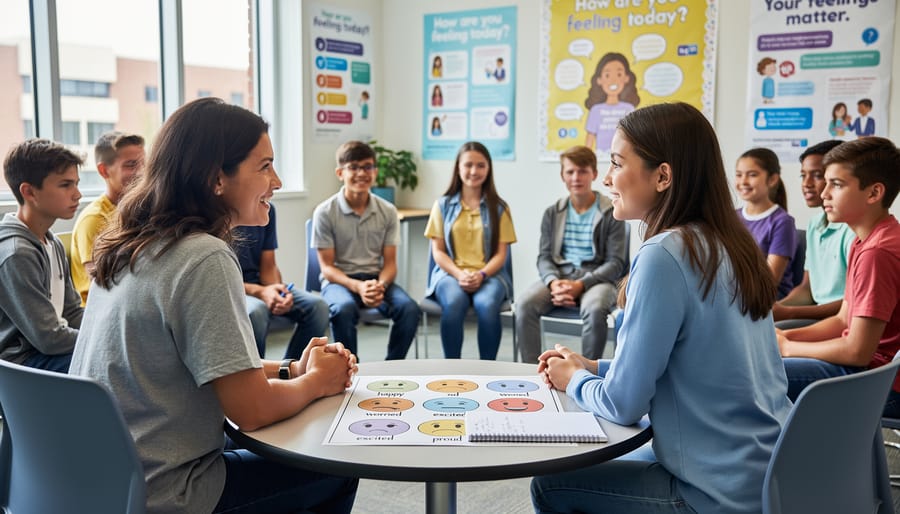
Starting your day with intentional check-ins creates a safe space for students to practice naming their emotions and builds mental health literacy naturally. These brief, consistent conversations don’t require special training—just genuine curiosity and five minutes of your morning routine.
Try using a feelings chart with varied emotion words beyond “good” or “bad.” Ask students to point to or name how they’re feeling, expanding vocabulary from “angry” to “frustrated,” “overwhelmed,” or “disappointed.” Visual supports help younger learners, while older students might prefer written journal prompts or anonymous digital check-ins.
Make it routine by incorporating check-ins before academic work begins. Some teachers use a simple thumbs system (up, middle, down), while others integrate mindfulness activities like brief breathing exercises. The key is consistency—when students expect this daily practice, they learn that discussing feelings is normal, not alarming.
Remember, you’re not diagnosing or solving every problem. You’re normalizing emotional awareness and showing students that mental health deserves the same attention as physical health. When check-ins become classroom culture, students develop self-awareness skills that serve them far beyond your classroom walls.
Literature, History, and Science Connections
You don’t need to create separate mental health lessons when you can naturally integrate these concepts into subjects you’re already teaching. In literature classes, character analysis offers perfect opportunities to explore emotional experiences and coping strategies. When students examine Scout’s anxiety in “To Kill a Mockingbird” or discuss Charlie’s depression in “The Perks of Being a Wallflower,” they’re building emotional vocabulary and empathy.
History lessons can highlight how societies have understood mental health across time periods, from ancient healing practices to modern psychology’s development. Discussing the treatment of shell shock in World War I or analyzing how stigma has evolved helps students recognize mental health as a legitimate societal concern.
Science classes provide natural entry points through neuroscience units exploring how the brain processes stress, sleep’s impact on mood, or the connection between physical and mental wellness. Biology lessons on hormones and the nervous system can include discussions about anxiety responses and emotional regulation.
This integrated approach reinforces that mental health isn’t separate from academic learning—it’s woven throughout human experience. Students encounter these concepts repeatedly across subjects, strengthening their understanding while you maintain your existing curriculum goals. The key is recognizing moments where mental health naturally connects to your content and pausing briefly to make those connections explicit for students.
Using Interactive Tools to Engage Different Learners
Interactive digital tools transform mental health education from abstract concepts into engaging, personalized learning experiences. These resources meet students where they are, accommodating visual, auditory, and kinesthetic learners through varied formats. Self-paced modules allow students to explore topics like stress management or emotion regulation at their comfort level, while interactive quizzes and scenarios help them apply knowledge to real-world situations. Discussion forums create safe spaces for students to share experiences and build community connections, fostering peer support and reducing isolation. Gamified elements, such as progress trackers and digital badges, motivate continued engagement while normalizing mental health conversations. Animation-based lessons and video content particularly resonate with younger learners, making complex topics approachable. By incorporating these diverse tools into your curriculum, you create multiple entry points for understanding mental health, ensuring every student can access this critical information in ways that resonate with their individual learning preferences and comfort levels.
Creating a Stigma-Free Classroom Culture
The Language Shift That Changes Everything
The words we choose when discussing mental health profoundly impact how students perceive and respond to these challenges. Simple shifts in language can transform stigma into understanding and create a classroom environment where seeking support feels natural rather than shameful.
Start by replacing deficit-focused language with strength-based alternatives. Instead of saying a student is struggling or suffering, try they’re working through challenges or developing coping skills. Rather than describing someone as broken or damaged, acknowledge they’re experiencing difficulties or going through a tough time. These modifications frame mental health as part of the human experience, not a personal failing.
Normalize mental health by using parallel language to physical health. Just as we say someone has the flu, we can say someone has anxiety without dramatic emphasis. Encourage phrases like mental health check-in rather than intervention, and wellness support instead of treatment. This everyday language removes the clinical distance that can feel intimidating.
Connect mental health discussions to broader emotional intelligence strategies already familiar in your classroom. Terms like self-awareness, emotional regulation, and relationship skills bridge the gap between social-emotional learning and mental health literacy seamlessly.
Model this language consistently in classroom conversations, written communications with families, and student interactions. When students hear you speaking openly and positively about mental health, they learn it’s safe to do the same.
Empowering Students to Seek Help
Mapping Your School’s Mental Health Resources
Creating a comprehensive mental health resource map is essential for empowering students to seek help when needed. Start by identifying all available support within your school community: counselors, social workers, nurses, trusted teachers, and peer support programs. Make this information accessible through multiple formats—classroom posters, digital handouts, and student planners—so students can reference it privately.
Organize resources by situation type: everyday stress management, academic pressure, friendship concerns, family issues, or crisis situations. Include contact information for both school-based support and external services like crisis hotlines, text lines, and community mental health centers. The National Suicide Prevention Lifeline (988) and Crisis Text Line (text HOME to 741741) should be prominently featured.
Consider developing a simple decision tree or flowchart that helps students determine who to approach based on their needs. This visual tool reduces anxiety about seeking help and normalizes the process of reaching out. Connect this resource mapping with building student resilience by emphasizing that asking for support demonstrates strength, not weakness.
Update your resource list quarterly and gather student feedback about which formats they find most helpful. Remember that accessibility means ensuring information is available in multiple languages and formats that accommodate different learning needs.
Partnering With Families Without Overstepping
Building strong partnerships with families enriches your mental health literacy initiatives while creating a consistent support system for students. The key is approaching these relationships with cultural sensitivity and clear boundaries that respect each family’s unique context.
Start by introducing mental health literacy concepts through accessible communication channels. A brief newsletter paragraph or email can explain what students are learning and why it matters. Consider this simple template: “This month, we’re exploring emotions and healthy coping strategies. Students will learn to identify feelings and practice simple techniques like deep breathing. You can support this at home by asking your child to share what they’ve learned.”
Recognize that families come from diverse backgrounds with varying perspectives on mental health. Some cultures may view emotional discussions differently or have specific beliefs about seeking help. Rather than assuming one approach fits all, offer multiple ways for families to engage. This might include optional parent workshops, translated materials, or informal coffee chats where caregivers can ask questions in a comfortable setting.
Establish clear boundaries about your role as an educator. You’re teaching mental health literacy, not providing therapy or diagnosing conditions. When communicating with families, emphasize that classroom activities focus on building awareness and general wellness skills for all students. If you notice concerning signs in a student, follow your school’s established protocols and involve appropriate support staff.
Create a resource list that families can reference independently. Include community mental health services, crisis hotlines, and culturally responsive organizations. This empowers parents to take action when needed without placing unrealistic expectations on your availability.
Remember, partnership means collaboration, not control. Some families may choose minimal involvement, and that’s okay. Your consistent, respectful outreach demonstrates that you value their role while maintaining professional boundaries that protect everyone involved.

Your Professional Development Roadmap
You don’t need to be a licensed therapist to teach mental health literacy effectively. Your role is to provide foundational knowledge and create a supportive environment, not to diagnose or treat mental health conditions. This distinction is important and liberating.
Start your professional development journey with accessible, evidence-based training programs. Many organizations offer free or low-cost mental health literacy courses specifically designed for educators. Look for programs certified by mental health organizations that focus on classroom application rather than clinical practice. These typically cover recognizing warning signs, appropriate language use, and when to refer students to qualified professionals.
Community forums provide invaluable opportunities to learn from fellow educators facing similar challenges. Join online discussion groups or local educator networks where teachers share successful strategies, troubleshoot difficulties, and normalize the learning process. These connections remind you that building mental health literacy is a collective effort, not an individual burden.
Consider forming a peer learning group within your school or district. Meet regularly to discuss resources, practice difficult conversations, and review your mental health literacy initiatives. Collaborative learning reduces isolation and builds confidence through shared experience.
Remember that professional development in this area is ongoing. Mental health research and best practices evolve, and your understanding will deepen with time and practice. Start with small, manageable steps rather than attempting to master everything at once. Attend workshops, read current research, and most importantly, remain curious and compassionate toward both your students and yourself throughout this journey.
Investing in mental health literacy is investing in the whole student. When you equip young people with the knowledge and skills to understand their mental health, you’re not just supporting their emotional well-being—you’re creating conditions for academic success, stronger relationships, and lifelong resilience. The strategies and approaches outlined here don’t require a complete curriculum overhaul or specialized training to begin making a difference.
Start small. Choose one conversation starter, integrate one reflective activity into your existing lessons, or dedicate five minutes to a mindfulness practice. These incremental changes accumulate into meaningful impact over time. Remember that you don’t need to be a mental health expert to create a supportive classroom environment where students feel safe discussing their experiences and asking for help.
The teaching community is your greatest resource. Connect with colleagues who are already incorporating mental health literacy into their practice, share what works, and learn from the collective wisdom of educators facing similar challenges. Explore available toolkits, professional development opportunities, and student-centered resources designed specifically for classroom application.
Your willingness to prioritize mental health literacy sends a powerful message to students: their well-being matters. Take that first step today, knowing that every conversation, every lesson, and every moment of understanding you create contributes to a healthier, more compassionate learning environment for all.