manuel

Technology & Digital Integration

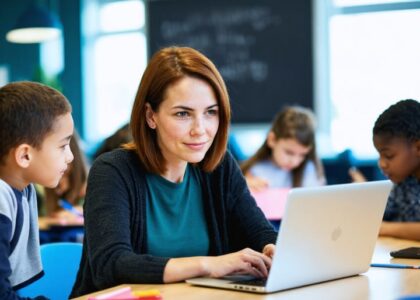
How AI is Quietly Transforming Your Classroom Management (And Making Your Job Easier)

**Picture this:** A student who struggles with reading finally gains confidence through an AI tutor that adapts to their pace. A teacher who spent hours grading essays now redirects that energy toward one-on-one mentoring. A classroom where language barriers dissolve as AI translates instructions in real-time.
Artificial intelligence is transforming K-12 classrooms from abstract possibility into daily reality. You’re not imagining a distant future—these tools are already helping educators like you manage the complex demands of modern teaching while creating more personalized learning experiences for every student.
The…


Early Childhood & Pre-K Education

When Your Young Students Can’t Calm Down: Emotional Regulation Techniques That Actually Work

**Teach young learners to “name it to tame it”** by helping them identify and label their emotions using simple feeling charts, emotion cards, or mirrors where they can observe their facial expressions. When children can verbally express “I feel frustrated” or “I’m worried,” they gain immediate power over overwhelming sensations that might otherwise lead to meltdowns.
**Create a classroom calm-down corner stocked with sensory tools** like stress balls, breathing buddies (stuffed animals that rise and fall with belly breaths), glitter jars for visual focus, and noise-canceling headphones. …

Assessment & Data-Driven Instruction Critical Thinking & Cognitive Development Interactive & Game-Based Learning

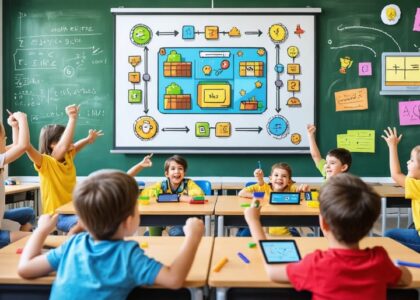
Safe Learning Through Play: Transform Math Lessons Without Risk

Transform your classroom into an engaging learning environment through strategic gamification in education. While platforms like poker games demonstrate gaming’s motivational power, educators can harness these mechanics responsibly for academic success.
Create achievement-based progression systems that reward mastery of mathematical concepts with digital badges, unlockable content, and special classroom privileges. Design collaborative quests …

Virtual & Adaptive Learning

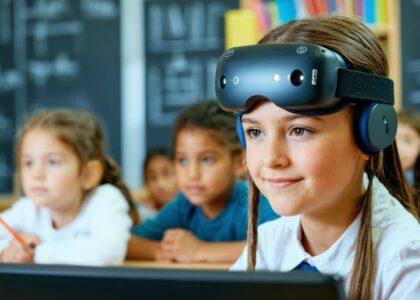
Neurofeedback in Schools: Real Evidence for Better Learning

Neurofeedback stands at the intersection of neuroscience and educational innovation, offering promising solutions for students’ cognitive development and learning challenges. As educators increasingly explore brain-based interventions, the question of evidence-based effectiveness becomes crucial for informed decision-making in our schools. While decades of research support neurofeedback’s potential in treating attention difficulties and enhancing cognitive performance, the educational community seeks clarity on its scientific validity and practical classroom applications.
Recent meta-analyses and controlled studies have …