manuel

Inclusive Learning Environments

Your Classroom Layout Is Leaving Students Behind (Here’s How to Fix It)

Rearrange your classroom furniture to create clear pathways at least 36 inches wide, ensuring students who use wheelchairs, walkers, or other mobility devices can navigate independently. Position desks in flexible configurations that allow you to quickly shift between whole-group instruction, small-group collaboration, and individual work zones without creating physical barriers.
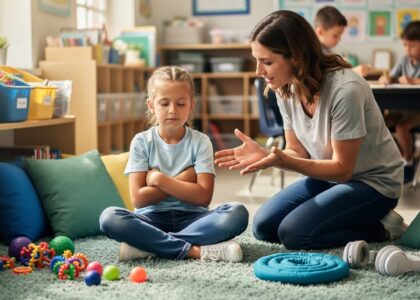
Designate a quiet corner with soft lighting, noise-canceling headphones, and calming visual elements where students experiencing sensory overload can self-regulate. This space shouldn’t feel like punishment but rather a supportive tool that any …

Early Childhood & Pre-K Education

This 7-Minute Activity Calms Even Your Most Emotional Learners

Implement the STOP technique by having students pause mid-activity, take three deep breaths, observe their physical sensations without judgment, and then proceed with a calmer mindset—this foundational sequence takes just two minutes and creates immediate distance between triggers and reactions.
Transform emotional overwhelm into concrete action by teaching students to name their feeling using an emotion wheel or chart, rate its intensity on a 1-10 scale, and identify where they feel it in their body. This metacognitive practice reduces anxiety by 40% according to emotion regulation research, and the specificity helps students …

AI in Education

AI Is Transforming How Teachers Grow (And You’re Already Behind)

Recognize that your professional development time is too valuable to waste on one-size-fits-all workshops that don’t address your actual classroom challenges. Artificial intelligence now offers targeted learning pathways that adapt to your teaching context, grade level, and specific needs—whether you’re struggling with differentiated instruction, classroom management, or integrating new curriculum standards.
Leverage AI-powered platforms to receive personalized coaching recommendations based on your unique teaching patterns and student outcomes. These systems analyze where you need support and deliver micro-learning …

Multicultural Classroom Strategies

Why Your Conflict Resolution Strategies Fail in Diverse Classrooms (And How to Fix It)

Observe how your students respond to disagreements before applying any conflict resolution framework. A student who appears “avoidant” may actually be demonstrating cultural values of patience and collective harmony, while another’s “competitive” approach might reflect cultural norms that encourage direct advocacy. Document these patterns across different situations to distinguish between individual temperament and cultural communication styles.
Reframe the Thomas-Kilmann conflict resolution styles as a menu of culturally responsive options rather than a hierarchy where collaboration always wins. In …