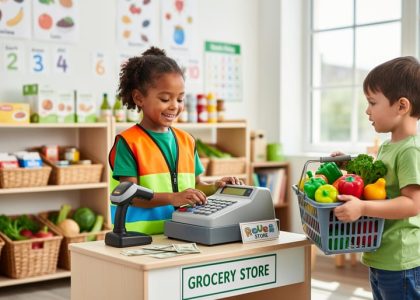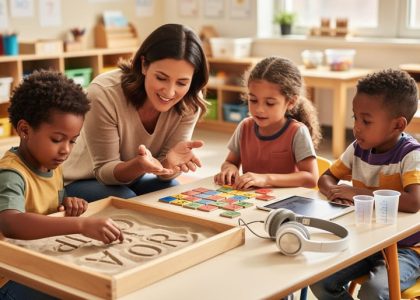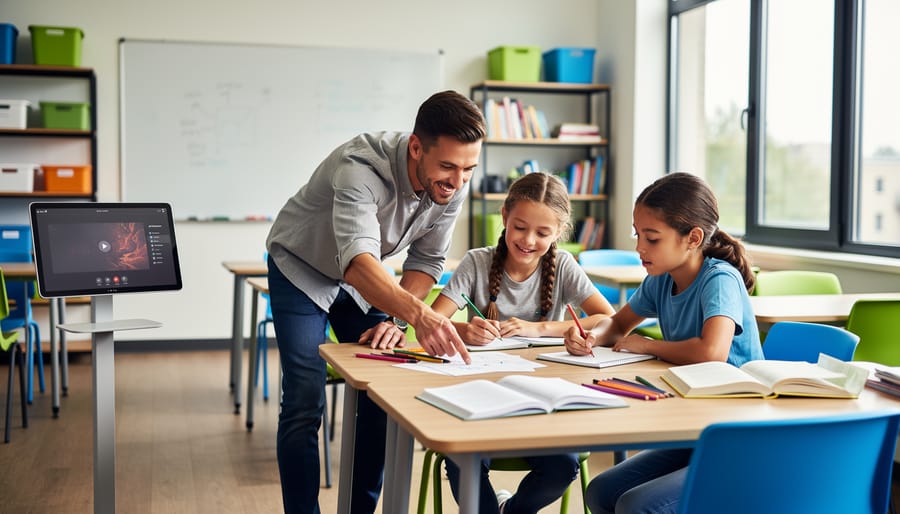
You’ve probably heard about the flipped classroom model, but understanding what it actually looks like in a real school day makes all the difference. In a flipped classroom, students engage with instructional content at home through videos, readings, or interactive modules, then use class time for active learning, collaboration, and personalized support from their teacher. This approach transforms your classroom from a lecture hall into a dynamic workspace where you can finally give students the individual attention they need.
The beauty of flipping lies in its flexibility. A high school chemistry teacher might assign a 10-minute lab safety video for homework, then spend the next day’s class running actual experiments with students. An elementary reading teacher could send home phonics practice on tablets, freeing up class time for small-group guided reading sessions. The common thread? Students arrive ready to do something with the knowledge, not just receive it.
If you’re considering flipping your own classroom, you’re likely wondering whether it works for your subject area, your grade level, and your students’ access to technology. You might also be concerned about the time investment required to create videos or find quality materials. These are valid questions, and seeing specific examples helps answer them far better than any theoretical explanation.
The 12 examples ahead span elementary through high school and cover core subjects alongside electives. Each one breaks down what students do at home, what happens during class time, and what makes it work. You’ll also find practical implementation guidance and answers to common concerns that surface when teachers first explore flipping their instruction.
What Makes a Flipped Classroom Example Effective
Not every classroom flip succeeds. The difference between a transformative example and a time-wasting gimmick often comes down to intentional design. The 12 examples in this article weren’t chosen at random, they represent proven models that meet specific criteria, ensuring they work across diverse teaching contexts and genuinely improve student outcomes.
Each example selected demonstrates clear strengths across five essential dimensions:
- Grade-level diversity: Models span elementary through high school, showing the flipped approach adapts to different developmental stages
- Subject variety: Examples cover core disciplines, math, science, language arts, social studies, and world languages, proving the method isn’t limited to one content area
- Ease of implementation: Teachers can start with existing resources and basic tools rather than requiring extensive technical expertise or budget
- Evidence of student engagement: Each example includes active learning components where students apply, create, or debate rather than passively receive information
- Alignment with interactive technologies: The pre-class and in-class portions work together, using digital tools purposefully rather than for novelty
- Support for collaborative learning: Most examples free up class time for peer interaction, group problem-solving, and teacher-facilitated discussions
These criteria filter out flashy but impractical ideas. A flipped lesson that requires students to have high-speed internet and expensive software fails the accessibility test. One that replaces lectures at home with lectures in class misses the engagement requirement entirely. The examples ahead clear all these hurdles, giving you adaptable starting points regardless of your subject, grade level, or available resources. You’ll notice patterns, short pre-class content, active class time, built-in accountability, that you can apply even beyond these specific scenarios.
1. Video Lessons with Interactive Quizzes (Elementary Math)
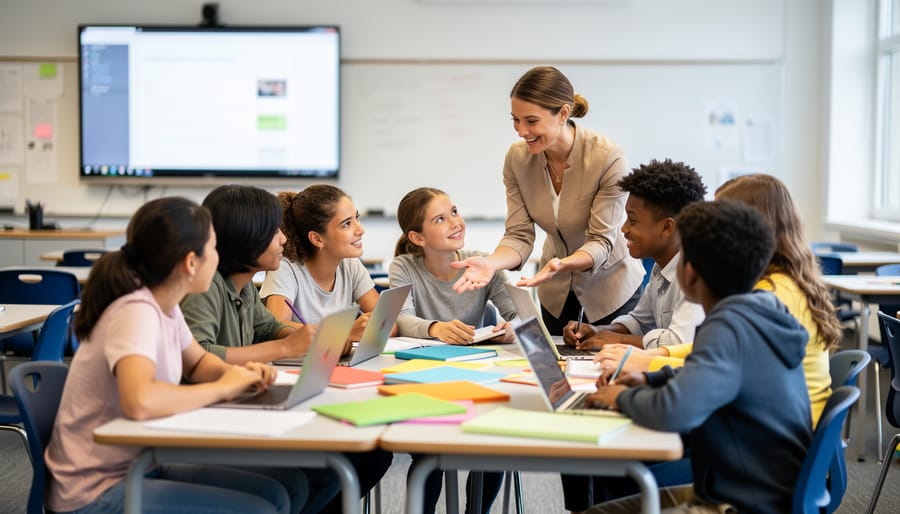
In this model, elementary students watch brief math videos before class, typically 5-8 minutes covering one concept like addition with regrouping or basic fractions. The videos include embedded questions that pause playback and require students to answer before continuing, ensuring they actively engage rather than passively watch. Teachers can create these using screen recording tools or platforms like Edpuzzle, which adds interactive elements to existing videos.
When students arrive in class, they’ve already encountered the foundational concept. This frees up precious class time for what elementary learners need most: hands-on exploration. Teachers set up problem-solving stations where small groups rotate through activities, manipulatives for building fraction models, card games reinforcing place value, or collaborative story problems.
The teacher circulates among stations, immediately identifying which students grasped the video content and which need reteaching. Instead of delivering the same lesson to 25 students simultaneously, the teacher provides targeted support exactly where confusion exists.
The quiz data from the videos helps teachers plan their station activities. If 60% of students struggled with a specific quiz question about denominators, one station focuses intensively on that concept while advanced learners tackle extension problems at another station. This approach transforms the teacher from lecturer to facilitator, meeting students at their actual understanding rather than their assumed grade level.
2. Student-Created Tutorial Videos (Middle School Science)
In this model, middle school science students flip the typical passive learning script twice over. At home, they watch teacher-curated videos covering foundational concepts, photosynthesis, the water cycle, or Newton’s laws. Then comes the twist: students become the teachers.
During class time, working in pairs or small groups, students script, record, and produce their own tutorial videos explaining the same concept to their classmates. They might demonstrate cellular respiration using household items, act out tectonic plate movements, or use whiteboard animations to show energy transfer. The requirement to teach forces deeper processing. Students can’t fake understanding when they have to break down complex ideas into clear, step-by-step explanations.
Teachers circulate during production, catching misconceptions in real time as students rehearse their explanations. The peer teaching element resonates with this age group, many middle schoolers care more about looking credible to classmates than to adults. Finished videos become a class library of student-generated resources, giving learners multiple entry points to tricky topics. Some teachers even have students create videos in response to common mistakes they noticed on recent assessments, turning errors into teaching moments. The process builds communication skills, scientific vocabulary, and genuine conceptual mastery simultaneously.
3. Interactive Simulations and Lab Work (High School Chemistry)
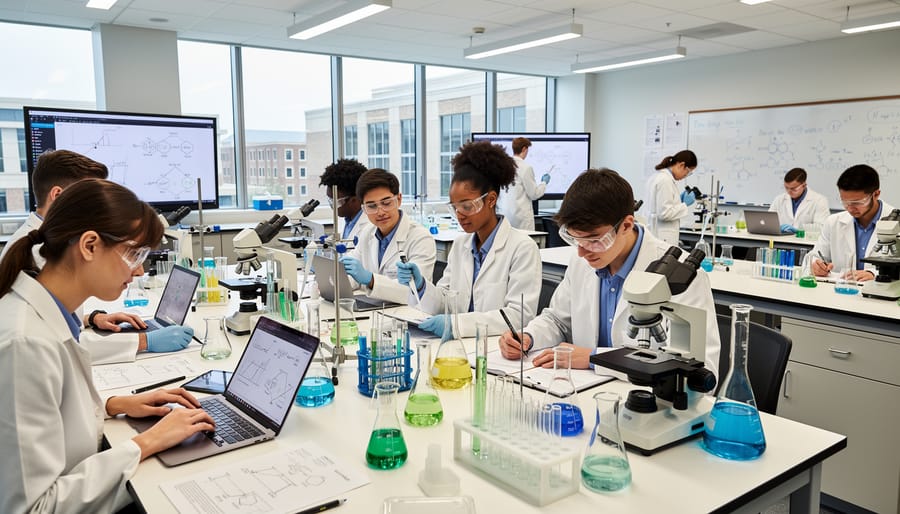
Students explore virtual lab simulations at home, platforms like PhET Interactive Simulations or ChemCollective offer free, no-risk environments where they can manipulate variables, observe reaction outcomes, and repeat experiments as many times as needed. Before stepping into the physical lab, they’ve already built mental models of what happens when you mix acids and bases or adjust temperature in an equilibrium system.
This prior exposure transforms classroom lab time. Instead of following cookbook procedures mechanically, students arrive with hypotheses to test. They design experiments to confirm or challenge what they observed virtually, discuss unexpected results with lab partners, and troubleshoot when real-world conditions don’t match the simulation perfectly. The teacher circulates to probe thinking rather than simply demonstrating technique.
Data analysis becomes genuinely collaborative. Groups compare findings, investigate discrepancies, and connect experimental outcomes to theoretical concepts they explored at home. Students who struggled with a virtual titration can get hands-on support immediately, while advanced learners tackle extension questions that push beyond the standard curriculum.
The model maximizes expensive lab resources and limited class periods while giving every student equal practice time with core concepts, regardless of how quickly they work through procedures.
4. Reading with Annotation Tools (English Language Arts)
Middle school and high school English teachers have transformed close reading by shifting annotation from classwork to homework. Students receive the week’s text, a short story chapter, poem, or article, and use digital tools like Hypothesis or Google Docs to highlight passages, pose questions in the margins, and respond to teacher-generated prompts before class begins.
This pre-class engagement means students arrive having already wrestled with the text independently. They’ve identified confusing metaphors, marked compelling arguments, and noted personal reactions. The teacher can review all annotations beforehand to gauge comprehension and spot patterns, perhaps eight students highlighted the same ambiguous paragraph, signaling a perfect discussion starting point.
Class time becomes rich and interactive. Instead of round-robin reading or teacher-led analysis, students participate in Socratic seminars where they reference their annotations to support interpretations. Literature circles allow small groups to explore different aspects of the text, with each student’s annotations serving as discussion currency. The teacher circulates, probes thinking with open-ended questions, and guides students toward deeper textual analysis. Students arrive prepared, and the quality of literary discussion increases dramatically because everyone has already engaged with the material individually.
5. Historical Documentary Analysis (Social Studies)
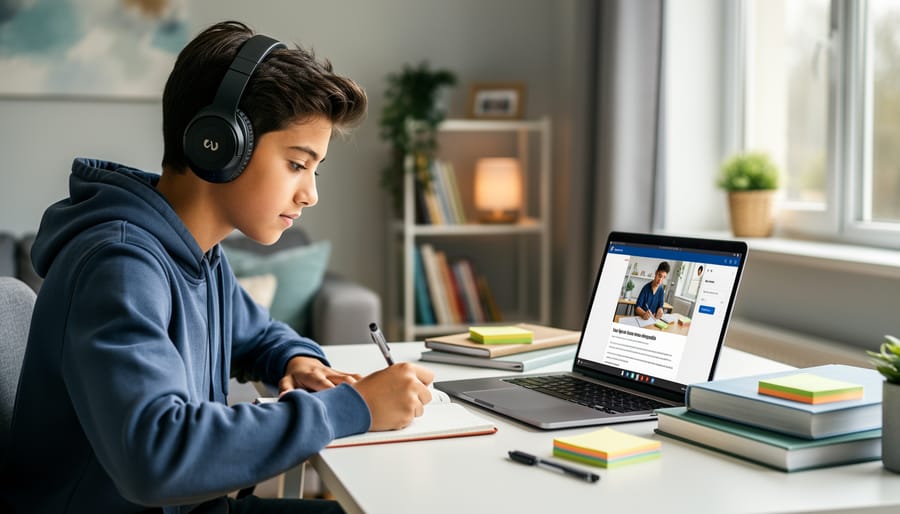
Students watch 15- to 20-minute documentary segments at home, accompanied by a structured viewing guide that prompts them to identify key historical figures, note turning points, and jot down questions. Teachers curate clips from platforms like PBS LearningMedia or the Library of Congress, selecting footage that introduces events, perspectives, or controversies without resolving them completely.
The guided questions steer attention without spoon-feeding answers. For a Civil Rights Movement unit, students might watch footage of the Selma marches and respond to prompts like “What tactics did protesters use?” and “How did officials react?” This primes them to arrive in class ready to argue, not passively receive a lecture.
Classroom time transforms into active analysis. Students participate in fishbowl debates where they defend different stakeholders’ positions, run mock trials reenacting historical decisions, or build collaborative timelines connecting cause and effect. A teacher studying the New Deal might split the class into groups representing farmers, factory workers, and business owners, each arguing how policies affected their constituency.
This approach works across grade levels. Middle schoolers can handle 10-minute clips with simpler guides, while high schoolers analyze feature-length documentaries over several nights and engage in multi-day simulations that mirror historical complexity.
6. Podcast-Based Learning (High School History)
Students listen to historical podcasts or teacher-recorded audio lessons during their commute or at home, then arrive ready for dynamic discussions that would otherwise consume precious class time with passive listening.
This approach works brilliantly for high school history because it transforms downtime into learning time. A student on the bus can absorb a 15-minute episode on the Cuban Missile Crisis. Another might listen while doing household chores. The audio format removes barriers that video creates around screen time and internet access, since podcasts can be downloaded and played anywhere.
Teachers can curate existing podcasts like BBC’s “In Our Time” or NPR’s historical segments, or record their own narrative lessons using free tools like Audacity or Anchor. The key is keeping episodes focused on a single event, figure, or theme rather than trying to cover everything.
Class time becomes the arena for critical thinking. Students participate in fishbowl discussions where they debate historical decisions, create collaborative timelines that map cause and effect, or connect historical patterns to current events they’ve researched. One teacher has students host mock podcast episodes in class where they interview historical figures, demonstrating their grasp of perspective and context.
The format also supports diverse learning needs. Students who struggle with reading comprehension often thrive with audio content, while others benefit from the ability to pause, rewind, and replay complex explanations at their own pace.
7. Math Practice with Immediate Feedback Apps (Middle School Algebra)
Students complete adaptive algebra practice at home using platforms like Khan Academy, IXL, or DeltaMath, apps that adjust difficulty based on performance and show correct solutions immediately after each problem. This instant feedback loop helps students catch misconceptions before they solidify, something traditional homework can’t provide when answers arrive the next day.
The real transformation happens in class. Teachers access dashboards showing exactly which skills each student mastered and where confusion persists. Instead of reviewing material most students already understand, teachers form flexible groups: students struggling with linear equations work directly with the teacher, those ready for challenges tackle multi-step word problems or extension activities, and students at grade level practice collaborative problem-solving.
One seventh-grade teacher describes checking her dashboard each morning, then planning three different lesson paths for that day’s class. “I’m not guessing anymore. I know Jordan needs help with negative coefficients while Maya is ready for systems of equations.”
The approach works because it separates mechanical practice from conceptual development. Students grind through procedural work at their own pace at home, freeing class time for the mathematical thinking and personalized support that actually requires a teacher’s expertise. Accountability comes from tracking completion rates and spot-checking student work during small-group sessions.
8. Coding Tutorials and In-Class Collaboration (Elementary/Middle School Computer Science)
Students tackle coding fundamentals at home through platforms like, Scratch, or Khan Academy, working at their own pace through tutorials that teach loops, conditionals, or functions. This self-paced approach lets faster learners advance while struggling students can rewatch and retry without classroom pressure.
Class time transforms into a collaborative workshop where students apply those concepts to real projects. Third-graders might build interactive stories in Scratch, working in pairs to debug each other’s code and add new features. Middle schoolers tackle more complex challenges: creating educational games about fractions, building chatbots that answer science questions, or programming micro:bit devices to solve classroom problems.
The classroom becomes a mini-hackathon environment. Teachers circulate as coaches rather than lecturers, asking questions like “What happens when you change this variable?” or “How could you make this more efficient?” Students share screens, troubleshoot together, and present their projects to classmates. This structure mirrors how professional developers actually work, emphasizing collaboration over isolated screen time.
The model particularly shines for mixed-ability classes. While everyone learns the same core concepts at home, classroom projects can scale in complexity. Advanced students add challenging features while others perfect the basics, yet all contribute meaningfully to team efforts. This approach naturally incorporates problem-based learning as students code solutions to authentic challenges rather than completing disconnected exercises.
9. Grammar Micro-Lessons with Creative Writing Workshops (Language Arts)
Students watch 5-10 minute videos at home covering focused grammar concepts, comma splices, active versus passive voice, sentence variety, or specific writing techniques like crafting strong thesis statements or building tension in narrative openings. Because instruction happens at home, the entire class period transforms into a writing studio where students draft, revise, and polish their work while the teacher circulates for individual conferences.
This model solves the perennial time crunch language arts teachers face: you can’t teach grammar, model revision, and provide meaningful feedback all in one period. With the basics handled at home, you spend class time addressing each student’s unique struggles, whether that’s organizing an argument, developing a character’s voice, or untangling a convoluted sentence. Peer review sessions become more productive because students arrive with foundational knowledge already in place, allowing partners to focus on higher-order concerns like coherence and style rather than explaining comma rules.
Teachers often pair short exit tickets or quick grammar checks at the start of class to gauge who absorbed the at-home content, then use interactive assessment tools to track revision progress and growth over time. The workshop format encourages risk-taking because students receive immediate coaching when they attempt a new technique, and frequent teacher contact builds stronger writing relationships than batch-grading essays in isolation ever could.
10. Virtual Field Trips with Project-Based Learning (Elementary Science/Social Studies)
Virtual field trips give elementary students the chance to explore worlds they can’t physically visit. At home, kids travel through the Smithsonian’s Natural History Museum, wander the streets of ancient Rome via Google Earth, or dive into coral reefs through 360-degree ocean videos. Teachers provide a simple viewing guide: “Find three animals in the rainforest exhibit” or “Notice how the houses in this village are built differently from ours.”
When students return to class, they’ve already experienced the wonder. Now they channel that excitement into creation. Third-graders who explored Egyptian pyramids build cardboard models and write museum placards. Second-graders who toured a working farm create life-cycle posters for different crops. Fifth-graders who visited international landmarks design travel brochures comparing geographic features.
The beauty here is differentiation. One student draws, another builds a diorama, a third records a video tour guide. Teachers circulate, ask probing questions, and use observations as part of smarter K-12 assessment rather than relying solely on tests. Students present their projects to classmates, teaching each other what they discovered. The virtual trip sparks curiosity; the in-class project deepens understanding and lets every learning style shine.
11. Vocabulary Building with Gamification (World Languages)
In this world language example, students tackle vocabulary acquisition, often the most repetitive part of language learning, through gamified apps at home. Platforms like Duolingo, Quizlet, or Memrise use spaced repetition algorithms, points, streaks, and levels to keep learners engaged with new words and phrases outside class. Students spend 10-15 minutes daily building their vocabulary base, earning badges as they progress through themed units like food vocabulary, travel phrases, or verb conjugations.
This home-based vocabulary work transforms classroom time into immersive practice. Teachers design conversational activities, role-plays at a restaurant or train station, speed-dating style partner rotations for question-and-answer drills, and scenario-based challenges where students must use their new vocabulary in context. One Spanish teacher has students play “survival challenges” where they navigate imaginary situations, ordering food, asking for directions, describing symptoms at a doctor’s office, using only the vocabulary they’ve mastered at home.
The gamification element addresses a persistent challenge in language teaching: students arrive at different proficiency levels. Apps adapt to individual pace, so advanced learners tackle more complex vocabulary while beginners solidify basics, yet everyone enters class ready for verbal practice. This approach makes technology integration feel natural rather than forced, leveraging digital tools for drill work while preserving face-to-face time for authentic communication.
12. Pre-Lecture Reading with Case Study Analysis (High School Social Sciences)
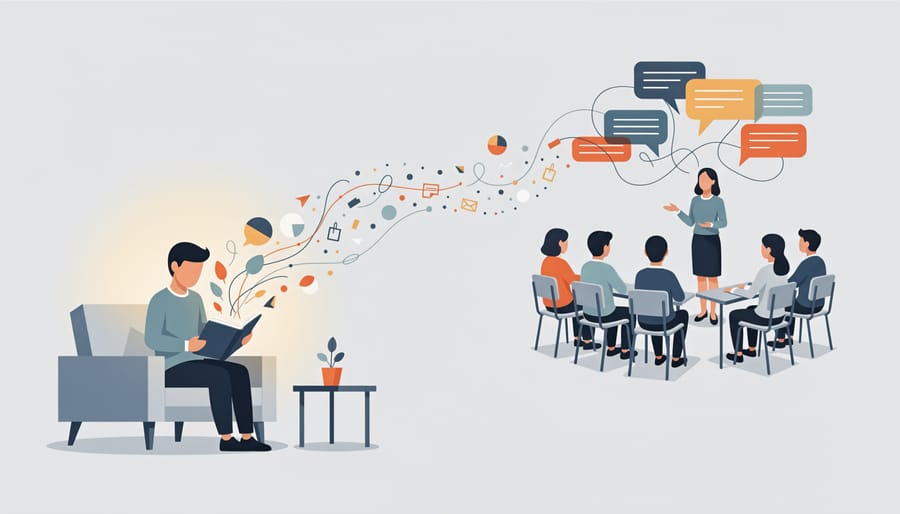
High school social sciences demand critical thinking that’s hard to build through passive lecture. This example flips the content delivery to free up classroom time for the kind of rigorous analysis colleges expect.
Students read textbook chapters, scholarly articles, or teacher-curated summaries at home to grasp foundational concepts, think constitutional principles, economic theory, or sociological frameworks. The reading isn’t busy work: teachers provide guided notes or comprehension checks to ensure students arrive with the necessary background.
Class time transforms into an analytical workshop. In economics, students apply supply-and-demand theory to real market disruptions. Government classes dissect Supreme Court cases, debating majority and dissenting opinions. Sociology students examine case studies of social movements, identifying patterns and exceptions to theories they read about the night before.
Mock trials take this further. After reading about legal precedents at home, students argue cases, cross-examine witnesses, and defend positions using evidence. The teacher facilitates rather than lectures, pushing students to justify claims and connect abstract concepts to messy real-world scenarios.
This approach mirrors university seminars and professional settings where you’re expected to arrive prepared and contribute substance, not just absorb information. Students develop argumentation skills, learn to support claims with evidence, and practice the kind of thinking that transfers across disciplines.
Making It Work: Practical Implementation Tips
Flipped classroom implementation doesn’t have to be overwhelming. The most successful transitions happen when educators address practical barriers upfront and take measured steps rather than overhauling their entire approach overnight.
Ensuring Equitable Access
Not every student has reliable internet or devices at home. Offer alternatives like DVDs, printed transcripts of video content, or designated in-school viewing times before or after class. Some teachers maintain a classroom device lending library or partner with school media centers to extend access hours. The goal is participation, not perfection, meet students where they are.
Keep Videos Brief and Purposeful
Attention spans matter. Aim for 5-8 minutes for elementary students, 10-12 minutes for middle schoolers, and no more than 15 minutes for high school. Each video should cover one specific concept with a clear learning objective. Students should know exactly what they’re supposed to understand by the end.
Build Accountability Without Adding Stress
Simple entrance tickets work wonders: a quick three-question check at the door or via a digital form confirms who engaged with the material. These aren’t graded quizzes but diagnostic tools showing you where to focus class time. Students quickly learn that watching pays off when in-class activities make sense.
Practical Steps to Get Started
- Flip just one unit or topic first, evaluate what works, then expand gradually
- Create offline alternatives like printed guides or audio-only files for students without internet
- Set clear expectations: explain why you’re flipping and what success looks like
- Use brief entry tasks to gauge understanding before launching collaborative activities
- Join online communities or forums to troubleshoot challenges with experienced educators
- Connect with colleagues at your school who’ve tried flipped techniques and observe their classes
The transition takes patience. Give yourself and your students grace as you figure out what rhythm works for your classroom.
Questions Educators Ask About Flipped Classrooms
What if students don’t complete the at-home work?
Build in a brief “catch-up” station at the start of class where students can quickly watch key portions of the video or review main points. Pair them with classmates who did complete it, or have a summary handout ready. The goal is to get everyone able to participate, not to punish non-completion, you’ll find accountability improves when students see how much more fun and productive class time becomes.
How do I assess whether students understood the pre-class material?
Start each class with a quick formative check: a three-question entrance ticket, a quick poll using classroom response tools, or a two-minute partner discussion where you circulate and listen. These low-stakes assessments tell you instantly who needs more support and whether you can move forward with the planned activity.
Can flipped classrooms work with younger students?
Yes, but keep videos extremely short (3-5 minutes maximum for elementary grades) and incorporate parent involvement for accountability. Focus on activities kids already do at home, watching videos, playing educational games, then use class time for hands-on work where you’re present to guide them. The model works; it just requires more structure and shorter attention spans.
What technology is essential versus nice-to-have?
Essential: a way for students to access videos at home (smartphone, tablet, or computer) and for you to create or curate content (even recording on your phone works). Nice-to-have: interactive quiz platforms, annotation tools, and learning management systems. Start simple, you can always add layers once the basic flip is running smoothly.
How do I communicate this approach to parents?
Send a clear letter or hold a brief meeting explaining that homework now means watching a short video or completing a quick activity, while the “hard stuff” happens in class where you can help. Emphasize that you’ll still be teaching, just shifting when and how. Share one example of what a week looks like, and reassure them that traditional homework isn’t being piled on top.
Most educators worry they’ll lose control of learning when students work independently at home, but the opposite tends to happen. You gain better insight into who struggles because you’re working directly with students during the challenging application phase rather than assigning it as isolated homework. The questions above come up in every staff room when flipped models get introduced, and they’re all solvable with small adjustments rather than wholesale changes.
One pattern emerges across successful flipped classrooms: teachers who start small, troubleshoot as they go, and gradually expand see better results than those who try to flip everything at once. If only 60% of students complete the at-home work in week one, that’s normal. By week three, when students realize class time is more engaging and they need the background knowledge to participate, completion rates climb. The key is maintaining the in-class payoff, make sure those activities are genuinely more interesting and valuable than what traditional homework offered.
The 12 examples you’ve explored show that flipped classrooms aren’t tied to a single subject, grade level, or teaching style. From elementary math stations to high school case studies, the flipped approach adapts to where your students are and what they need to learn.
You don’t need to overhaul your entire teaching practice overnight. Pick one example that resonates with your current curriculum, maybe the video-with-quiz model for a tricky math unit, or the annotation approach for an upcoming novel study. Try it with one class or one topic, watch how your students respond, and adjust from there.
As you experiment, lean on the community. Teach Find’s forums connect you with educators who’ve tested these models in real classrooms, troubleshot the same obstacles you’ll face, and discovered clever tweaks that work. Share your own wins and setbacks, your insights help someone else take that first step.
The interactive tools available through Teach Find let you track what’s working, gather student feedback quickly, and refine your approach based on evidence rather than guesswork. Flipped learning thrives when teachers learn alongside their students, iterating and improving together.
Start small, stay curious, and join the conversation. Your classroom is already full of potential, these examples just help you unlock it.