Generative AI is rapidly revolutionizing K-12 classrooms, transforming how we teach, assess, and support student learning. For educators stepping into this new frontier, the potential is both exciting and overwhelming. ChatGPT, DALL-E, and similar tools now offer unprecedented opportunities to create personalized learning materials, provide instant feedback, and develop innovative lesson plans that engage students in ways previously unimaginable.
Yet this transformation extends beyond mere technological advancement. It represents a fundamental shift in how we approach education, enabling teachers to focus more on meaningful student interactions while automating routine tasks. From generating differentiated practice problems to creating culturally relevant reading materials, generative AI serves as a powerful ally in meeting diverse student needs.
As we navigate this educational evolution, the key lies not in replacing traditional teaching methods but in thoughtfully integrating AI tools to enhance student learning outcomes. This article explores practical, classroom-tested strategies for harnessing generative AI’s potential while addressing important considerations about equity, ethics, and effective implementation in your daily teaching practice.
Real Benefits of Generative AI for K-12 Teachers
Personalized Learning Support
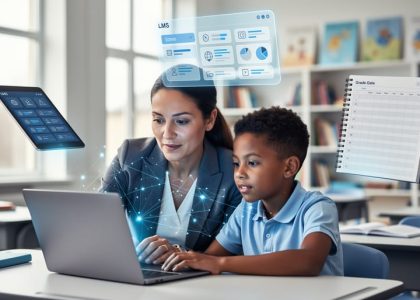
Generative AI is revolutionizing how we deliver personalized learning experiences in the classroom. By analyzing student performance data, learning preferences, and pace, AI tools can create tailored learning pathways that adapt in real-time. When a student struggles with fractions, for instance, the AI system might provide additional practice problems, visual explanations, or interactive demonstrations specifically designed for that student’s learning style.
These smart systems can identify knowledge gaps, suggest targeted interventions, and adjust difficulty levels automatically. For example, if a student excels in reading comprehension but needs support in vocabulary building, the AI can focus more attention on word-learning activities while maintaining an appropriate reading level.
Teachers can use these insights to make informed decisions about lesson planning and intervention strategies. The technology doesn’t replace teacher judgment; rather, it serves as a powerful tool that helps educators better understand and respond to individual student needs. This partnership between AI and teacher expertise creates a more responsive and effective learning environment where every student has the opportunity to succeed at their own pace.

Time-Saving Lesson Planning
Generative AI is revolutionizing how teachers approach AI for curriculum development and daily lesson planning. With these tools, educators can now generate creative lesson ideas, develop customized worksheets, and create engaging activities in minutes rather than hours.
For instance, teachers can use AI to quickly generate differentiated practice problems for various skill levels, craft compelling writing prompts, or develop project-based learning scenarios. The technology can also suggest modifications for diverse learners, helping ensure inclusive education for all students.
Consider using AI to:
– Generate multiple examples to illustrate complex concepts
– Create scaffolded learning materials for different ability levels
– Develop quick formative assessments
– Design creative hands-on activities
– Adapt existing lesson plans for different grade levels
While AI streamlines the planning process, remember that your expertise and judgment remain essential. Use AI-generated content as a starting point, then customize it based on your students’ needs and your teaching style. This approach combines the efficiency of AI with your professional knowledge to create truly effective learning experiences.
Starting Small: Easy Ways to Implement AI

Content Creation and Adaptation
Generative AI is revolutionizing how educators create and customize teaching materials, making it easier than ever to develop engaging content that meets diverse student needs. Teachers can now use AI tools to generate lesson plans, worksheets, quizzes, and interactive activities in minutes rather than hours.
For example, educators can input curriculum objectives and receive tailored lesson suggestions, complete with discussion questions and assessment ideas. These AI-generated materials serve as excellent starting points that teachers can then modify to suit their classroom’s specific requirements.
The technology particularly shines in content adaptation. Teachers can use AI to automatically adjust the reading level of texts, create multiple versions of assignments for differentiated learning, and translate materials into different languages. This flexibility ensures that all students can access the curriculum at their appropriate level.
Interactive elements are another powerful feature. AI can help create engaging multimedia content, such as interactive storytelling exercises, virtual science demonstrations, and adaptive math problems that adjust to student performance. These tools make learning more dynamic and personalized.
However, it’s important to remember that AI-generated content should be reviewed and refined by teachers. The technology works best as a collaborative tool that enhances, rather than replaces, educator expertise. By combining AI capabilities with professional judgment, teachers can create high-quality educational materials more efficiently while maintaining educational integrity.
Assessment and Feedback
Generative AI is transforming how educators assess student work and provide meaningful feedback. Through AI-powered tools, teachers can now automate routine grading tasks while delivering personalized feedback that helps students grow. These systems can analyze written assignments, identify patterns in student responses, and suggest areas for improvement.
For formative assessment, AI assistants can provide instant feedback on practice exercises, allowing students to learn from their mistakes in real-time. This immediate response helps maintain student engagement and enables self-paced learning. The technology can also detect common misconceptions and alert teachers to concepts that may need additional classroom attention.
When it comes to summative assessment, AI tools can help teachers maintain consistency in grading while reducing the time spent on mechanical aspects of evaluation. This gives educators more time to focus on providing thoughtful, qualitative feedback that addresses higher-order thinking skills.
However, it’s important to maintain a balance between automated and human feedback. While AI can identify technical errors and suggest improvements, teachers should review and customize the feedback to ensure it aligns with their instructional goals and meets individual student needs. The best results come from using AI as a supportive tool that enhances, rather than replaces, teacher expertise.
Consider implementing AI feedback tools gradually, starting with simple assignments and expanding as both teachers and students become more comfortable with the technology. Regular monitoring and adjustment of AI feedback systems ensure they remain effective and appropriate for your classroom context.
Addressing Key Concerns
Maintaining Educational Quality
While embracing generative AI in education offers exciting possibilities, maintaining educational quality requires a balanced approach. Teachers should view AI as a complementary tool that enhances their teaching abilities rather than a replacement for human instruction. The key lies in thoughtful integration that preserves the essential elements of effective teaching: personal connection, critical thinking, and meaningful assessment.
Consider using AI to handle routine tasks like basic grading or lesson planning, freeing up time for more valuable interactions with students. This allows educators to focus on providing individualized attention, fostering creativity, and developing students’ higher-order thinking skills. Regular evaluation of AI-enhanced teaching methods ensures they align with learning objectives and student needs.
Successful implementation involves setting clear boundaries for AI use, maintaining academic integrity, and regularly assessing the impact on student learning outcomes. Teachers should establish guidelines for appropriate AI tool usage, teach students to think critically about AI-generated content, and design assignments that promote original thinking rather than AI dependence.
Professional development opportunities help educators stay current with AI capabilities while developing skills to effectively integrate these tools into their teaching practice. This ensures that technology enhances rather than diminishes the quality of education.
Student Data Privacy
When implementing generative AI tools in the classroom, protecting student information must be a top priority. Start by carefully reviewing your school’s data privacy policies and ensuring any AI tools you select comply with FERPA and COPPA regulations. Choose platforms that offer robust privacy settings and don’t require students to create accounts with personal information.
Create clear guidelines for students about what information they should and shouldn’t share when using AI tools. Teach them to avoid inputting personal details, locations, or any identifying information into AI prompts. Consider using student ID numbers or aliases instead of real names when necessary.
Regularly monitor AI interactions to ensure student privacy isn’t compromised. Keep parents informed about which AI tools you’re using and how their children’s data is being protected. Document your privacy practices and maintain transparent communication with all stakeholders.
Set up a system to regularly review and update privacy protocols as AI technology evolves. Train fellow educators on best practices for data protection, and create a supportive environment where concerns about student privacy can be openly discussed and addressed.
Success Stories and Best Practices
Elementary School Implementation
Elementary schools across the country are discovering creative ways to integrate generative AI tools into their learning environments. At Lincoln Elementary in California, third-grade teacher Sarah Martinez uses AI storytelling assistants to help students develop their creative writing skills. Students provide simple prompts and work with the AI to create collaborative stories, learning about narrative structure and character development in an engaging way.
In Boston’s Riverside Elementary, educators have implemented an AI-powered math tutor that provides personalized practice problems and instant feedback. The system adapts to each student’s learning pace, offering simpler explanations when needed or more challenging problems when students show mastery. Teachers report increased student engagement and improved test scores since introducing this tool.
Another successful implementation comes from Sunshine Elementary in Florida, where students use AI art generators to visualize scientific concepts. For instance, when learning about the water cycle, students create AI-generated images showing different stages of the process, helping them better understand and remember complex natural phenomena.
These tools are being used alongside traditional teaching methods, not replacing them. Teachers emphasize the importance of maintaining a balance between AI-assisted and conventional learning activities. They also incorporate discussions about AI literacy, helping young students understand both the capabilities and limitations of these tools in age-appropriate ways.
Special education teachers have noted particular success using AI tools to provide differentiated instruction and support for students with diverse learning needs. The technology’s ability to adapt content presentation and difficulty levels has proven especially valuable in inclusive classrooms.
Secondary School Applications
Secondary schools across the country are discovering innovative ways to incorporate generative AI into their curriculum, enhancing both teaching and learning experiences. At Lincoln Middle School in Portland, students use AI writing assistants to develop stronger essay outlines and receive immediate feedback on their writing structure. The technology helps students identify areas for improvement while allowing teachers to focus on higher-level content and creativity coaching.
In biology classes at Riverside High School, students experiment with AI image generation to visualize complex cellular processes and create detailed diagrams of scientific concepts. This hands-on approach has increased student engagement and improved their understanding of abstract biological principles.
Mathematics departments are utilizing AI-powered problem-solving tools to provide students with step-by-step explanations of complex equations. At Thompson Academy, teachers report that students are more confident in tackling challenging problems when they can access AI-generated explanations that complement traditional instruction.
Language arts teachers are exploring creative applications, such as using AI to help students generate story prompts, analyze literary themes, and understand different writing styles. Many report that this technology particularly benefits English language learners and students who struggle with traditional writing assignments.
However, educators emphasize the importance of establishing clear guidelines for AI use. Many schools have developed comprehensive policies that encourage responsible AI integration while maintaining academic integrity. These policies typically include requirements for citing AI assistance and guidelines for appropriate use in assignments and projects.
As we’ve explored throughout this article, generative AI presents transformative opportunities for K-12 education when implemented thoughtfully and purposefully. The key to success lies in starting small, focusing on specific educational objectives, and gradually expanding your use of AI tools as comfort and confidence grow.
Remember to prioritize student engagement and learning outcomes while maintaining appropriate oversight of AI tool usage. Create clear guidelines for your classroom, share success stories with colleagues, and stay informed about emerging best practices in AI education.
Moving forward, consider forming or joining AI learning communities within your school or district to share experiences and resources. Start with one or two specific applications, such as using AI for lesson planning or creating personalized learning materials, and build from there.
The future of education is collaborative, combining the irreplaceable human element of teaching with AI’s supporting capabilities. By embracing these tools while maintaining focus on pedagogical goals, educators can create more engaging, efficient, and inclusive learning environments for all students.
Take the first step today by selecting one area where AI could enhance your teaching practice, and begin your journey into the future of education.