In today’s fast-paced educational environment, mindfulness attitudes offer educators a powerful framework for creating calmer, more focused classrooms while nurturing emotional intelligence in young learners. These seven fundamental attitudes – non-judging, patience, beginner’s mind, trust, non-striving, acceptance, and letting go – form the cornerstone of mindful teaching practices that transform both educator and student experiences.
As teachers, we understand that managing classroom dynamics while supporting student well-being has never been more challenging. Yet research consistently shows that incorporating mindfulness attitudes into daily teaching practices not only reduces stress and anxiety but also enhances learning outcomes and emotional regulation skills. Whether you’re new to mindfulness or looking to deepen your practice, these seven attitudes provide practical tools for creating more meaningful connections with students while fostering a supportive learning environment.
This exploration of mindfulness attitudes will equip you with concrete strategies to implement these principles in age-appropriate ways, helping your students develop essential life skills while maintaining your own sense of balance and presence in the classroom. Let’s discover how these transformative attitudes can revolutionize your teaching approach and create lasting positive impact in your educational community.
Why Mindfulness Matters in Early Childhood Development
In the dynamic landscape of early childhood development, mindfulness has emerged as a powerful tool for nurturing young minds. As research shows, incorporating mindfulness practices during these formative years can significantly enhance children’s cognitive, emotional, and social development.
During early childhood, the brain demonstrates remarkable plasticity, making it an ideal time to introduce mindfulness concepts. Children who engage in age-appropriate mindfulness activities often display improved attention spans, better emotional regulation, and enhanced social awareness. These benefits extend beyond the classroom, contributing to better sleep patterns, reduced anxiety, and more positive peer relationships.
Mindfulness practices help young children develop crucial executive function skills, including self-control, working memory, and cognitive flexibility. When children learn to pause, observe their thoughts and feelings, and respond thoughtfully rather than react impulsively, they build a strong foundation for future learning and social interactions.
For educators, implementing mindfulness in early childhood settings creates a more harmonious learning environment. Children become more attuned to their own needs and those of others, leading to fewer behavioral challenges and more meaningful engagement in learning activities. This emotional awareness also supports the development of empathy and compassion, essential qualities for building strong classroom communities.
By introducing mindfulness attitudes early, we help children develop lifelong tools for managing stress, building resilience, and maintaining mental well-being. These skills become increasingly valuable as children progress through their educational journey and face new challenges.

The 7 Core Mindfulness Attitudes for Young Learners
Non-Judging: Accepting Each Child’s Journey
In the journey of education, it’s natural for teachers to form opinions about students’ progress and behavior. However, practicing non-judgmental awareness means observing without labeling experiences as “good” or “bad.” This mindset is particularly crucial when implementing mindfulness activities in the classroom.
Consider each child’s unique developmental timeline. When one student struggles with sitting still while others remain focused, resist the urge to compare. Instead, observe their behavior with curiosity and openness. This approach creates a safe space where children feel accepted regardless of their capabilities or challenges.
To cultivate non-judgmental awareness, start by noticing your own thought patterns. When you catch yourself making evaluations, gently redirect your attention to simple observation. Ask yourself: “What am I actually seeing?” rather than “What should I be seeing?”
Practice using neutral language when describing student behavior. Instead of “Tommy is being disruptive,” try “Tommy is moving around the circle.” This shift in perspective helps maintain objectivity and supports positive relationship-building with students.
Remember that non-judging doesn’t mean abandoning guidance or standards. Rather, it means approaching each child’s journey with understanding and acceptance, creating an environment where authentic learning can flourish.
Patience: Honoring Natural Development
In early childhood education, patience emerges as a cornerstone of mindful teaching practice. Young children develop at their own unique pace, and honoring this natural progression requires educators to cultivate deep patience. This mindfulness attitude invites us to resist the urge to rush learning outcomes or force developmental milestones.
When we practice patience in the classroom, we create space for authentic discovery and growth. Consider a child struggling with letter recognition – rather than showing frustration or pushing harder, patient educators observe, support, and trust the learning process. This approach reduces anxiety in both teachers and students while fostering a more positive learning environment.
Practical ways to embody patience include taking deep breaths before responding to challenging situations, acknowledging that each child’s journey is different, and celebrating small steps of progress. Remember that seemingly slow moments often contain rich learning opportunities that might be missed if we’re too focused on reaching the next milestone.
Teachers can model patience by narrating their own thought processes: “I notice this is challenging for me, but I’m going to take my time and work through it step by step.” This not only demonstrates patience but also helps children develop their own self-regulation skills.
By embracing patience, we honor both the visible and invisible growth happening in our young learners, creating a foundation for lifelong learning and emotional well-being.
Beginner’s Mind: Fresh Perspectives in Learning
In the classroom, maintaining a beginner’s mind means approaching each learning moment as if experiencing it for the first time – even when teaching familiar concepts. This mindset is particularly powerful when working with young learners, as it allows educators to see the wonder and possibility in every teaching opportunity.
Think about how a child encounters something new – their eyes light up, questions flow freely, and their curiosity knows no bounds. By cultivating this same approach, teachers can create more engaging and dynamic learning environments. When we set aside our preconceptions and expertise momentarily, we open ourselves to fresh insights and innovative teaching methods.
Practical ways to embrace beginner’s mind include:
– Asking “what if” questions during lesson planning
– Observing how different students approach the same concept
– Being open to unexpected teaching moments
– Learning alongside your students
– Welcoming alternative perspectives and solutions
This attitude particularly shines when introducing complex topics. Instead of assuming students won’t understand, approach with genuine curiosity about how they might interpret the information. You might be surprised by their unique insights and creative connections.
Remember that beginner’s mind doesn’t mean dismissing your expertise – rather, it’s about combining your knowledge with openness to new possibilities. This balance helps create a classroom environment where both teachers and students feel empowered to explore, question, and grow together.

Trust: Building Self-Confidence Early
Trust is a fundamental mindfulness attitude that plays a crucial role in developing children’s self-confidence and emotional well-being. As educators, we can foster trust through consistent, supportive interactions and by creating safe spaces where students feel comfortable expressing themselves.
Start by encouraging students to trust their inner wisdom and feelings. When a child shares their thoughts or concerns, validate their experience instead of immediately trying to fix or dismiss it. Simple acknowledgments like “I understand how you feel” or “Thank you for sharing that with me” help build trust in both themselves and their relationship with you.
In practice, incorporate trust-building exercises into daily routines. For example, lead “trust circles” where students share something important to them while others practice active listening. Guide students through body awareness activities, helping them recognize and trust their physical sensations and emotional responses.
Remember that trust develops gradually. Create opportunities for small successes that build confidence over time. When students face challenges, remind them of past achievements and their inherent capabilities. This approach helps develop resilience and self-trust that extends beyond the classroom.
Model trust by being transparent about your own learning journey. Share appropriate examples of when you’ve had to trust yourself or others, and how this has contributed to your growth. This vulnerability helps create an authentic learning environment where trust can flourish naturally.
Non-Striving: Learning Through Play
In early childhood education, non-striving represents a fundamental shift from outcome-focused teaching to embracing natural learning processes through play and exploration. When we release the pressure to achieve specific results, we create space for authentic discovery and growth.
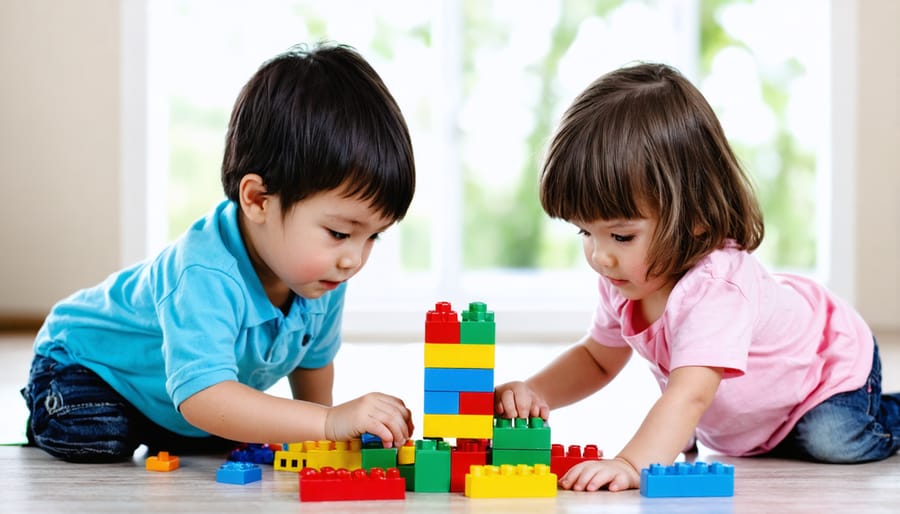
Consider how young children learn to build with blocks. They don’t begin with a predetermined structure in mind; instead, they experiment, stack, and sometimes watch their creations tumble. Each attempt brings new understanding, not through forced instruction, but through natural curiosity and hands-on experience.
As educators, we can support non-striving by:
– Creating open-ended learning environments where exploration is valued over perfect outcomes
– Allowing children sufficient time to engage with materials at their own pace
– Observing without immediately intervening when students face challenges
– Celebrating the process of learning rather than focusing solely on end results
– Incorporating playful elements into daily activities
This approach helps reduce anxiety around performance and nurtures a genuine love for learning. When children feel free to explore without pressure, they often exceed our expectations in unexpected ways. By stepping back from rigid objectives, we allow students to develop problem-solving skills, creativity, and emotional resilience naturally through their own discoveries.
Remember, meaningful learning often happens in those unplanned moments when children are fully absorbed in play, free from the burden of specific expectations.
Acceptance: Embracing the Present Moment
Teaching children to accept their present experiences, whether pleasant or challenging, is a fundamental aspect of mindfulness practice. Acceptance doesn’t mean passive resignation; rather, it involves acknowledging reality without judgment or resistance. This attitude helps children develop emotional resilience and self-compassion.
In the classroom, you can foster acceptance by creating opportunities for students to explore their thoughts and feelings without trying to change them. For example, when a student feels frustrated with a difficult math problem, guide them to acknowledge their frustration rather than immediately trying to fix it or push it away. Simple phrases like “It’s okay to feel this way” or “Let’s notice how this feels” can help normalize their experience.
Activities that promote acceptance include “weather report” check-ins, where students describe their current emotional state like weather patterns, without labeling them as good or bad. Another effective approach is the “acceptance jar,” where students write down challenging moments they’ve accepted and share them during circle time.
Remember to model acceptance yourself. When classroom situations don’t go as planned, demonstrate how to acknowledge and work with reality rather than fighting against it. This might mean calmly addressing an interrupted lesson or accepting that some students need more time to grasp certain concepts.
Encourage students to extend this acceptance to others, fostering a more inclusive and understanding classroom environment where all experiences and emotions are welcomed and validated.
Letting Go: Release and Move Forward
Teaching children to let go of difficult emotions and experiences is crucial for developing emotional resilience and maintaining mental well-being. In the classroom, students often encounter situations that trigger strong feelings – from disappointment over a low grade to conflicts with peers. As educators, we can guide them through the process of acknowledging these emotions without becoming overwhelmed by them.
Start by creating a safe space where students feel comfortable expressing their feelings. Encourage them to identify and name their emotions, then practice gentle release through age-appropriate techniques. Simple exercises like “balloon breathing” (imagining releasing worries like air from a balloon) or “leaves on a stream” (visualizing thoughts floating away) can help young learners understand the concept of letting go.
Make it clear that letting go doesn’t mean ignoring or suppressing feelings. Instead, it’s about accepting what we cannot change and choosing to move forward. Create classroom routines that support this practice, such as a daily “release and reset” moment or a designated corner where students can process difficult emotions.
Remember to model this attitude yourself. When facing challenges in the classroom, demonstrate how to acknowledge frustration or disappointment while choosing not to dwell on it. This shows students that letting go is an ongoing practice that even adults work on regularly.
Embracing mindfulness attitudes in early childhood education creates a foundation for lifelong emotional intelligence and self-awareness. By incorporating these seven attitudes into your daily teaching practice, you’re not just teaching mindfulness—you’re cultivating an environment where children can thrive emotionally, socially, and academically.
Start small by choosing one attitude to focus on each week. Consider beginning with non-judgment, as it sets the stage for other attitudes to flourish. Create simple routines, like morning check-ins or gratitude circles, that reinforce these mindful approaches. Remember that consistency matters more than perfection.
Engage your colleagues in this journey by sharing experiences and brainstorming implementation strategies. Document the changes you observe in your classroom—both in individual students and in the overall learning atmosphere. This reflection will help you refine your approach and maintain motivation.
As you move forward, stay connected with your school’s support network and consider joining professional development communities focused on mindfulness in education. The impact of these attitudes extends far beyond the classroom walls, contributing to a more compassionate and aware educational environment.
Remember, implementing mindfulness attitudes is a journey, not a destination. Be patient with yourself and your students as you explore these concepts together. Your commitment to fostering mindfulness today plants seeds that will grow throughout your students’ lives.