VR neurofeedback is a learning technology that combines virtual reality in K-12 environments with real-time brain activity monitoring to help students develop better focus, emotional regulation, and cognitive control. Instead of asking students to simply “pay attention” or “calm down,” this approach gives them immediate visual feedback about their brain states through engaging VR experiences, allowing them to actually learn how to self-regulate in ways that traditional classroom management can’t achieve.
For educators working with diverse learners, particularly students with ADHD, anxiety, or processing challenges, this technology represents a promising shift from telling students what to do to showing them how their own brains respond. When a student wears a VR headset paired with a simple EEG sensor, they might see a virtual garden bloom as they achieve a focused state, or watch storm clouds clear as they practice calming techniques. The brain learns through this direct feedback loop, building skills that transfer to regular classroom situations.
You’re probably wondering whether this is science fiction, snake oil, or something genuinely worth your limited budget and planning time. That’s exactly the right question to ask. This article will walk you through what VR neurofeedback actually is at a technical level, how the systems work in practice, what types are available for educational settings, and where the research stands on effectiveness. You’ll also find practical considerations about implementation, cost, and which students might benefit most. By the end, you’ll have the grounded information you need to evaluate whether this emerging tool deserves a place in your adaptive learning strategy.
Understanding VR Neurofeedback: The Basics
VR neurofeedback combines two powerful technologies, virtual reality and brain activity monitoring, to create an interactive learning experience where students’ brainwaves directly influence what they see and experience in a virtual environment. Think of it as a training system that makes brain activity visible and gamified: when a student achieves a focused or calm brain state, the VR world responds with positive changes, teaching their brain to recognize and recreate that state more easily.
At its core, this approach merges EEG sensors that track brain activity with immersive VR headsets that create engaging digital environments. The system monitors specific brainwave patterns associated with attention, relaxation, or other cognitive states, then translates that data into immediate changes within the virtual world. A student practicing focus might see a virtual garden bloom as their concentration improves, or control a spaceship’s speed through sustained attention.
- Neurofeedback
- A technique that provides real-time information about brain activity to help individuals learn to regulate their own brain function through practice and reinforcement.
- EEG (Electroencephalography)
- A non-invasive method of recording electrical activity in the brain using sensors placed on the scalp, typically appearing as a headband or cap in educational settings.
- Virtual Reality Immersion
- The experience of being fully present in a computer-generated three-dimensional environment that responds to user input and movement.
- Real-Time Feedback Loop
- The immediate connection between measured brain activity and changes in the virtual environment, allowing students to see the results of their mental state within milliseconds.
- Brainwave Training
- The process of learning to consciously influence specific brain activity patterns through repeated practice with feedback, similar to building a physical skill through exercise.
What sets VR neurofeedback apart from traditional neurofeedback is the immersive nature of the experience. Classic neurofeedback typically involves students sitting at a computer watching simple graphics change on a screen, a bar graph moving up and down, or a tone changing pitch. VR neurofeedback surrounds students in a three-dimensional world where they’re not just observing their brain activity but experiencing it through engaging scenarios that feel more like play than medical intervention. This immersion often leads to better engagement, especially for younger students or those who struggle with attention during conventional training sessions.
How VR Neurofeedback Works in Educational Settings
The Technology Behind the Experience
At its core, VR neurofeedback combines three key technology components that work together in real time.
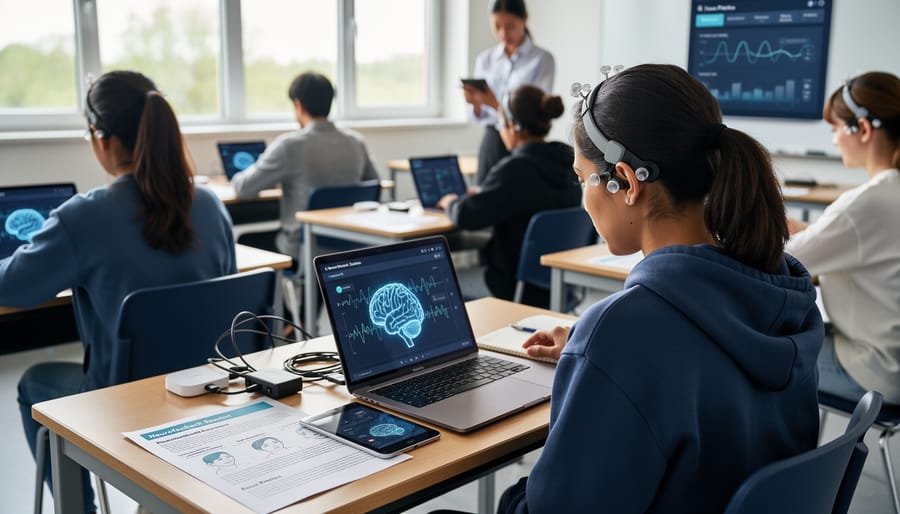
EEG sensors form the foundation. These small sensors, often positioned in a headband or cap, detect electrical activity in the brain by reading signals through the scalp. Think of them as listeners that pick up patterns of brain activity, like attention, relaxation, or concentration, without any discomfort to the student. Modern systems designed for schools use dry sensors that don’t require gel or lengthy setup time, making them practical for classroom use.
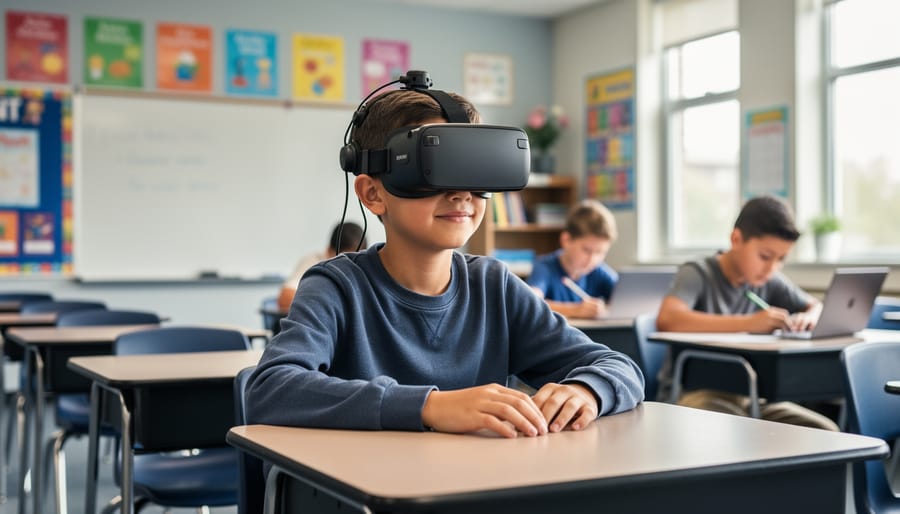
VR headsets create the immersive learning environment students interact with. These range from smartphone-based viewers to standalone devices with built-in displays and tracking. The headset shows students a three-dimensional world that responds directly to their brain activity, for example, a virtual classroom that becomes clearer when attention increases or a garden that blooms as a student maintains focus.
Adaptive software connects these pieces by translating brain signals into meaningful feedback within the VR experience. The software continuously analyzes EEG data, identifies specific brain patterns the student is working to strengthen, and adjusts the virtual environment accordingly. This creates a feedback loop: the student’s brain activity changes what they see, which in turn guides their brain toward more optimal patterns.
All three components communicate wirelessly in most modern systems, giving students freedom to move naturally while maintaining accurate monitoring throughout the session.
What Students Actually Experience
When a student puts on a VR neurofeedback headset, they enter an immersive environment that might look like a peaceful garden, an underwater scene, or even a gamified learning space. Unlike typical VR experiences where they control everything with hand movements or buttons, this environment responds directly to their brain activity.
The experience starts simply. A student might see a tree in their virtual garden. As they settle in and their brain waves indicate improving focus, the tree might grow taller or bloom with flowers. If their attention wavers, the growth slows or pauses. The visual feedback happens in real time, creating an immediate connection between their mental state and what they see.
What makes this powerful for learning is that students aren’t told “pay attention” through words. Instead, they discover through experience what focused attention feels like in their own brain. A middle schooler working on math problems in a VR environment might see their virtual workspace become clearer and brighter when they achieve optimal concentration. The system isn’t judging them; it’s simply reflecting their neural state back to them.
Educational content gets woven into these environments. A student might solve vocabulary problems while their calm, focused state allows a virtual butterfly to land on their hand, or work through science concepts while their sustained attention helps them build a digital structure. The learning objectives remain central, but the neurofeedback creates an additional layer of self-awareness.
Most sessions last 15 to 30 minutes. Students report that the experience feels engaging rather than medical or clinical. They’re not thinking about electrodes or brain waves; they’re watching their focus help a garden grow while they practice spelling words.
Types and Components of VR Neurofeedback Systems
K-12 VR neurofeedback systems typically fall into three primary categories, each targeting different aspects of student development and learning readiness.
Attention Training Systems form the most common category in educational settings. These programs create virtual environments that respond directly to a student’s focus levels. When attention wanes, the virtual scene might dim, blur, or slow down, a student piloting a virtual spaceship sees it drift off course when their focus drops, for instance. As concentration improves, the environment becomes clearer and more responsive. Schools often deploy these systems with students who have ADHD or attention challenges, though they benefit any learner working to strengthen sustained focus. Sessions typically run 15-20 minutes and track metrics like attention span duration and recovery time after distractions.
Emotional Regulation Programs help students recognize and manage their emotional states in real time. These systems monitor brain patterns associated with stress, anxiety, or emotional arousal. A student might navigate through a virtual forest where the weather reflects their emotional state, storms appear during heightened stress, clearing skies emerge as calm increases. The key component here involves teaching students what physiological calm feels like, then giving them agency to recreate that state. Teachers report these systems proving especially valuable before tests, during transition periods, or for students managing anxiety disorders. The software typically includes breathing exercises, guided imagery, and progressive relaxation techniques embedded within engaging scenarios.
Executive Function Development Programs target higher-order thinking skills including planning, working memory, cognitive flexibility, and impulse control. These often take the form of complex problem-solving scenarios where students must hold multiple pieces of information in mind, shift strategies, or resist immediate reactions. A virtual escape room might require students to remember sequences while simultaneously planning their next moves. The neurofeedback component tracks brain activity in regions associated with executive control, providing subtle cues when cognitive load becomes too high or when the student has capacity for additional challenge.
Most educational VR neurofeedback systems share several core components regardless of type: wireless EEG sensors (usually in a comfortable headband), age-appropriate VR headsets, adaptive software that adjusts difficulty based on performance, and educator dashboards showing progress over time. The most effective systems combine multiple approaches rather than focusing exclusively on one domain, recognizing that attention, emotion, and executive function interconnect in the actual learning process.
Educational Applications in K-12 Classrooms
Supporting Diverse Learning Needs
VR neurofeedback offers particularly promising applications for students whose learning needs fall outside traditional classroom approaches. For students with ADHD, the technology provides real-time feedback on attention states, allowing them to recognize and practice sustaining focus in engaging virtual environments. When they maintain concentration, the VR experience responds, perhaps a spaceship flies more smoothly or a puzzle piece clicks into place, creating immediate reinforcement that’s often more compelling than verbal reminders. Research confirms that VR neurofeedback improves attention in ways that can transfer to real classroom tasks.
Students managing anxiety benefit from VR neurofeedback’s ability to teach self-regulation in controlled, safe environments. The system might visualize calm brain states through peaceful virtual landscapes that brighten when the student achieves a relaxed focus. This gives anxious learners a concrete skill, recognizing and shifting their brain patterns, that they can apply during tests or social situations.
For students on the autism spectrum, VR neurofeedback can support executive function development and emotional regulation while offering the predictability and visual structure many find helpful. The virtual environment eliminates unpredictable social pressures, allowing students to practice self-regulation skills at their own pace.
Students with learning differences, including dyslexia and processing challenges, can use VR neurofeedback alongside learning games that adapt to their cognitive patterns, strengthening the neural pathways that support reading, memory, or information processing. The key advantage across all applications: students receive personalized feedback matched to their individual brain patterns, not a one-size-fits-all intervention.
Integration with Adaptive Learning Platforms
When VR neurofeedback tools connect with your school’s adaptive learning platforms, they create a powerful feedback loop that goes beyond what either system can accomplish alone. The brain activity data collected during neurofeedback sessions becomes another valuable input stream that helps adaptive software understand each student more completely.
Here’s how this integration works in practice: As a student engages with VR neurofeedback training, perhaps working on attention regulation exercises, the system captures real-time data about their cognitive states, stress levels, and engagement patterns. This information flows into your adaptive learning platform, which uses it alongside traditional performance metrics like test scores and completion rates. The result? The platform gains insight not just into whether a student got an answer right or wrong, but into their cognitive readiness and emotional state during learning.
This deeper data allows adaptive systems to make smarter adjustments. If neurofeedback data shows a student consistently struggles with attention during certain times of day, the platform might schedule their most challenging content during their peak focus periods. When stress indicators spike during particular lesson types, the system can adjust pacing or provide additional scaffolding before frustration derails learning.
The connection between these technologies delivers impressive adaptive learning results because it addresses both what students need to learn and how their brains are actually functioning during the learning process. For students with attention challenges or learning differences, this brain-aware personalization can make the difference between disengagement and genuine academic progress. The technology essentially helps adaptive platforms become more responsive to the invisible cognitive factors that shape every student’s learning experience.
Benefits and Considerations for Educators
VR neurofeedback offers K-12 educators several compelling advantages, starting with enhanced student engagement. When students see their brain activity control a virtual environment in real time, the immediate feedback creates motivation that traditional interventions often struggle to achieve. This visual, interactive format particularly resonates with digital-native learners who respond well to gamified experiences.
The technology supports genuinely personalized learning. Because VR neurofeedback systems respond to each student’s unique brain patterns, the intervention automatically adjusts to individual needs without requiring constant teacher oversight. This means a student struggling with attention regulation receives different feedback than one working on emotional control, even when using the same program. When combined with learning data analytics these systems generate objective data about student progress that goes beyond behavioral observation.
Perhaps most valuable is the potential for measurable outcomes. Unlike many social-emotional learning tools that rely on subjective assessment, neurofeedback produces quantifiable metrics tracking changes in attention patterns, emotional regulation, and cognitive control. The neurofeedback evidence base continues growing, giving administrators concrete data when evaluating program effectiveness.
However, educators must weigh several practical considerations. Cost remains significant, quality systems typically require substantial investment in hardware, software licenses, and ongoing support. Training demands shouldn’t be underestimated; teachers need time to understand both the technology and how to interpret neurofeedback data meaningfully.
Equity concerns deserve attention. If only certain students access VR neurofeedback due to resource constraints, schools risk creating a two-tiered support system. Similarly, parental consent and data privacy protections become more complex when collecting neural data, requiring clear policies and transparent communication.
Time investment matters too. Students generally need consistent sessions over weeks or months to show meaningful changes, which means committing classroom time and scheduling resources. Teachers should also maintain realistic expectations, VR neurofeedback isn’t a quick fix, and it works best as part of a comprehensive support approach rather than a standalone solution. The technology supports learning but doesn’t replace good teaching, appropriate accommodations, or the human relationships that remain central to student success.
Getting Started: What Teachers Need to Know
If you’re considering VR neurofeedback for your classroom, start by building a foundation of knowledge before making any commitments. Connect with your school’s technology coordinator and special education team early in the process. Their insights about existing infrastructure, student needs, and implementation challenges will shape realistic expectations from the start.
Research thoroughly before reaching out to vendors. Look for peer-reviewed studies about the specific VR neurofeedback systems you’re considering, particularly those conducted in K-12 settings similar to yours. Ask colleagues in your professional network or online education communities about their experiences. This background knowledge empowers you to ask informed questions when you do speak with companies.
When you’re ready to contact vendors, prepare a list of essential questions. Ask about the training required for teachers, the typical implementation timeline, and what ongoing support looks like. Find out how long students need to use the system to see results, and whether the technology requires a dedicated space or can move between classrooms. Request clear information about data privacy practices, especially how student brain activity data is stored, who can access it, and how long it’s retained.
Consider starting with a small pilot program rather than a school-wide rollout. Identify three to five students who might benefit most, ensuring you have parent consent and buy-in from your special education team. A focused pilot lets you evaluate the technology’s effectiveness in your specific context without overextending resources.
Budget realistically for the full scope of implementation. Beyond the initial hardware and software costs, factor in teacher training time, technical support, potential equipment repairs, and software updates. Some schools successfully fund pilots through special education grants, technology innovation funds, or partnerships with universities conducting educational research.
Document your pilot carefully. Track both quantitative data, such as attention metrics and academic performance, and qualitative observations about student engagement and behavior changes. This evidence becomes invaluable when discussing expanded implementation with administrators or justifying continued investment.
Remember that VR neurofeedback isn’t meant to replace effective teaching practices. It’s one tool among many in your adaptive learning toolkit. Approach it with curiosity and healthy skepticism, keeping your students’ best interests at the center of every decision.
Frequently Asked Questions
Here’s the content for the FAQ section:
As you consider VR neurofeedback for your students, you likely have practical questions about implementation, safety, and effectiveness. These answers address the concerns most educators raise when evaluating this technology.
Is VR neurofeedback safe for K-12 students?
VR neurofeedback is considered safe when used with age-appropriate equipment and proper supervision, as the technology involves passive monitoring rather than stimulation of brain activity. Most systems designed for schools include safety features like adjustable session lengths and comfort breaks, though students with seizure disorders or severe motion sensitivity should consult healthcare providers before participating.
How long does it take to see results with students?
Most educational VR neurofeedback programs recommend 15-20 sessions before measurable improvements appear, with sessions typically lasting 20-30 minutes. Some students show attention or emotional regulation gains earlier, while others need more consistent practice, making it important to set realistic expectations with students, parents, and administrators.
What does VR neurofeedback cost for schools?
Entry-level systems suitable for small pilot programs start around $3,000-$5,000 per station, while comprehensive classroom setups with multiple stations and ongoing support can range from $15,000-$40,000. Costs include hardware, software licenses, training, and sometimes per-student or annual subscription fees.
Do students need special qualifications or diagnoses to use VR neurofeedback?
No formal diagnosis is required for educational VR neurofeedback programs, as the technology can benefit any student working on attention, stress management, or self-regulation skills. However, students with specific learning differences or attention challenges often receive priority access when schools have limited equipment.
Beyond these core questions, you should ask potential vendors about data privacy practices, specifically how student brain activity data is stored, who can access it, and whether it integrates with your existing student information systems. Request clear documentation about compliance with student privacy laws and your district’s technology policies.
Training requirements vary by system complexity. Most vendors provide initial setup training that takes 2-4 hours, with additional coaching available as you build experience. Look for companies offering ongoing support rather than one-time training, since questions often arise once you begin working with students.
Student comfort is another practical consideration. Most children adapt quickly to VR headsets, but a small percentage experience mild dizziness or eye strain during their first sessions. Starting with shorter sessions and gradually increasing duration helps students adjust while maintaining engagement with the technology.
VR neurofeedback represents a promising frontier in supporting diverse learners, offering a technology-driven approach that adapts to individual brain patterns in real time. While still emerging in K-12 settings, it holds genuine potential for students who benefit from personalized attention training, emotional regulation support, and alternative pathways to engagement.
As with any educational technology, approach VR neurofeedback thoughtfully. It works best as one tool among many, not a replacement for proven teaching strategies, but a complement that may unlock progress for students who haven’t responded to traditional interventions. The research is evolving, implementations vary widely, and what works brilliantly in one context may need adjustment in yours.
The most valuable step you can take now is staying informed. Technology moves quickly, but education changes through careful piloting and community learning. Connect with other educators exploring brain-based technologies through our community forums, where teachers share real implementation experiences, troubleshoot challenges, and discuss what they’re seeing in their classrooms.
Our interactive tools can help you evaluate whether VR neurofeedback aligns with your students’ needs and your school’s resources. Ask questions, start small if you pilot it, and trust your professional judgment about what serves your learners best.
Your willingness to explore emerging approaches, while maintaining healthy skepticism and pedagogical grounding, positions you to make informed decisions that truly benefit the diverse students in your care.