
Cross-cultural journalism and strategic communication refers to the practice of creating, sharing, and framing messages across diverse cultural contexts in ways that respect different perspectives, honor varied communication styles, and build genuine understanding between communities. For educators in 2026, this skill set has become essential classroom currency. Your students arrive with backgrounds that span continents, languages, and worldviews. The families you serve navigate different cultural expectations around authority, collaboration, and feedback. The way you communicate a policy change, frame a student success story, or invite parent engagement can either bridge divides or deepen them.
This article breaks down what cross-cultural journalism and strategic communication actually means in educational settings, how these practices function when you’re crafting newsletters, social media updates, or community announcements, and which specific components make communication land with clarity across cultural lines. You’ll find practical applications designed for K-12 environments, whether you’re a classroom teacher reaching multilingual families, an administrator shaping school-wide messaging, or a communications coordinator building trust with diverse communities.
The stakes are real. A message that feels welcoming to one family might read as impersonal to another. A storytelling approach that engages some students could alienate others. Understanding how culture shapes the way people receive, interpret, and trust information transforms your ability to connect. You’ll learn to recognize cultural filters in news judgment, adapt strategic messaging for different audiences, and apply frameworks that make your communication more inclusive without diluting its clarity. The goal is simple: help every family feel seen, every student feel heard, and every community member understand that their perspective matters in your school’s story.
What Cross-Cultural Journalism and Strategic Communication Means
Cross-cultural journalism and strategic communication is the practice of creating and sharing messages that genuinely resonate with people from different cultural backgrounds. At its heart, it’s about recognizing that culture shapes how we understand stories, interpret information, and respond to calls to action.
Let’s break down the two main components. Journalism in this context means gathering, verifying, and presenting information in ways that serve different communities fairly and accurately. It requires moving beyond a single cultural lens to see how diverse audiences might interpret the same facts differently based on their values, experiences, and communication norms. Strategic communication, on the other hand, involves purposefully crafting messages to achieve specific goals, whether that’s informing families about a school policy, engaging students in a learning project, or building support for an educational initiative. When you add “cross-cultural” to strategic communication, you’re committing to shape those messages so they connect authentically with each cultural group you’re trying to reach.
- Cross-Cultural Journalism
- The practice of reporting and storytelling that accurately represents and resonates with audiences from diverse cultural backgrounds. It requires understanding how different communities process information and what storytelling approaches they trust.
- Strategic Communication
- Planned, purposeful messaging designed to achieve specific goals with target audiences. In educational settings, this includes everything from parent newsletters to student announcements to community outreach.
- Cultural Competence
- The ability to understand, appreciate, and effectively interact with people from cultures different from your own. It’s a learnable skill set that grows through experience and reflection.
- Message Framing
- The way information is presented and contextualized to make it meaningful for specific audiences. The same content can be framed differently to align with various cultural values and communication styles.
Culture influences every aspect of how we create and receive messages. The examples you choose, the level of directness in your language, whether you emphasize individual or collective benefits, which communication channels feel trustworthy, all these factors shift across cultural contexts. For K-12 educators, these skills are essential because your classrooms and communities reflect growing diversity. When you craft a message about a field trip, a behavior policy, or a student achievement, families from different backgrounds will interpret it through their own cultural frameworks. Understanding cross-cultural journalism and strategic communication helps you bridge those gaps intentionally rather than hoping your message lands the same way with everyone.
How Cross-Cultural Journalism and Strategic Communication Works
The Research and Listening Phase

Before crafting any message for a diverse audience, effective practitioners invest time in understanding the cultural landscape they’re entering. This research and listening phase forms the foundation of all successful cross-cultural communication.
Start by identifying who your audience actually is. Go beyond surface-level demographics to understand their cultural values, communication preferences, and community concerns. In educational settings, this might mean surveying families about their preferred communication channels, attending community events where different cultural groups gather, or consulting with bilingual staff and cultural liaisons who can offer insider perspectives.
Active listening matters more than assumptions. Hold listening sessions with small groups of parents, students, or community members. Ask open-ended questions about their experiences, what information they need, and how they prefer to receive it. Pay attention not just to what people say, but how they say it, communication styles vary widely across cultures.
Document your findings systematically. Create audience profiles that capture key cultural considerations: Are families more responsive to written or verbal communication? Do certain groups value formal or informal tone? What cultural events or holidays should inform your timing?
This upfront investment prevents missteps and builds the cultural intelligence needed for authentic, effective messaging.
Message Adaptation and Framing

Once you understand your audience’s cultural context, the next step is reshaping your message so it lands with clarity and respect. This doesn’t mean watering down facts or changing your core information. It means choosing language, examples, and frames that connect with how different communities understand the world.
Start by selecting culturally relevant examples. If you’re explaining a school policy on attendance, a farming family might relate better to seasonal work realities than an urban commuter schedule. The policy stays the same; the supporting details shift to match lived experience.
Next, adjust your tone and formality level. Some cultures expect formal titles and indirect language when discussing sensitive topics, while others value directness and casual warmth. Watch how community members address each other and mirror that level of formality in your communications.
Pay attention to visual and metaphorical language too. Sports metaphors common in American English might confuse families from regions where different games dominate. Choose universal images or draw from the specific cultural touchstones your audience knows. This takes homework, but it dramatically improves comprehension and trust.
Delivery and Feedback
Once you’ve adapted your message, delivery becomes critical. Different communities prefer different channels, some families engage readily through email or social media, while others respond better to printed flyers, phone calls, or face-to-face meetings at community centers. Timing matters, too: sending announcements during work hours may miss parents juggling multiple jobs, and scheduling events that conflict with religious observances or cultural celebrations can signal insensitivity. Format choices also carry weight; dense text-heavy documents may exclude families with limited literacy or English proficiency, whereas visual infographics, short videos, or audio messages can reach wider audiences.
Feedback loops close the circle. After delivering a message, actively seek input through surveys, informal conversations, or community meetings. Ask families and colleagues how information landed: was it clear, timely, and respectful? Did anyone feel excluded or misunderstood? This isn’t a one-time check; inclusive communication requires ongoing listening and adjustment. When you receive cultural feedback, respond visibly, acknowledge concerns, explain changes you’re making, and thank contributors. This builds trust and shows communities their voices shape how your school communicates, strengthening partnerships and ensuring messages truly connect.
Core Components of Effective Cross-Cultural Communication

Cultural intelligence sits at the heart of effective cross-cultural communication enabling journalists and communicators to navigate diverse contexts with awareness and skill. Understanding how cultural intelligence adapts across cultures helps educators recognize that successful messaging requires more than translation, it demands a fundamental shift in how we think about our audience and their values.
At its core, effective cross-cultural journalism and strategic communication rests on several interconnected components:
- Cultural self-awareness: Recognizing your own cultural lens, biases, and assumptions before attempting to communicate across differences
- Empathy and perspective-taking: Genuinely seeking to understand how different communities experience and interpret the world
- Linguistic sensitivity: Moving beyond literal translation to capture tone, connotation, and cultural meaning in language choices
- Visual and symbolic literacy: Understanding how images, colors, gestures, and symbols carry different meanings across cultures
- Relationship building: Investing time in authentic connections with community members and cultural brokers who can guide your communication
Ethical storytelling emerges as another foundational element. This means representing diverse communities with accuracy and dignity, avoiding stereotypes and generalizations that flatten complex cultural identities. When educators share stories about students or families from different backgrounds, they must consider who has the right to tell that story, whose perspective is centered, and whether the narrative reinforces or challenges existing power dynamics. Ethical practitioners ask permission, verify facts with community members, and share decision-making power over how stories are framed and distributed.
Inclusive language practices go beyond avoiding offensive terms. They involve actively choosing words that welcome and affirm diverse identities, using terminology that communities prefer for themselves rather than imposed labels, and recognizing that language evolves. For educators, this might mean staying current with how students and families describe their own cultural, linguistic, or identity groups, and being willing to adjust your vocabulary when you learn you’ve gotten it wrong.
Finally, community partnership transforms cross-cultural communication from a one-way broadcast into a genuine dialogue. Rather than communicating at or about diverse communities, effective practitioners build relationships that allow them to communicate with those communities. This means creating feedback mechanisms, involving community members in planning and review processes, and being accountable when messages miss the mark. In educational settings, this could look like forming parent advisory committees that represent your school’s diversity, consulting with cultural organizations before launching initiatives, or co-creating content with students and families rather than making all decisions in isolation.
How Educators Can Apply These Skills in K-12 Settings
Connecting with Families and Communities
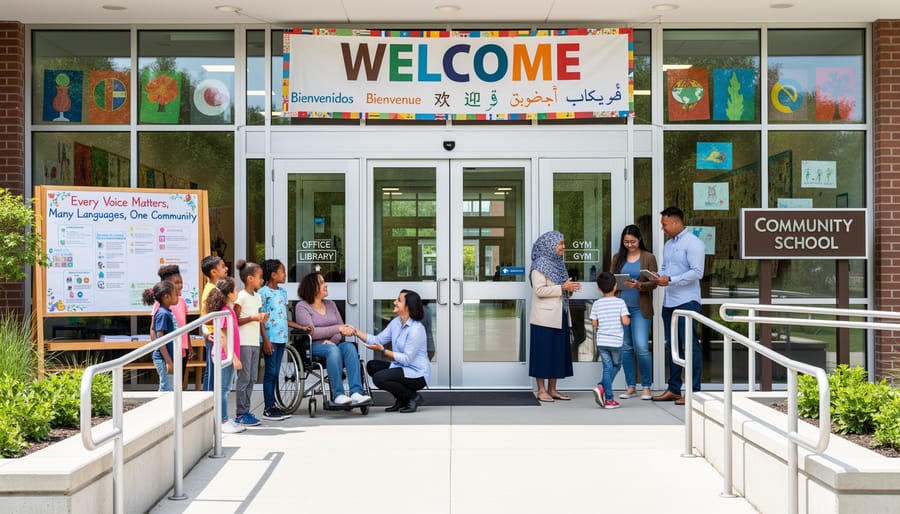
Building meaningful connections with families starts with recognizing that a one-size-fits-all communication approach rarely reaches everyone. When you send home a newsletter or permission slip, consider whether your message assumes cultural knowledge that not all families share. For example, a note about “standardized testing season” might puzzle parents unfamiliar with the U.S. education system, while references to school traditions can exclude newcomers.
Start by offering communications in the languages families actually speak at home. Go beyond machine translation by having bilingual staff or community members review messages for clarity and cultural appropriateness. A direct English-to-Spanish translation might be technically correct but miss cultural nuances in how information is typically shared.
Pay attention to communication channels too. Some families prefer text messages over email, while others rely on printed flyers or community bulletin boards. When announcing parent-teacher conferences, explain not just the logistics but the purpose and format, since educational expectations vary widely across cultures. Phrase invitations as genuine requests for partnership rather than demands for compliance.
Ask families how they prefer to receive information and what questions they have about school processes. This listening phase builds trust and reveals gaps in your current approach.
Teaching Students Cross-Cultural Media Literacy
Start by integrating digital literacy lessons with cultural analysis. Have students examine how the same news story is covered across different international outlets, noting differences in language choice, images selected, and perspectives highlighted. This reveals how cultural context shapes storytelling.
Create assignments where students produce content for specific audiences. A fifth-grader writing about a school event might create one version for peers, another for parents who speak English as a second language, and a third for community partners. They learn to adjust tone, vocabulary, and cultural references without changing core facts.
Use current events to teach critical media consumption. When students encounter stereotypes or one-dimensional portrayals of cultures in media, guide them to identify what’s missing and why representation matters. Connect this work to online safety by discussing how misinformation often exploits cultural biases.
Build a classroom media library featuring journalists and content creators from diverse backgrounds. Let students see varied storytelling approaches and interview techniques that honor different communication styles, from direct Western journalism to more contextual non-Western narrative traditions.
Strategic Communication for School Initiatives
When rolling out a new program or policy, effective cross-cultural strategic communication can mean the difference between strong community buy-in and confusion or resistance. Start by identifying all the cultural groups within your school community and understanding how each typically receives information, some families may prefer written notices, while others respond better to phone calls or in-person conversations.
Frame your initiative in terms that connect to diverse values. A literacy program might emphasize academic achievement for some families while highlighting community connection or practical life skills for others. Translate key materials into home languages, but go beyond word-for-word translation by adapting examples and references to be culturally relevant.
Time your communications strategically around cultural calendars and community rhythms. Avoid launching major initiatives during significant cultural holidays, and consider when different groups are most available and receptive. Use multiple channels, school apps, community centers, faith organizations, and local ethnic media, to reach families where they already gather.
Build credibility by partnering with respected community leaders who can champion your initiative in culturally appropriate ways. Their endorsement carries weight that official school communications alone may not achieve, bridging institutional and community perspectives effectively.
Common Questions About Cross-Cultural Journalism and Strategic Communication
Educators often worry about navigating unfamiliar cultural territory, especially when time and resources feel limited. The following questions address common concerns that arise when bringing cross-cultural journalism and strategic communication principles into your school.
What if I make a cultural mistake in my communication?
Mistakes happen, and approaching them with humility and openness to learning turns them into growth opportunities. When you misstep, acknowledge it directly, apologize sincerely, and ask how you can communicate more effectively next time, this demonstrates respect and builds trust with families and colleagues.
How can I learn about my students’ cultures without making assumptions?
Start by asking families directly through surveys, informal conversations, or welcome meetings where they can share what matters most to them. Listen actively to students’ stories, invite community members to share perspectives, and remember that individuals within any cultural group hold diverse views and experiences.
What resources are available for K-12 educators developing these skills?
Many school districts offer professional development on culturally responsive practices, and organizations like ASCD and Teaching Tolerance provide practical guides. Your own school community represents your richest resource, parent liaisons, multilingual staff, and cultural affinity groups can offer authentic insights you won’t find in any manual.
How do I balance cultural inclusivity with my existing time constraints?
Start small by adapting one existing communication, perhaps your weekly newsletter or a single parent event invitation, rather than overhauling everything at once. Building these practices gradually makes them sustainable and less overwhelming, and you’ll find that thoughtful communication actually saves time by reducing misunderstandings and strengthening partnerships.
The most effective approach involves weaving cross-cultural awareness into routines you already maintain rather than treating it as an additional task. When you translate key documents, consider which languages your families actually speak at home instead of making assumptions based on surnames. When scheduling events, check whether your timing conflicts with religious observances or work schedules common in your community.
Many educators find that developing cross-cultural communication skills strengthens their teacher resilience by deepening relationships with students and families. You don’t need formal certification or specialized training to begin, genuine curiosity, willingness to listen, and commitment to adjusting your approach based on feedback will carry you far. The interactive tools and community forums available on this platform connect you with other educators navigating similar challenges, offering practical strategies tested in real K-12 settings.
Developing cross-cultural journalism and strategic communication skills isn’t just about improving how you share information, it’s about fundamentally transforming your educational environment into a space where every student, family, and community member feels seen, heard, and valued. When you communicate with cultural intelligence and adapt your messages thoughtfully, you break down barriers that might otherwise keep families on the sidelines of their children’s education.
You don’t need to master everything at once. Start with one small change: perhaps translating your next classroom newsletter into the languages spoken by your students’ families, or inviting community members to share their perspectives before launching a new initiative. Each step you take builds your cultural awareness and strengthens the connections that make schools thrive.
The journey toward more inclusive communication is ongoing, and you don’t have to navigate it alone. Our platform’s community forums connect you with fellow educators who are tackling similar challenges and discovering what works in their diverse classrooms. You’ll find teachers sharing their successful approaches, administrators offering implementation strategies, and specialists providing guidance on culturally responsive practices.
Our interactive tools can help you assess your current communication strategies, develop culturally adapted messages, and track your progress in building stronger relationships across cultural boundaries. Join the conversation, share your experiences, and discover practical resources designed specifically for K-12 educators committed to creating truly inclusive schools where cross-cultural understanding drives everything you do.