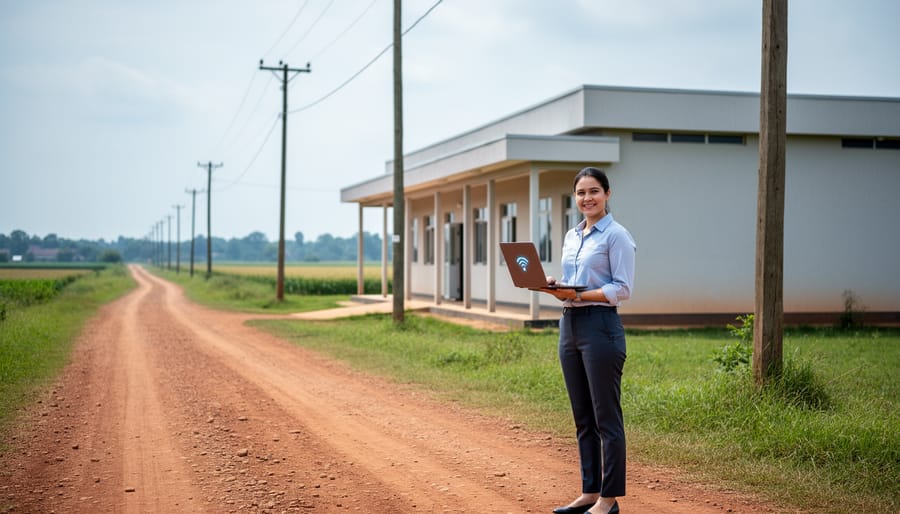
The Rural Digital Opportunity Fund is a $20.4 billion federal program designed to bring high-speed broadband to unserved rural areas, and for educators in these communities, it represents the largest single investment in closing the connectivity gap that affects millions of students. Managed by the Federal Communications Commission, RDOF awards funding to internet service providers who commit to building infrastructure in areas where reliable internet access has been scarce or nonexistent. The program operates in phases, with initial funding awarded in 2020 and deployment continuing through the end of this decade, though the timeline varies significantly by region and provider.
For rural schools and educators, understanding RDOF matters because improved home connectivity directly impacts your students’ ability to complete homework, access digital learning tools, and participate in online courses. The digital divide isn’t just about having devices in classrooms anymore. It’s about whether students can continue learning when they leave school grounds. While RDOF focuses on residential and business broadband rather than direct school connections, the ripple effects touch every aspect of rural education delivery.
The challenge for educators is that RDOF deployment happens at the community level, not the school level, which means you need to understand what’s happening in your service area to set realistic expectations with students and families. Some communities have already seen new fiber installations and dramatically improved speeds. Others are still waiting for providers to meet their buildout commitments. This variability creates an uneven landscape where neighboring districts may experience vastly different connectivity realities.
This guide will help you understand how RDOF works, what it means for your students and teaching practice, and how you can advocate effectively while the infrastructure arrives in your community.
Understanding the Rural Digital Opportunity Fund
The FCC administers RDOF as a $20.4 billion program designed to bring high-speed broadband to millions of Americans in rural communities. Launched in 2020, the fund targets areas where internet service providers have historically been reluctant to invest due to low population density and high infrastructure costs. For educators, this represents the largest single federal investment in closing the connectivity gap that has left many rural students and teachers without reliable access to digital learning tools.
The program works through a reverse auction process where internet service providers bid for the right to build infrastructure in specific census blocks. Companies that win bids commit to deploying broadband service that meets minimum speed requirements, at least 25 Mbps download and 3 Mbps upload, though many winning bids promise gigabit speeds. This matters for schools because it means not just incremental improvements, but potentially transformative upgrades to internet capacity.
Winners of RDOF awards receive support over a 10-year RDOF deployment period, with specific buildout milestones they must meet. Service providers typically have to reach a certain percentage of locations within three years and complete full deployment by year six. These timelines help set realistic expectations, if your district is in an RDOF area, meaningful connectivity improvements might still be several years away rather than arriving next semester.
Understanding RDOF helps educators connect infrastructure policy to classroom needs. While the program focuses on household and business connectivity rather than schools specifically, improved community broadband creates opportunities to implement digital equity strategies that rely on students having access beyond school walls. When families gain reliable home internet, homework gaps narrow and distance learning becomes viable for rural students who previously lacked connectivity.
How RDOF Impacts Rural Schools and Classrooms
Direct Benefits for Teaching and Learning
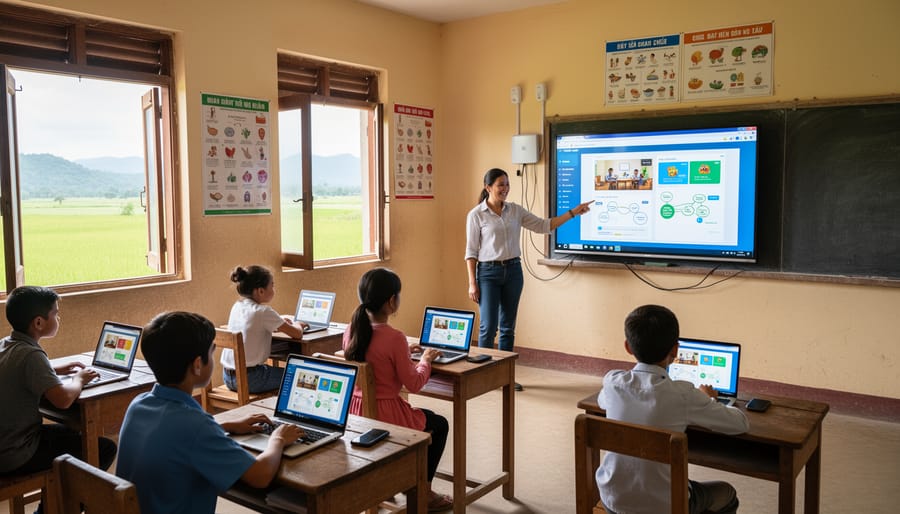
Reliable high-speed internet transforms daily instruction in ways that spotty or slow connections never could. Teachers can now stream high-quality educational videos without buffering interruptions, making complex concepts in science, history, and math accessible through visual demonstration rather than static textbook images alone. Virtual labs let biology students explore cellular processes or chemistry reactions they couldn’t safely conduct in under-resourced rural facilities. Geography classes take virtual field trips to museums, historical sites, and ecosystems across the globe, bringing experiences to students who might never travel to these locations.
Cloud-based collaboration platforms become genuinely functional when bandwidth supports them. Students can work simultaneously on shared documents, presentations, and projects from different locations, developing digital collaboration skills employers increasingly expect. Teachers access a wider range of tech tools for teachers that require stable connections, interactive whiteboards that sync across devices, real-time formative assessment platforms that provide instant feedback, and adaptive learning software that adjusts to individual student needs.
Professional learning networks become practical realities rather than aspirations. Rural educators join live webinars, participate in online professional development courses, and collaborate with teachers nationwide without the isolation that often defines rural teaching. These improvements help bridge the technology gap between what rural and urban students can access during the school day, creating more equitable learning opportunities.
Supporting Students Beyond School Hours

When school ends at 3pm, learning doesn’t stop, but for many rural students, their ability to continue learning does. The homework gap affects millions of students who lack reliable home internet, forcing them to complete assignments in parking lots or skip digital work entirely.
RDOF’s community-wide broadband expansion addresses this inequity directly. Students gain access to the same after-hours resources their connected peers take for granted: video tutorials that clarify confusing concepts, online libraries for research projects, and educational platforms for practice problems. They can join virtual study groups with classmates or connect with online tutors when parents can’t help with advanced coursework.
This extended access matters especially in rural areas where distance makes in-person tutoring impractical. A student struggling with algebra can replay Khan Academy lessons at their own pace. A budding writer can submit essays through Google Classroom instead of printing them. Students enrolled in dual-credit courses can participate in college seminars from home rather than driving an hour each way.
The broadband improvements also enable participation in enrichment opportunities, coding clubs, language learning apps, creative writing workshops, that expand horizons beyond what small rural schools can offer during regular hours. Home connectivity transforms evenings from educational dead zones into genuine learning time.
The RDOF Implementation Process and Timeline
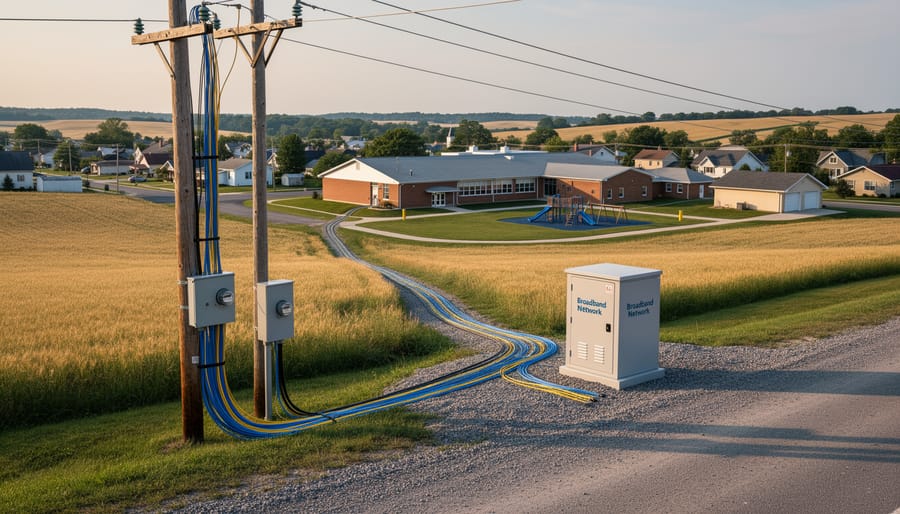
Understanding how RDOF works requires stepping through a multi-year process that began with competitive auctions and continues through infrastructure deployment. The FCC designed RDOF to allocate funding efficiently, ensuring service providers who bid competitively would deliver broadband to unserved areas.
The implementation follows a structured sequence:
- Service providers bid in competitive auctions to win funding for specific geographic areas, with lower bids and faster deployment commitments receiving priority.
- The FCC announces auction winners and allocates funding based on the areas they committed to serve and their proposed service tiers.
- Winning providers must meet buildout milestones, typically reaching 40% of locations by year three and full deployment by year six, as outlined in their RDOF auction deployment obligations.
- The FCC monitors compliance through progress reports and service verification, withholding payments if providers fall behind schedule.
- As infrastructure is built, residents and institutions in funded areas gain access to new or upgraded broadband service.
For educators, this means connectivity improvements don’t happen overnight. The first RDOF auction concluded in December 2020, with winning providers committing to serve over 5.2 million locations nationwide. However, actual service delivery depends on where your community falls in each provider’s buildout schedule. Areas designated for faster deployment may see improvements by 2023 or 2024, while others might wait until 2026 or later for full service activation.
Some RDOF winners have already begun infrastructure work, installing fiber lines, upgrading network equipment, and expanding wireless coverage. Others have faced delays due to supply chain issues, permitting challenges, or financial difficulties. A few providers have defaulted on their commitments entirely, returning their funding to the FCC and leaving their assigned areas back at square one.
Teachers and administrators should understand that RDOF represents a long-term infrastructure project rather than an immediate solution. If your school currently struggles with connectivity, RDOF may eventually bring relief, but planning should account for the reality that meaningful improvements could still be years away. Checking your area’s specific timeline and monitoring your assigned provider’s progress helps set realistic expectations and informs decisions about interim connectivity solutions your school might need while waiting for RDOF infrastructure to arrive.
What Educators Can Do Now
Checking Your Community’s RDOF Status
Start by visiting the FCC’s Rural Digital Opportunity Fund map at . Enter your school’s address or zip code to see which census blocks received funding and which internet service providers won auctions in your area. The map shows funding phases, deployment timelines, and speed commitments for each location.
Contact your local internet service providers directly to ask about their RDOF deployment plans and estimated service dates for your school district. Many providers publish press releases or community updates when they receive RDOF funding, so check their websites and local news outlets for announcements.
Reach out to your county or regional planning commission, as they often track broadband expansion projects and can provide information about infrastructure work happening in your area. Your state broadband office may also maintain resources about RDOF projects affecting schools and libraries.
If your school isn’t in a funded area, document your connectivity challenges and share them with local officials and your state education agency. This information helps build the case for future broadband investment and ensures your needs are visible in subsequent funding rounds.
Advocating for School Connectivity Priorities
Schools rarely appear automatically at the top of broadband deployment schedules, you need to make your case. Start by connecting with your superintendent or technology director to document current connectivity limitations, including specific examples of how inadequate bandwidth affects instruction, virtual learning, and student access to online resources. Schedule a meeting with your digital equity coordinator if your district has one, as they can coordinate advocacy efforts across multiple stakeholders.
Reach out to your local service providers, the companies that won RDOF funding, to introduce yourself and share a one-page summary of your school’s connectivity needs. Frame the conversation around partnership: you’re offering insight into high-impact locations that serve students during school hours and families after dismissal. Join or speak at school board meetings, town halls, and county commission sessions where broadband expansion is discussed. Bring concrete data about student enrollment, current internet speeds, and how improved connectivity would expand educational opportunities. Collaborate with parent organizations, local libraries, and community centers to present a unified voice about the educational and economic importance of prioritizing school connectivity in deployment plans.
Preparing Your School for Enhanced Connectivity
Start by conducting a thorough technology audit of your current systems before enhanced broadband arrives. Document existing devices, bandwidth capabilities, and software licenses to identify what needs upgrading. This inventory helps you prioritize investments and avoid purchasing technology your improved connection can’t yet support.
Invest in professional development now so teachers are ready to leverage new capabilities. Schedule workshops on cloud-based learning platforms, video conferencing tools, and streaming educational resources. Teachers who understand these tools before infrastructure arrives can implement them immediately rather than scrambling later.
Consider curriculum adjustments that will close the digital divide when connectivity improves. Identify learning objectives that were previously impossible with limited bandwidth, virtual science labs, real-time global collaborations, or interactive multimedia projects, and begin planning their integration.
Finally, establish a technology support framework that includes designated IT personnel, clear troubleshooting protocols, and ongoing training schedules. Enhanced connectivity only transforms learning when teachers feel confident using new tools and know where to turn when issues arise.
Challenges and Limitations to Consider
While RDOF represents a significant investment in rural connectivity, educators need to understand the practical challenges that may affect when and how their communities actually see improvements.
Deployment Takes Time
Service providers awarded RDOF funding have up to six years to build out their networks, and many are still in early construction phases. You might see funding announced for your area but not experience meaningful connectivity changes for several years. This timeline means the immediate impact on your classroom may be limited, even if your community received an award.
Performance Doesn’t Always Match Promises
Some RDOF recipients have already defaulted on their obligations or faced financial difficulties that delayed deployment. The FCC monitors compliance, but enforcement takes time. Your area might technically have a funded provider while actual service remains unchanged or below the promised speeds. Check service provider progress reports rather than assuming allocated funding equals delivered service.
Coverage Gaps Remain
RDOF focused on census blocks that lacked service, but these geographic units are large and imprecise. Your school might sit on the edge of a funded area while remaining just outside the deployment zone. Additionally, some rural areas received no bids during the auction, leaving them without RDOF support entirely. The fund improves coverage but doesn’t eliminate all connectivity gaps.
Funding Doesn’t Guarantee Affordability
Even when infrastructure arrives, service costs might remain a barrier for students’ families. RDOF requires providers to offer one low-cost option, but these plans may have limitations that make them impractical for educational use. Infrastructure improvements don’t automatically solve the affordability challenges many rural families face.
Coordination Challenges
School districts often have limited influence over where and when providers build infrastructure. Without strong communication between education stakeholders and service providers, deployment might prioritize residential areas over school zones or fail to consider peak usage times that matter for distance learning.
Understanding these limitations helps you advocate more effectively and set realistic expectations with colleagues and families while continuing to push for genuine digital equity.
Common Questions About RDOF and Rural Education
Does RDOF directly fund schools or school districts?
No, RDOF provides funding to internet service providers to build broadband infrastructure in underserved rural areas. Schools benefit indirectly when providers improve community-wide connectivity, but the fund doesn’t allocate money directly to educational institutions.
How is RDOF different from E-Rate?
E-Rate specifically subsidizes internet and telecommunications services for schools and libraries, helping institutions afford connectivity. RDOF focuses on building the underlying infrastructure in areas where it doesn’t exist, addressing the “last mile” problem that prevents service availability altogether.
When will my community see broadband improvements from RDOF?
Service providers have deployment obligations over six years, but timelines vary by location and provider. Many areas will see construction beginning within the first three years, though some remote locations may experience delays due to logistical challenges or provider performance issues.
What internet speeds are RDOF providers required to deliver?
Most RDOF funding went to providers promising gigabit service, with minimum requirements of 25/3 Mbps. The actual speeds delivered depend on which service tier the provider committed to in their winning bid for your specific area.
These questions reflect the practical concerns educators raise when first learning about RDOF and its implications for their schools. Understanding that RDOF addresses infrastructure rather than institutional funding helps clarify why improvements take time and why schools still need one-to-one programs and student engagement strategies that work within current connectivity constraints.
The relationship between infrastructure funding and educational technology initiatives matters because schools often layer multiple programs to address digital access. RDOF creates the foundation for connectivity, while E-Rate makes service affordable for institutions, and digital literacy initiatives ensure students and teachers can use the technology effectively. Each program serves a distinct purpose in the broader digital equity ecosystem.
Educators wondering about specific deployment schedules in their communities should recognize that construction timelines depend on numerous factors beyond the initial funding award. Geographic challenges, utility pole access, weather conditions, and provider capacity all influence when infrastructure actually reaches schools and homes. Checking with local service providers and county broadband coordinators provides more accurate timelines than the general deployment windows outlined in RDOF obligations.
The speed tiers matter for educational planning because different applications require different bandwidth. Video conferencing, cloud-based learning management systems, and simultaneous device usage all place demands on networks that 25/3 Mbps connections may struggle to support in busy classrooms. Knowing what speeds providers committed to delivering helps administrators plan technology investments and set realistic expectations for what becomes possible as infrastructure improves.
The Rural Digital Opportunity Fund represents more than infrastructure investment, it’s a critical step toward digital equity that can reshape educational opportunities for students in rural communities. While the path from funding announcement to actual connectivity improvements involves complexity and delays, understanding RDOF empowers you to advocate effectively for your students and prepare your school for enhanced broadband when it arrives.
Your role as an educator extends beyond the classroom in this context. By staying informed about RDOF deployment in your area, communicating connectivity needs to decision-makers, and ensuring digital equity in education remains a priority during implementation, you help translate infrastructure improvements into meaningful learning outcomes. The technical work of laying fiber and installing equipment matters only if it ultimately serves students who need reliable access to online learning resources and digital tools.
Digital equity isn’t achieved through policy alone, it requires educators who understand the landscape, advocate for their communities, and prepare their schools to maximize new opportunities. Connect with other rural educators through our community forums to share experiences, track RDOF progress in different regions, and develop strategies for making the most of broadband expansion. Use our interactive tools to assess your school’s connectivity needs and plan for technology integration as internet access for students improves.
The work of closing the digital divide continues, but RDOF provides substantial resources and renewed attention to rural connectivity. Your engagement ensures these investments deliver real classroom impact.