Blended learning transforms traditional education by seamlessly merging face-to-face instruction with digital technologies, creating a dynamic learning environment that empowers both teachers and students. This innovative approach allows educators to personalize instruction, leverage data-driven insights, and meet diverse learning needs while maintaining the invaluable human connection of classroom teaching.
In today’s rapidly evolving educational landscape, blended learning has emerged as more than just a tech-enhanced teaching method – it’s a fundamental shift in how we approach student engagement and achievement. By combining the best elements of in-person teaching with the flexibility and accessibility of online resources, educators can create learning experiences that are both more effective and more engaging than traditional methods alone.
Modern K-12 classrooms implementing blended learning strategies consistently report improved student outcomes, increased engagement, and better preparation for future academic and professional challenges. This adaptive approach allows teachers to differentiate instruction, provide immediate feedback, and create self-paced learning opportunities while maintaining the structure and support of traditional classroom environments.
As we continue to navigate the changing demands of education, blended learning stands as a bridge between conventional teaching methods and the digital future of learning, offering practical solutions for today’s educational challenges while preparing students for tomorrow’s opportunities.
What Makes Blended Learning Different?
Traditional vs. Blended Learning
Traditional classroom settings typically rely on face-to-face instruction, with teachers delivering content through lectures, textbooks, and worksheets. While this method has served education well for generations, today’s digital age demands more flexible and personalized approaches. This is where hybrid teaching strategies come into play, offering the best of both worlds.
Blended learning combines conventional teaching methods with digital tools and online resources, creating a more dynamic learning environment. Unlike traditional classrooms where students learn at the same pace, blended approaches allow learners to progress at their own speed and revisit materials as needed. While traditional teaching offers valuable face-to-face interactions and immediate feedback, blended learning enhances these benefits with interactive digital content, automated assessments, and expanded learning opportunities beyond classroom walls.
The key difference lies in flexibility and personalization. Traditional methods follow a one-size-fits-all approach, while blended learning adapts to individual student needs, learning styles, and schedules. This combination of traditional and digital methods creates a more engaging and effective educational experience that prepares students for our increasingly digital world.

The Three Pillars of Effective Blending
Successful blended learning rests on three fundamental pillars that work together to create an enriching educational experience. The first pillar, face-to-face instruction, provides essential personal interaction between teachers and students, allowing for immediate feedback, classroom discussions, and hands-on activities that build strong relationships and foster collaborative learning.
The second pillar, online learning, extends beyond traditional classroom walls through digital resources and interactive platforms. This component enables students to access course materials, complete assignments, and engage with multimedia content at their own pace, making learning more flexible and personalized.
Student-directed learning, the third pillar, empowers students to take ownership of their educational journey. This approach encourages learners to make choices about when, where, and how they learn, developing crucial self-management and digital literacy skills. When students have agency in their learning process, they become more engaged and motivated to succeed.
These three pillars don’t function in isolation but work together seamlessly. Teachers can adjust the balance between these elements based on their students’ needs, subject matter, and learning objectives, creating a dynamic and effective learning environment.
Popular Blended Learning Models in K-12
Station Rotation Model
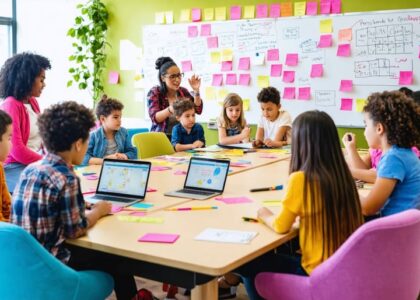
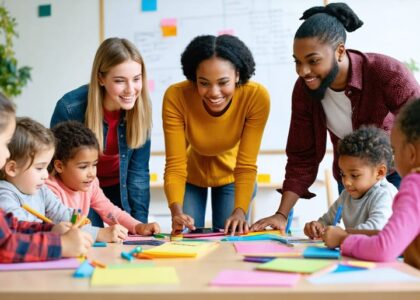
The Station Rotation Model transforms traditional classrooms into dynamic collaborative learning environments by organizing students into small groups that rotate through different learning stations. Each station offers a unique learning experience: one might feature direct teacher instruction, another focuses on online learning activities, while a third emphasizes hands-on projects or group work.
To implement this model effectively, start by creating 3-4 distinct stations based on your lesson objectives. Plan activities that complement each other and maintain a consistent rotation schedule, typically 15-20 minutes per station. Ensure each station has clear instructions, necessary materials, and engaging tasks that students can complete independently or in groups.
Consider incorporating technology stations with educational apps or online resources, discussion areas for peer learning, and quiet zones for independent work. Use visual timers and transition signals to help students move smoothly between stations. Regular assessment of student progress at each station helps teachers adjust content and pacing to meet individual learning needs while maintaining classroom momentum.

Flipped Classroom Approach
The flipped classroom approach revolutionizes traditional teaching by moving lecture-style content delivery outside the classroom through digital resources. Students engage with instructional videos, readings, and interactive materials at home, allowing classroom time to focus on deeper learning activities, discussions, and hands-on projects.
Teachers create or curate video lessons, digital presentations, or interactive modules that students review before class. This pre-learning enables students to absorb basic concepts at their own pace and revisit material as needed. During class time, teachers can then facilitate active learning experiences, guide problem-solving sessions, and provide personalized support.
This model particularly benefits students by promoting self-directed learning and maximizing face-to-face interaction with teachers. For example, students struggling with math concepts can pause and replay video explanations, while class time is devoted to working through problems with teacher guidance. The approach also encourages peer collaboration and critical thinking as students apply their knowledge through group projects and discussions.
To implement effectively, teachers should ensure pre-class materials are engaging and accessible, while planning meaningful in-class activities that build upon students’ preparation.
Flex Model
The Flex Model empowers students to progress through their learning journey at their own pace, with teachers serving as facilitators and mentors rather than traditional instructors. In this approach, students primarily learn through online platforms and digital resources, while teachers provide individualized support, guidance, and intervention when needed.
Students work independently through customized learning paths, accessing course materials and completing assignments according to their learning speed and style. The physical classroom transforms into a flexible learning space where students can work individually, collaborate in small groups, or seek one-on-one assistance from teachers.
Teachers monitor student progress through learning management systems, identifying areas where students need additional support or enrichment. This real-time data allows educators to provide targeted interventions and adjust learning paths to ensure student success. The model particularly benefits students who need extra time to master concepts or those ready to advance more quickly.
The Flex Model requires thoughtful implementation, including reliable technology infrastructure, well-designed digital content, and clear protocols for teacher-student interactions. When executed effectively, it creates a dynamic learning environment that promotes student agency and personalized learning experiences.
Enriched Virtual Model
The Enriched Virtual Model offers students the flexibility to complete most of their coursework online while maintaining regular face-to-face sessions with teachers. In this approach, students primarily learn through digital platforms but attend scheduled in-person classes for additional support, collaborative activities, and hands-on experiences.
What sets this model apart is its structured balance between independence and guidance. Students work through online materials at their own pace, typically from home or another location of their choice. The face-to-face sessions, usually scheduled once or twice a week, serve as valuable opportunities for clarifying complex concepts, conducting experiments, or engaging in group discussions.
Teachers in this model act as both online facilitators and in-person mentors. They monitor student progress through digital platforms, provide timely feedback, and use face-to-face meetings to address specific challenges or enrich understanding through practical applications. This approach particularly benefits students who thrive with independent learning while ensuring they maintain connection with their school community and receive personalized support when needed.
The Enriched Virtual Model proves especially effective for upper elementary and secondary students who demonstrate strong self-management skills and need flexibility in their learning schedule.
Implementation Strategies That Work
Technology Integration Tips
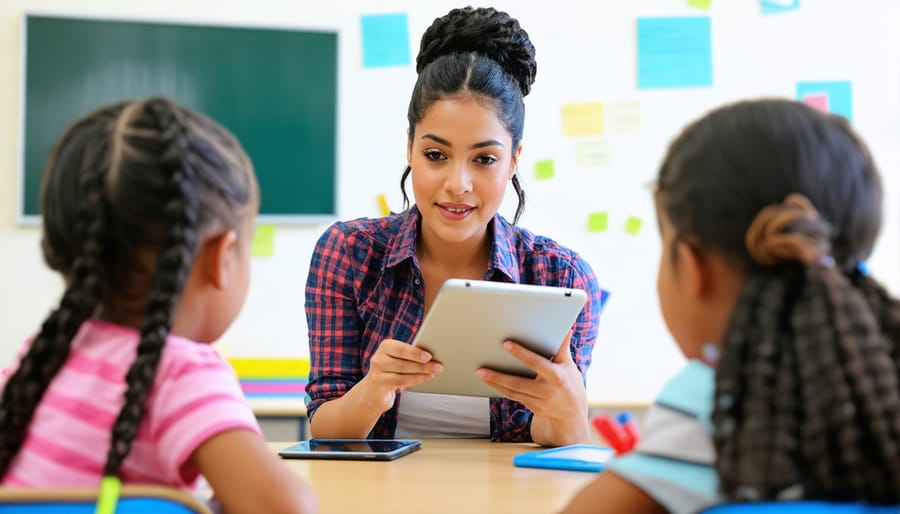
To successfully implement blended learning, educators should focus on integrating the right mix of digital learning tools and platforms. Start with a reliable Learning Management System (LMS) like Google Classroom or Canvas to organize your course materials and track student progress. Include interactive assessment tools such as Kahoot! or Quizlet for engaging formative assessments.
Video conferencing platforms like Zoom or Microsoft Teams are essential for synchronous online sessions. Complement these with screen recording tools like Screencastify or Loom for creating instructional videos students can watch at their own pace.
For collaborative work, implement tools like Padlet or Jamboard that allow students to share ideas and work together virtually. Consider using adaptive learning platforms that automatically adjust to each student’s level, such as IXL or DreamBox.
Remember to choose tools that are age-appropriate, accessible across different devices, and align with your learning objectives. Start with a few core tools and gradually expand your digital toolkit as you and your students become more comfortable with the blended learning environment.
Creating Engaging Content
Creating engaging content for blended learning requires a thoughtful mix of digital and traditional materials that work together seamlessly. Start by identifying clear learning objectives and then design content that addresses different learning styles and preferences.
Interactive elements are essential – incorporate multimedia resources like educational videos, interactive presentations, and digital quizzes that allow students to engage with the material actively. Consider using tools like virtual simulations or game-based learning activities to make complex concepts more accessible and enjoyable.
Traditional materials should complement digital resources. Develop hands-on activities, worksheets, and group projects that reinforce online learning. Remember to chunk content into manageable segments, making it easier for students to process and retain information.
Personalization is key – create materials that can be adapted to different skill levels and learning speeds. Include options for both self-paced learning and collaborative activities. Regular feedback opportunities, such as discussion prompts and reflection exercises, help students stay engaged and monitor their progress.
Keep content relevant and current by incorporating real-world examples and scenarios that students can relate to. Using a variety of assessment methods, from digital portfolios to project-based assignments, helps maintain student interest while effectively measuring learning outcomes.
Assessment in Blended Environments
Assessment in blended learning environments requires a thoughtful combination of traditional and digital evaluation methods to effectively measure student progress. Teachers can leverage both formative and summative assessments through a mix of online tools and face-to-face interactions.
Digital platforms enable real-time tracking of student performance through interactive assessment methods such as online quizzes, digital portfolios, and automated feedback systems. These tools provide immediate insights into student understanding and allow for timely interventions when needed.
In-person assessments remain valuable, offering opportunities for direct observation of student skills, group presentations, and hands-on projects. The combination of both approaches provides a more complete picture of student achievement and growth.
Effective assessment strategies in blended environments include:
– Regular progress monitoring through learning management systems
– Digital submission of assignments with detailed feedback
– Self-assessment opportunities through online reflection tools
– Peer evaluation activities both online and in-person
– Project-based assessments that combine digital and physical components
By maintaining consistent assessment practices across both online and face-to-face settings, teachers can ensure fair and comprehensive evaluation of student learning while supporting individual growth and achievement.
Overcoming Common Challenges
Implementing blended learning can present challenges, but with the right strategies, these obstacles can be transformed into opportunities for growth. One common challenge is technology access – not all students may have reliable internet or devices at home. Schools can address this by establishing device lending programs, creating partnerships with local internet providers, or designating before and after-school hours for computer lab access.
Teacher training and support often emerge as crucial concerns. Educators can overcome this by participating in professional development workshops, joining online teaching communities, and starting small with manageable tools before expanding their digital toolkit. Many schools find success with mentor programs, pairing tech-savvy teachers with those who need additional support.
Student engagement and self-direction can also be challenging in blended environments. Teachers can boost participation by incorporating interactive elements, setting clear expectations, and developing structured routines. Breaking assignments into smaller, manageable chunks and providing regular feedback helps students stay on track and build confidence in their independent learning abilities.
Time management presents another hurdle for both teachers and students. Creating detailed schedules, using time-blocking techniques, and implementing digital planning tools can help everyone stay organized. Teachers should also build in buffer time for technology troubleshooting and student support.
Technical difficulties are inevitable, but having backup plans ready can minimize disruption. This might include offline alternatives for online activities, clear procedures for tech support, and maintaining open communication channels with IT staff. Remember that flexibility and patience are key – successful blended learning environments evolve through continuous improvement and adaptation.
Implementing blended learning represents a significant step forward in modern education, offering a flexible and engaging approach that meets diverse student needs. By combining traditional classroom instruction with digital learning tools, educators can create a more personalized and effective learning environment.
As you begin your blended learning journey, remember to start small and scale gradually. Focus on selecting appropriate technology tools that align with your learning objectives, and maintain regular communication with students, parents, and fellow educators. Professional development and ongoing assessment of your blended learning strategies will help refine and improve your approach over time.
Success in blended learning comes from maintaining a balance between face-to-face interaction and online components while staying adaptable to student needs. Build a supportive community within your school, share experiences with colleagues, and celebrate both small wins and significant achievements along the way.
The future of education lies in our ability to embrace innovative teaching methods while maintaining meaningful connections with our students. Take the first step today by identifying one aspect of your teaching that could benefit from a blended approach, and begin your transformation toward more engaging and effective instruction.