
In today’s rapidly evolving educational landscape, emotional intelligence stands as the cornerstone of effective school leadership. The ability to recognize, understand, and skillfully navigate emotions—both our own and others’—can dramatically transform your school’s leadership culture and foster unprecedented growth. Research consistently shows that leaders with high emotional intelligence create more resilient, collaborative, and high-performing educational environments.
Unlike traditional leadership metrics focused solely on academic outcomes or administrative efficiency, emotional intelligence empowers school leaders to build genuine connections, resolve conflicts constructively, and inspire authentic engagement across their educational community. This essential skill set enables administrators to read the subtle emotional currents that flow through their schools, anticipate challenges before they escalate, and create supportive environments where both staff and students can thrive.
As we explore the dimensions of emotional intelligence in educational leadership, we’ll discover how self-awareness, empathy, relationship management, and social awareness combine to create leadership approaches that resonate deeply with modern educational challenges. These capabilities aren’t just nice-to-have additions to a leader’s toolkit—they’re fundamental requirements for creating positive, sustainable change in our schools.
The Core Components of Emotional Intelligence for School Leaders
Self-Awareness in Educational Leadership
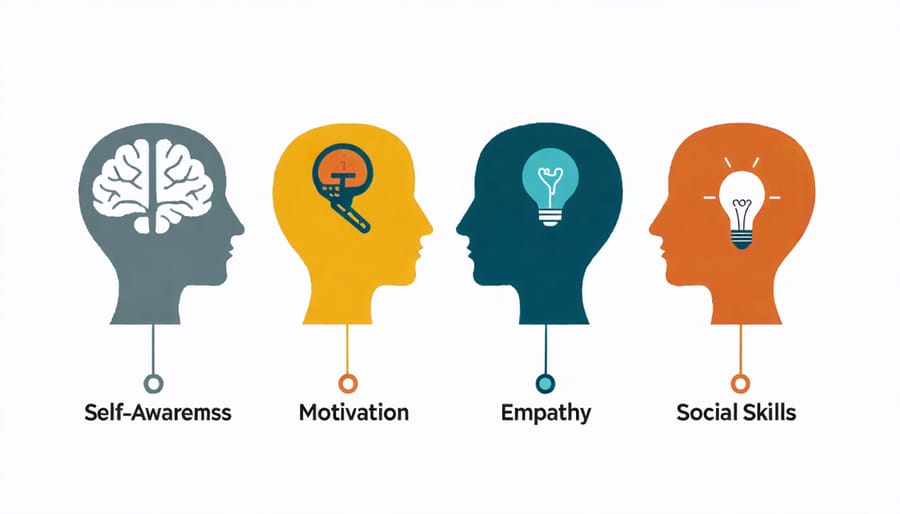
Self-awareness forms the cornerstone of emotional intelligence in educational leadership, requiring school leaders to maintain a clear understanding of their emotional responses and their impact on the school community. When principals and administrators recognize their emotional triggers and patterns, they can make more balanced decisions that benefit students, staff, and families.
Educational leaders who practice self-awareness regularly monitor their stress levels, communication styles, and leadership behaviors. This might involve reflecting on how they handle challenging parent conferences, respond to teacher concerns, or manage unexpected school crises. By understanding their emotional strengths and limitations, leaders can better navigate the complex dynamics of school management.
Practical strategies for developing self-awareness include maintaining a leadership journal, seeking feedback from trusted colleagues, and setting aside dedicated time for reflection. Many successful school leaders also use emotional check-ins throughout the day, especially before important meetings or difficult conversations. This practice helps them approach situations with clarity and purpose, rather than reacting from a place of unchecked emotion.
Remember that self-awareness isn’t about eliminating emotions but rather understanding and channeling them effectively to create a positive school culture.
Managing Emotions in High-Pressure School Environments
In high-pressure school environments, emotional intelligence becomes crucial for maintaining composure and leading effectively. Educational leaders must develop strategies for managing crisis situations while keeping their emotions in check. Start by practicing self-awareness through regular emotional check-ins throughout the day, especially before important meetings or challenging conversations.
Create a personal calming routine that can be implemented quickly, such as deep breathing exercises or a brief mindfulness moment. These techniques help maintain clarity during stressful situations like parent confrontations or staff conflicts. Additionally, establish a support network of trusted colleagues who can provide perspective and emotional backup when needed.
Remember that emotional regulation doesn’t mean suppressing feelings – it’s about acknowledging emotions and responding appropriately. Use the “pause and reflect” method: take a moment to identify your emotional state, consider the impact of your potential reactions, and choose a response that aligns with your leadership goals. This approach helps maintain professional relationships while modeling emotional intelligence for your school community.
Building Stronger School Communities Through EI
Creating Emotionally Safe Learning Spaces
Creating emotionally safe learning environments is fundamental to effective educational leadership and requires a thoughtful, systematic approach. Leaders who prioritize emotional safety understand that when staff and students feel secure, supported, and valued, they’re more likely to engage, take positive risks, and contribute meaningfully to the school community.
Start by establishing clear expectations and boundaries while maintaining flexibility for individual needs. This includes implementing community engagement strategies that encourage open dialogue and active participation from all stakeholders. Regular check-ins, both formal and informal, help identify potential concerns before they escalate and demonstrate genuine care for team members’ well-being.
Consider creating designated spaces for emotional processing and professional reflection. These might include quiet rooms for decompression, scheduled time for peer support groups, or structured mentoring programs. Leaders should model emotional vulnerability appropriately, showing that it’s acceptable to acknowledge challenges and seek support when needed.
Implement a feedback system that emphasizes growth rather than criticism. When addressing concerns, focus on specific behaviors and their impact rather than making personal judgments. This approach helps maintain professional dignity while promoting continuous improvement.
Remember that emotional safety doesn’t mean avoiding difficult conversations or challenges. Instead, it means creating an environment where these conversations can happen respectfully and constructively, with clear protocols for conflict resolution and professional support when needed. By consistently demonstrating emotional intelligence in your leadership approach, you help cultivate a culture where everyone feels equipped to manage their emotional responses effectively.
Developing Staff Through Emotional Connection
Building strong relationships with staff members requires intentional effort and genuine emotional connection. As an educational leader, your ability to develop and nurture these connections directly impacts school culture and student success.
Start by practicing active listening during conversations with teachers and staff. This means maintaining eye contact, showing genuine interest, and responding thoughtfully to their concerns and ideas. Make time for regular one-on-one meetings where staff members can share their challenges, aspirations, and professional goals in a safe, supportive environment.
Show empathy by acknowledging the demands of teaching and the personal circumstances that may affect staff performance. When a teacher is struggling with work-life balance or facing classroom challenges, respond with understanding and work collaboratively to find solutions.
Celebrate both personal and professional milestones. Whether it’s a teacher completing an advanced degree, implementing an innovative teaching strategy, or reaching a personal goal, recognition builds trust and motivation. Create opportunities for staff to share their successes and learn from each other through mentoring programs and collaborative projects.
Remember that emotional connection also means being vulnerable as a leader. Share your own challenges and learning experiences, demonstrating that growth is a continuous journey for everyone. When making decisions that affect staff, be transparent about your reasoning and actively seek input from team members.
Invest in professional development opportunities that align with individual interests and strengths. This shows that you value their growth and are committed to their success. Regular check-ins and feedback sessions help maintain these connections and ensure ongoing support for your staff’s development.

Practical EI Strategies for Daily School Leadership

Active Listening and Empathy in Practice
Active listening and empathy form the cornerstone of emotionally intelligent leadership in schools. When you practice active listening, you demonstrate to your staff and students that their voices matter and their perspectives are valued. Start by maintaining eye contact, nodding to show understanding, and avoiding interruptions when others speak.
Consider implementing the “pause-reflect-respond” technique during conversations with teachers or parents. Take a brief moment to process what’s been said before responding, which shows thoughtful consideration of their input. This approach is particularly effective during challenging conversations about student performance or curriculum changes.
To enhance empathy in your daily interactions, try “perspective-taking walks” – mentally putting yourself in the position of different school community members. For example, consider how a new policy might affect a first-year teacher versus a veteran educator, or how a schedule change impacts both students and support staff.
Create dedicated listening spaces and times, such as monthly “open-door sessions” where staff can share concerns freely. Use reflective questioning techniques, like “What I hear you saying is…” or “Help me understand how this affects your classroom…” These approaches validate others’ experiences while ensuring clear communication.
Remember that body language speaks volumes. Position yourself at eye level during conversations, maintain an open posture, and be mindful of facial expressions that might unintentionally communicate judgment or dismissal.
Conflict Resolution with Emotional Intelligence
In educational settings, conflicts are inevitable, but emotionally intelligent leaders can transform these challenges into opportunities for growth and learning. When addressing disagreements between staff members or handling difficult conversations with parents, start by creating a safe space where all parties feel heard and validated.
Practice active listening by maintaining eye contact, asking clarifying questions, and reflecting back what you’ve heard. This demonstrates respect and helps ensure you truly understand each perspective. Remember that emotions often run high during conflicts, so maintain awareness of both your own emotional state and those of others involved.
Use the “pause and reflect” technique when tensions escalate. Take a brief moment to assess the situation, regulate your emotions, and consider the best approach to move forward constructively. This models emotional self-regulation for your school community.
Frame conflicts as shared problems to solve rather than win-lose situations. For example, when addressing resource allocation disputes between departments, focus the conversation on how to best serve student needs while acknowledging budget constraints. This approach helps maintain collaborative relationships even during challenging discussions.
Develop clear communication protocols for addressing conflicts and ensure all staff members understand the process. This might include establishing regular check-ins, creating structured feedback channels, and providing multiple ways for team members to voice concerns before they escalate into larger issues.
Remember that successful conflict resolution strengthens relationships and builds trust within your school community, ultimately creating a more positive and productive learning environment for everyone.
Measuring EI Impact in School Leadership
Key Performance Indicators for EI Success
Measuring emotional intelligence success in educational leadership involves tracking specific indicators that reflect both personal growth and organizational impact. Consider monitoring your staff retention rates, as emotionally intelligent leaders typically maintain higher teacher satisfaction and lower turnover. Track the frequency and quality of collaborative initiatives, noting increased participation in team projects and professional development activities.
Student achievement data, while not directly measuring emotional intelligence, can indicate the effectiveness of a supportive school climate. Pay attention to metrics like reduced disciplinary incidents and improved attendance rates, which often correlate with stronger emotional connections between staff and students.
Regular feedback surveys can gauge staff perception of leadership accessibility and effectiveness. Look for improvements in communication satisfaction scores and increased willingness to share innovative ideas. Document instances of successful conflict resolution and the number of staff members seeking mentorship or guidance.
Remember to measure your own growth through self-reflection logs, tracking how often you practice active listening, demonstrate empathy, and successfully manage challenging emotional situations. Consider keeping a leadership journal to monitor your progress in applying emotional intelligence strategies throughout the school year.
Long-term Benefits of EI Leadership
Research consistently shows that emotionally intelligent leadership in schools creates lasting positive impacts on both staff and student outcomes. Schools led by principals with high emotional intelligence report higher teacher retention rates, increased staff satisfaction, and stronger community engagement. These leaders excel at developing future leaders within their teams, creating sustainable improvement cycles that benefit the entire school ecosystem.
Studies indicate that emotionally intelligent school leaders foster environments where teachers feel valued and supported, leading to improved classroom instruction and student achievement. When leaders effectively manage their own emotions and demonstrate empathy, they create psychologically safe spaces where innovation flourishes and collaborative problem-solving becomes the norm.
The ripple effects extend beyond immediate academic results. Schools with emotionally intelligent leadership show enhanced social-emotional learning outcomes for students, reduced behavioral incidents, and stronger parent-school partnerships. These benefits compound over time, creating a positive school culture that sustains excellence and growth, even during challenging periods of change or transition.
Emotional intelligence is not just a leadership concept – it’s a transformative force that can reshape our educational communities for the better. As we’ve explored throughout this article, developing emotional intelligence skills enables school leaders to create more supportive, engaging, and successful learning environments.
Remember that enhancing your emotional intelligence is an ongoing journey. Start by practicing self-awareness in your daily interactions with staff and students. Pay attention to how your emotions influence your decisions and leadership style. Take time to actively listen to your team members, showing genuine empathy and understanding for their perspectives and challenges.
The impact of emotionally intelligent leadership extends far beyond administrative effectiveness – it shapes school culture, strengthens relationships, and ultimately supports better student outcomes. By modeling these skills, you inspire your staff to develop their own emotional intelligence, creating a ripple effect throughout your school community.
Consider starting small by implementing one or two strategies discussed here, then gradually expanding your emotional intelligence toolkit. Remember, every step forward in developing your emotional intelligence makes you a more effective, empathetic, and inspiring educational leader.
Together, we can create school environments where emotional intelligence drives positive change and lasting success.