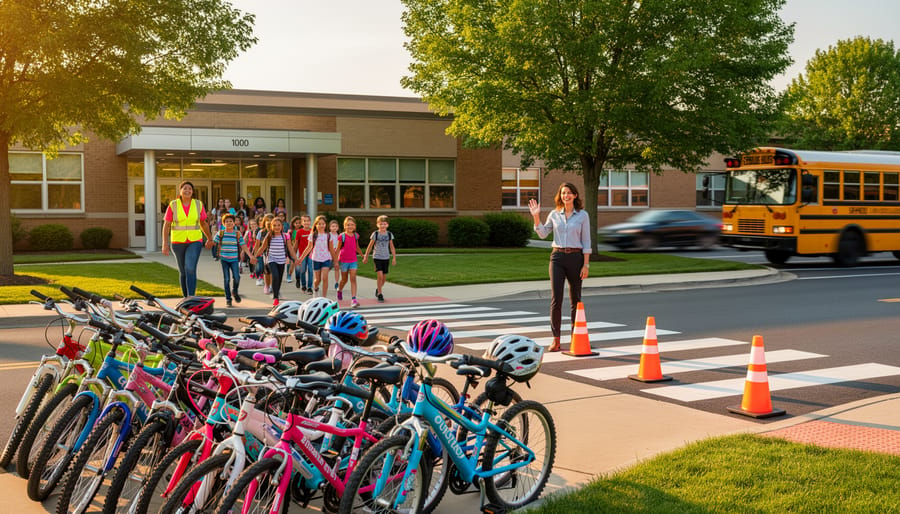
Transform morning drop-off routines into powerful teaching moments by launching a school-wide bike-to-school day that students help organize, complete with safety stations, route maps, and data collection on carbon emissions saved. Integrate transportation choices directly into your math curriculum by having students calculate fuel costs, carbon footprints, and time efficiency across different modes—walking, cycling, carpooling, and public transit—using real data from your local community. Partner with your school’s parent association to establish a walking school bus program where adult volunteers lead groups of students along designated routes, turning the daily commute into an opportunity for exercise, community building, and hands-on sustainability education.
The transportation choices we make today shape the world our students will inherit tomorrow. As educators, you hold unique power to influence not just what students learn about sustainable transportation, but how they experience it as a viable, accessible part of daily life. Every school community faces distinct challenges—urban traffic congestion, rural distances, limited public transit, varying family resources—yet each context offers genuine opportunities to explore transportation alternatives that benefit both the environment and student wellbeing.
This guide equips you with comprehensive knowledge about sustainable transportation options alongside practical strategies for bringing these concepts alive in your classroom and school community. You will discover how to connect transportation topics across subject areas, from science and social studies to health and economics, while addressing real-world problems your students care about. Whether you are introducing basic concepts to elementary learners or facilitating complex policy discussions with high schoolers, you will find adaptable lesson frameworks, assessment tools, and community engagement strategies that make sustainable transportation relevant and actionable for your unique teaching context.
Why Transportation Matters in Sustainability Education
Transportation offers an exceptional entry point for teaching sustainability because it’s something every student experiences daily. Whether they arrive by bus, car, bicycle, or on foot, students already have personal connections to transportation choices. This familiarity makes abstract sustainability concepts tangible and immediately relevant to their lives.
The impacts of transportation decisions are measurably visible in ways that resonate with young learners. Students can observe traffic patterns outside their school, notice differences in noise levels, and even detect changes in air quality on high-traffic days. These observable phenomena create natural opportunities for inquiry-based learning and scientific investigation that align with curriculum standards across grade levels.
Transportation also serves as a powerful lens for understanding interconnected systems. When students explore how people move through their community, they naturally encounter questions about urban planning, public health, economics, and social equity. A family’s transportation choices might depend on income, physical ability, geographic location, or work schedules. These real-world complexities help students develop critical thinking skills while recognizing diverse perspectives and experiences.
The health and wellbeing connections are particularly compelling for students. They can understand how active transportation like walking or cycling promotes physical fitness, while reduced vehicle emissions support respiratory health for everyone in their community. These personal health benefits make sustainability feel less like an abstract environmental concern and more like a practical consideration for their own lives and families.
Perhaps most importantly, transportation is an area where student action can create visible change. Unlike some sustainability topics that feel overwhelming or distant, students can participate in walk-to-school events, advocate for bike lanes, or help organize carpool programs. These actionable steps empower students to see themselves as change-makers rather than passive observers, building confidence and agency that extends beyond transportation to other sustainability challenges they’ll face throughout their lives.
Core Sustainable Transportation Options to Teach
Walking and Biking Programs
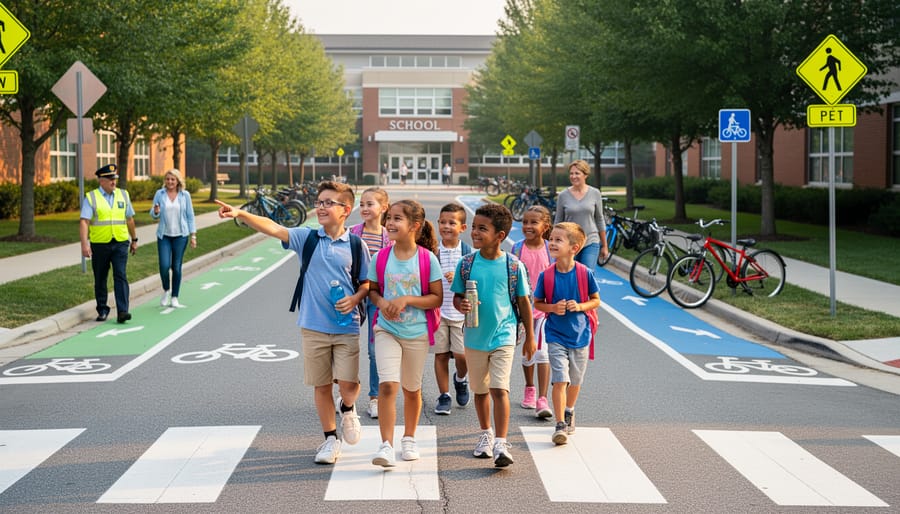
Walking and biking programs offer wonderful opportunities to connect sustainability education with students’ daily lives while promoting healthy, active transportation habits. These initiatives transform the journey to school into a meaningful learning experience that benefits both students and the environment.
Safe Routes to School programs provide an excellent framework for making walking and biking safer and more accessible. These community-based efforts typically include infrastructure improvements like crosswalks, bike lanes, and sidewalk repairs, along with educational components you can integrate into your curriculum. Start by conducting a walking audit with your students to identify safe routes and potential hazards in your school neighborhood. This hands-on activity teaches observation skills, critical thinking, and civic engagement while collecting real data to share with local planners.
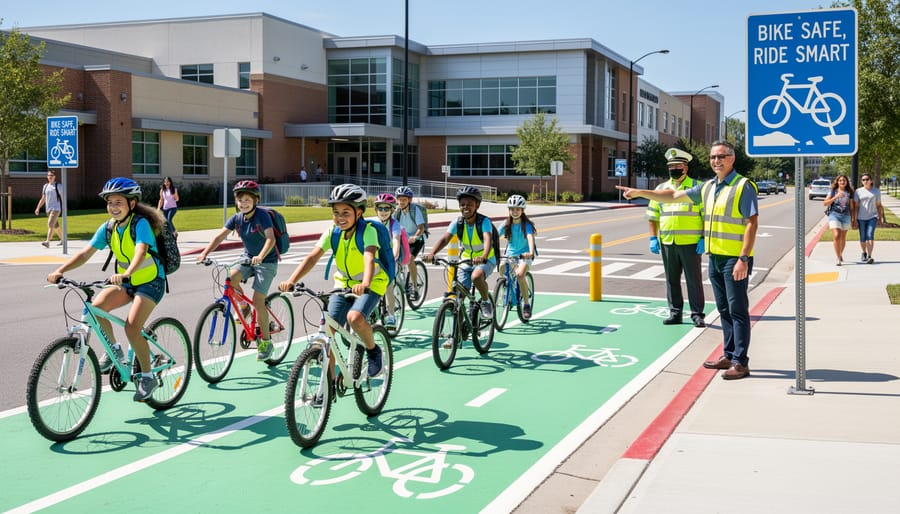
Bike safety education is essential before launching any cycling initiative. Partner with local bicycle advocates or police departments to provide helmet fittings and safety workshops. Create a checklist system where students earn bicycle licenses after demonstrating proper signaling, helmet use, and road awareness. Many schools find success with bike rodeos that turn safety training into an engaging, interactive experience.
To encourage participation, consider organizing Walk and Bike to School Days, establishing walking school buses with parent volunteers, or creating a bike valet system where students can safely store bicycles during the school day. Track participation through friendly classroom competitions or reward systems that celebrate consistent active transportation choices.
Remember to address equity by providing bicycles through lending libraries or partnerships with community organizations, ensuring all students can participate regardless of family resources. By normalizing walking and biking, you are helping students develop lifelong sustainable habits while building stronger, more connected school communities.
Public Transit Literacy
Helping students understand and confidently navigate public transit systems opens doors to independence while reinforcing sustainability concepts. You can transform what might seem like a mundane skill into an empowering learning experience that connects environmental awareness with real-world application.
Start by introducing students to local transit systems through hands-on exploration. Create classroom activities where students practice reading bus schedules, mapping routes, and calculating travel times. Many transit agencies offer educational materials or even virtual tours that bring these systems to life without leaving your classroom. Consider organizing field trips where students experience public transportation firsthand, learning to use fare cards, identify stops, and follow route maps.
Connect transit literacy to environmental benefits by engaging students in comparing the carbon footprint of different transportation modes. Have them calculate how many cars could be removed from roads if families shared rides on buses or trains. This mathematical connection makes abstract sustainability concepts tangible and meaningful.
For younger students, simplified route-planning activities using your local area help build foundational skills. Older students can tackle more complex challenges like planning multi-stop journeys or analyzing accessibility features for diverse community members.
Interactive mapping tools and transit planning apps provide excellent opportunities for technology integration while teaching practical life skills. Encourage students to become transit ambassadors, sharing their knowledge with families and peers. This ripple effect extends sustainability lessons beyond classroom walls into your broader community.
Carpooling and Ridesharing Models
Carpooling and ridesharing present excellent opportunities for teaching students about collaboration, environmental impact, and practical mathematics. Your classroom can explore these concepts through engaging activities that make sustainability tangible and relevant.
Start with simple calculations that resonate with different grade levels. Elementary students can count how many cars are saved when families share rides to school, while middle schoolers can calculate weekly emission reductions using real data from your school community. High school students might develop optimization models for efficient carpool routes using mapping tools and algorithms.
Create interactive simulations where students role-play coordinating carpool schedules, considering variables like timing, routes, and participant needs. This teaches valuable problem-solving and communication skills while demonstrating how cooperation benefits everyone. Students can survey families about current transportation habits and design carpool matching systems for your school.
The mathematics behind carpooling offers rich cross-curricular connections. Students can graph emission reductions, calculate cost savings per family, and compare environmental impacts across different scenarios. These exercises strengthen numeracy skills while building environmental awareness.
Consider launching a school carpool initiative as a service-learning project. Students can create promotional materials, develop coordination systems using shared digital tools, and track results over time. Community forums allow families to share experiences and troubleshoot challenges together, building lasting sustainable habits. This hands-on approach transforms abstract concepts into meaningful action, empowering students as environmental leaders.
Electric and Low-Emission Vehicles
Electric and low-emission vehicles represent an exciting frontier in sustainable transportation that offers rich learning opportunities for your students. These emerging technologies are transforming how we think about getting from place to place while reducing our environmental impact.
When comparing emissions across vehicle types, you can help students understand that traditional gasoline-powered cars produce the most carbon dioxide and air pollutants, while hybrid vehicles offer a middle ground by combining gas engines with electric motors. Fully electric vehicles produce zero direct emissions, though it’s important to discuss with students that the electricity powering them comes from various sources, including both renewable and non-renewable energy.
This topic opens wonderful cross-curricular connections. In science classes, students can explore battery technology and energy conversion. Math lessons might involve calculating fuel efficiency or comparing long-term costs of different vehicle types. Social studies can examine how transportation choices affect community health and environmental justice.
Looking toward the future, your students can investigate emerging innovations like hydrogen fuel cells, solar-powered vehicles, and improvements in battery technology. Engaging them in these discussions helps build critical thinking skills while empowering them to envision their role in creating more sustainable communities. Consider inviting local electric vehicle owners to share their experiences or using online interactive tools to explore vehicle emissions data together.
Practical Lesson Plan Ideas Across Grade Levels
Elementary School Activities
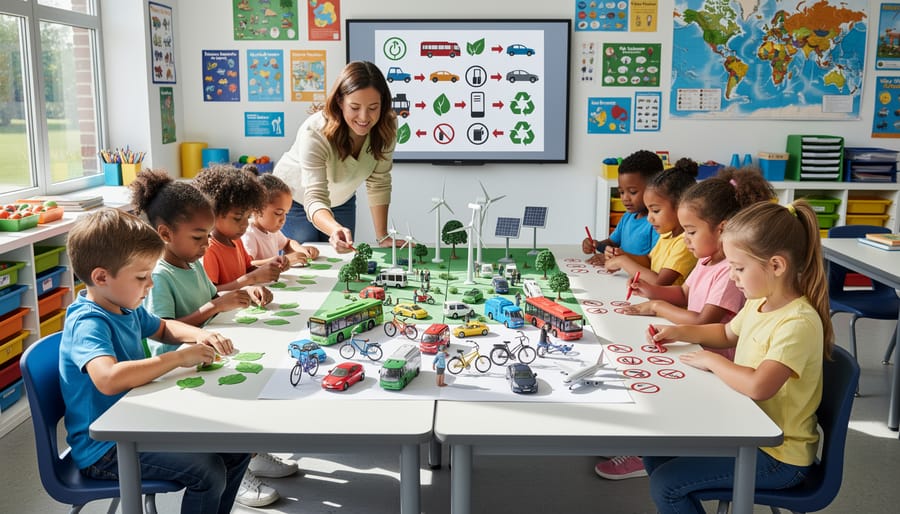
Elementary learners thrive with hands-on activities that make sustainable transportation concepts tangible and fun. Start with transportation mode sorting games where students categorize picture cards by environmental impact, travel speed, or energy source. This visual exercise helps young learners understand the differences between walking, biking, buses, and cars while building classification skills.
Walking field trips transform lessons into lived experiences. Plan routes around your school neighborhood to identify pedestrian-friendly features like crosswalks, sidewalks, and traffic signals. Students can sketch maps, count street trees, or observe how different transportation modes share the road. These excursions reinforce that walking is both sustainable and accessible.
Bike safety obstacle courses bring movement and learning together. Set up cones, traffic signs, and designated lanes in your playground or gymnasium. Students practice hand signals, stopping techniques, and road awareness while discovering biking as a healthy, eco-friendly option. Partner with local cycling organizations for equipment loans or guest instructors.
Introduce simple carbon footprint calculations using age-appropriate worksheets. Students can estimate emissions from their family’s weekly transportation choices using basic addition or visual charts with color-coded impact levels. This mathematical connection helps quantify abstract environmental concepts.
Create a classroom transportation tracker where students mark daily travel modes with stickers or magnets. Review weekly patterns together, celebrating sustainable choices and discussing barriers to greener options. These activities build environmental awareness while developing critical thinking about everyday decisions.
Middle School Projects
Middle school students are ready to tackle more sophisticated investigations that connect transportation choices to broader community and environmental impacts. Start by having students conduct transportation surveys within their school or local community to gather real data about how people travel. They can create digital surveys, analyze results using spreadsheets, and present findings through charts and infographics that reveal patterns in transportation choices.
Transit route mapping projects help students understand public transportation systems and identify gaps in service. Students can map existing bus or train routes, calculate coverage areas, and propose improvements that would better serve underserved neighborhoods. This work naturally integrates geography, math, and social studies while developing spatial reasoning skills.
Comparative emissions research allows students to calculate and compare carbon footprints of different transportation modes. Using online calculators and real-world data, they can determine the environmental impact of driving alone versus carpooling, taking public transit, or biking. These calculations make abstract concepts concrete and demonstrate the cumulative effect of individual choices.
Persuasive writing campaigns empower students to advocate for change. They can write letters to local officials requesting bike lanes, create public service announcements promoting walking school buses, or develop social media campaigns encouraging sustainable commuting. These projects build communication skills while giving students authentic opportunities to influence their communities and see themselves as agents of positive change.
High School Explorations
High school students are ready to tackle sophisticated transportation challenges that mirror real-world decision-making. Urban planning simulations provide an excellent starting point, where students can redesign their community’s transportation network using mapping tools and data analysis. Challenge them to balance environmental goals with economic constraints and community needs, presenting their proposals to local officials or planning departments for authentic feedback.
Cost-benefit analyses deepen critical thinking as students evaluate different transportation investments. They can compare the long-term costs of expanding highways versus developing light rail, factoring in environmental impact, maintenance expenses, and community benefits. This mathematical modeling connects to economics, environmental science, and statistics while building analytical skills employers value.
Policy research projects empower students to investigate transportation legislation at local, state, and national levels. Students can examine how zoning laws affect walkability, how tax incentives promote electric vehicles, or how different cities approach bike infrastructure. These investigations naturally lead to advocacy opportunities where students testify at school board meetings about improving campus transportation, write proposals for bike-sharing programs, or launch awareness campaigns about carpooling benefits.
Partner with local transportation agencies to create internship experiences or mentorship programs. These real-world connections help students see sustainable transportation as both an urgent challenge and a viable career pathway.
Integrating Transportation Education Across the Curriculum
Math and Science Connections
Transportation topics offer rich opportunities to integrate mathematics and science concepts into your lessons in meaningful, real-world ways. Your students can collect and analyze local transportation data to create graphs and calculate averages, bringing statistics to life beyond the textbook. Have them measure distances between home and school, then compare travel times across different transportation modes to explore speed, efficiency, and the relationship between variables.
Carbon footprint calculations provide excellent practice with multiplication, unit conversion, and comparative analysis. Students can research emission rates for various vehicles, then calculate and compare the environmental impact of different transportation choices. This connects abstract numbers to concrete environmental outcomes, making math feel purposeful and relevant.
Environmental science concepts naturally emerge when examining transportation systems. Students can investigate air quality, explore the chemistry of combustion engines versus electric vehicles, and study energy transfer and efficiency. Weather patterns, wind resistance, and friction offer engaging physics connections that explain why certain transportation modes work better in specific conditions.
These interdisciplinary activities strengthen mathematical reasoning while building scientific literacy and environmental awareness. You can easily adapt complexity levels to match your grade level, ensuring every student engages meaningfully with both the computational and conceptual aspects of sustainable transportation.
Social Studies and Civics Applications
Transportation discussions offer rich opportunities to connect students with civics and social studies content in meaningful ways. When examining urban planning history, students discover how past infrastructure decisions continue shaping their communities today. Have them investigate why certain neighborhoods have better access to public transit or safer bike lanes, leading naturally into conversations about transportation equity and environmental justice.
Engage students in analyzing local transportation policies through mock city council meetings where they debate bike lane installations or bus route changes. This hands-on approach helps them understand democratic processes while developing critical thinking skills. Consider organizing community forums where students present transportation improvement proposals to actual local officials, transforming classroom learning into genuine civic participation.
Students can map transportation deserts in their region, interview community members about mobility challenges, and research how different communities worldwide have addressed similar issues. These activities connect historical decision-making with present-day consequences, empowering students to envision themselves as active participants in creating more equitable, sustainable communities.
Language Arts and Creative Expression
Language arts offers powerful opportunities to connect students with sustainable transportation through authentic communication and creative expression. Start with transportation-themed literature that explores environmental themes, from picture books about bicycling adventures to young adult novels addressing climate change and community action. These stories provide natural springboards for classroom discussions about personal choices and collective responsibility.
Persuasive writing assignments allow students to practice argumentation while exploring real-world issues. Challenge your students to write letters to local officials advocating for bike lanes, compose op-eds about school bus route optimization, or create proposals for improving pedestrian safety near campus. These assignments develop critical thinking and civic engagement skills simultaneously.
Awareness campaigns merge creativity with purpose. Students can design posters, write public service announcements, or produce video content promoting walking school buses or carpooling initiatives. Consider establishing a classroom publishing center where students develop newsletters or social media content sharing sustainable transportation tips with the school community. These projects build communication skills while empowering students as environmental advocates who can inspire meaningful change in their own communities.
Building School-Wide Sustainable Transportation Initiatives
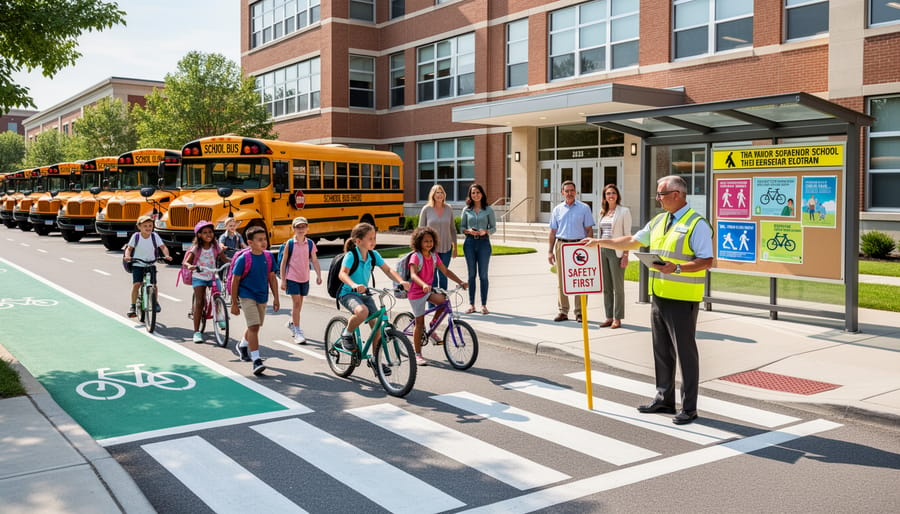
Walk and Roll to School Programs
Establishing Walk and Roll to School programs creates meaningful opportunities for students to practice sustainable transportation while building healthy habits. Start by designating specific days—many schools find success with “Walking Wednesdays” or monthly bike-to-school events that gradually build participation and enthusiasm.
The walking school bus model offers an excellent entry point. Identify a regular route and schedule where parent or teacher volunteers lead groups of students walking together to school. Begin with a single route near your school, then expand as interest grows. Clearly communicate meeting points, times, and safety procedures to all families involved. This approach works particularly well in neighborhoods where several students live within a mile of campus.
For biking programs, partner with local bicycle shops or safety organizations to offer bike rodeos that teach proper riding techniques, helmet fitting, and traffic awareness. Ensure your campus has adequate, secure bike parking to support student cyclists.
Create engaging incentive systems that celebrate participation without creating pressure. Consider punch cards where students earn recognition after certain milestones, classroom challenges that foster friendly competition, or simple celebration assemblies acknowledging participants. Display participation data visually in hallways to build school-wide momentum.
Launch your program by surveying families about interest levels, available routes, and potential volunteer support. Connecting with your parent-teacher organization often yields enthusiastic volunteers ready to champion the initiative within your school community.
Infrastructure and Safety Improvements
Creating a school environment that truly supports sustainable transportation requires intentional infrastructure improvements. Start by partnering with your administrators and facilities team to assess current conditions. Walk around your campus together and identify opportunities for enhancement, such as installing additional bike racks near main entrances, improving lighting along walking paths, or creating clearly marked drop-off zones that separate pedestrians from vehicle traffic.
Engage your parent-teacher organization and local community partners in these efforts. Many municipalities offer grants for pedestrian safety improvements, and local businesses may sponsor bike parking facilities. Consider forming a Green Transportation Committee that includes teachers, parents, students, and community members who can advocate for improvements and coordinate with local traffic engineers.
Focus on quick wins that make immediate impacts. Painting vibrant crosswalks, adding bicycle repair stations, or creating covered waiting areas for students shows your commitment to sustainable options. These visible changes encourage more families to choose walking, biking, or carpooling. Remember that infrastructure improvements send a powerful message to students about prioritizing environmental responsibility and community wellbeing, reinforcing the sustainability lessons happening in your classroom.
Family and Community Engagement
Engaging families and the broader community transforms sustainable transportation from a classroom concept into a lived practice. Start by creating accessible communication materials that explain your transportation initiatives in multiple languages, using newsletters, social media updates, and school apps to share success stories and practical tips families can implement immediately.
Consider organizing a Walk and Roll to School Week that invites families to participate alongside students. This community-wide event builds enthusiasm while demonstrating that sustainable transportation choices can fit into busy family schedules. Provide resources like safe route maps, bike safety checklists, and carpooling coordination tools through an online community forum where families can connect and share solutions.
Partner with local organizations to extend your impact. Transit agencies often offer free educational workshops, bike shops may provide maintenance clinics, and environmental groups can support walking school bus programs. These partnerships bring expertise and resources while strengthening community connections.
Create opportunities for families to contribute their knowledge and experience. Host evening sessions where parents share transportation traditions from their cultures or organize a community solutions fair where families brainstorm local improvements. When parents see themselves as partners in sustainability education, they’re more likely to reinforce these practices at home, creating lasting change that extends far beyond the school day.
Overcoming Common Implementation Challenges
Launching a transportation education program brings exciting opportunities, but you may encounter some predictable challenges along the way. The good news? Each obstacle has workable solutions that other educators have successfully implemented.
Safety concerns often top the list of worries, particularly when considering activities like walking field trips or bicycle education. Start by establishing clear protocols and obtaining proper permissions. Partner with local traffic safety officers who can provide professional guidance and even visit your classroom. For cycling programs, consider beginning with stationary bike demonstrations or parking lot practice sessions before any road activities. Many schools have found success using virtual field trips and simulation tools when physical activities present too many variables.
The rural versus urban divide presents distinct challenges. Urban educators might struggle with limited green space, while rural teachers may face long distances between destinations. Embrace your context rather than fighting it. Urban schools can explore micro-mobility options like scooters and bike-sharing systems that students actually encounter. Rural educators can emphasize carpooling strategies, school bus optimization, and the role of rural public transit systems. Both settings offer authentic learning opportunities when you frame lessons around your community’s real transportation landscape.
Weather considerations require flexible planning. Develop indoor alternatives for every outdoor activity. Create transportation simulation games, use interactive digital tools, or organize hallway movement activities that teach concepts without requiring ideal conditions. Some of the most creative lessons emerge from weather limitations.
Resource constraints need not derail your program. Begin small with discussion-based lessons requiring zero budget. Tap into free resources from transportation departments and environmental organizations. Your community likely has transportation professionals willing to speak with students virtually or in person. Consider forming partnerships with neighboring schools to share materials and guest speakers.
Remember that implementation challenges decrease significantly when you build a support network. Connect with other educators through community forums where you can exchange solutions and celebrate successes. Start with one manageable initiative, document what works, and expand gradually. Your first attempt doesn’t need to be perfect; it just needs to begin. Every educator introducing these concepts faces similar hurdles, and each small step forward contributes to building a culture of sustainable thinking in your school community.
Resources and Tools for Educators
Teaching about sustainable transportation becomes much easier when you have the right resources at your fingertips. Here’s a curated collection of practical materials and support systems to enhance your classroom instruction.
The Alliance for Climate Education offers free, downloadable lesson plans specifically designed for middle and high school students, including interactive modules on transportation’s environmental impact. Similarly, Green Education Foundation provides age-appropriate activities spanning K-12, with ready-to-use worksheets and project templates that require minimal preparation time.
For hands-on learning tools, consider using the EPA’s Carbon Footprint Calculator in your classroom. This interactive platform helps students measure transportation-related emissions and compare different commuting choices. The Walk Score website offers another engaging tool, allowing students to analyze the walkability and transit accessibility of various neighborhoods as part of geography or social studies lessons.
Professional development opportunities abound through organizations like Project Learning Tree and the National Environmental Education Foundation, both offering workshops and online courses focused on sustainability education. Many programs provide continuing education credits and connect you with fellow educators implementing similar initiatives.
Grant funding can support your sustainable transportation projects. The Captain Planet Foundation awards grants up to five thousand dollars for hands-on environmental projects, while many state departments of education offer sustainability-focused mini-grants. Local community foundations and environmental organizations often fund school-based transportation initiatives like bike share programs or walking school buses.
Connect with other educators through the Green Schools National Network’s online community forums, where teachers share successful strategies, troubleshoot challenges, and exchange resources. The North American Association for Environmental Education also hosts regional networking events and maintains a robust online resource library.
For ongoing support, bookmark the Transportation and Climate Initiative’s educational resources page, which regularly updates with new teaching materials, case studies, and success stories from schools implementing sustainable transportation programs. These practical resources will help you transform sustainability concepts into meaningful learning experiences for your students.
Teaching sustainable transportation isn’t just about sharing information—it’s about nurturing a generation of environmental stewards who understand their power to create positive change. When students explore bike lanes, public transit systems, and carpooling options, they develop critical thinking skills that extend far beyond the classroom. They begin questioning their own habits, discussing alternatives with family members, and recognizing how individual choices collectively shape our communities.
The ripple effect of this education is remarkable. Students who learn about sustainable transportation often become household advocates, encouraging parents to consider walking to nearby destinations or exploring public transit options. They share their knowledge with siblings, neighbors, and friends, amplifying the impact of your classroom lessons throughout the entire community.
Remember, you don’t need to transform your entire curriculum overnight. Start small with a single lesson about local bike paths, incorporate a walking field trip, or dedicate one week to tracking transportation choices. Each manageable step builds momentum and confidence.
We invite you to share your sustainable transportation teaching experiences and connect with fellow educators facing similar opportunities and challenges. Visit Teach Find’s community forums to exchange lesson ideas, troubleshoot implementation questions, and celebrate successes together. Your insights could inspire another educator just beginning their sustainability journey.