Transforming early childhood education through integrated curriculum creates powerful learning experiences that mirror how children naturally explore and understand their world. By weaving together mathematics, literacy, science, and environmental education strategies, educators can create meaningful connections that enhance cognitive development and deepen understanding across all domains.
Research consistently demonstrates that integrated learning approaches increase student engagement, improve knowledge retention, and develop critical thinking skills more effectively than traditional compartmentalized instruction. When young learners experience curriculum integration, they develop the ability to see relationships between different subjects, apply knowledge across contexts, and build stronger neural pathways that support long-term learning success.
This holistic approach aligns perfectly with how young children naturally learn – through play, exploration, and discovery. Rather than presenting subjects in isolation, integrated curriculum acknowledges that learning is interconnected, just as real-world challenges and opportunities rarely fit into neat subject-area boxes. By embracing this approach, educators create dynamic learning environments that prepare children for future success while honoring their natural curiosity and development.
Why Environmental Integration Matters in Early Learning
Cognitive Development Benefits
Research consistently shows that integrated curriculum approaches in early childhood education significantly enhance cognitive development across multiple domains. When children engage with environmental concepts alongside traditional subjects, they develop stronger neural connections and demonstrate improved problem-solving abilities.
Studies indicate that young learners who participate in integrated environmental activities show enhanced spatial reasoning, pattern recognition, and scientific thinking skills. For example, when children explore outdoor spaces while learning about shapes and numbers, they develop both mathematical concepts and natural science understanding simultaneously.
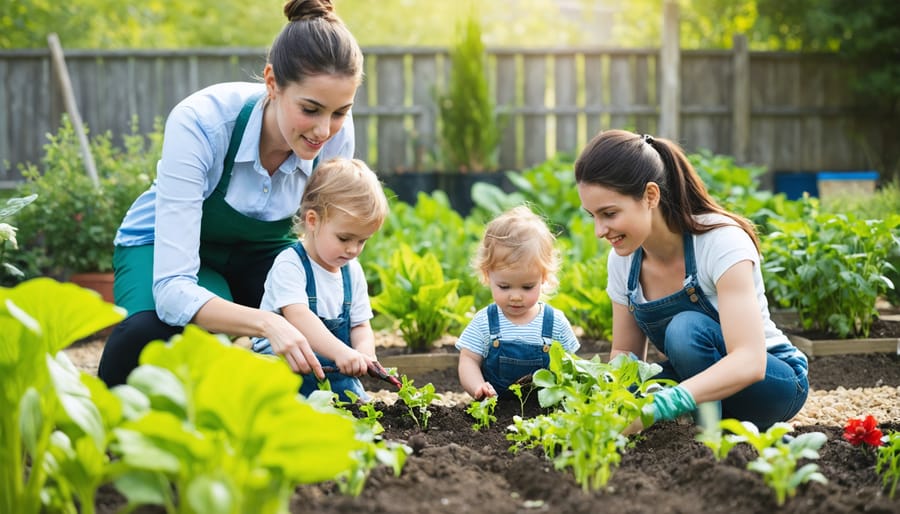
This cross-disciplinary approach also strengthens memory retention and recall. When children connect new information to real-world experiences, such as learning about plant life cycles through hands-on garden activities, the knowledge becomes more deeply embedded in their long-term memory.
Additionally, integrated learning experiences foster critical thinking and creativity. Children who explore environmental themes across different subjects demonstrate greater flexibility in applying knowledge to new situations and show improved ability to make connections between different concepts. This cognitive flexibility becomes particularly valuable as children progress through their educational journey, laying a strong foundation for future academic success.
Social-Emotional Growth
Environmental learning naturally cultivates social-emotional growth by providing children with authentic opportunities to develop empathy, self-awareness, and relationship skills. When children engage with nature and environmental topics, they learn to care for living things, understand cause-and-effect relationships, and develop a sense of responsibility for their surroundings.
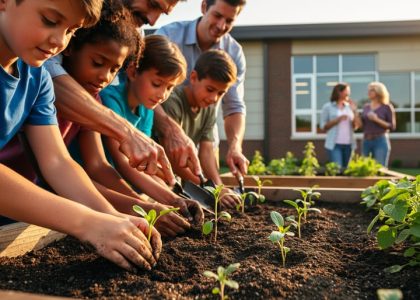
Through group activities like gardening, nature walks, and environmental projects, children practice essential social skills such as cooperation, communication, and problem-solving. These shared experiences create natural opportunities for children to express their feelings, work through conflicts, and celebrate collective achievements.
Environmental learning also supports emotional regulation by providing calming spaces and sensory experiences. Natural settings often reduce stress and anxiety, allowing children to better process their emotions and develop self-control. When children care for plants or observe wildlife, they learn patience, gentleness, and respect for other living beings.
Teachers can enhance these benefits by incorporating reflection time, encouraging peer collaboration, and modeling environmental stewardship. This approach helps children develop both environmental consciousness and crucial life skills that will serve them well beyond their early education years.
Practical Implementation Strategies
Nature-Based Math Activities
Nature offers endless opportunities for meaningful mathematical exploration in early childhood education. By taking learning outdoors, educators can create engaging experiences that combine numerical concepts with environmental awareness. Simple counting activities using natural materials like pinecones, leaves, or rocks help children develop basic number sense while fostering a connection with their environment.
Children can practice sorting and classification by organizing found objects by size, shape, or color. For example, collecting different types of leaves and arranging them by size creates a natural opportunity for understanding seriation and measurement concepts. Pattern recognition becomes more engaging when students create sequences using alternating natural materials like stick-leaf-stone patterns.
Geometric concepts come alive through nature walks where children identify shapes in their environment, from circular tree stumps to triangular pine needles. These activities complement traditional classroom learning while integrating math and literacy through nature journals where students can record their observations and measurements.
Simple graphing activities can be conducted using collected materials, such as creating pictographs of different types of seeds or leaves found during outdoor exploration. Weather tracking provides opportunities for data collection and basic statistical concepts, while garden planning introduces spatial awareness and measurement skills.
These nature-based activities not only reinforce mathematical concepts but also promote environmental stewardship and experiential learning, making mathematics more accessible and enjoyable for young learners.


Science Through Environmental Exploration
Environmental exploration provides an ideal context for introducing scientific concepts to young learners. Through guided outdoor activities, children naturally engage with fundamental scientific principles while developing observation skills and curiosity about the natural world.
Teachers can create simple experiments using natural materials, such as comparing the growth rates of plants in different soil types or observing weather patterns through daily sky watching. These hands-on experiences help children understand cause and effect relationships while building their scientific vocabulary through meaningful context.
Nature walks can become opportunities for collecting and classifying objects, introducing basic taxonomy and mathematical concepts simultaneously. Children might sort leaves by shape, size, or color, creating their own classification systems that mirror scientific thinking processes.
Water play areas can demonstrate concepts like flotation, absorption, and states of matter. Simple tools like magnifying glasses, collection jars, and measuring cups transform everyday exploration into scientific investigation. Seasonal changes provide perfect opportunities to discuss weather, plant life cycles, and animal behavior.
Documentation through drawings, photographs, and group discussions helps children process their observations and develop scientific communication skills. Teachers can guide these experiences by asking open-ended questions and encouraging prediction-making, fostering both critical thinking and scientific reasoning abilities.
These nature-based activities not only teach science but also promote environmental stewardship and respect for the natural world, creating a foundation for lifelong scientific inquiry and environmental consciousness.
Language Arts and Environmental Literacy
Integrating environmental themes into language arts creates meaningful connections that enhance both literacy skills and ecological awareness. Young learners naturally connect with nature-based stories and environmental topics, making this combination particularly effective in early childhood settings.
Teachers can incorporate environmental literacy through storytelling sessions featuring books about nature, wildlife, and conservation. These stories serve as springboards for discussions about environmental responsibility while building vocabulary and comprehension skills. Students can practice writing by keeping nature journals, documenting their observations of seasonal changes, or creating stories about local wildlife.
Reading activities can include exploring non-fiction texts about ecosystems, weather patterns, and sustainable practices. These materials help children develop research skills while learning about environmental concepts. Creative writing exercises might involve composing poems about nature, writing letters to community leaders about environmental concerns, or creating fictional stories with environmental themes.
Hands-on activities that combine literacy and environmental education include creating labeled diagrams of plant life cycles, writing and illustrating field guides for the school garden, or developing environmental awareness posters. These projects help children practice their writing skills while deepening their understanding of environmental concepts.
Assessment can include portfolio collections of nature-inspired writing, presentations of environmental research projects, and demonstrations of improved vocabulary related to environmental topics. This integrated approach ensures that students develop strong literacy skills while fostering environmental stewardship.
Assessment and Documentation
Portfolio Development
Portfolio development in early childhood integrated curriculum serves as a powerful tool for documenting and celebrating student growth. Teachers can create individual portfolios that include photographs, artwork, writing samples, and observation notes to track each child’s progress across multiple learning domains. These collections should include both teacher-documented observations and student-selected work samples, providing a comprehensive view of development.
Digital documentation tools, such as learning management systems and photo-sharing apps, make it easier to capture and organize evidence of environmental learning experiences. Teachers can record video clips of students exploring nature, document group discussions about sustainability, and collect samples of student-created environmental projects.
To make portfolios meaningful, establish clear organizational systems that align with your curriculum goals. Consider including sections for:
– Nature exploration activities
– Environmental art projects
– Scientific observations
– Community engagement initiatives
– Student reflections on environmental learning
Regular portfolio reviews with families help communicate student progress and encourage home-school connections. These reviews can spark meaningful discussions about environmental stewardship and inspire continued learning beyond the classroom. Remember to obtain necessary permissions for documentation and maintain student privacy when sharing portfolio contents.
Progress Monitoring Tools
Effective progress monitoring in integrated curriculum requires a combination of traditional and innovative assessment tools. Learning portfolios serve as comprehensive records of children’s development, containing samples of work, photographs, and detailed observations. These portfolios showcase growth across multiple domains simultaneously.
Digital documentation tools, such as learning management systems and educational apps, help teachers track progress in real-time. These platforms allow for quick documentation of learning moments through photos, videos, and notes, which can be easily shared with families.
Observation checklists and rubrics, specifically designed for integrated learning experiences, help educators assess multiple skills within a single activity. For example, during a garden-based project, teachers can evaluate scientific understanding, mathematical concepts, and social skills simultaneously.
Regular documentation through learning stories captures children’s engagement, problem-solving approaches, and collaborative abilities. These narrative assessments provide rich insights into how children connect different areas of learning.
Family feedback forms and student self-reflection tools complete the assessment picture, ensuring a well-rounded view of each child’s progress across the integrated curriculum.
Family and Community Engagement
Home-School Connections
Building strong partnerships between schools and families is crucial for successful environmental education. Research consistently shows that parent engagement in education significantly improves student outcomes, and environmental learning is no exception.
Encourage families to participate in environmental activities through take-home projects that connect classroom learning with home experiences. Simple activities might include maintaining a family recycling log, starting a small container garden, or conducting household energy audits together. Create weekly environmental challenges that families can complete as a unit, such as reducing water usage or finding creative ways to reuse materials.
Consider organizing family nature walks, community clean-up days, or environmental workshops where parents and children can learn together. Establish a classroom newsletter highlighting environmental topics and suggesting ways families can extend learning at home. Digital platforms can facilitate sharing of environmental projects and successes between school and home.
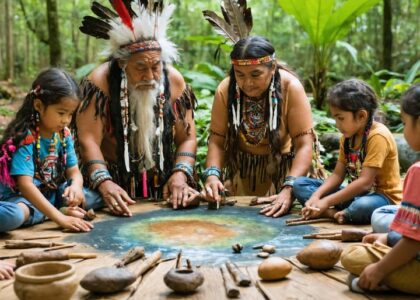
Provide resources in multiple languages and consider diverse cultural perspectives on environmental stewardship. Remember that families bring valuable knowledge and traditions about sustainable living that can enrich your curriculum. Create opportunities for parents to share their expertise, whether it’s traditional farming methods, cultural approaches to conservation, or professional experience in environmental fields.
Community Partnerships
Building strong community partnerships is essential for creating meaningful environmental education experiences in early childhood settings. Through community-based learning approaches, schools can connect with local environmental organizations, nature centers, and conservation groups to enrich their integrated curriculum.
Start by identifying potential partners within your community who align with your educational goals. Local botanical gardens, wildlife sanctuaries, and environmental agencies often have educational outreach programs specifically designed for young learners. These partnerships can provide access to expertise, resources, and authentic learning environments that bring environmental concepts to life.
When establishing partnerships, create clear communication channels and establish shared expectations. Develop a memorandum of understanding that outlines roles, responsibilities, and intended outcomes. Consider ways to make the partnership mutually beneficial – perhaps students can contribute to community environmental projects while learning valuable lessons.
Regular collaboration meetings help maintain strong relationships and ensure alignment with curriculum objectives. Partners can participate in curriculum planning, provide professional development for teachers, and offer hands-on learning experiences for students. They might also contribute materials, facilitate field trips, or serve as guest speakers.
Remember to document and celebrate partnership successes, sharing stories of student engagement and learning outcomes with the broader school community. This helps sustain support for these valuable relationships and encourages other potential partners to get involved.
Implementing an integrated curriculum in early childhood education is a transformative journey that benefits both educators and young learners. By weaving together different subject areas and learning experiences, we create meaningful connections that support children’s natural curiosity and development. The evidence clearly shows that this approach enhances engagement, promotes deeper understanding, and develops critical thinking skills from an early age.
As you move forward with implementation, remember to start small and build gradually. Begin by identifying natural connections between subjects in your existing curriculum, then expand these connections through thoughtful planning and observation of your students’ interests. Collaborate with fellow educators to share ideas and resources, and maintain open communication with families to extend learning beyond the classroom.
Key steps for success include regular assessment of your integrated activities, flexibility in adapting to children’s needs and interests, and ongoing professional development to enhance your skills. Consider joining educational communities and forums where you can share experiences and learn from others who are on similar journeys.
Remember that creating an effective integrated curriculum is an evolving process. Celebrate small successes, learn from challenges, and stay focused on the ultimate goal: providing children with meaningful, connected learning experiences that prepare them for future success. Your commitment to this approach will help create a more engaging and effective learning environment for your young students.