The educational landscape is transforming dramatically with the advent of 5G technology, opening unprecedented opportunities for dynamic, interactive learning experiences. This revolutionary network technology isn’t just about faster internet – it’s reshaping how we conceptualize modern education. For educators standing at this technological crossroads, 5G represents a gateway to real-time virtual field trips, seamless collaborative projects across continents, and instantaneous access to rich educational resources that were once hindered by technical limitations.
As classrooms evolve into smart learning environments, 5G’s ultra-low latency and massive device connectivity are enabling teachers to personalize learning at scale while maintaining meaningful student engagement. From augmented reality demonstrations that bring scientific concepts to life, to AI-powered adaptive learning systems that respond in real-time to student needs, 5G is fundamentally changing what’s possible in education.
Understanding and harnessing this technology’s potential is becoming increasingly crucial for educators committed to preparing students for a digitally interconnected future.
Understanding 5G in the Educational Context
How 5G Differs from Previous Technologies
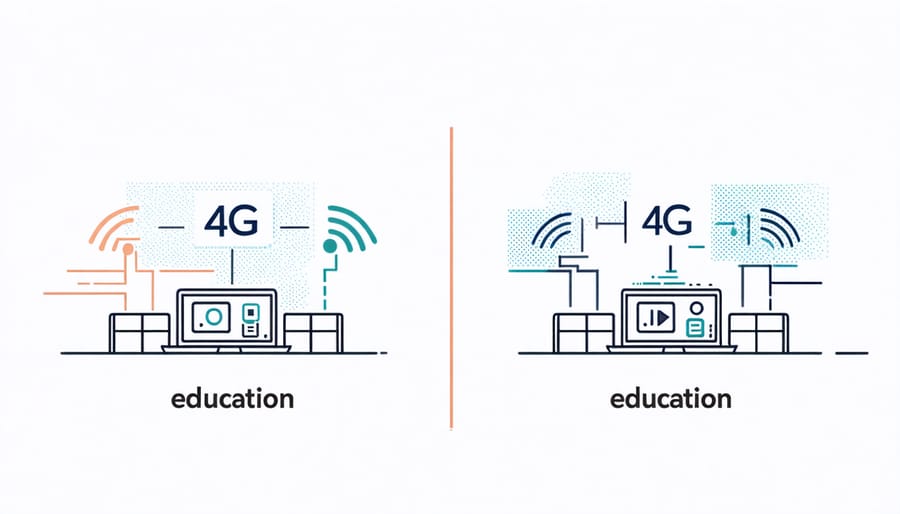
5G represents a significant leap forward from previous wireless technologies, offering transformative benefits for educational environments. While 4G provided reliable internet access, 5G delivers speeds up to 100 times faster, enabling seamless streaming of high-definition educational content and virtual reality experiences. This means your entire class can participate in immersive learning activities without buffering or lag.
The most notable improvement is reduced latency – the delay between sending and receiving data. With 5G, this delay is nearly imperceptible, making real-time collaboration and interactive learning truly effective. For example, students can participate in virtual science experiments or language exchange programs with peers across the globe without communication delays.
Additionally, 5G supports many more connected devices simultaneously, allowing entire classrooms to engage in online activities without network congestion. This enhanced capacity means you can confidently incorporate multiple digital tools, from student tablets to smart boards, creating a more dynamic and responsive learning environment.
Core Benefits for K-12 Classrooms
5G technology brings three game-changing benefits to K-12 classrooms that directly enhance teaching and learning experiences. First, the dramatic increase in connection speeds allows for instant access to educational resources, enabling seamless streaming of high-quality educational videos and real-time virtual field trips without buffering delays. Students can participate in interactive learning activities without frustrating lag times.
Second, 5G’s improved reliability ensures consistent connectivity throughout the school day. This means fewer dropped connections during critical online assessments or distance learning sessions, allowing teachers to plan and execute lessons with confidence. The enhanced stability also supports multiple devices simultaneously, making group activities and collaborative projects more effective.
Finally, 5G’s superior connectivity supports more devices per classroom, enabling true one-to-one digital learning environments. Teachers can incorporate more interactive tools and applications without worrying about network congestion. This expanded capacity allows entire classrooms to engage in bandwidth-intensive activities like augmented reality experiences or virtual laboratories simultaneously, opening new possibilities for immersive learning.
Practical Applications in K-12 Education
Enhanced Virtual and Augmented Reality Learning
With 5G’s high-speed connectivity and minimal lag time, virtual and augmented reality learning experiences are becoming more accessible and effective in the classroom. Students can now take virtual field trips to ancient civilizations, explore the human body in 3D, or conduct complex science experiments in a safe, virtual environment – all with incredibly realistic detail and real-time interaction.
Imagine your students walking through the streets of ancient Rome, examining architectural details up close, or diving deep into the ocean to study marine ecosystems. These immersive experiences are no longer limited by buffering issues or poor image quality. 5G enables smooth, high-definition streaming that makes virtual experiences feel natural and engaging.
Teachers can also leverage augmented reality tools to overlay digital information onto the physical world. For example, pointing a tablet at a science textbook can bring diagrams to life, showing dynamic molecular structures or demonstrating chemical reactions. Language teachers can use AR apps that instantly translate and explain vocabulary as students explore their surroundings.
These enhanced learning experiences help students better retain information and develop deeper understanding through active engagement and visual learning.

Real-time Collaboration Tools
With 5G’s enhanced bandwidth and minimal latency, real-time collaboration tools are transforming how students and teachers interact in virtual spaces. Video conferencing now supports crystal-clear communication, allowing for seamless participation in group discussions and interactive activities. Students can engage in technology-enabled global learning through high-definition virtual field trips and cross-cultural exchanges without disruption.
Teachers can now facilitate collaborative projects where multiple students work simultaneously on shared documents, virtual whiteboards, and interactive simulations. These tools respond instantly to input, creating an experience that closely mirrors in-person interaction. Real-time translation features help break down language barriers, making international collaboration more accessible than ever.
For special education students, 5G enables immediate response time for assistive technologies and communication tools, ensuring they can participate fully in classroom activities. This enhanced connectivity also supports instant feedback systems, allowing teachers to monitor student progress and adjust instruction on the fly.
Smart Classroom Integration
Smart classrooms powered by 5G technology transform traditional learning spaces into interactive, connected environments that enhance student engagement and learning outcomes. Connected devices like smart boards, tablets, and learning stations work seamlessly together, enabling real-time collaboration and personalized learning experiences.
Teachers can easily manage multiple devices simultaneously, sharing content across screens and monitoring student progress through integrated learning management systems. Motion sensors and smart cameras can adjust lighting and temperature for optimal learning conditions, while automated attendance systems save valuable instruction time.
Interactive learning tools, such as augmented reality displays and virtual science labs, become more responsive and reliable with 5G’s low latency. Students can participate in immersive learning experiences without technical delays or connectivity issues. The integration of IoT devices also supports adaptive learning, automatically adjusting content difficulty based on student performance and engagement levels.
For schools implementing smart classroom solutions, the robust 5G infrastructure ensures that all these connected tools work together smoothly, creating a dynamic and effective learning environment that supports both teachers and students.

Implementation Strategies for Teachers
Getting Started with 5G Tools
Getting started with 5G tools in your classroom doesn’t have to be overwhelming. By following a structured approach, you can effectively integrate these resources to enhance student success and create engaging learning experiences.
Begin by assessing your classroom’s current technology infrastructure. Most schools already have Wi-Fi connectivity, which makes transitioning to 5G tools smoother. Start with one device or application that aligns with your immediate teaching goals, such as a virtual reality headset for science lessons or a real-time collaboration platform for group projects.
Next, familiarize yourself with the basic functions of your chosen tool. Many educational technology providers offer free training sessions and tutorial videos specifically designed for teachers. Take advantage of these resources to build your confidence before introducing the tools to your students.
Create simple lesson plans that incorporate your new 5G tools gradually. For example, you might begin with a 15-minute activity using augmented reality to explore historical landmarks or conduct virtual lab experiments. As both you and your students become more comfortable, expand the use of these tools across different subjects and learning objectives.
Remember to establish clear guidelines for device usage and digital citizenship. Share these expectations with students and parents, and maintain open communication about the learning benefits of incorporating 5G technology in the classroom.
Addressing Common Challenges
While implementing 5G in education brings exciting opportunities, educators often face several common challenges. Let’s explore practical solutions to these concerns.
Limited device compatibility can be addressed by implementing a phased approach to technology upgrades. Start with essential devices and gradually expand as budget allows. Many schools find success by partnering with local businesses or applying for technology grants to support device upgrades.
Connectivity issues in rural or underserved areas remain a concern. Schools can work with local internet service providers to establish reliable connections and consider hybrid learning solutions that don’t solely rely on 5G. Creating offline-capable content ensures learning continues even when connectivity fluctuates.
Budget constraints often pose significant challenges. Consider cost-sharing initiatives with other schools or districts, and explore educational pricing for 5G-enabled devices. Many providers offer special packages for educational institutions, making implementation more affordable.
Professional development needs can be met through peer-learning communities and structured training programs. Create mentor-mentee relationships among staff members, where tech-savvy educators support colleagues in adopting new technologies. Online tutorials and regular workshop sessions help build confidence and competence.
Privacy and security concerns require clear policies and procedures. Implement robust cybersecurity measures, provide regular updates on safety protocols, and ensure all stakeholders understand data protection guidelines. Regular audits and updates of security measures help maintain a safe learning environment.
Remember, addressing these challenges is an ongoing process that requires flexibility and collaboration among all educational stakeholders.
Future-Ready Learning
Preparing students for a 5G-connected future requires a forward-thinking approach that combines technological literacy with essential life skills. As educators, we’re uniquely positioned to create a global learning environment that nurtures tomorrow’s innovators and problem-solvers.
The integration of 5G technology in education opens doors to immersive learning experiences through augmented and virtual reality, enabling students to explore complex concepts in three-dimensional space. Project-based learning takes on new dimensions as students can collaborate in real-time with peers across the globe, breaking down geographical barriers and cultural boundaries.
To prepare students effectively, educators should focus on developing:
– Digital citizenship skills for responsible technology use
– Critical thinking abilities for evaluating online information
– Adaptability in using emerging digital tools
– Cross-cultural communication competencies
– Creative problem-solving through technology
The key is to balance technology integration with fundamental learning objectives. While 5G enables faster, more reliable connections, the focus should remain on meaningful learning experiences that develop both technical and soft skills. By incorporating regular feedback from students and adapting teaching methods to embrace new possibilities, we can create learning environments that truly prepare students for their future careers and life experiences.
Remember, the goal isn’t just to teach students how to use technology, but to help them become confident, capable learners who can thrive in an increasingly connected world.
As we embrace the transformative potential of 5G in education, the path forward is both exciting and achievable. Remember that integrating 5G technology isn’t about replacing traditional teaching methods but enhancing them to create more engaging, interactive, and inclusive learning experiences. Start small by identifying one or two areas where 5G tools can address your specific classroom needs. Connect with fellow educators through professional development opportunities and online communities to share experiences and best practices. Keep student equity at the forefront by ensuring all learners can access and benefit from these technological advances. Stay informed about emerging 5G applications in education, but always filter them through the lens of pedagogical value. With thoughtful implementation and continuous learning, you can harness 5G’s power to create dynamic, future-ready classrooms that prepare students for tomorrow’s challenges while meeting today’s educational goals.