
Creativity in students is the ability to generate original ideas, make novel connections, and approach problems from fresh perspectives within the learning process. Far from being a trait reserved for the artistically gifted, creativity is a fundamental cognitive skill that every student possesses and can develop across all subject areas, from solving math problems in unconventional ways to crafting unique arguments in history essays.
Why does this matter now? The landscape of education in 2026 demands more than rote memorization. Students need to think flexibly, adapt to new challenges, and innovate in ways we can’t yet predict. When you nurture creativity in your classroom, you’re not just making lessons more engaging. You’re building the cognitive flexibility students will use to tackle complex, real-world problems throughout their lives.
Yet many educators face a genuine tension: how do you foster creativity within structured curricula, standardized assessments, and limited class time? The answer lies in understanding that creativity isn’t an add-on to your teaching. It’s a lens through which students can engage with content you’re already teaching.
This article breaks down what creativity actually looks like in educational settings, explores the cognitive processes behind creative thinking, and offers practical strategies you can implement tomorrow. You’ll discover how creativity manifests differently across subject areas, learn to recognize and remove common barriers in your classroom, and walk away with concrete techniques to support every student’s creative potential. Whether you teach kindergarten or high school calculus, these insights will help you create an environment where original thinking thrives.
What Creativity in Students Actually Means
Student creativity isn’t about producing museum-worthy art or writing the next great novel. It’s the capacity to generate ideas that are both original and useful within a student’s developmental context. When a third-grader invents a new strategy for solving a math problem, or a high schooler connects historical events to current social issues in an unexpected way, that’s creativity in action.
At its core, creativity involves making connections that others haven’t made yet. It’s the eighth-grader who applies a science concept to design a better school recycling system, or the kindergartner who figures out an alternative use for classroom materials during a building activity. This kind of thinking supports cognitive education by strengthening how students process information and approach challenges across all subjects.
Understanding creativity requires familiarity with several foundational concepts:
- Divergent thinking
- The ability to generate multiple possible solutions or ideas from a single prompt. Students practicing divergent thinking might list twenty uses for a paperclip or brainstorm various endings to a story.
- Convergent thinking
- The process of evaluating ideas and narrowing them down to find the best solution. This complements divergent thinking by helping students refine their creative output into practical applications.
- Creative confidence
- A student’s belief in their ability to generate worthwhile ideas and take creative risks. This confidence grows through supportive feedback and opportunities to see their ideas valued.
- Creative process
- The journey from initial idea generation through experimentation, revision, and final expression. Understanding this process helps students recognize that creativity involves iteration, not just sudden inspiration.
- Innovation mindset
- The willingness to challenge existing methods and imagine better alternatives. Students with this mindset ask “what if” and “why not” rather than accepting the status quo.
It’s crucial to distinguish between everyday creativity and exceptional creativity in educational settings. Everyday creativity is what we want all students to develop: the flexible thinking that helps them tackle unfamiliar problems, express themselves clearly, and adapt to new situations. This isn’t about producing groundbreaking work. A student demonstrates everyday creativity when they revise a weak paragraph in a fresh way, devise a study method that works for their learning style, or propose a compromise during group work.
Exceptional creativity, by contrast, produces work that’s novel even by adult or field-wide standards. While we celebrate it when it appears, expecting every student to demonstrate exceptional creativity sets an unrealistic bar and misses the point. Our goal as educators is cultivating the everyday creative capacity that serves students throughout their academic journey and beyond.
How Creative Thinking Works in Young Minds
The Role of Environment and Safety
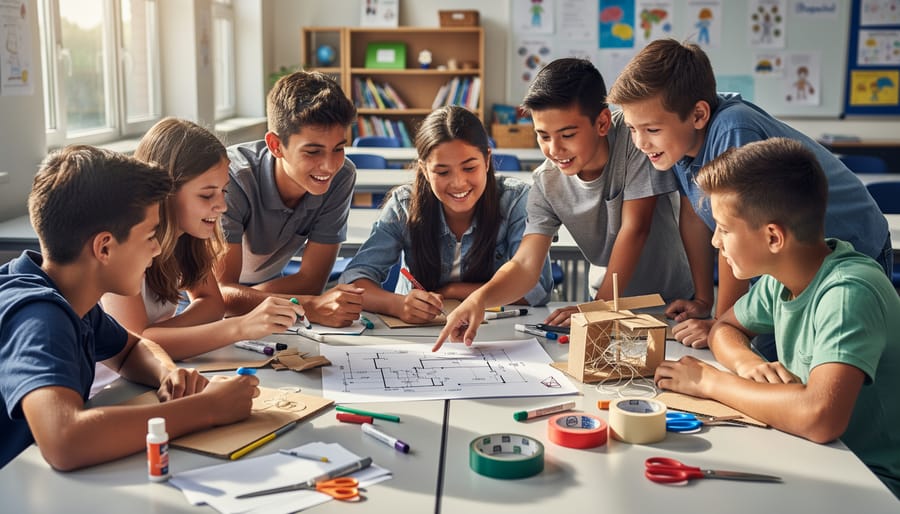
Students thrive creatively when they know it’s safe to share half-formed ideas, ask unusual questions, and propose solutions that might not work. Psychological safety, the belief that you won’t be ridiculed or penalized for taking intellectual risks, is the foundation for creative thought. Without it, students default to what they know will be accepted rather than exploring what might be possible.
Create this safety by modeling vulnerability yourself: share your own thinking process, including wrong turns and revisions. Celebrate attempts and partial solutions, not just correct answers. When a student’s idea doesn’t pan out, respond with curiosity about what they tried and what they learned, positioning failure as valuable data rather than something to avoid.
The physical environment matters too. Flexible seating, displayed student work, accessible materials, and visual prompts signal that experimentation is welcome. But cultural signals trump physical setup, students take creative risks when they trust their teacher and peers will respond constructively.
Risk-taking and working memory interact in interesting ways: when students feel threatened or judged, cognitive resources shift to self-protection rather than creative processing. Research on creativity and risk-taking confirms that teachers who explicitly value experimentation see more divergent thinking from their students. Build routines that normalize revision, allow do-overs, and treat mistakes as essential steps in the creative process.
The Balance Between Structure and Freedom
Many educators worry that imposing structure will stifle creativity, but research shows the opposite is often true. Constraints actually help students focus their creative energy rather than feeling overwhelmed by unlimited possibilities. When you give students complete freedom with no parameters, they often freeze or default to the easiest option.
The key is strategic structure. Specific constraints like “solve this problem using only these three materials” or “write a story that must include these five words” force students to think more creatively within boundaries. These limitations eliminate decision paralysis and push students to innovate around the edges.
However, timing matters. Younger students and those new to a concept benefit from more structure as they build foundational skills. As students gain confidence and domain knowledge, gradually loosen constraints to allow broader exploration. The sweet spot combines clear learning objectives and success criteria with flexibility in how students achieve them.
Think of it like jazz music: musicians need to master scales and theory before they can successfully improvise. Structure provides the scaffolding that makes meaningful creative freedom possible.
Different Forms of Creativity Across the Classroom
Academic Creativity vs. Artistic Creativity

When most educators hear “creativity,” they picture paint-splattered art rooms or students performing on stage. That’s artistic creativity, valuable, yes, but it’s just one expression of a much broader capacity. Academic creativity shows up differently: the student who devises an unexpected proof in geometry, restructures a lab experiment to test a new variable, or builds an argument by connecting historical patterns no one else noticed.
Both forms matter, but here’s what transforms classrooms: recognizing that the quiet mathematician sketching diagrams has as much creative potential as the drama student improvising dialogue. Academic creativity thrives in constraints, a word limit, a specific dataset, a narrow prompt, while artistic creativity often flourishes with open-ended freedom. Neither is superior; they’re complementary thinking modes.
This distinction connects directly to SEL methods and mental health literacy because students who don’t see themselves as “artistic” often believe they lack creativity entirely. When you celebrate the inventive scientist, the innovative writer, and the resourceful problem-solver alongside the talented painter, you affirm every student’s capacity to think originally within their strengths.
Individual vs. Collaborative Creativity
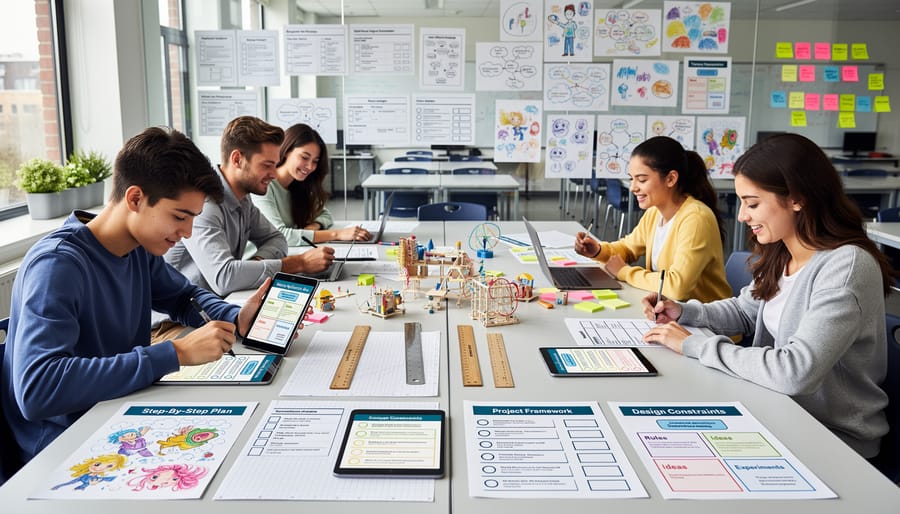
Students need opportunities to develop creative skills both independently and with peers, as each mode serves different developmental purposes. Individual creativity allows students to follow their own thinking without social pressure, build confidence in their ideas, and develop personal problem-solving approaches. It’s particularly valuable when students need deep concentration, are processing sensitive topics, or are building foundational skills they’ll later apply in groups.
Collaborative creativity, by contrast, teaches students to build on others’ ideas, navigate disagreement constructively, and combine diverse perspectives into stronger solutions. Group work sparks creative breakthroughs through what psychologists call “social facilitation”, the energy and unexpected connections that emerge when minds interact. It’s most effective for complex projects requiring varied expertise, brainstorming sessions where quantity of ideas matters, and developing real-world teamwork skills.
The key isn’t choosing one over the other but strategically alternating. Start projects with individual thinking time before group discussion to ensure quieter students generate ideas without louder voices dominating. Use collaborative sessions for mid-project feedback and refinement. Return to individual work for final execution. This rhythm respects different working styles while building both independent and collective creative capacities students need beyond school.
Where Student Creativity Makes the Biggest Impact

Student creativity delivers measurable benefits across every dimension of K-12 education, from test scores to emotional resilience. When students learn to think creatively, they don’t just produce interesting projects, they develop capabilities that transform how they learn and engage with the world.
The most immediate impact shows up in problem-solving. Creative students approach challenges from multiple angles rather than giving up when the first method fails. They combine concepts from different subjects, see patterns others miss, and generate solutions that aren’t in the textbook. This flexibility proves invaluable in math, science labs, literary analysis, and real-world applications alike.
Engagement and motivation soar when creativity enters the classroom. Students who get opportunities to make choices, express original ideas, and work on open-ended challenges show higher attendance, better focus, and more positive attitudes toward school. They take ownership of their learning because they see themselves as contributors rather than passive recipients. This intrinsic motivation often persists even after the creative task ends, carrying over to other subjects.
Academic achievement benefits too. Research shows that design thinking improves outcomes across core subjects, contradicting the myth that creativity is a soft skill that distracts from rigor. Students who practice creative thinking develop stronger critical thinking, make deeper connections between concepts, and retain information more effectively because they’ve actively constructed understanding rather than memorized facts.
The social-emotional domain sees profound impact. Creative work teaches students to tolerate uncertainty, manage frustration, and persist through revision. They learn that failure generates useful information and that multiple valid solutions can exist. Collaborative creative projects build communication skills, empathy, and the ability to integrate different perspectives. These social emotional skills transfer directly to conflict resolution, teamwork, and emotional regulation throughout students’ lives.
Perhaps most importantly, creativity prepares students for an uncertain future. The jobs they’ll hold likely don’t exist yet, and the problems they’ll solve haven’t emerged. Creative thinking gives them adaptability, entrepreneurial mindset, and confidence to navigate change. They learn to ask better questions, identify opportunities, and create value in any context, capabilities no automation can replace.
Practical Strategies to Cultivate Student Creativity
Asking Questions That Spark Creative Thinking
The questions you ask determine whether students retrieve a fact or generate an idea. Instead of “What is photosynthesis?” try “How might plants survive if sunlight disappeared for a week?” This shift moves from convergent recall to divergent exploration.
Start with open stems that invite multiple valid answers: “What if…?”, “How might we…?”, “What are all the ways…?”, and “Why do you think…?” These phrases signal there’s no single correct response, lowering the risk of being wrong and encouraging experimentation.
Build on student answers rather than moving to the next question. When a student responds, ask “What makes you say that?” or “How could we test that idea?” This validation shows you value their thinking process, not just their conclusion.
Replace binary yes/no questions with spectrum prompts: instead of “Is this character brave?” ask “Where on a scale from cautious to reckless would you place this character, and why?” Nuance demands creative reasoning.
Give wait time. After posing a creative question, pause for at least five seconds before accepting responses. Initial silence feels uncomfortable, but it allows processing time for deeper, more original thinking to emerge.
Designing Assignments With Creative Flexibility
The most effective creative assignments share a common structure: they define the destination clearly but leave the route open. Start by articulating your learning objective in concrete terms, what students should know, understand, or be able to do. Then step back and ask yourself how many different ways a student could demonstrate that mastery.
For example, if the goal is “explain the water cycle,” students might create a diagram, write a story from a raindrop’s perspective, build a physical model, compose a song, or design an infographic. Each pathway reaches the same learning target but honors different strengths and sparks different creative solutions.
Build choice into your rubrics by separating content criteria from format criteria. Assess whether students accurately explained evaporation, condensation, and precipitation, not whether they chose the “right” medium. Offer choice boards or menus with required elements and optional extensions.
The key is specificity about outcomes paired with flexibility about process. When students understand exactly what they need to demonstrate but control how they’ll demonstrate it, they engage more deeply and produce more original work.
Common Barriers and How to Overcome Them
You know creativity matters for students, but the reality of your classroom often makes it feel impossible to prioritize. The barriers are real, and pretending they don’t exist won’t help anyone.
Standardized testing pressure looms largest for most teachers. When test scores determine evaluations and funding, spending time on open-ended creative projects feels risky. The solution isn’t choosing between creativity and accountability. Instead, embed creative thinking into test preparation itself. Have students create multiple-choice questions for each other, design visual explanations of concepts, or generate alternative solution methods for math problems. These activities build both creative capacity and content mastery simultaneously.
Curriculum constraints present another challenge. Pacing guides leave little room for deviation, and coverage demands feel relentless. Rather than adding creativity as something extra, reframe existing lessons. That required essay becomes a choice between formats: traditional essay, podcast script, infographic with narration, or dialogue. The learning objective stays the same, but students exercise creative agency in how they demonstrate understanding.
Time limitations affect everyone. You can’t sacrifice three class periods for an elaborate creative project when you’re already behind. Start with five-minute bursts instead of grand initiatives. A quick brainstorming session, a one-minute sketch to explain a concept, or generating three unusual uses for a vocabulary word all build creative muscle without derailing your schedule.
Diverse student needs complicate implementation further. Some students freeze when given open-ended tasks, while others resist any structure. Provide scaffolding options students can choose based on their comfort level: sentence starters, examples, graphic organizers, or completely blank space. This differentiation supports everyone without lowering expectations.
Administrative resistance often stems from misunderstanding creativity as chaos or distraction. Document how your creative approaches align with standards and improve outcomes. Share student work that demonstrates deep learning through creative expression. When administrators see results rather than just activities, support typically follows.
Frequently Asked Questions About Student Creativity
Can creativity really be taught, or are some students just naturally creative?
Creativity is a skill that can absolutely be developed through practice and the right environment. While students may have different starting points or preferences, all learners can strengthen their creative thinking through exposure to diverse problems, encouragement to take risks, and explicit instruction in techniques like brainstorming and perspective-taking.
How do I assess creative work fairly when there’s no single right answer?
Focus your assessment on the process and specific criteria rather than subjective judgment. Evaluate factors like originality of approach, depth of exploration, willingness to revise and iterate, connection to learning objectives, and quality of execution. Rubrics that break creativity into measurable components work well, and student self-reflection can provide valuable insight into their thinking process.
What about students who seem resistant to creative tasks or say they’re not creative?
These students often fear judgment or have internalized a narrow definition of creativity as artistic talent. Start with low-stakes activities, offer structured choices rather than complete open-endedness, and highlight creativity in areas where they already excel. Reframe creativity as problem-solving or finding your own path, which feels less intimidating than “being creative.”
How much instructional time should I realistically dedicate to creativity-focused work?
You don’t need to carve out separate “creativity time.” Instead, embed creative elements into existing lessons through open-ended questions, choice in demonstrating understanding, or brief ideation activities that take just five to ten minutes. Even one substantive creative project per unit makes a difference.
What if my administration prioritizes test scores and doesn’t support creative approaches?
Frame creativity as a means to academic ends, not a distraction from them. Show how creative problem-solving strengthens critical thinking skills that improve test performance, and share student work that demonstrates mastery of standards through creative application. Start small with modifications to your own classroom, document positive results, and connect with like-minded colleagues to build grassroots support.
Do I need special resources or technology to foster creativity?
Not at all. The most powerful creativity tools are good questions, time to think, and permission to experiment. Simple materials like paper, markers, and everyday objects work beautifully. Technology can enhance creative work when available, but the core ingredients are mindset shifts and instructional strategies that cost nothing.
These questions reflect the real tensions educators navigate daily. The resistance you encounter, whether from students conditioned to seek single correct answers or from systems prioritizing standardized metrics, is normal and surmountable. Remember that small, consistent changes compound over time. When a student who claimed to hate creative work lights up because you structured the task differently, or when your class generates solutions you hadn’t considered, you’ll know the effort is worthwhile.
Building a creativity-friendly classroom doesn’t require perfection or unanimous buy-in. It requires your willingness to model curiosity, tolerate productive messiness, and trust that students will rise to thoughtful challenges when given the chance.
Creativity isn’t an innate gift reserved for a select few, it’s a skill every student can develop with the right support and environment. As you’ve seen throughout this guide, fostering creativity doesn’t require overhauling your entire curriculum overnight. Start with one questioning technique, redesign a single assignment to allow more choice, or carve out fifteen minutes a week for open-ended exploration. Small shifts compound over time.
The challenges are real: testing pressures, packed schedules, and varying administrative support. But the educators who successfully nurture creativity don’t wait for perfect conditions. They adapt, experiment, and learn alongside their students. You don’t have to do this alone. Connect with fellow teachers through Teach Find’s community forums to share what’s working, troubleshoot obstacles, and discover fresh approaches. Explore our interactive tools for lesson planning resources that build creative thinking into everyday instruction.
Your students will need creativity to navigate a world we can’t fully predict. By prioritizing it now, you’re equipping them with a fundamental skill for 2026 and far beyond.