As educators, we stand at a critical crossroads in teaching one of the most pressing environmental challenges of our time. Unsustainable agriculture practices threaten not just our food security, but the very foundation of our planet’s ecological balance. Each year, conventional farming methods deplete vital resources, contaminate water supplies, and contribute to climate change at an alarming rate. From excessive water consumption and soil degradation to the overuse of chemical fertilizers and pesticides, these practices create a ripple effect that extends far beyond farm boundaries.
What makes this topic particularly urgent for our classrooms is its direct connection to students’ daily lives and future well-being. Every meal they eat, every food choice they make, links them to this global challenge. By understanding unsustainable agriculture, students gain crucial insights into environmental science, economics, and social responsibility – essential knowledge for creating positive change in their communities.
This complex issue offers rich opportunities for cross-disciplinary learning, from analyzing data in mathematics to exploring solutions in environmental science. As we guide our students through these challenging concepts, we empower them to become informed citizens capable of making sustainable choices and advocating for responsible agricultural practices.
The Real Cost of Current Farming Practices
Environmental Impact Metrics
Measuring the impact of unsustainable agriculture provides students with concrete evidence of environmental changes. Here are key metrics that teachers can use to demonstrate these effects in the classroom:
Soil Health Indicators:
– Annual topsoil loss: 24 billion tons globally
– Organic matter reduction: 50% decrease in many farming regions
– Soil compaction: 20-40% reduction in water infiltration
Water Impact Measurements:
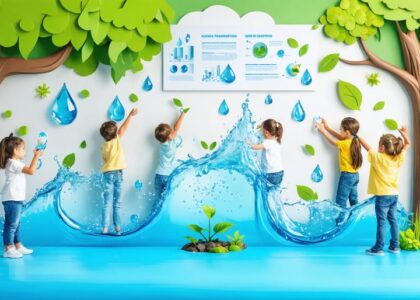
Through hands-on water conservation activities, students can explore:
– Groundwater depletion: 1-2 meters annually in intensive farming areas
– Chemical runoff: 30-50% of applied fertilizers enter water systems
– Irrigation efficiency: Only 40% of water reaches crops
Biodiversity Loss Metrics:
– Insect population decline: 75% reduction in agricultural areas
– Bird species decline: 30% decrease in farmland birds
– Native plant displacement: 40% reduction in field margins
These numbers can be transformed into engaging classroom activities, such as creating visual representations of soil loss using sand timers or measuring water quality in local streams. Students can track these metrics over time, creating their own environmental impact journals.

Social and Economic Consequences
Unsustainable agricultural practices have far-reaching effects that extend beyond environmental damage, deeply impacting communities and their ability to maintain food security. When farming practices deplete soil nutrients and water resources, crop yields decline over time, leading to decreased income for farming families and reduced food availability in local markets.
Rural communities often face the greatest challenges, as declining agricultural productivity can trigger a cycle of poverty. Farmers may struggle to afford essential inputs like seeds and fertilizers, while simultaneously dealing with reduced harvests. This economic strain frequently leads to rural-urban migration, as younger generations leave farming communities in search of other opportunities.
Food security becomes particularly vulnerable when unsustainable practices dominate agricultural systems. As soil degradation progresses, formerly productive lands become less reliable for food production, affecting both local food availability and market prices. This creates a challenging situation for schools and communities trying to maintain consistent access to nutritious food for students.
The social fabric of farming communities can also unravel as traditional agricultural knowledge and practices are abandoned in favor of short-term solutions that promise quick yields but ultimately prove unsustainable.
Teaching Unsustainable Agriculture: Classroom Strategies
Interactive Learning Activities
Here are engaging activities to help students understand unsustainable agriculture across different grade levels while promoting a sustainable learning environment:
Elementary (K-5):
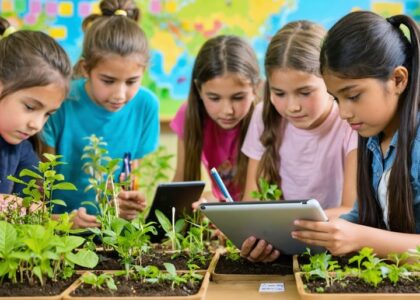
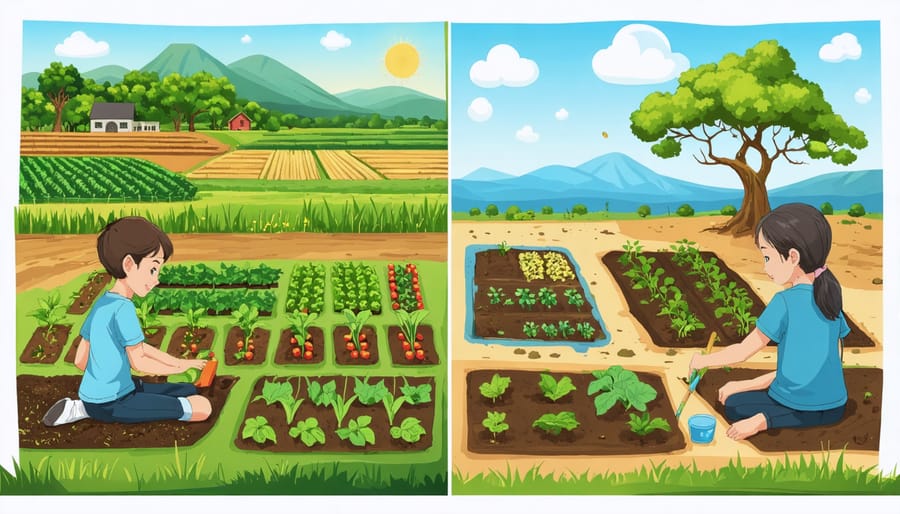
– Create a mini-garden comparison showing healthy vs. depleted soil
– Design a board game illustrating the effects of overfarming
– Build a water erosion model using sand and water tables
Middle School (6-8):
– Conduct soil testing experiments comparing different farming methods
– Calculate water usage in various irrigation systems
– Map local farming practices and their environmental impact
– Design sustainable farming solutions using recycled materials
High School (9-12):
– Analyze satellite imagery showing deforestation patterns
– Create mathematical models of resource depletion
– Develop case studies of local farming communities
– Design and execute controlled experiments comparing sustainable and unsustainable practices
Cross-Grade Activities:
– Host a school garden project demonstrating proper crop rotation
– Organize field trips to local farms practicing different methods
– Create multimedia presentations about agricultural impacts
– Develop student-led awareness campaigns
– Connect with farming communities through virtual exchanges
Assessment ideas include project portfolios, presentation rubrics, and peer evaluation systems. These activities can be modified based on available resources and specific learning objectives.
Cross-Subject Integration
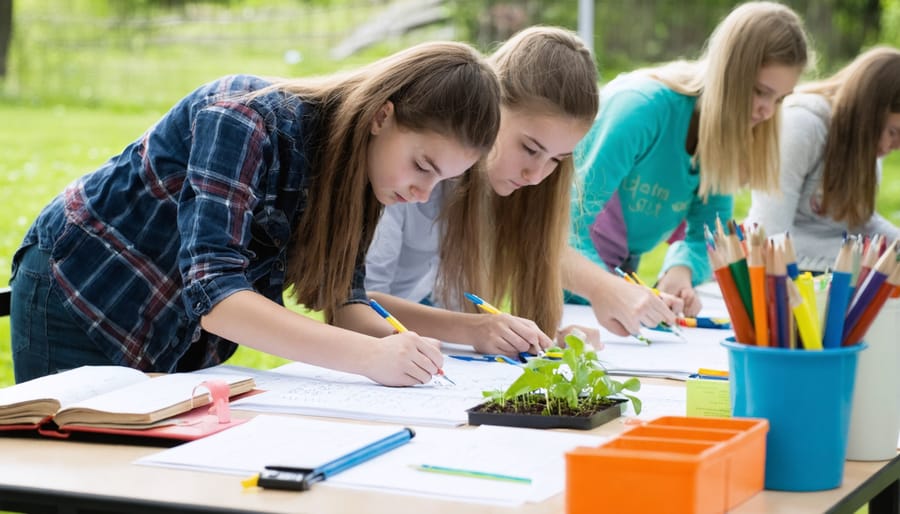
Integrating unsustainable agriculture topics across multiple subjects creates meaningful connections and deepens student understanding. In science classes, students can conduct soil quality experiments, study ecosystem disruption, and analyze the effects of chemical pesticides on local wildlife. These hands-on activities help students grasp the environmental impact while developing their scientific inquiry skills.
Mathematics offers numerous opportunities to explore agricultural data. Students can calculate crop yields, analyze water usage statistics, and create graphs comparing sustainable versus unsustainable farming practices. Real-world problem-solving activities might include determining the economic costs of soil degradation or calculating carbon footprints of different farming methods.
Social studies classes can examine the historical development of industrial agriculture, its cultural implications, and its effects on different communities worldwide. Students can investigate how agricultural practices vary across cultures, study food security issues, and explore the relationship between farming methods and social justice.
Consider implementing project-based learning that spans multiple subjects. For example, students could design a sustainable farm model that incorporates mathematical calculations, scientific principles, and social considerations. This approach not only reinforces learning across disciplines but also helps students understand the interconnected nature of agricultural systems and their impact on society and the environment.
Remember to adapt these integration strategies to match your students’ grade level and learning needs while maintaining alignment with your curriculum standards.
Solutions and Alternative Methods
Student-Led Projects
Engaging students in hands-on agricultural projects creates meaningful learning experiences while promoting environmental stewardship. Start by establishing a school garden where students can experiment with sustainable farming practices and learn about biodiversity in the classroom through direct observation.
Encourage students to design and implement their own sustainability projects. They might create composting systems, develop water conservation methods, or research alternative pest control solutions. These projects can be structured as individual assignments or collaborative group work, allowing students to take ownership of their learning while developing problem-solving skills.
Document progress through student journals, photographs, and data collection. This documentation helps students understand the long-term impact of their choices and creates opportunities for cross-curricular connections with subjects like mathematics and science.
Consider establishing partnerships with local farmers or agricultural organizations. These connections provide students with real-world perspectives and mentorship opportunities. Students can interview farmers about sustainable practices, organize field trips to local farms, or participate in community agriculture initiatives.
Encourage students to share their findings through presentations, school exhibitions, or social media campaigns. This sharing component helps spread awareness about sustainable agriculture while developing communication skills and fostering community engagement. Remember to celebrate successes and use setbacks as valuable learning opportunities.
Community Connections
Connecting classroom learning with real-world agricultural practices helps students understand the immediate relevance of sustainable farming in their community. Start by inviting local farmers to speak to your class about their experiences with both conventional and sustainable farming methods. These firsthand accounts can provide valuable insights into the challenges and opportunities in agricultural practices.
Organize field trips to nearby farms that demonstrate different farming approaches. Students can observe the contrasts between intensive monoculture operations and diversified sustainable farms, making the concepts tangible and memorable. Partner with local agricultural extension offices, which often provide educational resources and expert speakers for schools.
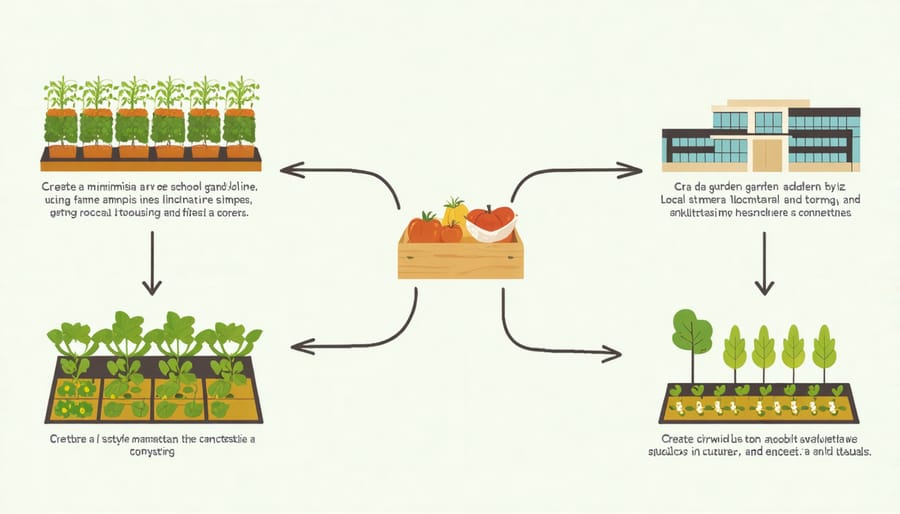
Create a school garden project where students can practice sustainable farming techniques firsthand. This hands-on experience helps them understand soil health, water conservation, and natural pest management. Consider connecting with community gardens or food banks to donate excess produce, teaching students about food security and community service.
Utilize local farmers’ markets as learning laboratories. Students can interview vendors about their farming practices, study product pricing, and learn about seasonal crop cycles. These interactions help them understand the economic aspects of sustainable agriculture while supporting local food systems.
Encourage students to research local agricultural policies and participate in community discussions about farming practices. This involvement helps them develop critical thinking skills while becoming active participants in shaping their community’s agricultural future.
As educators, we hold a unique position to shape our students’ understanding of sustainable agricultural practices and their impact on our planet’s future. Throughout this guide, we’ve explored the challenges of unsustainable agriculture and discovered practical ways to bring these important concepts into our classrooms.
Remember that engaging students in discussions about agricultural sustainability doesn’t require advanced expertise – it starts with simple, relatable examples from their daily lives. By connecting food choices to environmental impact, we can help students develop critical thinking skills and environmental awareness that will serve them throughout their lives.
Consider implementing some of the teaching strategies we’ve discussed: start a classroom garden, organize field trips to local farms, or use interactive simulations to demonstrate agricultural systems. These hands-on experiences create lasting impressions and deeper understanding.
Join our growing community of educators committed to environmental education. Share your experiences, lesson plans, and success stories in our online forums. Together, we can create a network of support and resources that benefits both teachers and students.
Let’s empower our students to become informed citizens who understand the importance of sustainable agriculture and feel equipped to make positive changes in their communities. Your role in this educational journey is invaluable, and every lesson you teach about sustainable practices contributes to a more environmentally conscious future.