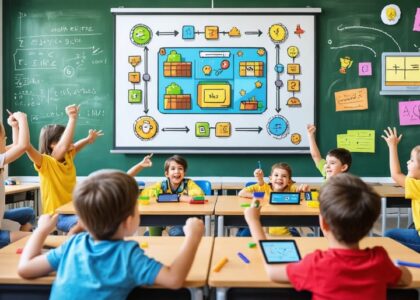
Transform your classroom into a dynamic learning environment where students eagerly engage with educational content through the power of game-based learning vs. gamification. Recent studies show that game-based education increases student engagement by up to 67% while boosting knowledge retention by 40% compared to traditional teaching methods.
Beyond mere entertainment, educational games create immersive experiences that naturally develop critical thinking, problem-solving, and collaboration skills. From kindergarten mathematics to high school physics, game-based learning adapts to every subject and learning style, making complex concepts accessible through interactive challenges and reward systems.
Leading educators worldwide are revolutionizing their teaching approaches by incorporating both digital and analog games into their curriculum. This shift represents more than just a trend – it’s a research-backed evolution in educational methodology that addresses modern students’ needs for interactive, personalized learning experiences. As technology continues to advance and educational games become more sophisticated, the distinction between playing and learning increasingly blurs, creating powerful opportunities for meaningful educational experiences.
This practical guide will help you navigate the exciting world of game-based education, providing concrete strategies for implementation, assessment, and optimization in your classroom.
Why Games Work in Education
The Science of Engagement
Research shows that game-based learning taps into multiple cognitive processes simultaneously, creating an optimal environment for learning and retention. When students engage in educational games, their brains release dopamine, a neurotransmitter associated with pleasure and reward, which enhances motivation and memory formation.
Brain imaging studies have revealed that gaming activates the hippocampus, responsible for memory consolidation, and the prefrontal cortex, which handles problem-solving and decision-making. This dual activation creates stronger neural pathways, making learned concepts more likely to stick.
The immediate feedback loops present in games also support the brain’s natural learning mechanisms. When students receive instant responses to their actions, it strengthens the connection between cause and effect, reinforcing successful strategies and encouraging adjustment of ineffective ones.
Additionally, the state of “flow” achieved during gameplay – where challenge and skill levels are perfectly balanced – creates ideal conditions for learning. In this state, students remain focused and engaged while processing new information, leading to deeper understanding and better retention of educational content.
These neurological insights explain why students often remember game-based lessons better than traditional instruction methods.

Motivation Through Achievement
Game-based learning excels at fostering student motivation through games by tapping into natural achievement drives. When students see immediate feedback and progress through levels or earn points, they experience a sense of accomplishment that fuels continued engagement. This achievement-based motivation works because it breaks learning into manageable challenges, each success building confidence for the next task.
The power of incremental achievements in games mirrors effective learning strategies. Students who might feel overwhelmed by traditional assignments often thrive when progress is clearly visible and rewards are immediate. Whether through experience points, achievement badges, or level progression, game mechanics provide concrete evidence of learning gains.
Achievement systems work best when they align with educational objectives. For example, awarding points for problem-solving strategies rather than just correct answers encourages deeper learning. This approach helps students develop resilience, as “failing” becomes an expected part of the learning process rather than a discouraging setback. The key is creating achievement structures that celebrate both effort and mastery, making the learning journey itself rewarding.
Implementing Game-Based Learning

Digital vs. Non-Digital Games
Both digital and non-digital games offer unique educational benefits, and successful game-based learning often incorporates a balanced mix of both formats. Digital games, including educational apps and virtual simulations, excel at providing immediate feedback, tracking student progress, and adapting to individual learning speeds. They’re particularly effective for subjects like mathematics, coding, and science, where interactive visualizations can make complex concepts more tangible.
However, traditional board games, card games, and physical activities remain powerful educational tools. These non-digital options often foster stronger face-to-face social interactions, develop fine motor skills, and help students practice important social-emotional skills like turn-taking and graceful winning or losing. They’re also typically more cost-effective and don’t require technological infrastructure.
Consider implementing both formats based on your learning objectives. For example, use physical card games for vocabulary building in younger grades, while leveraging digital geography games for interactive map exploration. Many educators find success in using non-digital games for introductory lessons and team-building activities, then transitioning to digital games for practice and assessment.
The key is selecting the game format that best serves your educational goals. Digital games shine in providing personalized learning paths and detailed assessment data, while non-digital games excel in promoting physical interaction and collaborative problem-solving. Many traditional games are now available in digital formats, offering the best of both worlds.
Choosing the Right Games
Selecting appropriate educational games requires careful consideration of both pedagogical goals and student engagement. When evaluating classroom learning games, focus on titles that align with your curriculum objectives while maintaining an engaging experience for students.
Start by examining the game’s learning outcomes and how they match your educational standards. Look for games that offer clear learning objectives, measurable progress tracking, and meaningful feedback systems. The content should be age-appropriate, considering both cognitive development and social-emotional factors.
Consider these key selection criteria:
– Curriculum alignment: Games should directly support your learning objectives
– Difficulty progression: Look for adaptive difficulty levels that accommodate different learning paces
– Assessment features: Built-in progress tracking helps monitor student achievement
– Cultural sensitivity: Choose games that represent diverse perspectives and experiences
– Time management: Select games that fit within your lesson planning constraints
– Technical requirements: Ensure your classroom infrastructure can support the chosen games
Remember to preview games thoroughly before implementation. Many educational platforms offer free trial periods or demo versions. Consider seeking feedback from colleague networks or educational gaming communities about their experiences with specific titles. This collaborative approach helps identify games that have proven successful in similar educational contexts.
Assessment Through Play
Assessment in game-based education goes beyond traditional testing methods, offering educators dynamic ways to evaluate student progress while maintaining engagement. Through carefully designed effective assessment games, teachers can gather valuable data about student understanding while learners remain actively involved in the learning process.
Real-time assessment opportunities emerge naturally during gameplay, allowing teachers to observe problem-solving approaches, collaboration skills, and critical thinking in action. Student responses, decision-making patterns, and achievement levels within games provide immediate feedback about learning progress. This instant feedback loop helps educators adjust their teaching strategies on the fly.
Observable metrics in game-based assessment include:
– Completion rates and time management
– Strategic thinking and problem-solving approaches
– Collaboration and communication skills
– Knowledge retention and application
– Student engagement levels
To maximize assessment effectiveness, educators should:
– Set clear learning objectives before implementing games
– Use built-in game analytics when available
– Document observations during gameplay
– Combine game-based assessment with traditional methods
– Provide opportunities for student self-reflection
Remember that assessment through play should feel natural and non-threatening to students. When implemented thoughtfully, game-based assessment can provide rich insights into student progress while maintaining the fun and engagement that makes game-based learning so effective.

Real Success Stories
Elementary Math Revolution
One of the most compelling success stories in game-based education comes from Mathville Elementary School in Portland, where third-grade students showed remarkable improvement in basic arithmetic skills through gamified learning. The school implemented a digital math program that transformed traditional worksheets into interactive adventures, where students became “Number Knights” solving mathematical challenges to progress through levels.
Within just one semester, teachers reported a 40% increase in student engagement during math lessons. The game’s reward system, which awarded virtual badges and points for correct answers, motivated students who previously showed resistance to mathematical concepts. More importantly, test scores improved by an average of 27% compared to the previous year’s traditional teaching methods.
The program’s success relied on three key elements: immediate feedback, progressive difficulty levels, and social learning components. Students received instant confirmation of correct answers, allowing them to learn from mistakes without fear of judgment. The difficulty increased gradually as students mastered concepts, maintaining an optimal challenge level. Additionally, collaborative challenges encouraged peer learning and healthy competition.
What made this initiative particularly effective was its integration with the standard curriculum rather than replacing it. Teachers used game data to identify areas where students needed additional support, enabling targeted intervention strategies. This blend of traditional teaching and gamified practice created a comprehensive learning environment that catered to diverse learning styles.
Social Studies Through Simulation
Social studies classrooms are being transformed through immersive historical simulations that bring the past to life. Games like “Mission US” allow students to step into the shoes of historical figures, making choices that help them understand the complexities of different time periods. For example, students might experience life as a young colonist during the American Revolution or navigate the challenges faced by immigrants arriving at Ellis Island.
These interactive experiences create emotional connections to historical events that textbooks alone cannot achieve. When students make decisions as characters facing historical challenges, they develop deeper empathy and understanding of different perspectives. Teachers report increased engagement and retention of historical concepts when using simulation-based learning approaches.
Popular titles like “Civilization” and “Oregon Trail” can be effectively integrated into lesson plans to teach resource management, decision-making, and cause-and-effect relationships in historical contexts. Students learn about trade, diplomacy, and the impact of technological advancement through hands-on experience rather than passive reading.
Assessment data shows that students who participate in historical simulations demonstrate improved critical thinking skills and better retention of historical facts. They’re more likely to engage in meaningful discussions about historical events and draw connections to contemporary issues. This approach is particularly effective for students who struggle with traditional textbook learning, offering an alternative path to historical understanding.
Overcoming Common Challenges
Budget and Resource Constraints
Implementing game-based learning doesn’t require substantial financial investment. Many effective solutions are available for educators working with limited resources. Free educational game platforms like Kahoot, Quizizz, and Duolingo can transform standard lessons into engaging gaming experiences without any cost.
For schools with tight budgets, consider starting with simple gamification elements such as point systems, achievement badges, or progress trackers using existing classroom materials. These approaches require minimal resources while maintaining the core benefits of game-based learning.
Open-source educational games and free game-making tools like Scratch provide excellent alternatives to commercial products. Teachers can also create low-tech gaming experiences using basic classroom supplies, such as card games for vocabulary practice or board game-style review activities.
Collaboration between teachers can significantly extend available resources. Creating a shared library of game-based materials within your school or district maximizes the impact of existing resources. Additionally, many educational organizations offer grants specifically for game-based learning initiatives, providing opportunities for schools to expand their resources over time.
Remember that effective game-based learning is more about creative implementation than expensive technology. Focus on engaging game mechanics and clear learning objectives rather than sophisticated digital solutions.
Maintaining Academic Focus
While games can be engaging and fun, maintaining educational focus is crucial for successful implementation. Start by clearly defining learning objectives before selecting or designing game-based activities. These objectives should align with your curriculum standards and be measurable through both gameplay and traditional assessment methods.
Create a balanced scoring system that rewards both gameplay achievement and demonstration of learning outcomes. For example, students might earn points for completing game challenges while also receiving credit for explaining the underlying academic concepts.
Regular check-ins during gameplay help ensure students are connecting gaming activities to learning goals. Implement brief reflection periods where students discuss how their gaming experience relates to the subject matter. This can be done through quick write-ups, group discussions, or digital learning journals.
Consider using assessment tools that track both engagement and academic progress. Many educational games offer built-in analytics that measure student performance against specific learning objectives. Combine these metrics with traditional assessments to get a complete picture of student achievement.
Remember to maintain a healthy balance between fun and learning – games should enhance, not overshadow, educational content.
As we’ve explored throughout this article, game-based education represents a powerful approach to engaging students and enhancing learning outcomes in modern classrooms. The evidence clearly shows that when implemented thoughtfully, educational games can boost student motivation, improve retention, and develop critical thinking skills while making learning more enjoyable and accessible for all students.
The key to success lies in starting small and scaling gradually. Begin by incorporating simple game elements into your existing lessons, then expand as your comfort level grows. Remember that you don’t need to transform your entire curriculum overnight – even occasional game-based activities can make a significant impact on student engagement and learning outcomes.
Take advantage of the many free and low-cost resources available, and don’t hesitate to connect with other educators who are on similar journeys. Your colleagues can be valuable sources of inspiration and support as you explore game-based learning strategies.
Most importantly, maintain an open mind and willingness to experiment. Every classroom is unique, and what works for one group may need adjustment for another. Pay attention to your students’ responses and adapt accordingly. Your efforts to create more engaging, interactive learning experiences will ultimately benefit both you and your students.
The future of education is evolving, and game-based learning is proving to be more than just a trend – it’s becoming an essential tool in the modern educator’s toolkit. Take that first step today, and watch as your classroom transforms into a more dynamic, engaging learning environment.