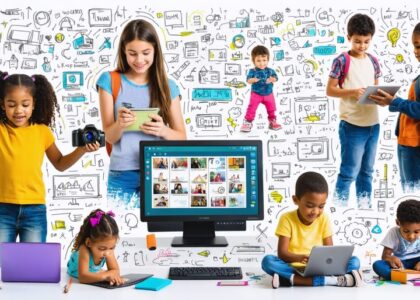
Engage students in hands-on STEM projects that solve real-world problems, fostering critical thinking and innovation. Integrate cutting-edge technology like coding, robotics, and 3D printing to prepare students for future careers. Collaborate with industry professionals and local organizations to provide authentic learning experiences and mentorship opportunities. Prioritize diversity and inclusion by showcasing diverse STEM role models and creating an equitable learning environment that supports all students’ success.
Hands-On Learning Experiences
Elementary School Activities
Here are some engaging and age-appropriate STEM activities for elementary school students:
Building simple machines like levers, pulleys, and inclined planes using everyday materials helps kids understand basic physics concepts through hands-on exploration. Planting a classroom garden teaches about plant life cycles, nutrition, and environmental stewardship. Students can observe plant growth, track weather patterns, and learn where healthy foods come from.
Coding games and apps designed for young learners, like Scratch Jr. and Kodable, introduce computational thinking and problem-solving skills in a fun, interactive way. Students can create their own stories and animations while developing foundational programming knowledge.
Quick science experiments with common household items make STEM accessible and exciting. Growing crystals, making lava lamps, or building mini catapults gets kids asking questions and thinking like scientists. These inquiry-based investigations build critical thinking skills applicable across subjects.
Introducing engineering design challenges encourages creativity and collaboration. Students can build bridges using various materials to learn about structure and stability, or design and test parachutes to explore air resistance. Working in teams, they learn communication and project management skills while applying STEM principles to solve problems. These projects foster a growth mindset, showing kids that trial and error is part of the scientific process.

Middle and High School Projects
For middle and high school students, STEM projects can be more complex and challenging, fostering critical thinking, problem-solving, and collaboration skills. Consider robotics competitions where teams design, build, and program robots to complete tasks, developing technical abilities and teamwork. Coding projects, such as creating apps, games, or websites, allow students to apply programming concepts to real-world scenarios. Environmental science projects, like monitoring water quality or designing renewable energy solutions, connect STEM to pressing global issues. Encourage participation in science fairs, showcasing research on topics like genetics, chemistry, or physics. Incorporate advanced math concepts through projects like building bridges or analyzing statistical data. Introduce interdisciplinary projects that combine STEM with other subjects, such as creating historical simulations using computer models or exploring the science behind art techniques. Provide opportunities for mentorship and internships with local STEM professionals, giving students valuable insights into career paths. Engage students in citizen science initiatives, contributing data to real research projects and fostering a sense of purpose. By offering diverse, challenging projects that relate to students’ interests and the world around them, educators can deepen STEM engagement and prepare students for future success in these fields.

Integrating Technology in STEM Lessons
Integrating technology into STEM lessons can significantly enhance student engagement and understanding. By incorporating educational apps, interactive simulations, and virtual labs, educators can bring abstract concepts to life and foster hands-on learning experiences. These digital tools allow students to explore complex topics at their own pace, visualize scientific phenomena, and conduct experiments in a safe, controlled environment.
Moreover, introducing students to coding platforms and computational thinking exercises can help develop critical problem-solving skills and prepare them for future careers in STEM fields. By learning to code, students gain a deeper understanding of how technology works and can apply this knowledge to create their own digital solutions.
Educators can also leverage online collaboration tools to facilitate group projects and discussions, enabling students to work together seamlessly even when learning remotely. This fosters essential communication and teamwork skills while allowing students to learn from one another’s perspectives.
When integrating technology, it’s crucial to ensure that all students have equitable access to devices and resources. Educators should also provide clear guidance and support to help students navigate digital tools effectively and responsibly. By thoughtfully incorporating technology into STEM lessons, educators can create dynamic, engaging learning experiences that inspire curiosity and prepare students for success in an increasingly digital world.
Real-World Connections and Career Exploration

Inviting STEM Professionals to the Classroom
Inviting STEM professionals to share their experiences in the classroom can be a powerful way to inspire and engage students. Reach out to local businesses, universities, and professional organizations to find potential speakers who can discuss their career paths, current projects, and the real-world applications of STEM skills. Encourage speakers to share personal stories and challenges they’ve overcome, as this can help students relate to them as role models. When planning these visits, work with the guest speakers to develop interactive presentations that allow for student participation and questions. Consider having students prepare questions in advance to foster meaningful discussions. After the visit, follow up with activities that reinforce the concepts discussed and encourage students to reflect on how the speaker’s experiences relate to their own interests and goals. By bringing STEM professionals into the classroom, educators can help students see the exciting possibilities that await them in these fields.
Field Trips and Virtual Tours
Field trips and virtual tours offer immersive STEM experiences that extend learning beyond the classroom walls. Consider partnering with local museums, science centers, or universities to organize hands-on workshops, guided tours, or interactive exhibits tailored to your curriculum. Many institutions also offer virtual tours and online resources, allowing students to explore distant locations, historical sites, or cutting-edge research facilities without leaving the school. These virtual tours can be particularly valuable for schools with limited budgets or those in remote areas. To maximize the impact of field trips and virtual experiences, prepare students with relevant background information, develop focused observation tasks, and facilitate post-trip discussions or projects that reinforce key concepts. By engaging students in authentic, real-world STEM contexts, you can spark curiosity, deepen understanding, and inspire future career aspirations in these critical fields.
Collaborative Learning and STEM Challenges
Collaborative learning and STEM challenges are powerful strategies for fostering teamwork and problem-solving skills in K-12 students. By engaging in group projects and competitions, students learn to work together, communicate effectively, and think critically to solve complex problems. Educators can facilitate these experiences by designing hands-on activities that require students to apply STEM concepts in real-world contexts.
One effective approach is to organize classroom challenges where teams of students must design, build, and test solutions to specific problems. For example, students could be tasked with creating a simple machine that accomplishes a particular goal, such as lifting a weight or moving an object. Throughout the process, teachers can guide students in breaking down the problem, brainstorming ideas, and iterating on their designs.
Another strategy is to participate in school-wide or regional STEM competitions, such as robotics tournaments, science fairs, or math olympiads. These events provide opportunities for students to showcase their skills, learn from their peers, and gain recognition for their achievements. To prepare for these competitions, educators can mentor teams, provide resources, and create a supportive environment that encourages experimentation and risk-taking.
Collaborative learning can also be integrated into daily classroom activities. Teachers can use cooperative learning structures, such as jigsaw groups or think-pair-share, to encourage students to work together and share their knowledge. By assigning roles and responsibilities within groups, educators can ensure that all students are actively engaged and contributing to the learning process.
To make collaborative STEM experiences more inclusive and equitable, it is important to consider the diverse needs and backgrounds of students. Educators can use culturally responsive teaching strategies, provide accommodations for students with disabilities, and ensure that all students have access to the necessary resources and support. By creating a welcoming and inclusive environment, teachers can help all students develop the confidence and skills they need to succeed in STEM fields.
Supporting Diversity and Inclusion in STEM
Encouraging underrepresented groups to pursue STEM is essential for fostering a diverse and innovative workforce. To achieve this, educators must create an inclusive classroom environment that celebrates diversity and promotes equity. One key strategy is to showcase diverse role models in STEM fields, highlighting the contributions of individuals from various backgrounds. This representation helps students see themselves in these careers and feel empowered to pursue their interests.
Educators can also engage students in culturally responsive learning experiences that connect STEM concepts to their lives and communities. By incorporating real-world examples and case studies that resonate with diverse learners, teachers make STEM more accessible and meaningful. Collaborative projects and group work further foster inclusion by encouraging students to share their unique perspectives and learn from one another.
Additionally, providing targeted support and resources is crucial for underrepresented students. This may include mentorship programs, after-school clubs, or partnerships with community organizations that offer STEM enrichment opportunities. By actively working to remove barriers and level the playing field, educators can ensure that all students have equal access to high-quality STEM education.
Creating an inclusive STEM classroom requires ongoing professional development for educators. Training on implicit bias, culturally responsive teaching, and inclusive pedagogy equips teachers with the tools to support diverse learners effectively. By prioritizing diversity and inclusion in STEM education, we cultivate a generation of problem-solvers and innovators who reflect the rich tapestry of our society.
Conclusion
In conclusion, implementing innovative strategies for K-12 STEM education is crucial for preparing students to thrive in an increasingly technology-driven world. By embracing hands-on learning, integrating technology, fostering collaboration, and connecting STEM concepts to real-world applications, educators can engage students and develop their critical thinking, problem-solving, and creativity skills. Prioritizing diversity and inclusion in STEM is equally important, as it ensures that all students have access to opportunities and feel empowered to pursue their passions. By providing role models, mentorship, and culturally responsive teaching, we can break down barriers and inspire a new generation of diverse STEM leaders.
As educators, we have the power to shape the future by nurturing our students’ love for STEM subjects. By implementing these strategies and continuously seeking new ways to engage and inspire our students, we can unlock their potential and set them on a path to success. The impact of our efforts extends far beyond the classroom, as we prepare our students to become the innovators, problem-solvers, and leaders of tomorrow. Let us embrace this responsibility with enthusiasm and dedication, knowing that our work in K-12 STEM education has the power to change lives and shape a brighter future for all.