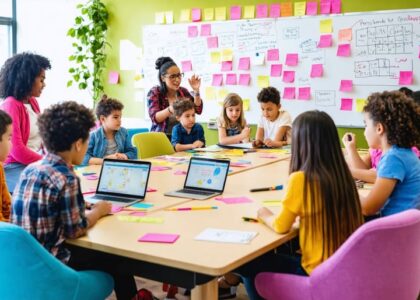
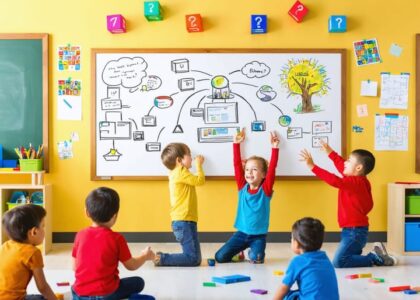
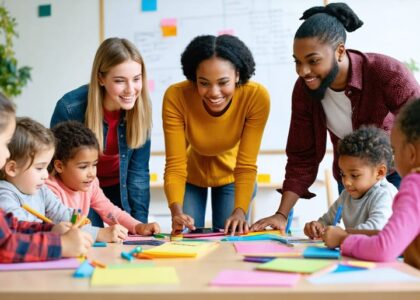
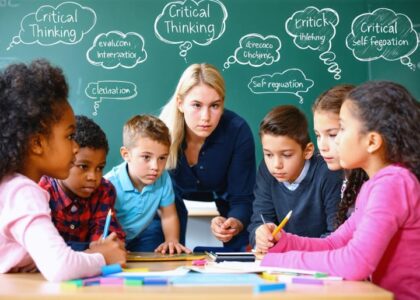
Collaborative learning transforms traditional classroom dynamics into dynamic, student-centered environments where knowledge flows multidirectionally. More than just group work, it represents a fundamental shift in how we understand effective education – from passive reception to active co-creation of knowledge. Through structured collaborative learning strategies, students develop critical thinking, communication skills, and deeper subject mastery while building essential social-emotional competencies.
Today’s educators recognize collaborative learning as a cornerstone of modern pedagogy, where students work together to solve problems, create projects, and engage in meaningful discourse. This approach reflects the real-world workplace, where success depends increasingly on teamwork, adaptability, and collective problem-solving. Research consistently shows that well-implemented collaborative learning leads to higher achievement, improved retention, and enhanced student engagement across diverse learning environments.
Whether in physical classrooms or digital spaces, collaborative learning creates opportunities for students to become active participants in their educational journey, supporting both academic excellence and the development of future-ready skills that transcend traditional subject boundaries.
How Collaborative Learning Reshapes Student Success

Academic Benefits
Research consistently shows that collaborative learning can transform K-12 classrooms and lead to improved learning outcomes across multiple subjects. Students engaged in collaborative activities demonstrate higher retention rates, with studies indicating up to 90% retention compared to just 5% in traditional lecture settings.
When students work together, they develop stronger critical thinking skills by engaging in discussions, defending their viewpoints, and considering different perspectives. This deeper level of engagement helps students process information more effectively and apply concepts in various contexts.
Collaborative learning also enhances problem-solving abilities as students pool their knowledge and skills to tackle complex challenges. They learn to break down problems, consider multiple solutions, and work systematically toward solutions—skills that are invaluable both in and outside the classroom.
Additionally, students in collaborative environments show increased motivation and participation. The social nature of group work creates a supportive atmosphere where students feel more comfortable taking risks and sharing ideas, leading to greater academic confidence and achievement.
Social-Emotional Growth
Collaborative learning serves as a powerful catalyst for students’ social-emotional development, fostering essential life skills that extend far beyond academic achievement. Through regular group interactions, students naturally develop their communication abilities, learning to express ideas clearly, listen actively, and provide constructive feedback to peers.
Leadership skills emerge organically as students take turns guiding group activities, managing project timelines, and helping teammates stay focused on shared goals. These experiences help students discover their leadership style while learning to recognize and appreciate different strengths in others.
The collaborative environment creates authentic opportunities for developing crucial interpersonal skills, including empathy, conflict resolution, and emotional intelligence. Students learn to navigate disagreements respectfully, celebrate diverse perspectives, and support their peers through challenges. These interactions help build self-awareness and social consciousness, as students learn to read social cues and adjust their behavior accordingly.
Working in groups also helps students develop resilience and adaptability, as they learn to cope with different personalities, varying work styles, and unexpected challenges. These experiences create a foundation for future success in both academic and professional settings.
Essential Elements of Effective Collaborative Learning

Positive Interdependence
Positive interdependence is the cornerstone of effective collaborative learning, where each student’s success is linked to the group’s achievement. To create this mutual reliance, teachers can implement several proven strategies that encourage students to work together meaningfully.
One effective approach is to establish shared goals that require input from all group members. For example, assign projects where each student contributes a unique component, like creating a class newspaper where different students handle writing, editing, illustration, and layout. This ensures that success depends on everyone’s participation.
Resource sharing is another powerful tool for building interdependence. Distribute materials or information among group members so they must interact to complete the task. You might give each student part of a story or different data sets that must be combined to solve a problem.
Role assignments also foster positive interdependence. Designate specific responsibilities such as timekeeper, facilitator, note-taker, or fact-checker. These roles should rotate regularly to ensure all students develop various skills and understand different perspectives.
Assessment strategies can reinforce interdependence by including both individual and group components. Consider using a combination of group project grades and individual reflection assignments, encouraging students to support each other while maintaining personal accountability.
Remember to celebrate group achievements and highlight how each member’s contribution led to the collective success, reinforcing the value of working together.
Individual Accountability
Individual accountability is a cornerstone of effective collaborative learning, ensuring that each student takes responsibility for their own learning while contributing to the group’s success. Teachers can foster this accountability through several practical strategies.
First, assign specific roles within group projects, such as researcher, writer, fact-checker, or presenter. These roles should rotate regularly, allowing students to develop different skills and prevent any single student from dominating or disengaging from the work.
Regular check-ins and progress monitoring help maintain individual accountability. Teachers can implement quick formative assessments, individual reflection journals, or one-on-one conferences to track each student’s understanding and participation. This approach helps identify students who might be struggling or not fully participating.
Creating clear evaluation criteria that include both individual and group components is essential. For example, a project grade might be composed of 60% group work and 40% individual contributions. This balance encourages teamwork while ensuring personal responsibility.
Technology can be a powerful tool for tracking individual contributions. Digital platforms allow teachers to monitor each student’s input in shared documents, discussion boards, or collaborative presentations. Some helpful practices include:
– Having students submit individual components before group integration
– Using peer evaluations to assess individual contributions
– Implementing self-assessment tools
– Requiring personal reflection submissions alongside group work
When students know they’re individually accountable, they’re more likely to engage meaningfully in collaborative activities and take ownership of their learning journey.
Practical Strategies for Implementation
Setting Up Collaborative Groups
Creating effective student groups requires careful planning and consideration of multiple factors. Start by determining the optimal group size, typically 3-4 students, which allows for diverse perspectives while ensuring each member can actively participate. Consider mixing ability levels, learning styles, and social dynamics to create balanced teams that promote peer learning.
When forming groups, use a combination of structured and flexible approaches. Sometimes allow students to choose their partners, while other times assign groups strategically. This variation helps students develop adaptability and prevents the formation of exclusive cliques. Consider using interest surveys or pre-assessments to inform group composition.
Establish clear roles within each group to promote accountability and equal participation. Common roles include facilitator, recorder, timekeeper, and presenter. Rotate these roles regularly so students experience different responsibilities and develop various skills.
Set specific guidelines for group interaction and collaboration. Create simple rules like “everyone contributes” and “respect all ideas.” Provide students with collaboration tools and templates to structure their work together. Consider using role cards or collaboration rubrics to help students understand expectations.
Remember to be mindful of students with special needs or social challenges when forming groups. Create an inclusive environment by providing appropriate supports and modifications. Regular monitoring and adjustment of group dynamics ensures all students benefit from the collaborative experience.
Designing Collaborative Activities
Creating effective collaborative activities requires careful planning and a structured approach. Start by clearly defining your learning objectives – what specific skills or knowledge do you want students to gain through collaboration? These goals will guide your activity design and help measure success.
Next, determine the optimal group size based on your objectives and class dynamics. Generally, groups of 3-4 students work well, allowing for diverse perspectives while ensuring each member can actively participate. Consider using both heterogeneous and homogeneous grouping strategies depending on the task.
Structure your activity with clear roles and responsibilities. Assign specific functions like timekeeper, recorder, or facilitator to promote equal participation and accountability. Provide detailed instructions in both verbal and written formats, including time limits, expected outcomes, and evaluation criteria.
Incorporate checkpoints throughout the activity where groups can assess their progress and seek guidance if needed. This helps maintain focus and allows for timely interventions. Design tasks that require positive interdependence – where success depends on all members contributing their unique strengths.
Finally, create assessment tools that evaluate both individual contributions and group outcomes. This might include peer evaluations, self-reflection forms, or rubrics that measure collaboration skills alongside content knowledge. Remember to build in time for groups to share their work and reflect on their collaborative process.
Always have backup plans and modifications ready to accommodate different learning styles and needs, ensuring all students can participate meaningfully in the collaborative experience.

Assessment Methods
Assessing collaborative learning requires a balanced approach that evaluates both individual contributions and group outcomes. One effective method is using rubrics that clearly outline expectations for teamwork, communication, and project deliverables. These rubrics should include specific criteria for both process and product evaluation.
Peer assessment plays a crucial role in collaborative learning evaluation. Students can provide valuable feedback on their teammates’ participation, cooperation, and contributions. Using structured peer evaluation forms helps maintain objectivity and provides meaningful data about individual performance within the group.
Self-reflection assignments allow students to analyze their own role in the collaborative process. Regular journal entries or reflection papers can help teachers understand individual growth and identify areas where support might be needed. These reflections also develop students’ metacognitive skills.
Group portfolios serve as excellent documentation of the collaborative journey. They can include drafts, meeting notes, progress reports, and final products, giving teachers insight into the development process and individual contributions.
Technology tools like shared documents and collaboration platforms can track individual participation and contributions automatically. This data provides objective evidence of engagement and helps ensure fair assessment.
Multiple assessment touchpoints throughout the project, rather than just evaluating the final product, give a more complete picture of both individual and group progress. This approach allows teachers to provide timely feedback and support when needed.
Overcoming Common Challenges
Managing Uneven Participation
Uneven participation in collaborative learning can challenge even the most experienced educators, but several effective strategies can help ensure all students contribute meaningfully. Start by assigning specific roles that rotate regularly, such as timekeeper, note-taker, or discussion leader, giving each student clear responsibilities and opportunities to lead.
Implement structured participation protocols like “think-pair-share” or “round-robin” discussions to ensure every voice is heard. Using individual accountability measures, such as having students submit personal reflections alongside group work, helps track individual contributions while maintaining the collaborative spirit.
Digital tools can be particularly effective in monitoring and encouraging participation. Online discussion boards, collaborative documents, and project management platforms allow teachers to track individual contributions and provide targeted support where needed.
Consider creating participation rubrics that students help develop, fostering ownership and understanding of expectations. For students who tend to dominate discussions, teach them leadership skills that include drawing out others’ perspectives. Meanwhile, support quieter students by providing alternative participation methods, such as written contributions or small-group discussions before whole-class sharing.
Supporting Diverse Learning Needs
Collaborative learning inherently supports supporting diverse learning needs by providing multiple pathways for student engagement and success. When structuring collaborative activities, teachers can incorporate different roles that align with students’ strengths and abilities. For example, a group project might include roles for visual designers, writers, researchers, and presenters, allowing each student to contribute meaningfully while developing new skills.
Flexible grouping strategies also play a crucial role in accommodating diversity. Teachers can create heterogeneous groups where students with different abilities support each other, or homogeneous groups where learners work at similar pace and level. This adaptability ensures that all students can participate actively and learn effectively.
Technology integration can further enhance accessibility, with tools like shared documents, voice recording options, and visual collaboration platforms providing alternative ways for students to contribute. By offering multiple modes of participation and expression, collaborative learning becomes an inclusive framework that celebrates and leverages student differences while promoting mutual understanding and respect.
Collaborative learning represents a powerful shift in educational practice that benefits students and teachers alike. Through the strategies and approaches discussed in this article, we’ve seen how this pedagogical method creates engaging, interactive learning environments that prepare students for real-world success.
Remember that implementing collaborative learning doesn’t require a complete overhaul of your teaching methods overnight. Start small by incorporating one or two strategies into your existing lessons, then gradually expand as you and your students become more comfortable with the approach. Pay attention to what works best for your specific classroom dynamics and be willing to adapt methods to meet your students’ needs.
The benefits of collaborative learning extend far beyond academic achievement. By fostering teamwork, communication, and critical thinking skills, we’re preparing our students for future success in an increasingly interconnected world. As educators, we have the opportunity to create learning environments where every student can contribute, grow, and succeed through meaningful collaboration with their peers.
Take the first step today by choosing one collaborative strategy to implement in your next lesson. Share your experiences with colleagues, learn from each other’s successes and challenges, and continue to refine your approach. Remember, the journey to effective collaborative learning is itself a collaborative process – one where we all learn and grow together as educational professionals.