
Picture a high school student pipetting DNA samples, running gel electrophoresis, or transforming bacteria with bioluminescent genes—not at a university research lab, but in your own classroom. This is quantitative biology, or q-bio, and it’s transforming how K-12 educators teach the life sciences.
Q-bio brings authentic laboratory experiences into educational settings by emphasizing hands-on experimentation with real biological materials and equipment. Rather than simply reading about restriction enzymes or watching videos about CRISPR technology, students engage directly with these tools and concepts. They collect measurable data, analyze results, troubleshoot protocols, and experience the scientific method as working scientists do. This approach bridges the gap between theoretical knowledge and practical application, preparing students for college-level coursework and STEM careers while making abstract concepts tangible and memorable.
The educational value extends far beyond content mastery. When students conduct actual biotechnology procedures, they develop critical thinking skills, learn to work collaboratively in lab teams, and build confidence in their scientific abilities. They encounter the same challenges professional researchers face—contaminated cultures, unexpected results, equipment limitations—and learn resilience and problem-solving in authentic contexts. These experiences demystify science careers and help students see themselves as capable scientists, particularly important for engaging underrepresented groups in STEM fields.
Perhaps most importantly, q-bio is achievable regardless of your school’s budget or your prior lab experience. From minimal-cost microbiology investigations using household materials to grant-funded PCR thermal cyclers, educators across diverse settings are successfully implementing quantitative biology programs. The key lies not in expensive equipment, but in strategic planning, creative resource acquisition, and connecting with supportive educator communities who share protocols and troubleshooting advice.
What Is Q-Bio and Why Should K-12 Educators Care?
Q-bio represents a transformative shift in how we approach biotechnology education in K-12 classrooms. At its core, q-bio is both a teaching philosophy and a practical framework that brings authentic, hands-on biotechnology experiences to students of all ages. Rather than limiting biology education to textbooks and diagrams, q-bio emphasizes experiential wet lab learning where students engage directly with the tools, techniques, and thinking processes that real scientists use every day.
The evolution toward q-bio reflects a growing recognition that traditional biology teaching often falls short of inspiring genuine scientific curiosity. For decades, K-12 biology education has relied heavily on memorization and theoretical concepts, leaving students disconnected from the exciting reality of modern biological research. Q-bio changes this dynamic by making wet lab experiences accessible, engaging, and developmentally appropriate for younger learners.
One of the most persistent misconceptions surrounding biotechnology education is that it’s simply too advanced or prohibitively expensive for K-12 settings. This belief has kept countless students from experiencing the wonder of genetic engineering, microscopy, or microbiology firsthand. The reality, however, is quite different. Q-bio demonstrates that with thoughtful planning and creative resource allocation, educators can create meaningful biotechnology experiences at virtually any budget level.
You don’t need a university-level laboratory to implement q-bio principles in your classroom. Many foundational biotechnology concepts can be explored using affordable materials and simplified protocols designed specifically for K-12 learners. From bacterial transformation experiments costing just a few dollars per student to DNA extraction activities using household items, the possibilities are more accessible than most educators realize.
What makes q-bio particularly valuable is its emphasis on authentic scientific practice rather than cookbook-style labs. Students don’t just follow steps; they engage in genuine inquiry, troubleshoot real problems, and develop the critical thinking skills that define scientific literacy. This approach prepares students not only for potential STEM careers but also for informed citizenship in an increasingly biotechnology-driven world.
By embracing q-bio, you’re opening doors for students who might never otherwise see themselves as scientists, making cutting-edge science education a reality rather than a distant aspiration.
The Core Components of Q-Bio Learning Environments
Hands-On Wet Lab Experiences That Mirror Real Research
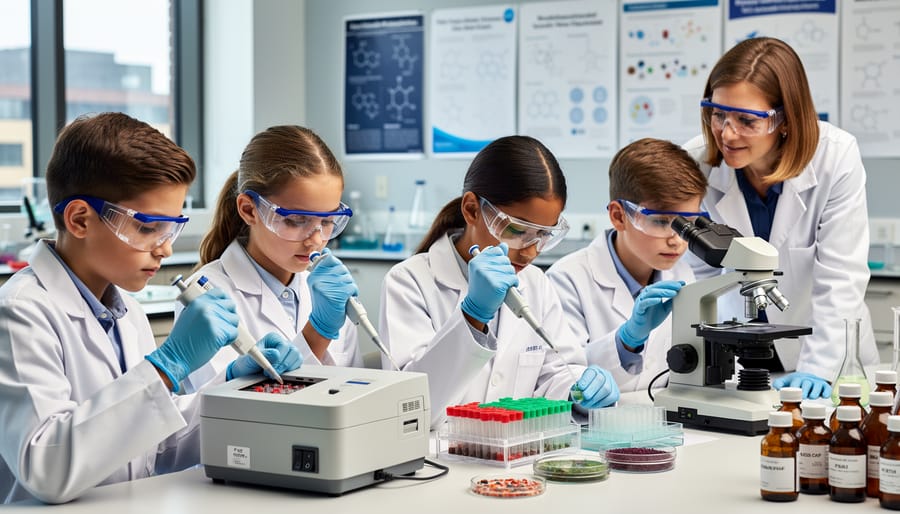
Authentic wet lab experiences transform students from passive learners into active scientists. In q-bio environments, students engage with the same techniques and tools used in professional research laboratories, creating meaningful connections between classroom concepts and real-world applications.
Common hands-on activities include DNA extraction from everyday materials like strawberries or cheek cells, allowing students to visualize genetic material they’ve only read about in textbooks. Bacterial transformation experiments enable learners to observe genetic engineering firsthand as they introduce new traits into living organisms. Students also practice gel electrophoresis to separate DNA fragments, microbial culturing to grow and identify bacterial colonies, and enzyme assays to understand biological catalysts in action.
These experiences matter because they develop critical thinking and problem-solving skills that reading alone cannot achieve. When students pipette solutions, make observations, troubleshoot unexpected results, and analyze data, they’re practicing the scientific method in its truest form. The tactile nature of wet lab work helps diverse learners grasp abstract concepts through multiple sensory pathways, supporting different learning styles and needs.
What makes these activities particularly powerful is their authenticity. Students aren’t following cookbook procedures with predetermined outcomes. Instead, they encounter real variables, experience genuine uncertainty, and develop resilience when experiments don’t go as planned. This mirrors the iterative nature of actual research, preparing students for science careers or simply helping them become more scientifically literate citizens. The confidence gained from successfully completing professional-level techniques empowers students to see themselves as capable scientists, regardless of their background or previous academic performance.
Safety Protocols That Empower Rather Than Limit
Creating safety protocols in q-bio learning environments doesn’t mean restricting student exploration—it means building confidence through clear expectations. Start by involving students in developing lab agreements rather than imposing rigid rules. When learners understand why we wear gloves when handling biological materials or how proper waste disposal protects everyone, they become active participants in safety rather than passive rule-followers.
Design your space with visible, student-friendly safety reminders. Color-coded zones for different activities, pictorial guides for equipment use, and accessible safety data sheets written in age-appropriate language help students make independent, informed decisions. Consider creating student safety ambassadors who can model best practices and support their peers.
Progressive responsibility works beautifully in q-bio settings. Begin with highly supervised activities, then gradually release control as students demonstrate competency. For example, students might initially observe micropipetting demonstrations, then practice with water, before working with actual samples. This scaffolded approach builds both skills and confidence.
Remember that mistakes are learning opportunities. When safety incidents occur, facilitate reflection conversations rather than punitive responses. Ask students what they learned and how they’ll approach similar situations differently. This supportive framework transforms safety protocols from limitations into tools that empower students to engage authentically with real scientific practices while maintaining the protective boundaries they need to explore safely.
Equipment and Resources That Fit K-12 Budgets
Bringing quantitative biology into your classroom doesn’t require expensive university-grade equipment. Many essential q-bio experiments can be conducted with surprisingly affordable tools and creative substitutions that deliver authentic learning experiences.
Start with the basics: digital micropipettes can be replaced with adjustable standard pipettes (under $50), while smartphone microscopes with camera attachments cost as little as $30 and provide excellent imaging capabilities for cell counting and analysis. Free software like ImageJ allows students to perform quantitative image analysis on any computer, making data collection accessible without specialized programs.
For data collection and graphing, leverage the technology your students already have. Smartphones and tablets can run free data-logging apps, and many schools already have access to spreadsheet software perfect for creating growth curves and analyzing experimental results.
Grant opportunities specifically support hands-on science education. The Amgen Foundation Teacher Grants, DonorsChoose classroom projects, and state-level STEM education initiatives regularly fund biotechnology equipment. Many biotechnology companies also offer educational discounts or equipment donation programs.
Consider forming partnerships with local community colleges or universities. They often welcome opportunities to share resources with K-12 educators, providing occasional equipment access while building valuable mentorship connections for your students. Community forums and teacher networks can also connect you with educators willing to share protocols adapted for budget-conscious classrooms.
How Q-Bio Enhances Student Learning Outcomes
Building Scientific Thinking Through Authentic Problem-Solving
Wet lab experiences transform students into scientific thinkers by engaging them in authentic problem-solving that mirrors real-world research. When students design experiments to answer genuine questions, they develop critical thinking skills that extend far beyond memorizing facts.
The q-bio approach strengthens hypothesis testing abilities as students learn to make predictions, design protocols, and analyze results. This iterative process teaches them that science is not about getting the “right” answer on the first try, but rather about asking better questions and refining approaches based on evidence.
Perhaps most importantly, wet lab work builds resilience. When experiments yield unexpected results or fail entirely, students discover that setbacks are valuable learning opportunities rather than defeats. They learn to troubleshoot, adjust variables, and persist through challenges—essential skills for academic success and life beyond the classroom. These experiences help students understand that scientific progress depends on asking why things didn’t work and trying again with new insights, fostering a growth mindset that serves them across all disciplines.

Preparing Students for STEM Careers and College Readiness
Introducing students to biotechnology through q-bio experiences creates tangible advantages as they progress toward higher education and future careers. When students engage with authentic wet lab techniques during their K-12 years, they develop foundational skills that distinguish them in competitive college admissions processes. Admissions committees increasingly value demonstrated interest in STEM fields, and hands-on biotechnology experience provides compelling evidence of genuine commitment and curiosity.
Beyond the application boost, students who participate in q-bio learning environments enter college-level science courses with practical knowledge their peers often lack. They’ve already navigated laboratory protocols, understood proper safety procedures, and developed the patience required for experimental work. This familiarity reduces the intimidation factor many first-year college students experience in introductory biology and chemistry labs.
Career pathways in biotechnology, pharmaceutical research, healthcare, and environmental science become more accessible when students can connect classroom concepts to real-world applications. Interactive tools like virtual lab simulations and community forums where students discuss their findings with peers nationwide further enhance this preparation. These experiences help students visualize themselves in STEM professions, making abstract career possibilities feel achievable and exciting rather than distant or overwhelming.
Increasing Engagement Across Diverse Learning Styles
Q-bio’s hands-on approach naturally supports diverse learning styles that traditional lecture-based science often misses. Kinesthetic learners thrive when pipetting samples or observing gel electrophoresis results firsthand, while visual learners benefit from color-changing reactions and microscopy observations. Students who struggle with abstract concepts can grasp DNA structure by physically manipulating lab materials.
To maximize inclusivity, consider station rotations where students explore different aspects of experiments at their own pace. Pair collaborative lab work with individual reflection journals, allowing both social and independent learners to process information effectively. Providing visual protocols alongside written instructions supports English language learners and students with reading challenges. Digital documentation tools let students capture and review procedures, creating multiple entry points for understanding. When students see themselves as capable scientists through successful hands-on work, engagement naturally increases across all learning preferences.
Practical Steps to Bring Q-Bio Into Your Classroom or School
Starting Small: Low-Cost Entry Points for Any Classroom
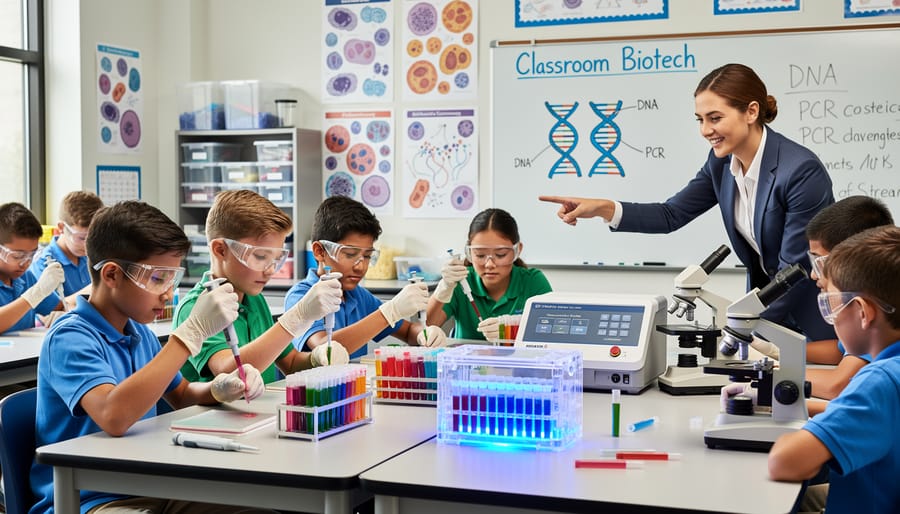
You don’t need a full-fledged lab to begin bringing authentic biotechnology experiences into your classroom. Start with simple DNA extraction using household materials: dish soap, salt, and rubbing alcohol can successfully extract visible DNA from strawberries or bananas. This foundational activity costs under $10 for materials that serve an entire class.
Build on this foundation with basic microscopy. If microscopes aren’t available, smartphone-based microscope adapters cost $5-15 and transform student devices into functional tools for cell observation. Combine these observations with collaborative learning by having students document and share their findings through digital portfolios.
Consider low-cost gel electrophoresis alternatives using agar from grocery stores instead of specialized suppliers. Student teams can model DNA separation patterns, connecting hands-on experience with theoretical concepts. Many suppliers offer single-use kits for $2-3 per student, making occasional experiments budget-friendly.
Free digital resources complement physical activities. Virtual lab simulations allow students to explore complex procedures before attempting simplified versions. Online community forums connect you with educators sharing equipment lists, lesson plans, and troubleshooting advice. These starter activities establish the investigative mindset central to q-bio while demonstrating that meaningful biotechnology education begins with creativity, not expensive equipment.
Building Institutional Support and Securing Funding
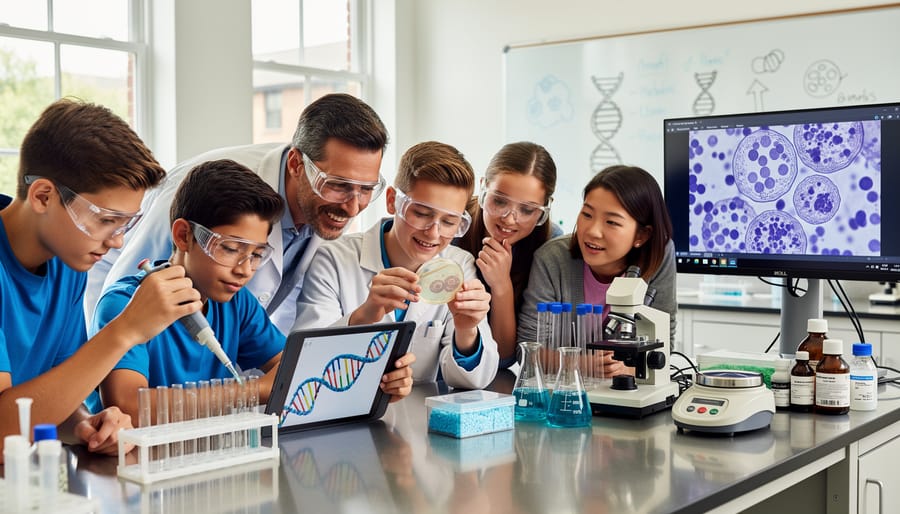
Securing support for q-bio programs begins with clearly articulating their value to administrators. Present data on how hands-on biotechnology experiences align with STEM standards, prepare students for growing career fields, and increase engagement in science courses. Create a concise proposal that outlines learning objectives, required resources, and potential community partnerships. Consider starting small with pilot programs to demonstrate success before requesting larger investments.
Grant opportunities exist specifically for STEM education innovation. The National Science Foundation, state education departments, and private foundations often fund biotechnology education initiatives. When writing grant applications, emphasize student outcomes, equity in STEM access, and collaboration with local institutions. Include detailed budgets and sustainability plans that extend beyond initial funding periods.
Partnerships with universities and biotechnology companies strengthen programs while reducing costs. Local universities may provide equipment loans, lab space access, or expert mentors for students. Biotechnology companies often have education outreach programs and may donate surplus supplies or sponsor specific projects. These partnerships also create authentic learning connections, showing students real-world applications of their classroom work.
Community forums and collaborative networks help educators share successful funding strategies and partnership models. Connect with colleagues who have established programs to learn from their experiences and adapt proven approaches to your school’s unique context.
Professional Development and Community Resources
Growing your q-bio teaching practice doesn’t mean going it alone. A vibrant community of educators is actively sharing resources, troubleshooting challenges, and celebrating successes in bringing authentic biotechnology experiences to K-12 classrooms.
Start by exploring professional development opportunities through organizations like the National Association of Biology Teachers (NABT) and the Biotechnology Institute, which offer workshops, webinars, and certification programs focused on hands-on lab instruction. Many university outreach programs also provide teacher training in biotechnology techniques at little or no cost.
Online communities offer invaluable day-to-day support. Join educator forums on platforms like the Science Teachers Association social networks or biotechnology-specific Facebook groups where teachers share lesson modifications, equipment recommendations, and creative solutions for common obstacles. These interactive tools allow you to ask questions, exchange protocols, and find collaborators for grant applications.
Consider partnering with local biotech companies or research institutions. Many organizations welcome classroom partnerships and can provide mentorship, guest speakers, or even equipment donations. Community colleges with biotechnology programs often support K-12 initiatives through their outreach departments.
Document and share your own journey through community forums. Your experiences implementing q-bio activities will help other educators take their first steps, strengthening the collective knowledge base and expanding opportunities for all students.
Overcoming Common Challenges in K-12 Biotechnology Education
Navigating Time Constraints and Curriculum Requirements
One of the most common concerns educators express is finding time for q-bio activities within an already packed curriculum. The good news is that q-bio doesn’t require adding more to your plate—it enhances what you’re already teaching. When you integrate authentic biotechnology experiences into existing science units, you’re deepening student understanding of standards you must cover anyway.
Consider mapping q-bio activities directly to your state’s science standards. A DNA extraction lab, for example, addresses multiple standards related to genetics, molecular biology, and scientific inquiry simultaneously. This means you’re not sacrificing content coverage—you’re making it more meaningful and memorable.
For scheduling, try these practical strategies: start with single-period demonstrations that preview concepts, then gradually expand to multi-day investigations as you grow comfortable. Partner with colleagues to share prep work and equipment costs. Some schools successfully implement q-bio through elective courses, after-school clubs, or dedicated lab days that rotate through classes.
Remember that even 30-minute experiences with real biological materials create lasting impact. You don’t need week-long units to introduce authentic science. Begin where you are, with the time you have, and watch as students’ engagement justifies expanding these opportunities further.
Managing the Learning Curve for Teachers New to Wet Labs
If you’re new to wet lab teaching, you’re not alone—and feeling uncertain is completely normal. Many successful biotechnology educators began with limited lab experience, and that fresh perspective can actually be an asset in the classroom. When you learn alongside your students, you model curiosity, problem-solving, and resilience—essential scientific practices that textbooks can’t teach.
Start small with foundational protocols like DNA extraction from strawberries or bacterial transformation. These entry-level experiments build your confidence while delivering meaningful learning experiences. As you grow comfortable, gradually introduce more complex techniques.
The q-bio community offers extensive support through interactive tools and community forums where educators share troubleshooting tips, lesson modifications, and encouragement. These spaces connect you with experienced mentors who remember their own first attempts and are eager to help. Many organizations also provide professional development workshops specifically designed for teachers transitioning into wet lab instruction.
Remember, expertise develops through practice, not perfection. Your willingness to embrace new challenges demonstrates exactly the growth mindset you want students to develop. By taking this journey, you’re opening doors to authentic science experiences that can transform how students see themselves as future scientists and problem-solvers.
Bringing q-bio into your classroom represents more than adding a new teaching method—it’s about opening doors to authentic scientific exploration that can genuinely transform how your students engage with biology. Whether you start with a simple extraction activity using household materials or gradually build toward a full wet lab setup, every step you take moves your students closer to experiencing science as it’s actually practiced in the real world.
The beauty of q-bio lies in its flexibility. You don’t need a perfect lab or an unlimited budget to begin. What matters most is your willingness to guide students through hands-on discovery, to embrace the messiness of authentic inquiry, and to celebrate the learning that happens when experiments don’t go exactly as planned. These experiences build critical thinking, resilience, and genuine scientific literacy in ways that textbooks alone simply cannot achieve.
You’re not alone in this journey. The Teach Find community stands ready to support you with practical resources, lesson plans from fellow educators, and forums where you can ask questions and share your own successes. Many teachers who now run thriving biotechnology programs started exactly where you are today—curious, perhaps uncertain, but ready to try something new.
Take one small step this week. Review a single q-bio protocol. Gather materials for one basic activity. Reach out to another educator who’s already started. That single action can spark a transformation in your classroom that benefits students for years to come. Your students are waiting to discover what science really feels like—and you have everything you need to show them.