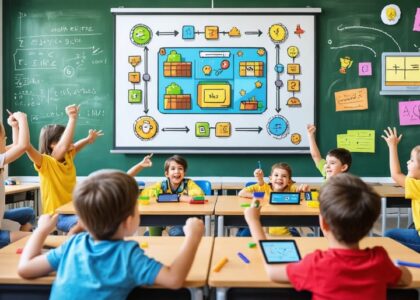
Unlock the power of play in your classroom with game-based learning. This innovative approach transforms dull lessons into exciting challenges, motivating students to eagerly engage with content. By tapping into the universal appeal of games, you can create immersive learning experiences that boost knowledge retention, develop critical thinking skills, and foster a genuine love for learning. Game-based learning breathes new life into education, empowering you to captivate minds, inspire creativity, and achieve remarkable outcomes. Discover how this groundbreaking strategy can revolutionize your teaching and unlock the full potential of every student. Get ready to level up your classroom and watch learning come alive through the magic of play.
What is Game-Based Learning?
Engaging Students Through Games
Games are a powerful tool for engaging students and motivating learning. By tapping into students’ natural curiosity and love of play, educational games capture attention and drive active participation. Well-designed games present challenges that encourage problem-solving, critical thinking, and persistence. As students progress through levels and earn rewards, they experience a sense of accomplishment that fuels their desire to learn more. The immersive nature of games creates an emotional connection to the content, making learning memorable and enjoyable. Moreover, games provide immediate feedback, allowing students to learn from their mistakes and try again without fear of failure. This low-stakes environment builds confidence and resilience. By harnessing the engaging power of games, educators can transform learning into an exciting adventure that students eagerly embrace.


Developing 21st Century Skills
Game-based learning fosters a range of 21st-century skills essential for success in today’s world. By engaging students in problem-solving scenarios, games encourage critical thinking as learners analyze information, make decisions, and develop strategies to overcome challenges. Collaboration is another key skill promoted through game-based learning, as many games require teamwork, communication, and the ability to work towards common goals. Moreover, game-based learning nurtures creativity by providing opportunities for experimentation, innovation, and the exploration of multiple solutions. Through immersive experiences that simulate real-world situations, games empower students to apply these skills in meaningful contexts. By prioritizing the development of critical thinking, collaboration, and creativity, game-based learning equips students with the adaptable skill set needed to thrive in an ever-changing global landscape.
Benefits of Game-Based Learning
Increased Motivation and Engagement
Games have the power to transform learning into an enjoyable and rewarding experience for students. By tapping into the intrinsic motivation that games provide, educators can create engaging learning environments that captivate students’ attention and drive their desire to learn. The sense of accomplishment and progress that games offer, such as leveling up or earning rewards, motivates students to persist through challenges and strive for mastery. Moreover, the interactive nature of games encourages active participation, making learning a hands-on and immersive experience. This increased engagement leads to deeper understanding and retention of concepts, as students are more likely to remember what they’ve learned when they are emotionally invested in the process. By leveraging the motivational power of games, educators can foster a love for learning that extends beyond the classroom and supports students’ cognitive development in the long run.
Enhanced Knowledge Retention
Game-based learning experiences actively engage students, requiring them to apply knowledge and skills to progress. This hands-on approach creates stronger neural connections compared to passive listening or reading. Games also provide immediate feedback, reinforcing correct answers and prompting reflection on mistakes. Repetition through leveling up and replaying challenges solidifies understanding. Emotionally stimulating gaming elements like stories, characters, and rewards make learning memorable. The multi-sensory nature of games, with visuals, audio, and interactive components, caters to diverse learning styles. This immersive learning process encodes information into long-term memory more effectively. By making learning fun and motivating, game-based strategies combat boredom and boost knowledge retention.
Personalized Learning Experiences
One of the key advantages of game-based learning is its ability to provide personalized learning experiences. By adapting to each student’s individual needs, skill levels, and learning pace, educational games can create tailored challenges that keep learners engaged and motivated. For example, games can adjust difficulty levels based on a student’s performance, ensuring that they are always working within their zone of proximal development. This personalized approach allows struggling students to receive extra support and practice, while advanced learners can be challenged with more complex tasks. Additionally, game-based learning often incorporates multiple learning styles, such as visual, auditory, and kinesthetic, catering to diverse student preferences. By offering personalized learning experiences, game-based learning promotes a more inclusive and effective educational environment.
Implementing Game-Based Learning
Choosing the Right Games
When selecting educational games, prioritize those that align with your specific learning objectives and curriculum standards. Look for games that target the skills and knowledge you want your students to develop. Consider the age-appropriateness of the content, ensuring it matches your students’ developmental levels. Evaluate the game’s mechanics and determine if they effectively support the intended learning outcomes. Opt for games that provide clear instructions, engaging gameplay, and constructive feedback to keep students motivated. Additionally, consider the technical requirements and accessibility of the games, ensuring they can be easily integrated into your classroom setup. Reading reviews and trying out the games yourself can help you make informed decisions. Remember, the right educational game should not only be fun but also purposefully designed to facilitate learning and support your instructional goals. By carefully choosing games that meet these criteria, you can harness the power of game-based learning to create meaningful and effective educational experiences for your students.
Balancing Gameplay and Instruction
To effectively balance gameplay and instruction, educators should strategically integrate game-based activities with direct teaching. Start by identifying clear learning objectives and then select or design games that align with those goals. During gameplay, provide guidance and support to help students connect the game to the intended concepts. Pause at key moments to discuss strategies, reinforce skills, and encourage reflection. After the game, debrief as a class to solidify understanding and extend the learning. It’s also important to vary the structure, alternating between game-based exploration and explicit instruction to maintain engagement and cater to diverse learning needs. By thoughtfully interweaving play and direct teaching, educators can harness the power of games to enhance student learning and achievement.
Assessing Learning Outcomes
Game-based learning offers unique opportunities for assessing learning outcomes through in-game performance metrics and feedback loops. Educators can track student progress by analyzing data points such as completion rates, time spent on tasks, and decision-making patterns within the game environment. This data-driven instruction approach allows for real-time adjustments and personalized support. Additionally, well-designed games incorporate formative assessments like quizzes, challenges, and problem-solving scenarios that provide immediate feedback on student understanding. By observing how learners navigate these in-game assessments, teachers can identify areas of strength and weakness, adapting their instruction accordingly. Game-based learning also promotes self-assessment and reflection, empowering students to take ownership of their learning journey and develop metacognitive skills essential for lifelong success.

Real-World Examples
Math Games that Make Numbers Fun
Math games transform numbers and equations into exciting, interactive challenges that engage students and enhance their computational abilities. From classic board games like Equate to digital apps like Prodigy Math Game, there’s a wealth of options to make math practice feel like play. Number sense games like Shut the Box improve basic arithmetic skills, while logic puzzles like Sudoku and KenKen encourage strategic thinking. Online platforms such as Beast Academy and DreamBox Learning adapt to each student’s level, ensuring appropriate challenge and growth. Collaborative games like 24 Challenge foster teamwork and friendly competition as students race to find solutions. By turning math into a game, educators can boost motivation, reduce anxiety, and help students develop a positive relationship with numbers. Game-based learning makes math approachable and enjoyable for all learners, building confidence and critical thinking skills that extend far beyond the classroom. Incorporating math games into lessons and practice routines is a powerful way to make numbers fun and meaningful for students at any level.
Language Adventures for Worldly Learners
Language learning games immerse players in virtual environments that closely mimic real-life conversations and cultural contexts. These engaging experiences allow learners to practice their language skills in a safe, supportive setting while reducing the anxiety often associated with speaking a new language. Imagine stepping into the role of a tourist navigating a foreign city, interacting with native speakers to ask for directions, order food, or engage in small talk. Through these simulated encounters, learners gain confidence in their ability to communicate effectively and authentically in the target language.
Games like “Influent” and “Mondly” create rich, interactive worlds filled with everyday objects and scenarios, encouraging learners to explore and absorb vocabulary naturally. By combining visual cues, audio prompts, and speech recognition technology, these immersive games provide immediate feedback and adapt to each learner’s progress. This personalized approach ensures that players are consistently challenged and motivated to improve their language proficiency. As educators incorporate these captivating language adventures into their curriculum, they empower students to become confident, culturally-aware communicators, ready to embrace the diverse world around them.
Conclusion
Game-based learning has the potential to revolutionize education by engaging students, developing crucial skills, and transforming classrooms into dynamic, interactive learning environments. As educators, it is our responsibility to embrace innovative teaching methods that cater to the needs of modern learners. By incorporating game-based strategies into our lesson plans, we can create meaningful learning experiences that resonate with students and prepare them for the challenges of the 21st century. Let us harness the power of play, collaboration, and critical thinking to inspire a new generation of curious, creative, and confident learners. Together, we can shape the future of education, one game at a time.