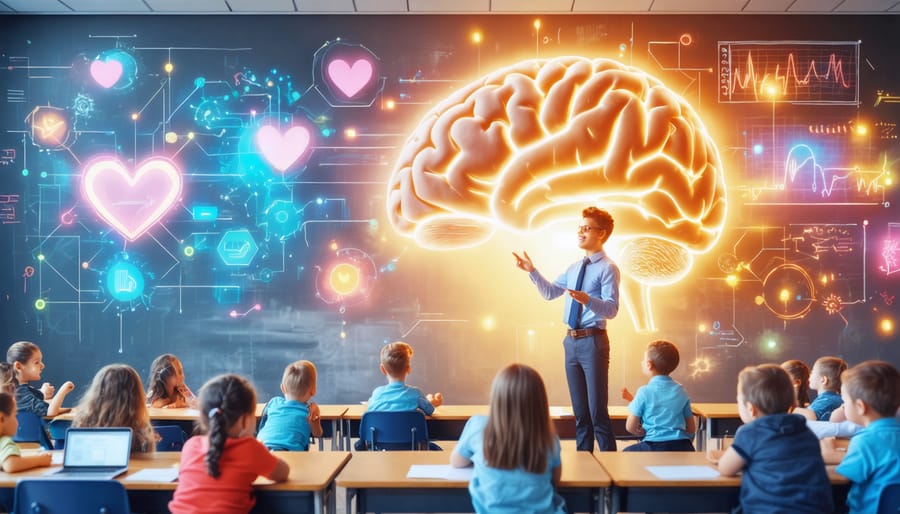
Transform your classroom into an emotional intelligence hub by creating dedicated spaces for students to express and process feelings safely. Research consistently shows that educators who develop emotional intelligence in their students see significant improvements in academic performance, social relationships, and long-term success.
Today’s students face unprecedented emotional challenges, from social media pressures to academic stress. By implementing structured emotional awareness activities, teaching specific vocabulary for feelings, and modeling emotional regulation, educators can foster crucial life skills that extend far beyond the classroom walls.
Our comprehensive approach combines evidence-based practices with real-world application, ensuring that emotional intelligence development becomes an integral part of daily learning rather than an additional curriculum burden. Through strategic integration of emotional learning into existing lesson plans, teachers can create transformative educational experiences that honor both academic growth and emotional development.
This practical guide offers concrete strategies for educators at every grade level, supported by current research and enriched by success stories from classrooms across the country. Together, we’ll explore how to build emotional intelligence systematically, creating resilient, empathetic learners prepared for future challenges.
The Foundation of Emotional Intelligence in K-12
Key Components of Student EI
Emotional intelligence in students comprises five essential components that work together to create emotionally adept learners. Self-awareness forms the foundation, enabling students to recognize their emotions, strengths, and areas for growth. When students understand their emotional triggers and responses, they’re better equipped to navigate challenging situations.
Self-regulation builds upon this awareness, helping students manage their emotional responses effectively. This involves developing strategies to handle stress, anxiety, and frustration in healthy ways, particularly during academic challenges or peer conflicts.
Motivation, the third component, drives students to pursue goals and maintain enthusiasm for learning, even when faced with obstacles. This intrinsic drive helps students persist through difficulties and maintain a growth mindset.
Understanding empathy enables students to relate to their peers’ experiences and emotions, fostering a supportive classroom environment. This skill is crucial for building meaningful relationships and developing leadership capabilities.
Finally, social skills tie these components together, allowing students to communicate effectively, work collaboratively, and navigate social situations with confidence. These skills are essential for success both in and beyond the classroom, helping students build lasting relationships and develop strong support networks.

Age-Appropriate EI Development
Students develop emotional intelligence at different rates, but certain milestones typically emerge at specific grade levels. In early elementary (K-2), children begin recognizing basic emotions and learning to name their feelings. They practice simple emotion regulation strategies like deep breathing and counting to ten when upset.
Middle elementary students (grades 3-5) develop more complex emotional awareness, including understanding that people can feel multiple emotions simultaneously. They begin showing greater empathy and can identify emotions in others through facial expressions and body language.
In middle school (grades 6-8), students enhance their ability to manage complex social situations and navigate peer relationships. They develop more sophisticated emotion regulation strategies and begin understanding how their actions affect others’ feelings.
High school students (grades 9-12) refine their emotional intelligence through abstract thinking and deeper self-reflection. They learn to analyze emotional responses in various contexts, develop stress management techniques, and build stronger interpersonal skills for academic and social success.
Teachers should adjust their emotional intelligence instruction to match these developmental stages, providing age-appropriate activities and support that builds upon previous learning.
Practical Classroom Implementation
Elementary School Strategies
Elementary school provides a crucial foundation for developing social emotional skills through age-appropriate activities and consistent practice. Start with emotion identification exercises using picture cards or storytelling, allowing students to recognize and label different feelings. Create a “feelings corner” in the classroom where students can use emotion wheels and calming tools when they need support.
Implement daily check-ins using simple visual aids like emoji charts or color wheels, encouraging students to express their emotional state. Role-playing scenarios help children practice empathy and conflict resolution in relatable situations, such as sharing playground equipment or working on group projects.
Use children’s literature featuring emotional themes as discussion starters, followed by guided conversations about characters’ feelings and choices. Incorporate movement-based activities like “emotion charades” or “feelings freeze dance” to make emotional learning engaging and memorable.
Create collaborative art projects that explore emotions through colors, shapes, and creative expression. Establish peer support systems through “buddy benches” or friendship circles, where students learn to recognize when classmates need emotional support and practice offering help appropriately.
Remember to celebrate emotional awareness achievements, however small, and maintain consistent communication with families to reinforce these skills at home.
Middle School Applications
Middle school presents a unique opportunity to develop emotional intelligence as students navigate significant social and personal changes. Role-playing exercises focused on real-life scenarios help adolescents practice emotional responses in a safe environment. For example, students can act out peer pressure situations or friendship conflicts while identifying and discussing the emotions involved.
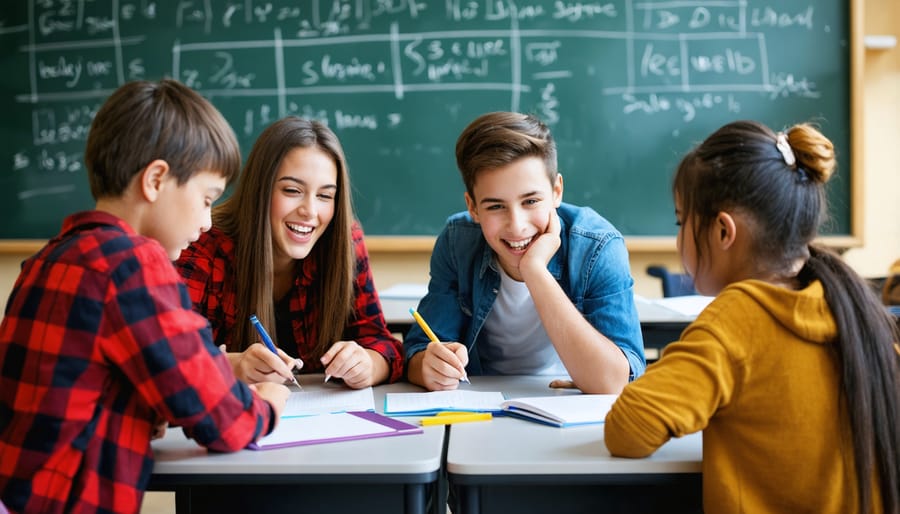
Group projects deliberately structured to encourage emotional awareness serve dual purposes: academic learning and social-emotional development. Teachers can incorporate reflection questions that prompt students to consider how they and their teammates felt during different stages of collaboration.
Journal writing remains particularly effective at this age, especially when combined with guided prompts about emotional experiences. Students can explore complex feelings about identity, belonging, and changing relationships through private written reflection. This practice builds self-awareness while improving emotional vocabulary.
Peer mentoring programs pair students with different emotional strengths, allowing them to learn from each other while developing empathy and social skills. These partnerships can focus on specific challenges like managing test anxiety or handling social media pressures.
Interactive digital tools and apps designed for emotional check-ins appeal to tech-savvy middle schoolers. These platforms can help students track their emotional patterns and learn regulation strategies in an engaging format.
Regular class discussions about emotional topics should be structured to ensure psychological safety while encouraging open dialogue. Teachers can use current events, literature, or hypothetical scenarios as starting points for these conversations.
High School Integration
High school presents a crucial opportunity to integrate emotional intelligence skills into college and career preparation. By incorporating EI activities into existing curriculum and counseling programs, educators can help students develop the social-emotional competencies essential for post-secondary success.
Start by implementing career exploration workshops that emphasize emotional intelligence skills like self-awareness and relationship management. Have students reflect on how their emotional strengths align with different career paths and practice professional communication through role-playing exercises.
College preparation activities should include stress management techniques, resilience building, and emotional regulation strategies. Students can work on personal essays that demonstrate emotional growth and self-awareness, while mock interviews allow them to practice reading social cues and managing anxiety.
Create mentorship programs pairing students with professionals who can model emotional intelligence in workplace settings. These relationships help students understand how EI impacts career success and provides real-world context for their development.
Include collaborative projects that mirror real-world work environments, where students must navigate team dynamics, resolve conflicts, and practice empathy. These experiences build both emotional competencies and practical skills valued by employers and colleges.
Finally, help students develop emotional intelligence portfolios documenting their growth in areas like self-reflection, relationship building, and stress management. These portfolios can enhance college applications while reinforcing the importance of continued emotional development beyond high school.
Assessment and Progress Monitoring
Observable Indicators
Educators can recognize emotional intelligence development through several key behavioral indicators in their students. Watch for increased self-awareness, demonstrated when students can accurately identify and articulate their emotions during challenging situations. Notice improvements in self-regulation, such as when students pause before reacting or use learned coping strategies during stressful moments.
Social awareness growth becomes evident when students show greater empathy, actively listen to peers, and recognize others’ emotional states. Look for enhanced relationship management skills, including more effective conflict resolution, better teamwork, and increased willingness to help classmates.
Observable progress may also include:
– More frequent use of emotional vocabulary
– Improved ability to read non-verbal cues
– Better stress management during tests or presentations
– Increased participation in class discussions about feelings
– More effective communication during group work
– Greater resilience when facing academic challenges
These indicators often emerge gradually and may vary among students. Regular documentation of these observations helps track individual progress and adjust teaching strategies accordingly. Remember that emotional intelligence development is a continuous journey, and progress may not always be linear.
Documentation Strategies
Tracking student emotional development requires a systematic approach that combines observation, documentation, and analysis. Create individual emotional growth portfolios that include regular entries documenting significant emotional responses, conflict resolution instances, and positive interactions. Use simple rating scales and checklists to monitor progress in specific emotional competencies like self-awareness and empathy.
Digital tools like emotion tracking apps and online journals can streamline the documentation process. Consider implementing a “feelings log” where students record their emotional experiences throughout the day, providing valuable insights into patterns and triggers. Photographs and video recordings of student interactions during group activities can serve as powerful documentation tools for analyzing emotional development over time.
Maintain anecdotal records of significant emotional milestones and breakthroughs. These records should include specific situations, student responses, and outcomes. Create emotional development rubrics that align with age-appropriate expectations and your school’s social-emotional learning objectives. Regular parent-teacher conferences can help gather additional perspectives and document emotional growth in different environments.
Remember to update documentation consistently and review it periodically to adjust support strategies and celebrate progress. This comprehensive approach ensures that emotional development is tracked systematically and meaningfully.
Building a Supportive School Environment
Teacher-Student Relationships
Strong teacher-student relationships form the bedrock of emotional intelligence development in the classroom. When educators establish genuine connections with their students, they create safe spaces where emotional learning can flourish. These relationships serve as living models of emotional awareness and healthy social interactions.
To build these meaningful connections, start by practicing active listening when students share their thoughts and feelings. Make eye contact, acknowledge their emotions, and respond with empathy. Simple phrases like “I understand how you’re feeling” or “That must have been challenging” can validate students’ emotional experiences and encourage further sharing.
Create daily opportunities for one-on-one interactions, even if brief. Morning greeting rituals, quick check-ins during independent work, or end-of-day conversations can strengthen bonds significantly. These moments allow you to gauge students’ emotional states and adjust your approach accordingly.
Remember that consistency matters. When students know they can count on your emotional support, they’re more likely to develop trust and open up about their feelings. Model emotional intelligence by acknowledging your own emotions appropriately and demonstrating healthy coping strategies.
Incorporate relationship-building activities into your lessons. Partner work, class discussions, and collaborative projects provide natural opportunities for emotional learning while strengthening the teacher-student dynamic. Be patient – strong relationships develop over time and require ongoing nurturing and attention.

School-Wide Integration
Successful emotional intelligence development requires a coordinated, school-wide approach that weaves EI principles into every aspect of the educational experience. By implementing proven SEL methods across different subjects and activities, schools can create a comprehensive environment that nurtures emotional growth.
Start by incorporating EI elements into core academic subjects. In literature classes, students can explore characters’ emotions and motivations. Math problems can include scenarios that require emotional problem-solving. Science experiments can integrate discussions about handling frustration and celebrating discoveries.
Beyond academics, extracurricular activities offer rich opportunities for EI development. Sports teams can focus on teamwork and emotional regulation, while art programs can encourage emotional expression and empathy. Student government and clubs can develop leadership skills and social awareness.
Common spaces should reflect EI principles through positive messaging, emotion check-in stations, and calm-down corners. Train all staff members, including administrative and support staff, in EI concepts to ensure consistent modeling throughout the school day.
Regular community events, such as parent workshops and student-led presentations, can reinforce EI learning and create a supportive network. This comprehensive approach ensures that emotional intelligence becomes part of the school’s culture rather than just another program.
Remember to celebrate emotional growth achievements alongside academic successes, making EI development visible and valued throughout the school community.
As we’ve explored throughout this article, developing emotional intelligence in the classroom is a transformative journey that benefits both educators and students. By implementing the strategies we’ve discussed, you can create an emotionally aware and supportive learning environment that nurtures the whole child.
Remember that building emotional intelligence is an ongoing process that requires patience, consistency, and commitment. Start small by incorporating one or two strategies into your daily routine, such as morning check-ins or emotion vocabulary exercises. As these become natural parts of your classroom culture, gradually introduce additional techniques and activities.
Your role as an educator extends beyond academic instruction – you’re helping shape emotionally intelligent individuals who will navigate life’s challenges with resilience and empathy. Keep track of your students’ progress through regular observations and assessments, celebrating small victories along the way.
Connect with fellow educators in your school or through online communities to share experiences and best practices. Consider joining professional development workshops focused on emotional intelligence or starting a peer support group within your school.
Take the next step today by selecting one strategy from this guide and implementing it in your classroom tomorrow. Remember, every interaction is an opportunity to model and develop emotional intelligence. Your commitment to this journey will create lasting positive impacts on your students’ lives and contribute to a more emotionally intelligent future generation.