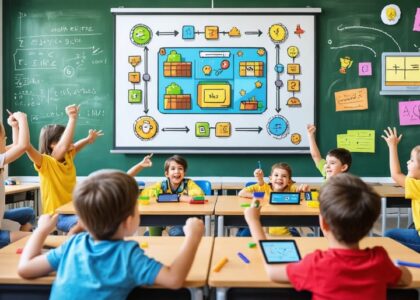
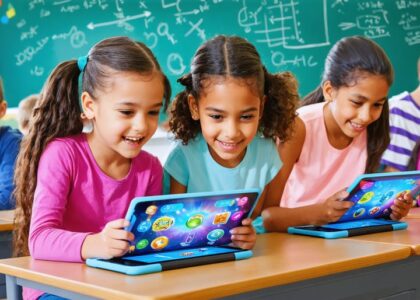
Integrate interactive role-playing games to foster critical thinking by simulating real-world scenarios. Incorporate game apps like “Kahoot!” to enhance engagement through quizzes and challenges tailored to reinforce curriculum content. Utilize community forums to share strategies and successful implementations, encouraging collaboration and knowledge exchange among educators. Design a classroom escape room to develop problem-solving skills and teamwork, aligning puzzles with educational outcomes.
Understanding Game-Based Learning
Game-based learning is an educational approach that utilizes games to facilitate learning and enhance student engagement. Unlike traditional methods, which often rely on lectures and rote memorization, game-based learning immerses students in interactive experiences that emphasize problem-solving and critical thinking. By integrating play into the educational process, students are motivated to explore and learn through trial and error, collaboration, and discovery. This approach fosters an environment where students are not passive recipients of information but active participants in their learning journey.
The distinction between game-based learning vs. gamification is crucial. While gamification involves adding game-like elements to non-game contexts, game-based learning directly employs games as the main vehicle for educational content. This method supports student engagement by creating authentic contexts for applying knowledge and skills, making learning more relatable and enjoyable.
In practice, game-based learning can include digital games or traditional board games tailored to enhance curriculum objectives, offering experiences across various subjects such as math, science, and language arts. These games can serve as interactive tools that adapt to diverse learning needs and styles, ultimately empowering educators to motivate students through creative and meaningful educational strategies.
Game-Based Learning in Mathematics
Digital Math Games
Digital math games have become a pivotal part of modern classrooms, providing interactive and engaging ways to reinforce math concepts. A prime example is Prodigy Math Game, an adaptive platform that tailors math challenges to each student’s level, transforming learning into a fantasy-based adventure. Students embark on quests, using math skills to conquer obstacles and foes, thereby blending educational content with game-like dynamics. Prodigy’s approach not only helps in understanding but also in retaining math skills while fostering a sense of achievement and motivation.
Another exemplary tool is Math Blaster, a game that seamlessly integrates math exercises with a space-themed narrative. Suitable for various grade levels, Math Blaster involves missions where students must solve math problems to advance, making abstract concepts more tangible and enjoyable. By emphasizing real-world applications of math skills, these games offer practical support to educators aiming to diversify their teaching strategies.
These digital math games represent brilliant game-based learning examples, equipping educators with innovative methods to bolster students’ confidence and proficiency in mathematics. In leveraging such platforms, teachers access interactive tools and community forums for shared experiences and strategies, ultimately enhancing the learning environment.
Augmented Reality in Math
Augmented reality (AR) has emerged as a transformative tool in game-based learning, particularly in the field of mathematics. Apps like GeoGebra AR are revolutionizing how students engage with complex math concepts by allowing them to visualize problems in a three-dimensional space. Instead of relying solely on traditional problem-solving methods, students can now manipulate mathematical objects in an interactive and immersive environment. This innovative approach helps demystify challenging topics, like geometry and algebra, and fosters a deeper understanding by decoupling abstract concepts from textbook pages.
Educators are finding that AR tools not only captivate students’ attention but also encourage active participation, making math more engaging and accessible. By integrating AR into the curriculum, teachers can create a hands-on learning experience that bridges the gap between theory and practical application. Such tools offer new opportunities for personalized learning, allowing students to explore at their own pace. Furthermore, platforms like GeoGebra AR often feature community forums where educators can share ideas and strategies, enhancing collaborative learning and professional development.
Incorporating augmented reality in math education empowers teachers to transform their classrooms into dynamic learning environments, where students can discover, experiment, and ultimately cultivate a passion for math that goes beyond the traditional educational confines.

Game-Based Learning in Social Sciences
Simulation Games for History
Simulation games such as Civilization and Oregon Trail serve as excellent tools for engaging students in historical exploration and strategic thinking. These games immerse learners in different historical contexts, allowing them to make strategic decisions as they build civilizations or pioneer journeys. In Civilization, students take on the role of a leader, fostering an understanding of historical timelines, cultural development, and geopolitical strategy. This not only provides historical context but also promotes critical thinking and decision-making skills.
On the other hand, Oregon Trail transports students back to the 19th-century American frontier, encouraging them to tackle challenges faced during westward expansion. Through decision-making tasks such as resource management and problem-solving, students gain a hands-on understanding of the trials early settlers encountered. By incorporating these games into the curriculum, educators can help students develop an appreciation for history and strategic thought processes in a dynamic, interactive environment. This approach empowers teachers to deliver content in a way that resonates with digital-native learners and supports diverse learning styles, making history not only insightful but also engaging and memorable.

Role-Playing in Political Studies
Role-playing in political studies, such as Model United Nations (MUN), offers a dynamic approach to learning, immersing students in the roles of diplomats engaging in international diplomacy and political negotiations. These simulations provide an enriched understanding of global issues, decision-making processes, and the intricacies of political discourse. As students embody delegates from various countries, they practice articulating national interests, evaluating foreign policy, and crafting resolutions on pressing global matters. This engaging, interactive format enhances critical thinking, public speaking, and negotiation skills, empowering students to explore diverse perspectives and develop empathy for different cultures and viewpoints. For educators aiming to integrate similar interactive tools, activities like Model UN encourage active learning and collaboration, fostering an inclusive environment where students collectively address complex issues. Such experiences resonate with the practical application of game-based learning, as seen in other fields, such as geometric learning through Origami. Role-playing frameworks like MUN not only prepare learners for future civic engagement but also ignite curiosity and enthusiasm, making the study of politics more relatable and compelling for K-12 students.
Cross-Disciplinary Game-Based Learning Examples
Minecraft for Education
Minecraft for Education is transforming classrooms by engaging students with interactive lessons across subjects like science, history, and language arts. This versatile platform allows educators to create immersive learning experiences that encourage critical thinking and creativity. In science, for instance, students can simulate ecosystems, conduct virtual chemistry experiments, or explore geological formations. History lessons come alive as students reconstruct ancient civilizations or simulate historical events, enhancing understanding through active participation. Language arts classes benefit from Minecraft’s storytelling capabilities, enabling students to build narrative worlds or visualize literary settings. This game-based approach not only enhances engagement but also fosters a sense of collaboration through its community features, where students share and discuss their creations. Many educators find Minecraft a powerful tool that supports diverse learning styles and empowers students to take control of their education.
Escape Rooms in the Classroom
Integrating escape room games into the classroom offers a dynamic way to foster teamwork and enhance problem-solving skills across various subjects. In these interactive scenarios, students work collaboratively to solve a series of puzzles and challenges, aiming to “escape” within a set time limit. As they unravel clues, they practice critical thinking and communication skills, essential for their academic and social development. These games can be tailored to different subjects—incorporating math problems, historical facts, or science concepts—making learning an engaging adventure. By simulating real-world problem-solving situations, escape rooms encourage students to think creatively and support one another, reinforcing the value of teamwork. With a focus on collaboration and adaptability, escape rooms transform traditional lessons into immersive and memorable experiences for students.
Conclusion
In summary, game-based learning holds immense potential to revolutionize modern education by engaging students in dynamic and interactive experiences. Throughout this article, we’ve explored various examples demonstrating how games can make learning enjoyable and effective, transforming traditional lesson plans into immersive educational journeys. From enhancing problem-solving skills through puzzle games to fostering collaboration through online platforms, the benefits are clear. Game-based learning encourages active participation, critical thinking, and creativity, essential skills for the 21st-century learner. As educators, embracing these tools allows you to inspire and motivate students while adapting to diverse learning styles and needs. By integrating interactive tools and leveraging community forums, teachers can create rich, tailored learning environments that captivate students’ imaginations and drive academic success. Let’s continue to explore and implement these exciting strategies, paving the way for an inclusive and innovative future in education.