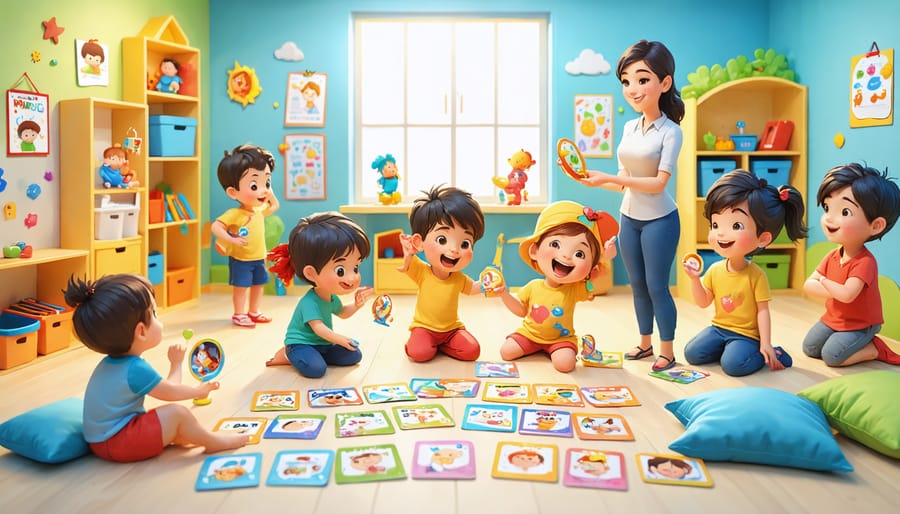
Kindergarten represents a crucial turning point in a child’s emotional development, laying the foundation for lifelong social-emotional skills and academic success. Research consistently shows that children who develop strong emotional competencies during these formative years are better equipped to handle future challenges, build meaningful relationships, and achieve academic excellence. As educators, our ability to nurture emotional intelligence in the kindergarten classroom shapes not only individual student outcomes but also creates a positive, supportive learning environment for the entire class.
Recent studies indicate that kindergarteners with well-developed emotional skills demonstrate improved cognitive function, better peer relationships, and reduced behavioral challenges. This critical period of development presents unique opportunities for teachers to integrate emotional learning into daily routines, creating lasting positive impacts that extend far beyond the classroom walls. By understanding and implementing evidence-based strategies for emotional development, educators can create transformative learning experiences that honor each child’s unique emotional journey while building essential life skills.
This comprehensive exploration of emotional development in kindergarten will provide practical strategies, research-backed approaches, and actionable insights for creating an emotionally nurturing classroom environment where every child can thrive.
The Foundation of Emotional Learning in Early Years
Key Emotional Milestones at Age 5-6
At age 5-6, children reach several significant emotional milestones that shape their social interactions and learning experiences. They begin to understand and express more complex emotions, moving beyond basic feelings like happy and sad to recognize subtle emotional states such as frustration, disappointment, and pride in achievement.
Kindergarteners typically demonstrate increased emotional self-regulation, showing the ability to wait their turn and follow multi-step directions. They’re developing empathy and can recognize when peers are upset, often attempting to comfort them. These children also start forming meaningful friendships and showing preference for specific playmates.
Most 5-6 year olds are learning to verbalize their feelings more effectively and can use simple strategies to manage their emotions, like taking deep breaths or seeking adult help. They show growing independence in problem-solving but still need adult guidance during challenging situations.
Children this age begin understanding cause and effect in emotional scenarios and can predict how their actions might affect others’ feelings. They’re also developing a stronger sense of self and can articulate basic preferences, likes, and dislikes with growing confidence.
The Brain-Emotion Connection
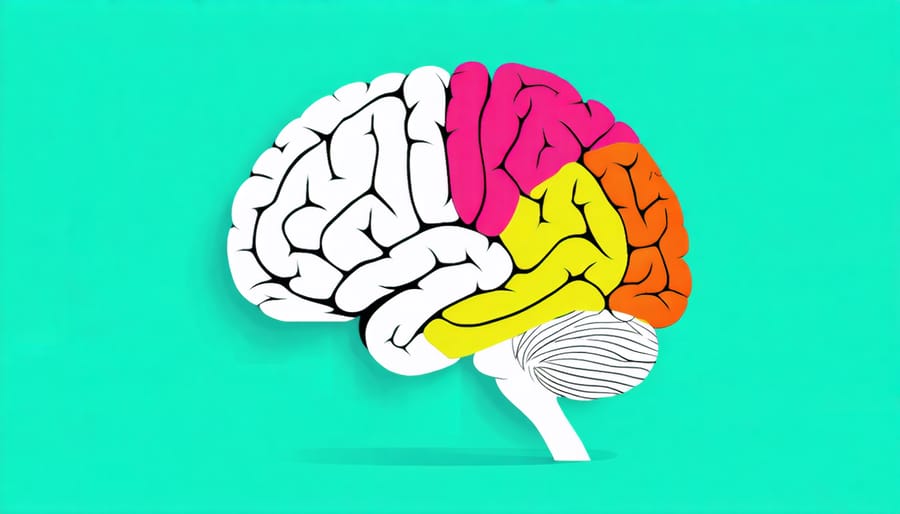
During kindergarten, children’s brains are developing at an incredible rate, creating millions of neural connections that shape how they process and respond to emotions. The brain’s limbic system, particularly the amygdala, plays a crucial role in emotional responses, while the prefrontal cortex helps children learn to regulate these feelings.
At this age, children are developing their capacity for emotional awareness and control through everyday experiences. When a child feels safe and supported, their brain releases chemicals that promote positive emotional development and learning. Conversely, stress can trigger the release of cortisol, which may interfere with emotional regulation and cognitive development.
Understanding this connection helps educators create environments that support healthy brain development. Simple activities like deep breathing exercises, mindfulness moments, and emotional vocabulary games strengthen these neural pathways. When children practice naming their feelings and learning coping strategies, they’re actually building stronger connections in their brains that will serve them throughout their lives.
Remember that each child’s brain develops at its own pace, and providing consistent, nurturing responses helps establish secure emotional foundations.
Practical Strategies for the Classroom
Emotion Recognition Activities
Engaging children in emotion recognition activities helps build their emotional vocabulary and self-awareness. Here are several effective classroom activities that encourage emotional learning through play and interaction:
The “Emotion Mirror” exercise invites children to practice facial expressions while looking in a mirror or with a partner. Teachers can guide students through different emotions, asking them to show what happy, sad, angry, or surprised looks like on their faces.
“Feeling Friends Puppets” allows children to act out various emotional scenarios using simple hand puppets. This activity helps students understand emotional responses in different situations while providing a safe distance through puppet play.
Create an “Emotions Station” in your classroom with pictures showing different facial expressions and corresponding emotion words. Students can match emotions to faces, encouraging visual recognition and vocabulary development.
“Movement and Mood” combines physical activity with emotional awareness. Children move around the room expressing different emotions through their body language – tiptoeing when scared, stomping when angry, or skipping when happy.
The “Weather Report” check-in asks children to describe their current emotional state using weather metaphors. They might say “I’m sunny” for happy or “I’m cloudy” for confused, making abstract feelings more concrete and relatable.
“Story Time Emotions” involves reading books about feelings and asking children to identify characters’ emotions based on facial expressions and story context. This activity builds empathy while strengthening emotion recognition skills.
Remember to acknowledge and validate all emotional expressions during these activities, creating a supportive environment where children feel safe exploring their feelings.

Self-Regulation Techniques
Teaching kindergarteners self-regulation techniques is essential for their emotional development and classroom success. These age-appropriate strategies help children recognize and manage their feelings effectively.
The “Calm Corner” approach provides students with a designated space where they can go when feeling overwhelmed. Stock this area with soft cushions, stress balls, and picture books about emotions. Teach children to use this space proactively, not as a punishment.
Deep breathing exercises, specially designed for young learners, can be highly effective. The “balloon breath” (pretending to inflate and deflate a balloon) and “bear breath” (hibernating bears breathing slowly) make these exercises engaging and memorable for kindergarteners.
Movement-based regulation activities help children release energy constructively. The “freeze dance” technique allows students to move freely when music plays and practice self-control when it stops. Similarly, “turtle power” encourages children to retreat into their imaginary shells when feeling angry or upset.
Visual aids like emotion meters and feeling charts enable children to identify and express their emotions. Using simple traffic light colors (red for stop and calm down, yellow for slow down and think, green for good to go) helps students understand and monitor their emotional states.
Positive self-talk phrases, such as “I can do this” or “I will try my best,” give children practical tools for managing challenging situations. Teaching these phrases through songs or rhymes makes them more accessible and memorable for young learners.
Building Empathy Through Play
Play-based activities serve as powerful tools for developing empathy skills in kindergarten students. Through structured play experiences, children learn to recognize and respond to others’ emotions while building meaningful social connections.
Role-playing activities offer excellent opportunities for emotional growth. Set up scenarios where students can act out different situations, such as sharing toys or helping a friend who feels sad. Provide dress-up materials and props that represent diverse cultures and professions, encouraging children to step into different perspectives.
Puppet play allows children to express emotions safely and practice emotional problem-solving. Use puppets during circle time to demonstrate social situations and encourage students to suggest solutions. This creates a safe distance for children to explore complex emotions and develop conflict resolution skills.
Cooperative games foster emotional awareness while building teamwork. Activities like “emotion charades” or “feelings matching games” help children identify and understand various emotional expressions. Group art projects, where children must work together to create something, naturally encourage empathy and consideration for others’ ideas.
Create a dedicated “feelings corner” with emotion cards, mirrors, and calm-down tools. This space allows children to explore emotions independently while providing opportunities for guided emotional learning through teacher-facilitated activities.
Remember to observe and document how children interact during these activities, using their responses to guide future emotional learning opportunities.
Creating an Emotion-Friendly Environment
Physical Space Organization
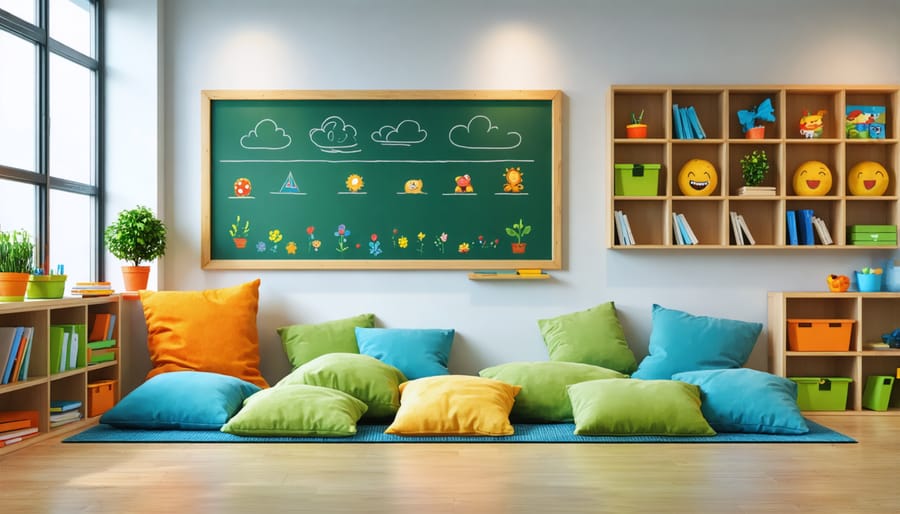
Creating dedicated spaces for emotional expression and regulation is essential in a kindergarten classroom. A well-designed calm corner serves as a safe haven where children can process their feelings and practice self-regulation skills. This area should include soft furnishings like cushions, bean bags, or a small tent, making it inviting and comfortable for young learners.
Stock your emotional support area with tools that help children identify and manage their emotions. Consider including emotion cards, mirrors for facial expression practice, stress balls, and breathing exercise visual guides. Sensory items like glitter jars, textured materials, and fidget toys can help children self-soothe when experiencing strong emotions.
Establish clear guidelines for using these spaces, teaching children that the calm corner is a positive tool rather than a punishment area. Create visual cues and simple instructions showing how to use the space effectively. For example, post pictures demonstrating deep breathing exercises or emotion regulation strategies at child eye level.
Position the calm corner away from high-traffic areas but still within your line of sight. This arrangement allows children to feel secure while giving them the space they need to process their emotions. Consider using room dividers or low shelves to create a sense of privacy while maintaining appropriate supervision.
Remember to regularly rotate materials and refresh the space to maintain student interest and engagement. Involve children in organizing and caring for these areas to foster ownership and responsibility.
Daily Routines That Support EQ
Establishing consistent daily routines that support emotional intelligence can significantly impact kindergarteners’ social-emotional development. Start each day with a morning meeting that includes an emotional check-in, where students can share how they’re feeling using simple emotion cards or a feelings chart. This practice helps children recognize and articulate their emotions while building empathy for their peers.
Incorporate regular mindfulness practices throughout the day, such as deep breathing exercises or quiet reflection time after active periods. These moments allow children to pause, center themselves, and develop self-awareness.
Create a “Peace Corner” or “Calm Down Space” where students can go when they need emotional regulation time. Stock this area with sensory tools, emotion cards, and calming activities. Schedule brief reflection periods after transitions or challenging activities, encouraging students to identify and express their feelings.
End each day with a closing circle that includes gratitude sharing and positive affirmations. This routine helps students process their experiences, celebrate successes, and develop emotional resilience. Consider using simple journals where children can draw or write about their feelings, creating a tangible record of their emotional growth throughout the year.
Family Partnership Strategies
Home-School Communication Tools
Regular communication between teachers and families is essential for supporting children’s emotional development. Digital platforms like ClassDojo or Seesaw allow teachers to share real-time updates, photos, and videos of children’s emotional growth moments throughout the day. These tools enable families to celebrate their child’s progress and maintain consistency between home and school approaches.
Weekly newsletters highlighting emotional learning themes, strategies, and vocabulary help families reinforce these concepts at home. Including specific examples of how children demonstrated emotional skills during class activities makes the information more relatable and actionable for parents.
Emotion journals that travel between home and school create a collaborative space for documenting children’s emotional experiences and strategies. Parents can contribute observations from home, while teachers share insights from the classroom, fostering a comprehensive understanding of each child’s emotional development.
Regular check-ins through video calls or in-person meetings provide opportunities to discuss children’s emotional progress in depth and develop shared support strategies. These conversations help build trust and ensure that both teachers and families are working together effectively to nurture children’s emotional growth.
Parent Resource Guide
Engaging with your child’s emotional development at home reinforces the social emotional learning foundations established at school. Try these simple yet effective activities:
Create a “feelings corner” with comfortable cushions and emotion-themed books where your child can process their feelings. Use dinner time conversations to discuss emotions experienced during the day, encouraging your child to share both challenges and victories.
Practice emotional vocabulary through games like “emotion charades” or by making faces in the mirror together. When reading stories, pause to discuss how characters might be feeling and why.
Model emotional awareness by expressing your own feelings appropriately: “I feel frustrated when this doesn’t work, but I’m going to take a deep breath and try again.”
Establish consistent routines for transitions and challenging moments. Create a visual schedule using pictures to help your child anticipate emotional challenges throughout the day.
Remember to celebrate emotional growth moments, no matter how small, and maintain open communication with your child’s teacher about emotional development strategies that work at school.
Supporting emotional development in kindergarten classrooms is a journey that requires dedication, patience, and consistent effort. By implementing the strategies discussed throughout this article, educators can create nurturing environments where young learners develop crucial emotional skills that will serve them throughout their lives.
Remember that every small step matters – from setting up calm-down corners to incorporating emotional vocabulary into daily activities. The key is to maintain consistency while remaining flexible enough to adapt these approaches to your unique classroom dynamics and individual student needs.
Start by choosing one or two strategies that resonate most with your teaching style and classroom culture. Perhaps begin with morning check-ins or emotion-focused story time, then gradually incorporate additional elements as you and your students become more comfortable with these practices.
Don’t forget to leverage your support network. Collaborate with fellow educators, maintain open communication with families, and regularly assess the effectiveness of your approaches. Celebrate the small victories and learn from challenges as they arise.
Remember that you’re not just teaching emotional skills – you’re helping shape resilient, empathetic individuals who will carry these foundational skills into their future. Your commitment to supporting emotional development today creates ripples that extend far beyond the kindergarten classroom, positively impacting your students’ academic success and personal growth for years to come.
Keep fostering those emotional connections, celebrating progress, and building a supportive classroom community. Your dedication to emotional development makes a profound difference in your students’ lives.