As mounting evidence demonstrates the profound impact of outdoor learning on student achievement, engagement, and well-being, educators worldwide are reimagining traditional classroom boundaries. Recent research from leading institutions reveals that students participating in regular outdoor education programs demonstrate up to 27% higher academic performance across core subjects, particularly in science and environmental studies. Beyond academic gains, studies consistently show significant improvements in students’ social-emotional development, physical health, and environmental stewardship.
The transformative power of outdoor education extends far beyond these immediate benefits. Longitudinal studies tracking students from elementary through high school have documented enhanced critical thinking skills, increased creativity, and stronger problem-solving abilities among those regularly engaged in outdoor learning experiences. Furthermore, research indicates that outdoor education serves as a powerful equalizer, helping close achievement gaps and providing particularly strong benefits for students from diverse socioeconomic backgrounds.
As we face unprecedented environmental challenges and rapidly evolving educational needs, understanding and implementing evidence-based outdoor education practices has never been more crucial. This comprehensive examination of current research provides educators with the foundational knowledge needed to develop and sustain effective outdoor learning programs that prepare students for future success while fostering a deep connection with the natural world.
The Science Behind Outdoor Learning Success
Cognitive Development Benefits
Research consistently demonstrates that outdoor education enhances students’ cognitive development across multiple dimensions. Studies show that children who participate in regular outdoor learning activities demonstrate improved concentration and memory retention compared to those in traditional indoor settings. These benefits stem from the dynamic nature of outdoor environments, which naturally encourage critical thinking strategies through real-world problem solving.
A landmark study by the University of Illinois found that students engaged in outdoor learning showed a 27% increase in academic performance across core subjects. This improvement is attributed to the implementation of brain-boosting learning techniques that naturally occur in outdoor settings, such as experiential learning and hands-on exploration.
The cognitive benefits extend beyond traditional academic measures. Students demonstrate enhanced spatial awareness, improved pattern recognition, and stronger analytical skills when learning outdoors. Natural environments provide rich, multisensory experiences that stimulate neural pathways and support deeper learning connections. Additionally, outdoor education has been shown to improve executive function skills, including better planning abilities and increased cognitive flexibility.
These findings are particularly relevant for educators working with diverse learning styles, as outdoor education naturally accommodates different cognitive approaches and learning preferences. The variable and engaging nature of outdoor environments helps maintain student attention while promoting active problem-solving and creative thinking.

Social-Emotional Growth
Research consistently demonstrates that outdoor education significantly enhances students’ social-emotional development. Studies show that children who participate in regular outdoor learning experiences exhibit improved self-confidence and stronger peer relationships compared to those in traditional classroom settings.
A notable three-year study conducted across multiple elementary schools found that students engaged in outdoor education programs showed a 43% increase in their ability to manage conflicts constructively and a 35% improvement in emotional regulation skills. These students demonstrated enhanced empathy and were more likely to offer help to their peers during challenging tasks.
The natural environment provides unique opportunities for developing resilience. When faced with physical challenges like navigating terrain or adapting to weather conditions, students learn to persist through difficulties and develop coping strategies. Group activities in outdoor settings naturally foster collaboration and communication skills, as students must work together to solve problems and complete tasks.
Researchers have also observed that outdoor learning environments reduce anxiety and stress levels in students. A recent study measuring cortisol levels in children found that those participating in forest school programs showed significantly lower stress markers compared to their indoor-learning counterparts. This reduction in stress creates an optimal environment for developing emotional intelligence and building positive relationships.
The benefits extend to students with diverse needs, with multiple studies highlighting how outdoor education can help build confidence and social skills in children who struggle in traditional classroom settings.
Practical Implementation Strategies
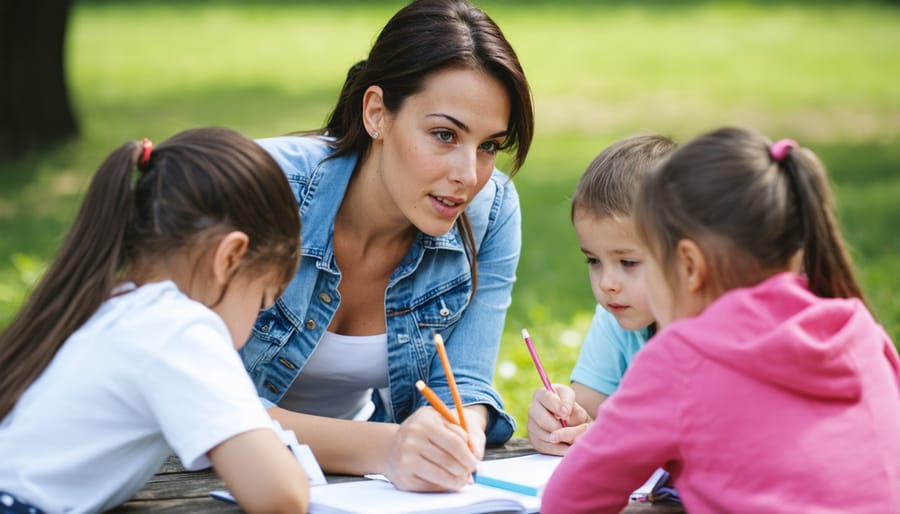
Cross-Curricular Integration
Research consistently shows that outdoor education provides unique opportunities for integrating multiple subject areas naturally and meaningfully. Studies indicate that mathematics comes alive through activities like measuring tree heights, calculating trail distances, and analyzing natural patterns. Science naturally blends with outdoor learning through hands-on exploration of ecosystems, weather patterns, and geological formations.
Language arts find new contexts through nature journaling, descriptive writing, and storytelling inspired by outdoor experiences. Social studies become tangible through local history exploration, map reading, and understanding human-environment interactions. The implementation of collaborative learning strategies in outdoor settings enhances cross-curricular connections and student engagement.
Recent studies highlight how art education thrives outdoors through nature-inspired creative projects, environmental sculpture, and natural color exploration. Physical education seamlessly integrates with outdoor learning through activities that combine movement with subject-specific learning objectives. Technology integration studies show successful use of mobile devices for data collection, digital nature photography, and environmental monitoring projects.
Research emphasizes that cross-curricular outdoor learning is most effective when teachers deliberately plan connections between subjects while maintaining flexibility for spontaneous learning opportunities. This approach not only reinforces academic concepts but also helps students understand real-world applications of their learning across multiple disciplines.
Assessment Methods
Research on outdoor education employs various assessment methods to measure learning outcomes and program effectiveness. Both quantitative and qualitative approaches play crucial roles in understanding the impact of outdoor learning experiences.
Traditional assessment tools like pre and post-tests help measure specific knowledge gains, while observation checklists allow educators to track student engagement and skill development in real-time. Student portfolios and journals provide rich insights into personal growth and reflection, capturing the deeper learning that often occurs during outdoor experiences.
Many successful programs use a mix of formative and summative assessments. Formative assessments might include group discussions, peer evaluations, and practical skill demonstrations during outdoor activities. Summative assessments often incorporate project presentations, environmental impact studies, or research reports that showcase cumulative learning.
Digital tools have expanded assessment possibilities, with mobile apps and online platforms enabling immediate feedback and data collection. Photo documentation, video reflections, and digital storytelling help capture and evaluate experiences that might be difficult to assess through traditional methods.
Parent and community feedback surveys offer valuable perspectives on program impact beyond academic measures. These assessments often reveal improvements in students’ social skills, environmental awareness, and community engagement.
Remember that assessment should align with outdoor education’s holistic nature, considering not just academic achievement but also personal development, environmental stewardship, and social-emotional growth.
Overcoming Implementation Challenges
Research consistently shows that while implementing outdoor education programs presents challenges, there are proven strategies to overcome common obstacles. Budget constraints, often cited as a primary barrier, can be addressed through community partnerships, grant applications, and utilizing nearby natural spaces rather than requiring expensive travel. Studies indicate that even small outdoor spaces within school grounds can provide meaningful learning experiences when properly utilized.
Safety concerns, another frequent challenge, can be effectively managed through proper risk assessment protocols and staff training. Research demonstrates that establishing clear safety guidelines and maintaining appropriate student-to-teacher ratios significantly reduces potential risks while maximizing educational benefits.
Time constraints within rigid academic schedules can be addressed by integrating outdoor learning with existing curriculum requirements. Studies show that cross-curricular approaches, where outdoor activities align with multiple subject areas, help maximize instructional time while meeting educational standards.
Weather-related challenges can be overcome through flexible scheduling and appropriate preparation. Research indicates that providing students with proper clothing and equipment, combined with alternative indoor activities when necessary, ensures program continuity throughout the year.
Teacher confidence and preparation emerge as crucial factors in successful implementation. Professional development opportunities, mentorship programs, and collaborative planning sessions have proven effective in building educator capacity and comfort with outdoor teaching methods. Studies show that teachers who receive adequate support and training are more likely to sustain outdoor education initiatives long-term.
Impact on Different Student Groups
Special Education Considerations
Research consistently demonstrates that outdoor education offers unique benefits for students with diverse learning needs and disabilities. Studies show that natural environments can provide exceptional opportunities for individualized learning approaches that accommodate various learning styles and abilities.
For students with attention deficit disorders, outdoor learning environments have been found to improve focus and reduce symptoms of hyperactivity. The natural setting provides multi-sensory experiences that help maintain engagement while reducing common classroom stressors. Research indicates that students on the autism spectrum often show increased social interaction and communication skills when participating in structured outdoor activities.
Physical disabilities can be accommodated through carefully designed outdoor spaces and activities that promote inclusive participation. Studies highlight improved motor skills, spatial awareness, and self-confidence among students with mobility challenges who regularly engage in adapted outdoor learning experiences.
Students with emotional and behavioral challenges have shown significant improvements in self-regulation and positive social behaviors when participating in nature-based education programs. The calming effect of natural environments, combined with hands-on learning opportunities, creates a supportive space for emotional growth and development.
Educators report that outdoor settings naturally facilitate differentiated instruction, allowing students to progress at their own pace while building essential life skills and environmental awareness. This inclusive approach supports the development of the whole child while fostering a sense of belonging in the learning community.

Cultural Responsiveness
Recent research highlights the critical importance of incorporating culturally responsive practices in outdoor education programs. Studies show that when outdoor learning experiences reflect and respect students’ diverse cultural backgrounds, engagement and learning outcomes significantly improve.
Several successful approaches have emerged from this research. Programs that integrate traditional ecological knowledge and cultural practices from various communities have shown particularly positive results. For example, collaborating with Indigenous educators and community leaders has helped many schools develop more inclusive outdoor learning experiences that honor different ways of understanding and connecting with nature.
Research also emphasizes the importance of addressing potential barriers to participation. Studies indicate that some students may face cultural, economic, or social obstacles to engaging in outdoor education. Successful programs actively work to eliminate these barriers through strategies such as providing appropriate gear, offering multilingual instruction, and ensuring activities are culturally sensitive and relevant.
Additionally, studies demonstrate the value of incorporating diverse perspectives in curriculum design. When outdoor education programs reflect multiple cultural viewpoints about nature, environmental stewardship, and outdoor activities, students report feeling more connected to the learning experience and show increased participation rates.
Researchers recommend regular cultural competency training for outdoor educators and emphasize the importance of building authentic relationships with diverse community partners to ensure programs remain relevant and inclusive for all students.
Future Directions
As we look ahead, outdoor education research is evolving in exciting new directions that promise to reshape how we approach learning outside the classroom. Technology integration is emerging as a key focus area, with researchers exploring how digital tools can enhance nature-based learning experiences without detracting from their essential hands-on quality. Mobile apps for species identification, GPS-based activities, and digital storytelling are becoming valuable additions to outdoor learning programs.
Another promising trend is the increased emphasis on measuring long-term impacts of outdoor education on student development. Longitudinal studies are beginning to track how regular exposure to nature-based learning affects academic performance, social-emotional skills, and environmental stewardship well into adulthood.
Researchers are also expanding their focus on inclusive outdoor education practices. This includes developing strategies to ensure accessibility for students with diverse abilities and investigating how cultural perspectives can be meaningfully incorporated into outdoor learning experiences.
Climate change education is emerging as a critical area of study, with researchers examining how outdoor education can help students understand and respond to environmental challenges. This includes investigating the role of school gardens, citizen science projects, and local ecosystem studies in building environmental literacy.
The integration of outdoor education with core curriculum standards continues to be a priority. Future research will likely focus on developing more structured frameworks for aligning outdoor activities with academic objectives while maintaining the spontaneous, experiential nature of outdoor learning.
For educators, these emerging trends suggest exciting opportunities to enhance their outdoor education programs. The key will be finding ways to incorporate new research findings while preserving the fundamental benefits that make outdoor education so valuable for student development.
The extensive body of research on outdoor education consistently demonstrates its significant positive impact on student learning, development, and well-being. Studies have shown that regular outdoor learning experiences improve academic performance, particularly in science and environmental subjects, while fostering critical thinking and problem-solving skills. The evidence also points to enhanced social-emotional development, with students showing increased self-confidence, better peer relationships, and improved communication skills.
For educators looking to implement outdoor education programs, the research supports starting with short, structured activities and gradually expanding to more comprehensive outdoor learning experiences. Success factors include proper planning, clear learning objectives, and strong administrative support. Teachers report the most positive outcomes when outdoor education is integrated across the curriculum rather than treated as an isolated activity.
Moving forward, educators are encouraged to document their outdoor learning initiatives and share outcomes with colleagues. This collaborative approach helps build a stronger evidence base and supports continuous improvement in outdoor education practices. By combining research insights with practical experience, schools can create sustainable outdoor learning programs that benefit students academically, socially, and emotionally.