
Cultural pre-competence is the stage in the cultural competency continuum where educators and school teams recognize the importance of cultural responsiveness and commit to learning, but lack the knowledge, skills, or structured approach to turn intention into meaningful practice. Your PLC might be at this stage if team members express genuine commitment to equity work yet struggle to translate conversations into classroom changes that impact student outcomes.
This developmental stage matters because it represents both promise and peril. Teams operating in pre-competence have moved past denial or resistance to cultural work, which is significant progress. However, without deliberate growth strategies, PLCs can remain stuck here for years, cycling through surface-level diversity initiatives while deeper inequities persist. The gap between good intentions and effective action becomes a source of frustration for educators who genuinely want to serve all students well.
Understanding cultural pre-competence helps PLC leaders diagnose why equity efforts stall despite team buy-in. When you can identify the specific knowledge gaps, skill deficits, or structural barriers keeping your team in this stage, you can design targeted support that moves everyone forward together.
This article breaks down what cultural pre-competence looks like in practice within PLCs, the core components needed to progress beyond well-meaning conversations, and concrete strategies you can implement starting with your next team meeting. You’ll learn to recognize pre-competence behaviors, assess your team’s readiness for deeper work, and create conditions that transform cultural awareness into culturally responsive teaching practices that reach every student.
What Cultural Pre-Competence Means in Education
Cultural pre-competence sits at a pivotal point on the cultural competency continuum, it’s where awareness finally clicks, but action hasn’t caught up yet. Educators and schools at this stage genuinely recognize that cultural differences matter for student learning and belonging. They see disparities in outcomes. They notice when families from different backgrounds engage differently with the school. The problem? They’re stuck asking “What should we do?” without the concrete skills, resources, or systems to answer that question effectively.
Think of pre-competence as the educational equivalent of knowing you need to learn a language but only having a phrasebook. You recognize communication barriers exist, you want to bridge them, but you lack the fluency to have real conversations. Schools at this stage might form equity committees, attend a workshop on culturally responsive teaching, or acknowledge diverse student needs in mission statements, all genuine efforts that rarely translate into changed classroom practice because the how remains unclear.
- Cultural Pre-Competence
- The developmental stage where educators recognize the need to address cultural differences but lack the concrete skills or systems to do so effectively. Characterized by good intentions without consistent follow-through.
- Cultural Competency Continuum
- A framework developed by Cross et al. describing six stages organizations move through, from cultural destructiveness (actively harmful) to cultural proficiency (advocating for others). Pre-competence falls in the middle, between blindness and competence.
- Cultural Blindness
- The stage preceding pre-competence, where educators operate as if cultural differences don’t affect learning, often claiming to “treat all students the same.” Marked by unawareness rather than malice.
- Cultural Competence
- The stage beyond pre-competence, where educators skillfully adapt instruction and interaction based on cultural understanding. Demonstrated through consistent, effective practice rather than intentions alone.
Pre-competence differs from cultural blindness, the stage that comes before it, in critical ways. Culturally blind educators genuinely believe they’re being fair by treating everyone identically, missing how that approach advantages students whose home culture matches school culture. Pre-competent educators have moved past that; they see the differences and want to respond. The gap lies in execution.
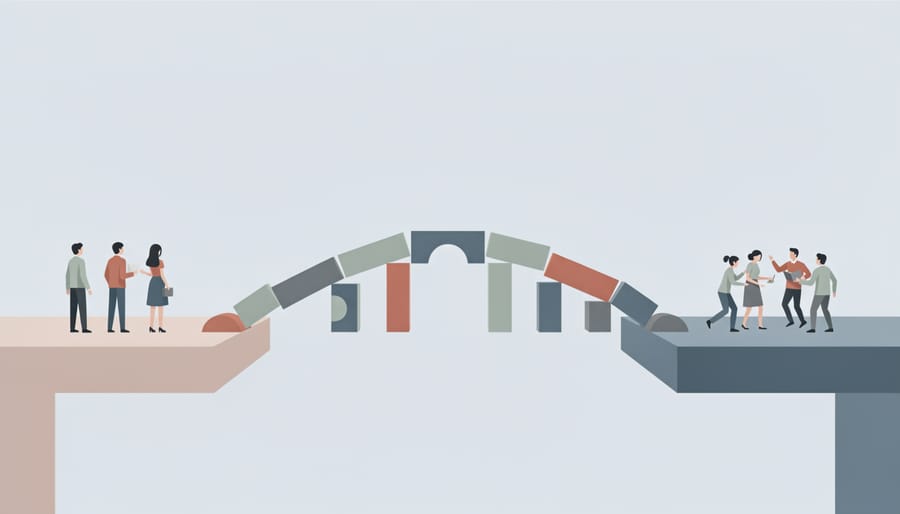
Similarly, pre-competence isn’t yet cultural competence, where educators consistently adapt curriculum, communication, and assessment based on deep cultural understanding. Competent practitioners don’t just recognize diversity, they skillfully engage it, adjusting their practice based on students’ specific cultural contexts. Pre-competence is the bridge between seeing the need and meeting it, and most PLCs spend considerable time here before developing the collective expertise to cross over.
How Cultural Pre-Competence Shows Up in PLCs

Individual Educator Behaviors
At the individual level, cultural pre-competence looks like genuine awareness without the toolkit to act on it. You’ll recognize pre-competent educators by their questions: “I know my students come from different backgrounds, but how do I actually teach differently?” or “I want to be more inclusive, but I’m not sure what that means for my lesson plans.”
These teachers acknowledge that their students’ cultural identities matter. They might notice patterns, certain groups disengaging during class discussions or struggling with specific assessments. But acknowledgment stops at observation. A pre-competent teacher sees that her English learners aren’t participating but doesn’t know how to modify discussion protocols to include them. Another recognizes that his discipline referrals disproportionately affect Black students yet lacks strategies to examine his own biases or adjust his classroom management approach.
You’ll also see pre-competent educators attend diversity workshops and nod along, then return to classrooms unchanged. They mean well and want to improve, but good intentions haven’t yet translated to altered practice. The gap isn’t commitment, it’s capacity. They’re asking the right questions but need their PLC to help them find answers that work.
Team and System-Level Patterns
At the organizational level, cultural pre-competence often manifests through well-intentioned initiatives that don’t translate into meaningful change. Schools may form equity teams or diversity committees, yet these groups meet irregularly and lack clear objectives or decision-making authority. The committee becomes a symbolic gesture rather than a change agent.
Data collection provides another revealing pattern. Districts gather extensive demographic information about students, race, ethnicity, home language, socioeconomic status, but this data sits unused in reports. PLCs don’t regularly disaggregate achievement or discipline data by cultural groups, missing opportunities to identify patterns and adjust instruction accordingly.
Professional development sessions on cultural responsiveness appear on the calendar, satisfying compliance requirements. However, these workshops rarely connect to ongoing PLC work. Teachers attend, perhaps feel inspired, but return to classrooms without concrete strategies or follow-up support. The training exists in isolation rather than as part of a systematic approach to building competence.
School mission statements may emphasize diversity and inclusion, yet hiring practices, curriculum choices, and family engagement strategies remain unchanged. The gap between stated values and actual practice signals that the organization recognizes the importance of cultural competence without yet possessing the skills or structures to achieve it.
The Three Components of Moving Beyond Pre-Competence
Building Cultural Knowledge
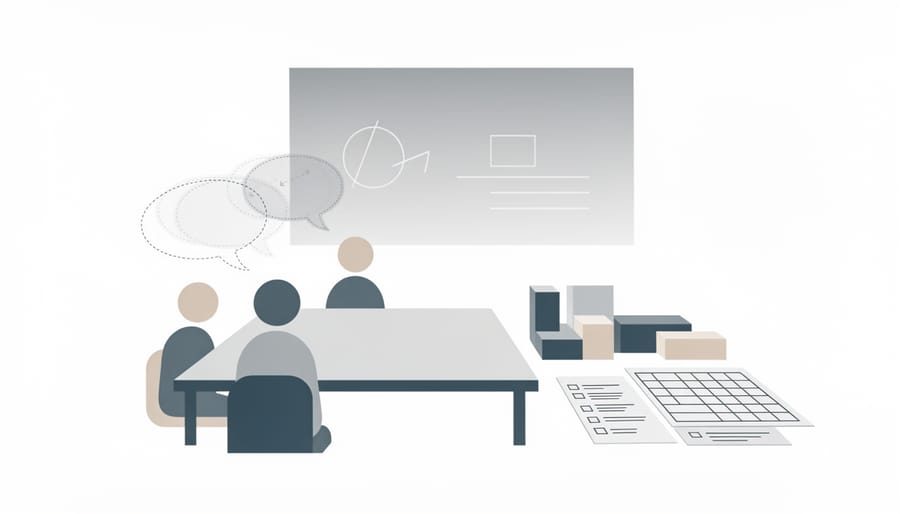
Building cultural knowledge starts with examining the deeper dimensions of culture that shape how students learn and engage. While recognizing holidays and food traditions matters, PLCs operating at pre-competence often stop there. True cultural knowledge requires understanding how values, communication patterns, and worldviews differ across cultures and directly influence classroom dynamics.
Your PLC needs structured learning in three areas. First, explore how different cultures approach authority, collaboration, and individual versus collective achievement, concepts that fundamentally affect classroom participation and group work. Second, investigate implicit bias through tools like the Implicit Association Test, then discuss how these unconscious preferences show up in discipline decisions, student praise, and academic expectations. Third, examine how cultural background shapes family engagement; what looks like disinterest may reflect different cultural norms about questioning teachers or participating in school activities.
Effective knowledge-building happens through case studies of real classroom scenarios, inviting community members to share their experiences, and reading research written by scholars from diverse backgrounds. The goal isn’t becoming an expert in every culture, it’s developing genuine curiosity and the humility to ask questions rather than make assumptions about what students and families need.
Developing Practical Skills
Cultural knowledge alone won’t change what happens in your classroom. Pre-competent educators often understand why culturally responsive teaching matters but freeze when it’s time to actually modify a lesson or redirect a conversation about race.
The skill gap shows up in concrete moments: You’re teaching a unit on family structures, but your examples assume two-parent households. A student makes a comment about another culture that needs addressing, and you’re not sure how to respond without shutting down dialogue. Your classroom management system rewards compliance in ways that disadvantage students from collectivist cultures.
Moving beyond pre-competence means practicing specific techniques until they become natural. Start with curriculum adaptation, look at your next unit and ask, “Whose stories are centered? Whose perspectives are missing?” Then add primary sources, literature, and examples that reflect your students’ cultures as assets, not footnotes.
For difficult conversations, use structured protocols. The “Ouch and Oops” framework gives students language to name harm (“Ouch, that comment felt hurtful”) and acknowledge mistakes (“Oops, I didn’t realize that was offensive”) without derailing the discussion.
Culturally responsive classroom management requires examining your expectations. Does your definition of “respectful behavior” align with direct eye contact, immediate compliance, or individual achievement? Students from different backgrounds may show respect differently, through deference to peers, collective decision-making, or questioning as engagement.
Finally, authentic family partnerships mean meeting families where they are, not expecting them to navigate school structures designed without their input.
Creating Systemic Support Structures
Individual awareness and skills won’t take root without organizational scaffolding. PLCs stuck in pre-competence often fail because the system doesn’t support the work.
Start by protecting time. Equity work can’t be squeezed into five minutes at meeting’s end. Designate at least one full PLC session monthly specifically for examining culturally responsive practices, analyzing disaggregated data, or unpacking instructional bias. Make this time non-negotiable, not the first thing cut when other priorities emerge.
Provide access to expertise. Arrange coaching from equity specialists who can observe lessons, facilitate difficult conversations, and offer feedback tailored to your context. Curate resources, books, articles, lesson plan banks, that address your students’ specific cultural groups rather than generic diversity materials. Budget for professional learning that goes beyond one-day workshops to sustained, job-embedded support.
Establish accountability that matters. Track both participation (who attended equity-focused training) and impact (how instruction changed, which students benefited). Review progress toward equity goals in administrator walkthroughs and performance evaluations, signaling that this work counts.
Most critically, leadership must model the vulnerability growth requires. When principals and instructional coaches share their own learning edges, admit mistakes, and demonstrate how they’re adjusting practice, they give permission for everyone else to do the same. Cultural competence becomes the norm, not the exception.
Practical Applications for Your PLC
Starting Conversations That Lead to Action
The difference between awareness and action often comes down to how you structure conversations. PLCs stuck in pre-competence talk about diversity in abstract terms, “our students are so diverse” or “we need to be more culturally responsive”, but these discussions rarely connect to specific teaching decisions or student data.
Start with sentence stems that push beyond comfort: “When I look at this assignment through a cultural lens, I notice…” or “The achievement gap in our data suggests my instruction may not be reaching…” These frames make personal practice the subject, not student deficits.
The Courageous Conversations protocol offers a structured approach. Establish agreements first: stay engaged, speak your truth, experience discomfort, expect and accept non-closure. Then examine a specific piece of student work or discipline data, asking “What patterns do we see when we disaggregate by race or language?” and “What instructional decisions might be contributing to these disparities?”
As facilitator, redirect generalizations to specifics. When someone says “These families just don’t value education,” respond with “Let’s look at our family contact log. Are we reaching out in ways that respect their work schedules and preferred communication methods?” Ground every conversation in evidence from your own classroom and concrete next steps you’ll try before the next meeting.
Using Data to Drive Culturally Responsive Decisions
Data becomes culturally responsive when your PLC examines it through an equity lens, asking not just “how are students performing?” but “which students are thriving, and which aren’t?” Start by disaggregating achievement, discipline, and engagement data by race, ethnicity, language status, and other demographic factors. Look for patterns: Are certain groups disproportionately represented in lower performance bands, office referrals, or chronic absenteeism?
The key move happens in collaborative analysis. Instead of treating disparities as facts to note, use protocols that push your PLC to ask why. “What instructional practices might contribute to this gap? What cultural assets are we missing in our teaching? How might our classroom management approaches affect different students inequitably?” Compare data across teachers to identify where practices are working and where adjustments are needed.
Then translate insights into action. If data shows English learners struggling with a particular standard, your PLC designs scaffolds together. If discipline data reveals bias, you collaborate on alternative approaches. Set measurable goals for closing gaps, track progress monthly, and adjust strategies based on what the numbers reveal. This cycle transforms data from passive reporting into active problem-solving.
Common Questions About Cultural Pre-Competence in PLCs
Educators working through cultural pre-competence often wrestle with similar concerns as they push their teams forward. Here are answers to questions that come up repeatedly in schools committed to this work.
How long does it typically take a PLC to move beyond pre-competence?
There’s no fixed timeline, some PLCs make substantial progress within a school year, while others need two to three years of consistent effort. The pace depends on your team’s starting point, the depth of your commitment, and whether you have dedicated time and resources for this work.
What if colleagues think we’re already culturally competent?
This perception often signals pre-competence itself, awareness without full understanding of what competence requires. Share disaggregated student data showing outcome gaps, or invite an external equity consultant to facilitate an honest assessment of current practices against competency benchmarks.
Can individual teachers be culturally competent if the whole PLC isn’t there yet?
Absolutely. Individual educators can develop strong skills and knowledge even when their teams lag behind. However, systemic change requires collective movement, which is why PLCs that actually work ground themselves in the 3 core ideas of shared learning and mutual accountability.
How do I handle resistance when bringing up cultural competence work?
Frame the conversation around student outcomes and evidence rather than personal judgments. Lead with curiosity, not accusation, ask “What patterns do we notice in our data?” instead of “Why aren’t you addressing bias?” Building trust through inclusive practices makes space for harder conversations later.
Recognizing when your PLC has genuinely moved into competence requires looking at both process and outcomes. You’ll know you’ve advanced when equity discussions happen naturally in every meeting, not just designated diversity sessions. Your team will analyze student work through a cultural lens without prompting, adapt instruction based on students’ cultural strengths, and address disproportionate discipline or achievement patterns as routine practice. Most tellingly, your impact evaluations will show narrowing gaps and improved outcomes for historically marginalized students.
The transition isn’t marked by perfect practice but by sustained commitment to growth, willingness to examine uncomfortable truths about your own teaching, and systems that support ongoing learning rather than one-time workshops.
Recognizing cultural pre-competence in your PLC isn’t a sign of failure. It’s proof that your team has moved past indifference and denial. You’ve acknowledged that cultural differences matter, that your current practices may not serve all students equitably, and that change is necessary. That awareness is the foundation everything else builds on.
But awareness alone doesn’t change outcomes for students. The gap between good intentions and effective practice can persist for years if PLCs don’t intentionally push forward. Your students can’t wait for you to feel fully ready. They need you to act now, to practice and stumble and learn together as you go.
Start by honestly assessing where your team stands today. Which behaviors from this article do you recognize in your meetings? What knowledge gaps or skill deficits are holding you back? Use our interactive self-assessment tool to identify your PLC’s specific growth areas, then explore the targeted resources matched to your needs.
Connect with other educators navigating this journey through our community forums. Share what’s working, ask questions about what isn’t, and learn from colleagues who’ve moved their teams forward. Whether your PLC meets in person or you’re building virtual PLCs the path from pre-competence to competence is the same: sustained, intentional collaboration focused on equitable outcomes.
Cultural competence isn’t a destination you reach and check off. It’s a practice you commit to, refine, and deepen over time. Your PLC can get there together.