
The lecture hall where 300 students sit in identical rows, absorbing information the same way, at the same pace, demonstrating learning through identical assessments—this traditional model no longer serves the diverse learners populating today’s colleges and universities. Universal Design for Learning offers a research-based framework that transforms how you design courses to reach every student from the start.
Picture your course as a building. Just as architects now design entryways with ramps built in rather than added as afterthoughts, UDL asks you to build flexibility into your syllabus, assignments, and assessments before the semester begins. This proactive approach benefits not just students with documented disabilities, but also working parents balancing coursework with jobs, English language learners, first-generation college students, and neurodivergent thinkers who process information differently.
The beauty of UDL in higher education lies in its practicality. You do not need to create entirely new courses or lower academic standards. Instead, you offer multiple pathways to the same rigorous learning goals. Provide your economics lecture as both a live session and a recorded option. Allow students to demonstrate mastery of literary analysis through traditional essays, video presentations, or annotated digital portfolios. Design problem sets that students can tackle individually, in pairs, or through guided tutorials.
This approach might sound overwhelming, but implementation happens incrementally. Start with one course element—perhaps how you present information or how students engage with material. Each small change compounds, creating learning environments where more students can access, engage with, and demonstrate their understanding of complex content. The result is not diluted academics, but enriched teaching that honors the reality of who sits in your classroom.
What Universal Design for Learning Really Means in Higher Education
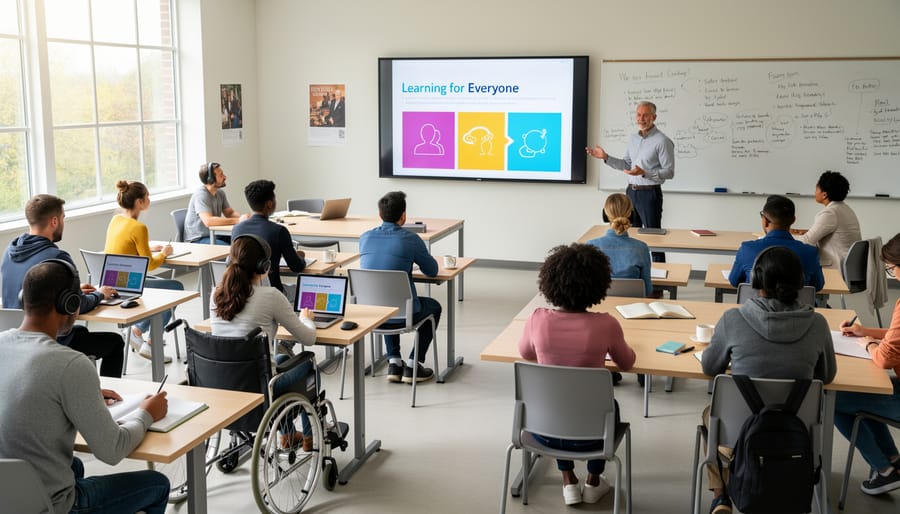
The Three Core Principles Made Practical
Universal Design for Learning rests on three foundational principles that transform how we think about teaching in higher education. Let’s explore each one with practical examples you can implement right away.
The first principle, Multiple Means of Representation, recognizes that students process information differently. In a college lecture setting, this might mean recording your sessions so students can review complex concepts at their own pace. You could also provide your slides in advance, include visual diagrams alongside text explanations, or offer short video summaries of key points. Think of it as presenting the same valuable content through different windows, allowing each student to look through the one that works best for them.
The second principle, Multiple Means of Action and Expression, gives students choices in how they demonstrate learning. Instead of requiring everyone to write a traditional research paper, consider offering alternatives like creating an infographic, recording a podcast episode, developing a presentation, or yes, writing that paper. The academic rigor remains high across all options, but students can showcase their understanding in ways that align with their strengths.
The third principle, Multiple Means of Engagement, addresses the why of learning. In higher education, this could include connecting course material to real-world applications, offering project topics that reflect diverse student interests, incorporating collaborative discussions alongside independent work, or using case studies from various cultural contexts. When students see relevance and have some agency in their learning path, motivation naturally increases.
These principles work together to create a more inclusive, effective learning environment for all students.
UDL vs. Accommodations: Understanding the Difference
Understanding the distinction between UDL and accommodations is essential for effective teaching. Think of UDL as building a ramp into your course from the start, while accommodations are like adding the ramp later for specific individuals who need it.
UDL is proactive and universal. It means designing your course materials, activities, and assessments with flexibility built in from day one, benefiting all students. For example, providing lecture notes in multiple formats or offering choice in assignment formats serves everyone, not just students with documented disabilities. This approach connects naturally with differentiated instruction strategies you may already use.
Accommodations, on the other hand, are reactive and individualized. They respond to specific documented needs after a student requests support through disability services. Examples include extended test time or alternative text formats for students with qualifying disabilities.
Here’s the empowering truth: UDL and accommodations work together beautifully. When you implement UDL principles, you reduce the barriers students face and may even decrease accommodation requests. However, some students will always need individual accommodations, and that’s perfectly appropriate. UDL doesn’t replace legal obligations but rather creates a more inclusive foundation that makes accommodations easier to implement when needed.
Why Higher Education Needs UDL More Than Ever

The Reality of Today’s College Classrooms
Today’s college classrooms look dramatically different than they did even a decade ago. If you’re an educator considering the transition to higher education or curious about how teaching principles translate across educational levels, understanding this landscape is essential.
The modern college student body represents incredibly diverse student populations. Non-traditional students now make up nearly 40% of undergraduates, bringing rich life experiences but also juggling family responsibilities and full-time jobs alongside coursework. Many learners are working 20-40 hours weekly while pursuing their degrees, meaning they’re accessing course materials at midnight after their shift ends or during lunch breaks.
Neurodivergent students, including those with ADHD, autism, dyslexia, and anxiety disorders, are attending college in greater numbers than ever before. Multilingual learners bring valuable global perspectives while navigating academic content in what may be their second or third language. Additionally, students arrive with vastly different academic preparation levels, some entering directly from high school while others are returning after years away from formal education.
This beautiful complexity means that one-size-fits-all teaching approaches simply don’t reach everyone. What works perfectly for a traditional 19-year-old student might create barriers for a working parent or a neurodivergent learner. This reality isn’t a challenge to overcome but rather an opportunity to design learning experiences that work better for everyone from the start.
What Happens When We Don’t Use UDL
When higher education classrooms rely solely on traditional, one-size-fits-all teaching methods, we unintentionally create barriers that prevent many capable students from reaching their full potential. The consequences of this approach extend far beyond individual course grades, affecting student retention, confidence, and career readiness.
Without UDL, students who learn differently often struggle silently. Those who need information presented visually may find themselves lost in lecture-heavy courses, while students who process information through hands-on experiences sit passive in traditional classrooms. The result? Increased frustration, disengagement, and ultimately, higher dropout rates. Research consistently shows that rigid teaching approaches contribute significantly to student attrition, particularly among first-generation college students and those from underrepresented backgrounds.
The impact goes beyond completion rates. Students who don’t see their learning needs reflected in course design may internalize academic struggles as personal failure rather than recognizing systemic barriers. This damages confidence and can discourage talented individuals from pursuing advanced degrees or careers in their chosen fields.
Faculty also experience frustration when traditional methods don’t connect with increasingly diverse student populations. Office hours fill with confused students, assignment quality suffers, and the joy of teaching diminishes when many learners can’t access the content effectively.
Perhaps most concerning is the untapped potential. When we don’t proactively design for variability, we miss opportunities to develop the critical thinking, creativity, and problem-solving skills that all students possess. These capabilities remain dormant simply because the pathway to demonstrate them wasn’t available.
Practical UDL Strategies for College Classrooms
Multiple Means of Representation: Making Content Accessible
Making course content accessible to all learners starts with recognizing that students process information differently. The first principle of UDL, Multiple Means of Representation, encourages you to present information through various channels so every student can engage with the material effectively.
Begin by offering course materials in multiple formats. If you typically assign textbook readings, consider supplementing them with podcasts, video lectures, or infographics that convey the same concepts. Many students benefit from receiving a lecture outline before class, while others appreciate recorded sessions they can review at their own pace. This variety doesn’t mean creating entirely new content for each format—instead, think about how existing materials can be repurposed or enhanced.
Visual and auditory elements strengthen understanding across learning preferences. When presenting complex information, pair verbal explanations with diagrams, charts, or concept maps. In online courses, short video segments with clear audio quality can break up text-heavy modules and maintain engagement.
Accessibility features like captions and transcripts serve everyone, not just students with disabilities. Captioned videos help non-native speakers, students in noisy environments, and those who prefer reading along while listening. Transcripts make content searchable and allow students to quickly locate specific information during exam preparation.
Chunking information into manageable segments prevents cognitive overload. Rather than posting a 50-page document, divide content into themed sections with clear headings. Break lengthy lectures into 10-15 minute segments focused on single concepts. Provide advance organizers that preview what students will learn, helping them build mental frameworks for new information.
These representation strategies create entry points for diverse learners while maintaining the academic rigor your courses require.
Multiple Means of Engagement: Connecting with Diverse Learners
When you think about what motivates college students to truly engage with learning, the answers are remarkably diverse. Some students thrive on independent projects, while others find energy in collaborative discussions. Universal Design for Learning recognizes this diversity and provides a framework to tap into what drives each learner forward.
Start by offering meaningful choices that honor student autonomy. In a psychology course, students might demonstrate their understanding of research methods through a traditional paper, a podcast interview with practitioners, or a visual infographic. This flexibility maintains academic rigor while allowing students to connect with content through their strengths and interests. When students have agency in how they learn and demonstrate knowledge, engagement naturally increases.
Collaboration options should accommodate different social learning preferences. Consider providing opportunities for both group work and individual exploration within the same assignment. Some students might interview community members as part of a team, while others conduct their research independently but share findings in class forums. These innovative teaching strategies recognize that collaboration itself isn’t one-size-fits-all.
Real-world connections transform abstract concepts into relevant, engaging experiences. Invite guest speakers from diverse professional backgrounds, incorporate current events into discussions, or design projects that address actual community challenges. When students see how their learning connects to life beyond the classroom, motivation deepens naturally.
Where institutional constraints allow, flexible pacing accommodates different learning rhythms. Provide optional extension activities for students who grasp concepts quickly, while offering additional scaffolding resources for those who need more time. Consider staggered deadlines for multi-part projects or allowing students to choose which assignments they complete first within a unit. These approaches recognize that engagement flourishes when learning environments adapt to individual needs rather than expecting all students to adapt identically to rigid structures.
Multiple Means of Action and Expression: Flexible Assessment
Traditional assessment methods often limit how students can demonstrate their understanding, but flexible assessment offers multiple pathways for success while maintaining academic rigor. This approach recognizes that students possess diverse strengths and challenges, allowing them to showcase their learning in ways that work best for them.
Consider offering project alternatives where students choose between research papers, multimedia presentations, podcasts, infographics, or case study analyses. Each option requires the same depth of content knowledge but appeals to different learning preferences and strengths. A biology student might create an annotated scientific illustration while another writes a traditional lab report—both demonstrating mastery of the same concepts.
Varied presentation formats empower students to communicate their knowledge effectively. Allow written essays, oral presentations, video recordings, digital portfolios, or creative demonstrations. This flexibility particularly benefits English language learners, students with communication differences, and those who excel in non-traditional formats.
Portfolio assessments provide powerful opportunities for reflection and growth. Students curate their best work over time, adding reflective commentary that demonstrates their learning journey. This method values progress alongside final products, encouraging metacognitive development.
Multiple drafts with constructive feedback transform assessment into a learning process rather than a one-time judgment. Provide specific, actionable feedback on initial submissions, allowing students to revise and improve. This approach reduces anxiety, supports skill development, and mirrors real-world professional practices.
Remember, flexible assessment doesn’t mean lowering standards—it means removing unnecessary barriers while maintaining clear learning objectives. When students can demonstrate their knowledge through authentic, personalized pathways, everyone benefits from richer, more meaningful evidence of learning.
Building Your UDL Course Design: A Step-by-Step Approach
Start Small: Your First UDL Changes
You don’t need to overhaul your entire course overnight. The beauty of UDL is that even small, intentional changes can create significant positive impact for your students. Start by selecting one or two modifications that feel manageable and align with your teaching goals.
Consider offering flexible deadlines with a deadline bank system, where students receive a few “extension tokens” per semester they can use without explanation. This simple change reduces anxiety and accommodates diverse life circumstances without compromising learning outcomes.
Another high-impact starting point is providing assignment choice. Instead of requiring everyone to write a traditional essay, allow students to demonstrate their understanding through presentations, videos, infographics, or written papers. This respects different strengths while maintaining rigorous academic standards.
Adding captions to your lecture videos is perhaps the easiest first step with immediate benefits. Captions support students with hearing differences, non-native English speakers, and anyone learning in noisy environments. Many video platforms now offer automatic captioning that you can quickly edit for accuracy.
Remember, implementing UDL is a journey, not a destination. Each small change you make creates a more inclusive learning environment. Celebrate these incremental improvements and build on them gradually as you gain confidence.

Auditing Your Current Course for UDL
Taking a thoughtful look at your existing courses is an empowering first step toward creating more inclusive learning environments. Start by asking yourself key questions about each UDL principle. For representation, consider: Do I offer content in multiple formats, such as text, video, and audio? Can students access materials in ways that suit their learning preferences? When examining action and expression, reflect on whether your assessments allow for student choice. Are there diverse ways students can demonstrate their knowledge beyond traditional exams or papers? Finally, for engagement, ask: Do my course activities connect to real-world applications? Are there opportunities for collaboration and individual exploration?
As you review your syllabus, assignments, and course materials, look for patterns. You might discover that while you provide reading materials in various formats, your assessments rely heavily on written essays. Or perhaps your lectures are engaging but lack interactive elements that appeal to different learners. This honest evaluation isn’t about identifying shortcomings but rather uncovering opportunities for growth. Remember, implementing UDL is a journey, not a destination. Even small adjustments can make meaningful differences for your students while maintaining the academic rigor your courses require.
Creating a Semester Plan for Implementation
Starting small is the key to sustainable UDL implementation. Begin by selecting one course and identifying just two or three UDL elements to introduce in the first few weeks. For example, you might start by providing lecture notes in advance and offering assignment choices for the first major project. This manageable approach prevents burnout while letting you observe what works.
During mid-semester, reflect on student feedback and your own observations. What’s resonating? Where do students still struggle? Use this information to add one or two additional UDL strategies, such as incorporating varied assessment formats or creating flexible participation options. Consider joining community forums where fellow educators share their experiences and troubleshoot challenges together.
As the semester progresses, gradually layer in more elements rather than overhauling everything at once. Interactive tools like digital annotation platforms or collaborative workspaces can be introduced incrementally, giving both you and your students time to adapt.
Plan ahead for the next semester by documenting what worked well and what needs refinement. This reflective practice ensures continuous improvement without overwhelming yourself. Remember, UDL implementation is a journey, not a destination. Each small step you take creates a more inclusive, engaging learning environment for all students.
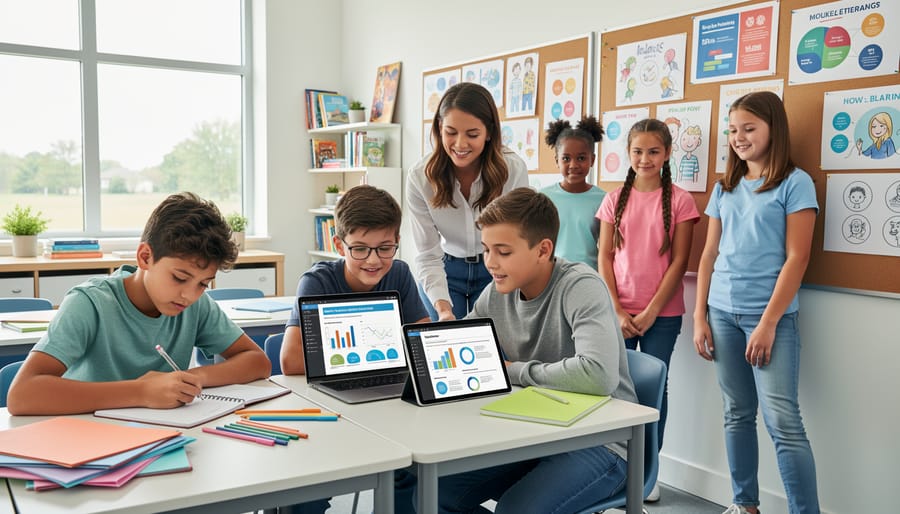
Tools and Technology That Make UDL Easier
Essential Digital Tools for UDL
Implementing UDL in higher education becomes much more achievable when you leverage the right technology. Today’s digital teaching tools can help you create more accessible and engaging learning experiences for all students.
Screen readers like JAWS and NVDA enable students with visual impairments to access course materials independently. When you design with these tools in mind, you’re removing barriers before they occur. Similarly, captioning services such as Otter.ai or Rev provide real-time transcriptions that benefit not only deaf and hard-of-hearing students but also those who process information better through reading.
Collaborative platforms like Google Workspace and Microsoft Teams offer multiple ways for students to engage with content and each other. These tools support various learning preferences while building the teamwork skills essential for today’s workplace.
For flexible assessment, consider tools like Padlet for visual presentations, Flipgrid for video responses, or traditional written formats through your learning management system. This variety allows students to demonstrate knowledge in ways that align with their strengths.
Learning management systems including Canvas and Blackboard now include built-in accessibility checkers to ensure your materials meet universal design standards. Many institutions also provide text-to-speech tools and adjustable display settings that students can customize to their needs.
Remember, you don’t need to master every tool at once. Start with one or two that address your students’ most common needs, then expand your toolkit as you grow more comfortable.
Free and Low-Cost Resources to Get Started
Getting started with UDL doesn’t require a significant budget or specialized training. Many institutions offer teaching and learning centers that provide free workshops, consultations, and resources specifically focused on inclusive teaching practices. The CAST website remains the cornerstone resource, offering comprehensive UDL guidelines, examples, and planning tools at no cost. Online communities like the UDL Facebook groups and LinkedIn networks connect you with thousands of educators sharing practical strategies and peer support. Free design tools such as Google’s accessibility checker, Hemingway Editor for readability, and Canva’s accessible templates help you create inclusive materials immediately. Your campus disability services office can also provide guidance on accessible course design. Remember, implementing UDL is a journey, not a destination. Start small by exploring one free resource this week, join an online community to learn from colleagues, and gradually build your toolkit. These accessible starting points empower you to make meaningful changes without overwhelming your schedule or budget.
Overcoming Common Concerns and Barriers
“I Don’t Have Time to Redesign Everything”
Your concern about time is completely valid. You’re already managing course preparation, grading, research, and countless other responsibilities. The good news? You don’t need to overhaul everything at once.
Start small with incremental changes that build over time. This semester, focus on one or two UDL principles in a single course. For example, add captions to your existing lecture videos or offer students choice in demonstrating their learning on just one assignment. These adjustments take minimal time but create meaningful impact.
Create reusable resources that work semester after semester. Design accessible templates for assignments, rubrics, and course materials once, then adapt them as needed. Many institutions also offer UDL course design support and instructional design consultants who can help streamline the process.
Consider collaborating with colleagues to share UDL-aligned materials and strategies. You might discover that someone has already created accessible resources you can adapt for your courses.
Remember, implementing UDL is a journey, not a destination. Even small changes improve student access and learning outcomes. The time you invest now actually saves time later by reducing accommodation requests and clarifying expectations upfront for all students.
“Won’t This Lower Academic Standards?”
This is perhaps the most common concern among college instructors, and it’s worth addressing directly: Universal Design for Learning does not mean lowering expectations or making coursework easier. Instead, UDL separates the learning goal from the means of demonstrating that learning.
Think of it this way: if your learning objective is for students to analyze complex theories in your discipline, does it truly matter whether they show that analysis through a traditional essay, a video presentation, or an annotated visual diagram? The rigor lies in the depth of analysis required, not the format of delivery.
UDL actually raises academic standards by removing unnecessary barriers that previously prevented some students from showing what they truly know. When a student with dyslexia can demonstrate their understanding of quantum physics through verbal explanation rather than struggling with written text, you’re assessing their physics knowledge, not their writing challenges. The standard for physics comprehension remains exactly the same or even higher because you’re seeing their authentic capability.
Research consistently shows that when students have multiple pathways to engage with material and demonstrate learning, overall performance improves across all student groups. This isn’t about accommodation after the fact; it’s about designing assessments that measure what actually matters from the start.
The key is maintaining clear, rigorous learning objectives while being flexible about how students reach them. You’re not changing what students need to learn or the depth of understanding required. You’re simply acknowledging that there are multiple valid ways to get there, making excellence accessible to more students without compromising academic integrity.
Implementing Universal Design for Learning in your higher education courses is a journey, not a destination. You don’t need to transform everything overnight or achieve perfection from day one. The beauty of UDL lies in its flexibility and your ability to grow alongside your students.
Start small. Choose one principle that resonates with you, perhaps offering lecture recordings for students who benefit from reviewing content at their own pace, or providing assignment choices that let students demonstrate knowledge in different ways. Each modification you make creates a more inclusive learning environment, and these changes build momentum over time.
You’re not alone in this process. Connecting with communities of practice can provide invaluable support as you explore UDL implementation. These networks offer opportunities to share successes, troubleshoot challenges, and discover innovative approaches from colleagues who understand the unique context of higher education. Many institutions also provide professional development opportunities specifically focused on accessible and inclusive teaching practices.
Core Teaching Differentiated Instruction and UDL Resources remain available to support your ongoing implementation efforts. These tools provide practical guidance, ready-to-use templates, and research-based strategies that you can adapt to your specific discipline and student population.
Remember why you started this journey: every student deserves the opportunity to succeed. When you design courses that anticipate diverse learning needs, you’re not lowering standards—you’re removing barriers that prevent talented students from demonstrating their true capabilities. Your commitment to UDL principles creates ripples of positive change that extend far beyond individual courses, shaping confident, capable learners prepared to thrive in an increasingly diverse world. That transformation begins with your next small step forward.