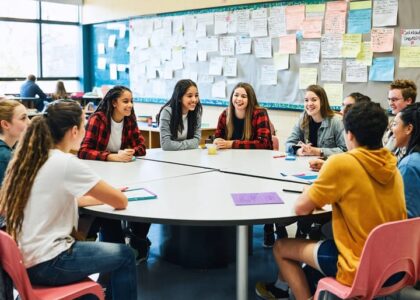
Build K-12 alliances by identifying shared community goals first. Map local organizations, businesses, and nonprofits whose missions intersect with your educational priorities, then reach out with specific collaboration proposals rather than vague partnership requests. Focus on mutual benefit: what can your students offer community partners, not just what you need from them.
Align your partnerships with the United Nations Sustainable Development Goals framework to give structure and global relevance to local efforts. Whether addressing quality education, reduced inequalities, or sustainable communities, SDG alignment helps partners speak a common language and measure collective impact. This framework transforms scattered initiatives into coherent, purpose-driven alliances that attract funding and stakeholder buy-in.
Start small with pilot projects before scaling. A single classroom partnering with one local organization to address food security or environmental sustainability creates proof of concept. Document outcomes, gather feedback from all stakeholders including students, and refine your approach based on real results. These early wins build credibility and momentum for broader alliance development.
Establish clear communication structures from day one. Designate partnership coordinators, set regular meeting schedules, and create shared digital spaces for collaboration. Successful K-12 alliances thrive on transparency and consistent engagement, not sporadic enthusiasm. Define roles, responsibilities, and success metrics collaboratively so every partner understands their contribution to shared goals.
The most powerful K-12 alliances emerge when schools position themselves as community hubs rather than isolated institutions. Your students gain real-world learning experiences, community partners access youth energy and fresh perspectives, and together you create sustainable solutions to local challenges while preparing the next generation for global citizenship.
What Makes a K-12 Alliance Different from Regular Partnerships
You’ve likely participated in plenty of school-community relationships throughout your career—inviting local professionals for career day, organizing field trips to museums, or welcoming parent volunteers. These traditional partnerships serve valuable purposes, but K-12 alliances operate at a fundamentally different level.
The primary distinction lies in intentionality and depth. Regular partnerships often focus on single events or specific activities with limited scope. A K-12 alliance, by contrast, is built on strategic collaboration where all partners work toward shared educational goals over sustained periods. Think of it as the difference between occasionally carpooling with neighbors and co-owning a vehicle together—the latter requires deeper commitment, clear agreements, and ongoing coordination.
What defines a true K-12 alliance? Four key characteristics set these relationships apart:
Shared goals anchor the entire partnership. Rather than your school simply receiving support from community organizations, you collaborate to define mutually beneficial outcomes. For instance, a business partner doesn’t just donate funds; they work alongside educators to develop programs addressing real workforce needs while enhancing student learning.
Mutual accountability means all partners share responsibility for results. You track progress together, celebrate successes collectively, and problem-solve collaboratively when challenges arise. This shared ownership creates stronger commitment than traditional donor-recipient relationships.
Resource pooling extends beyond financial contributions. Partners combine expertise, facilities, networks, and human capital. A university might provide research support, a nonprofit offers community-based learning opportunities, and local government shares data—all working in concert.
Sustained commitment distinguishes alliances from one-off collaborations. These partnerships typically span multiple years, allowing relationships to deepen and initiatives to mature.
These characteristics align perfectly with the United Nations Sustainable Development Goals framework, particularly SDG 17, which emphasizes collaborative partnerships for achieving global objectives. By embracing alliance principles, you’re not just improving your school—you’re contributing to broader educational equity and community development.
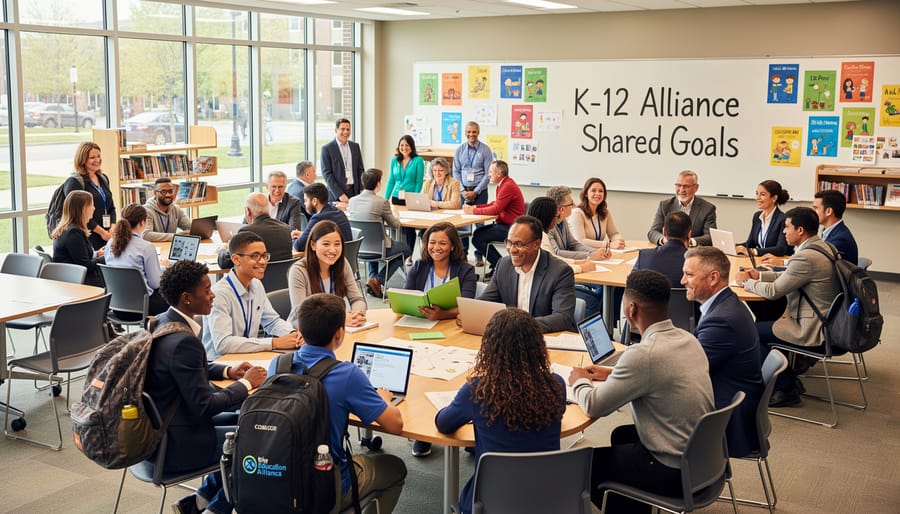
The SDG Connection: Why Global Goals Matter for Local Schools
Translating Global Goals into Classroom Impact
When you align your partnership activities with specific SDGs, you transform abstract global goals into concrete classroom outcomes. Start by identifying which SDG resonates most with your community’s needs. For example, if you’re partnering with a local environmental organization, frame your collaboration around SDG 13 (Climate Action) by setting measurable targets like reducing school waste by 20% or conducting quarterly water quality tests in nearby streams.
Make these partnerships purposeful by co-creating assessment rubrics with your community partner. If students are working with a food bank to address SDG 2 (Zero Hunger), establish clear learning objectives such as understanding food distribution systems, calculating nutritional needs for different populations, or designing awareness campaigns. These partnerships become even more impactful when structured as service learning projects that combine meaningful community service with academic learning.
Track progress using simple tools like reflection journals, photo documentation, or community impact surveys. Students can create SDG progress dashboards showing how their partnership activities contribute to global targets while addressing local challenges. This approach helps you demonstrate to administrators and parents exactly how community partnerships enhance curriculum standards while fostering civic responsibility and real-world problem-solving skills.
Four Essential Partners Every K-12 Alliance Needs
Building a successful K-12 alliance requires bringing together diverse partners who each contribute unique strengths and resources. Understanding who these partners are and what they bring to the table helps you create a sustainable, impactful collaboration that truly serves your students and community.
Local businesses form the first essential pillar of your alliance. These partners provide real-world context for student learning, offering internship opportunities, mentorship programs, and insights into workforce needs. A regional bank might support financial literacy programs, while a manufacturing company could sponsor STEM initiatives and provide tours that show students career pathways. Small businesses often prove just as valuable as large corporations, bringing authentic community connections and flexible partnership opportunities. The key is finding businesses whose missions align with your educational goals.
Nonprofit organizations serve as your second critical partner, bringing specialized expertise and additional resources to address specific student needs. Youth development organizations, arts councils, environmental groups, and social service agencies each offer unique programming that complements classroom instruction. For example, a local conservation nonprofit might partner with your science department to create outdoor learning experiences, while a literacy-focused organization could provide after-school tutoring. These groups often have established community relationships and grant funding that can amplify your alliance’s impact.
Higher education institutions represent your third essential partner, creating pathways that extend beyond high school graduation. Community colleges and universities can offer dual enrollment programs, professional development for teachers, and access to facilities and experts. They help students envision their futures while providing valuable data on college readiness. These partnerships ensure your alliance doesn’t just prepare students for the next grade level but for lifelong success.
Civic organizations and parent groups complete your alliance foundation. Libraries, faith-based organizations, civic clubs, and parent-teacher associations bring community trust, volunteer networks, and grassroots support. These partners help you reach families who might not otherwise engage with school initiatives. When combined with engaged parents, civic partners create the community buy-in necessary for sustainable change.
Together, these four partner types create a comprehensive support system that addresses academic, social, emotional, and career development needs. The most effective alliances include representation from each category, ensuring balanced perspectives and diverse resources that benefit every student.
Building Your Alliance: A Step-by-Step Approach
Step 1: Identify Your Community’s Needs and Assets
Before building any alliance, you need a clear picture of what your community truly needs and what strengths already exist. Start by gathering diverse voices through surveys, focus groups, and listening sessions with students, families, teachers, and local organizations. Ask open-ended questions about educational challenges, but equally important, invite participants to share community assets you might overlook.
Look beyond obvious resources. That retired engineer volunteering at the library? A potential STEM mentor. The community garden down the street? An outdoor classroom waiting to happen. Local businesses, cultural centers, and faith organizations often have skills, spaces, and networks eager to support education.
Create a simple asset map documenting both needs and resources. Include academic gaps, social-emotional concerns, and equity issues alongside community strengths like multilingual families, technology access points, and passionate volunteers. This dual-lens approach prevents deficit thinking and reveals natural partnership opportunities.
Consider hosting a community forum where stakeholders can share findings together. This collaborative discovery process builds trust from day one and ensures your alliance addresses real priorities rather than assumed ones. Remember, the strongest partnerships emerge when everyone sees themselves reflected in both the challenges identified and solutions proposed.
Step 2: Find Your Champion Partners
Finding the right partners starts with looking beyond your immediate circle. Begin by identifying organizations and individuals who already share your commitment to student success and community well-being. Consider local nonprofits, businesses with educational initiatives, parent-teacher associations, and community centers as potential allies.
When making first contact, lead with curiosity rather than asking for resources. Schedule informal conversations to understand their goals, challenges, and existing community involvement. Ask questions like “What educational needs do you see in our community?” or “How could schools better support your organization’s mission?” This approach builds authentic relationships rather than transactional arrangements.
Be transparent about your vision while remaining open to their ideas. Share specific examples of how collaboration could benefit students and the broader community. Remember, the strongest partnerships emerge when all parties see mutual value and shared purpose.
Don’t overlook unlikely partners. A local environmental group might become your science curriculum ally, while a community garden could connect nutrition, sustainability, and hands-on learning. Keep detailed notes from these conversations and follow up promptly. Your genuine interest in their perspective will set the foundation for meaningful, lasting collaboration.
Step 3: Create Shared Goals That Stick
Creating partnership goals that truly stick begins with bringing all voices to the table. Start by hosting collaborative planning sessions where teachers, administrators, community partners, students, and families can contribute their perspectives. This inclusive approach ensures your goals reflect genuine needs rather than assumptions.
Align your partnership objectives with specific Sustainable Development Goals that resonate with your community’s priorities. For example, if addressing educational quality is central, frame goals around SDG 4 (Quality Education) while considering how they intersect with other relevant goals like SDG 10 (Reduced Inequalities) or SDG 3 (Good Health and Well-being).
Make goals SMART—specific, measurable, achievable, relevant, and time-bound—but keep them flexible enough to adapt as your partnership evolves. Document agreements clearly and establish regular check-ins to monitor progress together.
Consider using interactive planning tools or community forums to gather ongoing feedback and maintain momentum. When everyone understands how partnership activities connect to larger global frameworks while addressing immediate local needs, commitment deepens and sustainability follows naturally.
Step 4: Launch Small and Build Momentum
Starting with a focused pilot project allows your alliance to demonstrate value while managing risk and building confidence. Rather than launching multiple initiatives simultaneously, choose one achievable project that addresses a clear need and aligns with your shared goals. This might be a single classroom partnership, a targeted after-school program, or a monthly community event.
Design your pilot with success markers that partners can celebrate together. Set a realistic timeline—perhaps 8-12 weeks—and identify specific, measurable outcomes. For instance, if you’re partnering with a local museum, start with quarterly field trips before expanding to curriculum co-development.
Document what works and what doesn’t throughout your pilot. Collect feedback from all participants: students, teachers, and community partners. These insights become invaluable when scaling your efforts or inspiring others through community-based instruction examples.
Early wins create momentum and trust. They demonstrate your alliance’s effectiveness to stakeholders and help secure additional support. Once your pilot succeeds, you’ll have a proven model to replicate and expand, making your K-12 alliance sustainable and impactful for years ahead.

Real Success Stories: Alliances That Changed Everything
When districts and communities come together with clear goals and genuine commitment, remarkable things happen. Here are three examples of K-12 alliances that have created lasting change across different educational landscapes.
In Atlanta, Georgia, the Partnership for Southern Equity brought together ten urban schools, local businesses, and community health organizations to address educational inequity in underserved neighborhoods. This alliance tackled SDG 4 (Quality Education) and SDG 10 (Reduced Inequalities) head-on by creating after-school STEM programs staffed by volunteer engineers and scientists from partner corporations. Within two years, participating schools saw a 34% increase in students pursuing advanced math courses. More importantly, the alliance established a mentorship pipeline that connected 500 students with professional role models, fostering youth-led community change as students began designing solutions for neighborhood challenges. The program’s success led to district-wide adoption and secured ongoing funding through corporate partnerships.
In rural Montana, the Hi-Line Alliance demonstrated how small communities can achieve big impacts. Five school districts spanning 200 miles partnered with the local agricultural extension, tribal councils, and telehealth providers to overcome geographic isolation. They created shared online courses, bringing AP-level instruction to schools with fewer than 100 students. The alliance addressed SDG 3 (Good Health) by establishing school-based mental health services through telehealth partnerships, reducing student counselor wait times from weeks to days. Achievement data showed that college enrollment rates increased by 28% among alliance schools, and student retention in rural communities improved as graduates saw pathways to meaningful careers close to home.
Suburban Chester County, Pennsylvania offers another model. Their alliance linked twelve school districts with environmental organizations and renewable energy companies to transform sustainability education. Students participated in real-world projects, from installing solar panels on school buildings to managing community gardens that supplied local food banks. This initiative advanced SDG 13 (Climate Action) while teaching practical skills. Student engagement surveys showed 89% of participants felt more prepared for civic participation, and the alliance saved districts over $2 million in energy costs, funds redirected to classroom resources.
These examples prove that well-structured alliances create measurable benefits while addressing global challenges at the local level.
Common Roadblocks (And How to Navigate Them)
Even the most well-intentioned K-12 alliances can encounter obstacles that threaten their success. Understanding these common roadblocks and having strategies ready will help you navigate challenges with confidence.
Misaligned expectations often emerge as the most frequent stumbling block. Partners may enter the alliance with different visions of success or varying levels of commitment. To prevent this, invest time upfront in creating a shared agreement document that clearly outlines roles, responsibilities, and measurable goals. Schedule quarterly check-ins where all partners can openly discuss whether the alliance is meeting their needs and adjust course if necessary.
Sustainability concerns pose another significant challenge. Many alliances start strong but fade when initial enthusiasm wanes or key personnel change. Build sustainability into your alliance from day one by documenting processes, creating succession plans, and embedding the partnership into existing school structures rather than treating it as an add-on project. Consider rotating leadership responsibilities among partners to distribute workload and maintain fresh perspectives.
Bureaucratic hurdles and approval processes can slow momentum considerably. School districts and community organizations often have different timelines and decision-making protocols. Navigate this by identifying a liaison within each partner organization who understands internal processes and can advocate for the alliance. Start small with pilot projects that require minimal bureaucratic approval, then scale up once you’ve demonstrated success.
Communication breakdowns frequently occur when partners rely solely on email or infrequent meetings. Establish multiple communication channels that suit different needs—perhaps a shared digital platform for quick updates, monthly video calls for deeper discussions, and an annual in-person gathering for relationship building. Designate a communications coordinator who ensures information flows consistently to all stakeholders.
Remember, challenges are normal and often signal growth opportunities. When roadblocks appear, approach them as a team with curiosity rather than blame, and you’ll emerge with a stronger, more resilient alliance.
Measuring What Matters: Tracking Alliance Impact
Measuring the true impact of your K-12 alliance goes far beyond standardized test scores. While academic achievement matters, the richest partnerships create change that ripples through entire communities. The good news? You can track this impact using straightforward methods that fit into your existing workflow.
Start with quantitative indicators that align with SDG targets. Track student attendance rates, community engagement numbers (like volunteer hours or family participation in school events), and resource sharing metrics. For example, count how many community mentors are actively involved, or measure the reduction in students facing food insecurity through partnership programs. These concrete numbers tell an important part of your story.
Equally valuable are qualitative measures that capture the human dimension of your work. Conduct brief quarterly surveys asking students, families, and partners about their sense of belonging and connection. Document stories that illustrate transformation—perhaps a student who discovered a passion through a community partnership, or a parent who gained confidence to advocate for their child’s needs.
Here’s a simple template to get started: Create a one-page dashboard with three columns—What We’re Measuring, Why It Matters, and Current Status. Include 3-5 quantitative metrics and 2-3 qualitative indicators. Update it monthly during team meetings, using different colored markers to show progress.
Consider establishing a digital community forum where partners can share observations and celebrate small wins in real time. This creates ongoing dialogue rather than relying solely on annual reports.
Remember, effective measurement isn’t about proving perfection—it’s about learning and improving together. Choose indicators that genuinely reflect your alliance’s goals, keep data collection manageable, and use what you discover to strengthen your partnerships. When measurement becomes a tool for growth rather than judgment, everyone benefits.
Building meaningful K-12 alliances has the power to transform not just individual classrooms, but entire communities. When educators, families, local organizations, and students come together with shared purpose, the ripple effects extend far beyond academic achievement. These partnerships create ecosystems of support that nurture well-rounded learners, address real community challenges, and model the collaborative problem-solving our students need to thrive in an interconnected world.
The journey toward building effective alliances begins with a single step. Perhaps it’s reaching out to a local nonprofit, initiating a conversation with parents about community needs, or connecting with a colleague at another school who shares your vision. Whatever that first step looks like for you, know that you’re not alone in this work.
Teach Find’s community forums offer a vibrant space where educators across the country share their experiences, challenges, and successes in building K-12 alliances. Here, you can ask questions, exchange practical strategies, and find inspiration from those who have walked this path before you. Our interactive tools help you identify potential partners, plan collaborative projects, and track the impact of your alliance work.
The students in your classrooms are counting on us to prepare them for a complex, collaborative future. By building strong K-12 alliances today, you’re creating the networks of support that will empower tomorrow’s changemakers. Take that first step, connect with fellow educators, and discover the transformative potential waiting in your own community.