
Every student deserves equitable access to educational opportunities, yet significant gaps persist in how special education services reach diverse learners. An Office of Equity and Access serves as your district’s dedicated force for identifying and dismantling these barriers, ensuring that students with disabilities from all backgrounds receive the support they need to thrive.
These offices function as strategic problem-solvers, analyzing data to uncover patterns of inequity in special education identification, placement, and outcomes across different student populations. They bridge the gap between policy and practice by translating compliance requirements into meaningful supports that respect cultural and linguistic diversity. When marginalized students face disproportionate discipline, delayed evaluations, or limited access to inclusive settings, equity offices investigate root causes and develop targeted interventions.
Understanding how these offices operate empowers you to advocate more effectively for your students, whether your district has established such an office or not. The principles they champion—proactive identification of barriers, culturally responsive practices, and data-informed decision-making—belong in every classroom and administrative decision. By recognizing the systemic nature of inequities in special education, you can become an equity champion within your own sphere of influence.
This article explores the core functions of equity and access offices, their impact on special education services, and practical strategies you can implement immediately to advance equity in your educational setting.
What an Office of Equity and Access Actually Does

Beyond Compliance: The Real Purpose
Meeting legal requirements is just the starting point. An Office of Equity and Access moves beyond checking compliance boxes to create meaningful change in students’ educational experiences. While following laws like IDEA and Section 504 is essential, these offices ask deeper questions: Are students with disabilities truly thriving? Do they have genuine opportunities to participate fully in school life?
This proactive approach focuses on removing systemic barriers before they limit student potential. Rather than waiting for complaints or due process hearings, equity offices examine data patterns, identify gaps in services, and work collaboratively with educators to strengthen support systems. They analyze whether certain student groups receive disproportionate disciplinary actions or have limited access to advanced coursework.
The real purpose centers on transforming school culture. By reshaping special education access, these offices help create environments where accommodations are normalized, not stigmatized, and where diverse learning needs are anticipated and welcomed.
This means providing professional development that goes beyond legal basics, facilitating conversations about implicit bias, and ensuring families from all backgrounds feel genuinely heard. When equity offices succeed, compliance becomes a natural byproduct of doing what’s right for students, rather than the end goal itself.
Who Benefits and How
An Office of Equity and Access creates meaningful change for everyone in the educational community. Students with disabilities gain access to improved resources, culturally responsive teaching practices, and learning environments where their unique needs are understood and valued. When equity is prioritized, students experience fewer barriers to participating fully in classroom activities and school programs.
Families benefit through stronger communication channels and advocacy support. These offices often provide training on navigating special education processes, helping parents understand their rights and become effective partners in their child’s education. Access to translated materials and culturally competent staff ensures that language and cultural differences don’t prevent families from engaging meaningfully.
Educators receive professional development focused on inclusive practices, equitable assessment strategies, and addressing implicit bias. This support empowers teachers to create classrooms where all students thrive. You’ll find practical tools and strategies that make differentiation more manageable in your daily practice.
Administrators gain data-driven insights to identify disparities in special education identification, disciplinary actions, and service delivery. This information guides policy decisions and resource allocation, ensuring that equity isn’t just an ideal but a measurable outcome. District leaders can use these insights to build accountability systems that truly serve all students.
The Equity Gaps That Demand Attention
Disproportionate Identification and Placement
Research consistently shows that students from marginalized communities face disproportionate identification and placement in special education programs. African American students, for instance, are more likely to be identified for emotional and behavioral disorders, while English Language Learners may be over-identified due to language differences being mistaken for learning disabilities. Conversely, gifted programs often under-identify students from low-income families and communities of color.
The Office of Equity and Access addresses these disparities by analyzing data patterns across demographics and implementing evidence-based screening practices. They work to ensure that cultural and linguistic differences aren’t misinterpreted as disabilities, and that all students receive appropriate evaluations using culturally responsive assessment tools.
As an educator, you can support equitable identification by examining your own referral patterns and questioning potential biases. Ask yourself: Are students from certain backgrounds referred more frequently? Are you considering cultural and environmental factors before making referrals? Engage with your school’s equity team to access training on culturally responsive evaluation practices. Additionally, advocate for multi-tiered systems of support that provide interventions before formal special education referrals, ensuring students receive help without premature labeling.
Resource Allocation Disparities
One of the most significant challenges facing special education is how resource allocation disparities create unequal learning opportunities for students with disabilities. Schools in lower-income areas often receive less funding per student, resulting in larger class sizes, fewer specialized materials, and limited access to assistive technology. This inequity becomes even more pronounced in special education, where individualized instruction and specialized equipment are essential.
The distribution of qualified staff also varies dramatically across districts. Some schools struggle to recruit and retain certified special education teachers, speech therapists, and occupational therapists, while more affluent districts can offer competitive salaries and smaller caseloads. This means students in under-resourced schools may not receive the intensity of services their IEPs require.
As an educator, recognizing these disparities is the first step toward advocating for change. Document the resources your students need, build partnerships with community organizations, and connect with colleagues facing similar challenges through professional networks. Your voice matters in pushing for more equitable distribution of funding and qualified staff across all schools.
Access to Inclusive Learning Environments
Too often, students with disabilities face unnecessary barriers that limit their access to general education classrooms and challenging coursework. An Office of Equity and Access works to identify and remove these obstacles, ensuring every student can learn alongside their peers in the least restrictive environment possible.
These offices tackle systemic issues like insufficient accommodations, outdated placement practices, and limited access to advanced coursework. They examine scheduling patterns, support structures, and curriculum design to create genuine opportunities for inclusion. By partnering with special education teams and general education teachers, they help develop collaborative approaches that benefit all learners.
The work of breaking down educational barriers requires commitment at every level. Whether your school has a dedicated equity office or not, you can champion inclusive practices by examining your own classroom structures, advocating for co-teaching models, and questioning assumptions about student capabilities.
Consider reviewing your school’s data on special education placement trends. Are students with disabilities proportionally represented in honors courses? Do scheduling practices inadvertently segregate students? These questions can spark meaningful change toward truly inclusive learning environments where every student thrives.
Key Functions That Make the Office Effective

Data Collection and Equity Audits
Data collection serves as the foundation for meaningful equity work in schools. When an Office of Equity and Access systematically gathers and analyzes information about student outcomes, discipline rates, and access to advanced coursework, patterns of inequity become visible. This process often reveals disparities you might not notice in day-to-day practice—perhaps students with disabilities from certain demographic groups receive more restrictive placements, or English learners access gifted programs at lower rates.
Regular equity audits transform raw numbers into actionable insights. These reviews examine multiple data points across racial, linguistic, socioeconomic, and ability lines to identify where gaps exist and track progress over time. You can start small in your own classroom or school by examining your referral patterns, participation rates in various programs, or achievement data through an equity lens. Many districts now provide dashboards and interactive tools that make this analysis more accessible. Remember, data isn’t about assigning blame—it’s about understanding reality so you can create targeted solutions that benefit every student.
Policy Review and Advocacy
The Office of Equity and Access plays a vital role in examining how current policies affect students with diverse learning needs. This work begins with conducting equity audits that assess whether policies create unintentional barriers for students receiving special education services. Your office’s team systematically reviews discipline procedures, resource allocation, assessment practices, and student placement processes to identify areas where inequities exist.
When gaps are discovered, the office becomes a powerful advocate for meaningful policy changes. This advocacy happens through data-driven presentations to school boards, collaborative work sessions with district leadership, and community engagement initiatives that amplify the voices of families and educators directly affected by these policies. You might see this reflected in revised policies around inclusive classroom practices or enhanced support structures for multilingual learners with disabilities.
As an educator, you can support this work by sharing your observations through community forums or contributing to policy feedback opportunities when they arise. Your firsthand experiences provide invaluable insights that strengthen advocacy efforts and ensure policy changes truly serve all students.
Professional Development and Training
The Office of Equity and Access typically provides comprehensive professional development opportunities designed to strengthen your teaching practice and expand your cultural competence. These training programs focus on practical strategies you can implement immediately in your classroom.
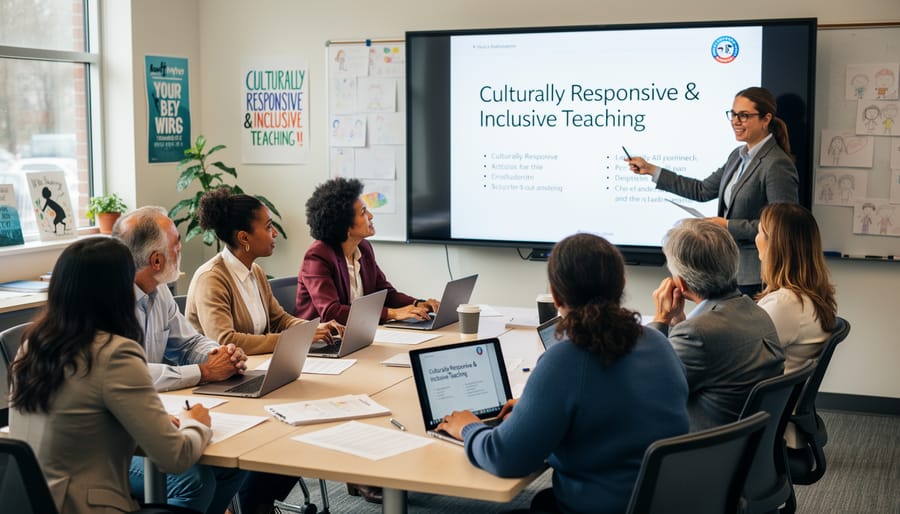
Core training areas include culturally responsive teaching practices that honor students’ diverse backgrounds and learning styles. You’ll explore how to recognize and address implicit bias in instruction, assessment, and student interactions. Workshops on inclusive pedagogy help you create learning environments where all students, including those with disabilities, feel valued and supported.
Many offices offer tiered training options, from introductory workshops to advanced certification programs. Interactive learning formats such as coaching circles, peer observation opportunities, and online modules let you engage with content in ways that fit your schedule and learning preferences.
These programs often integrate technology and inclusive practices, showing you how digital tools can support equitable access for diverse learners. Community forums connected to these trainings provide ongoing spaces to share challenges, celebrate successes, and learn from colleagues across your district who share your commitment to equity.
Family Engagement and Support
Building authentic partnerships with families, particularly those from historically underserved communities, stands as a cornerstone of equity work. An effective Office of Equity and Access recognizes that families are essential partners in their children’s education, bringing valuable insights about their child’s strengths, needs, and cultural context.
Successful family engagement goes beyond traditional parent-teacher conferences. Consider hosting community forums in accessible locations, offering interpretation services, and scheduling meetings at times that accommodate diverse work schedules. Create interactive tools like family resource guides that explain special education processes in plain language, translated into home languages.
Trust builds through consistent, respectful communication. Reach out to share positive updates, not just concerns. Welcome family input in IEP development by asking open-ended questions about their child’s growth and goals. When families have previously felt excluded from educational decision-making, extra effort to demonstrate genuine partnership makes a meaningful difference.
Remember that engagement looks different across cultures. Some families may prefer written communication, while others value face-to-face conversation. Flexibility and cultural responsiveness show families their voices truly matter in shaping their child’s educational journey.
What This Means for Your Classroom Tomorrow

Access to Better Resources and Support
When your school or district establishes an Office of Equity and Access, you gain a dedicated partner in building an inclusive classroom environment. This office typically provides educators with curated instructional materials that reflect diverse learning needs and cultural backgrounds, moving beyond one-size-fits-all approaches. You’ll find access to professional development opportunities specifically designed to strengthen your skills in differentiated instruction, culturally responsive teaching, and evidence-based interventions for students with disabilities.
Many offices create collaborative support structures like professional learning communities where you can connect with colleagues facing similar challenges. These communities often include interactive tools such as shared resource libraries and lesson planning templates that save you valuable time. Additionally, community forums allow you to exchange strategies and celebrate successes with educators across your district.
The office can also connect you with specialists who provide coaching and classroom-based support, helping you implement new strategies effectively. Rather than navigating equity challenges alone, you become part of a network committed to ensuring every student receives the high-quality education they deserve. This collaborative approach reduces feelings of isolation while building your confidence in serving all learners.
Clearer Pathways for Student Advocacy
When your students encounter systemic barriers to services, the Office of Equity and Access can serve as a powerful ally in your advocacy efforts. Rather than navigating complex district policies alone, you can partner with equity specialists who understand how to address institutional obstacles that prevent students from receiving appropriate support.
Start by documenting specific instances where students face delays or denials in accessing services. Note patterns you observe, such as certain student populations experiencing longer wait times for evaluations or particular schools lacking adequate resources. Bring this documentation to the Office of Equity and Access, where staff can help identify whether these issues reflect broader systemic problems requiring policy-level intervention.
The office can also provide you with data and research to strengthen your case when advocating for individual students or groups. They may facilitate conversations between families, educators, and district administrators to resolve access issues more efficiently. Additionally, many offices maintain resource libraries and host community forums where you can connect with other educators facing similar challenges, building collective knowledge about effective advocacy strategies. Remember, your observations from the classroom provide invaluable insight that helps equity offices identify and address gaps in service delivery.
Your Role in the Equity Journey
You don’t need to wait for a formal Office of Equity and Access to champion equity in your setting. Start by examining your own practices through an equity lens. Review your classroom materials and teaching strategies to ensure they represent diverse perspectives and learning styles. Consider which students might be overlooked in current identification processes for special education services.
Connect with colleagues to share observations and strategies. Many schools have discovered systemic issues simply through honest conversations among educators who care. Use your school’s existing community forums to raise questions about equity gaps you’ve noticed.
Take advantage of professional development opportunities focused on cultural responsiveness and inclusive practices. Even small changes, like diversifying your assessment methods or building stronger family partnerships, create meaningful impact. Document what works and share these successes with your administration.
Remember, equity work thrives on collective action. Your willingness to examine practices, ask questions, and try new approaches contributes to a larger movement toward educational justice for all students.
Building Your Own Equity Framework (Without an Office)
Start With Self-Reflection and Data
Begin by examining your own classroom or school environment through an equity lens. Ask yourself: Which students are thriving, and which are struggling? Are certain groups disproportionately represented in disciplinary actions or special education referrals? Do all families feel equally welcomed and heard?
Review your student outcome data with fresh eyes. Look for patterns in achievement gaps, attendance rates, and participation in advanced coursework. This information reveals where systemic barriers might exist, even when intentions are good.
Consider creating a simple self-assessment checklist covering your classroom materials, teaching strategies, and communication methods. Questions might include: Do my instructional materials represent diverse perspectives? Am I providing multiple ways for students to demonstrate learning? Have I reached out to families who seem less engaged?
Many districts offer anonymous surveys and data dashboards that help you identify trends. Take advantage of these resources, and don’t hesitate to reach out to colleagues through community forums to discuss what you’re discovering. Remember, identifying gaps isn’t about assigning blame—it’s about finding opportunities to better serve every student who walks through your door.
Create Grassroots Equity Teams
You don’t need formal approval to start making change happen in your school. Grassroots equity teams are informal groups of committed colleagues who meet regularly to discuss equity issues, share strategies, and support one another in creating more inclusive practices. Start small by inviting two or three fellow educators who share your commitment to equity to join you for monthly conversations about what you’re observing in your classrooms and schools.
These teams work best when they focus on specific, actionable goals. Perhaps you’ll examine discipline data together, review curriculum materials for bias, or practice inclusive language. Keep meetings informal and solution-focused, celebrating small wins along the way. Consider using a shared online document where team members can contribute resources, success stories, and questions between meetings.
As your team gains momentum, you’ll naturally attract others who want to be part of the solution. Remember, sustainable change often begins with passionate educators having honest conversations and supporting each other through the learning process.
Offices of Equity and Access hold transformative potential for special education, serving as catalysts for systemic change that ensures every student receives the support they deserve. Whether your district has a dedicated equity office or not, you possess the power to champion these principles in your daily practice. Start by advocating for equity-focused structures within your school or district, sharing successful models with administrators, and collaborating with colleagues who share your commitment to inclusive education.
Remember that building equity isn’t about achieving perfection overnight. Small, consistent steps create meaningful change. Begin by examining one policy or practice through an equity lens, engage in conversations about access barriers with families and colleagues, or join community forums where educators share strategies for supporting diverse learners. Each action contributes to a larger movement toward educational justice.
Your voice matters in shaping special education services. By staying informed, advocating for structural supports, and implementing equity-minded practices in your classroom, you become part of the solution. Together, we can transform special education into a system that truly honors every student’s potential and provides equitable opportunities for success.