
Every time a student rocks in their chair, spins during recess, or tilts their head while listening, their vestibular system is at work. This often-overlooked sensory processing system controls movement, balance, and spatial orientation—and it plays a surprisingly critical role in classroom learning. Located in the inner ear, the vestibular system detects changes in head position and motion, sending constant signals to the brain about where the body is in space. When this system functions smoothly, students can sit upright at their desks, navigate hallways without bumping into peers, and maintain focus during instruction. When it struggles, you might notice children who constantly fidget, avoid playground equipment, or seem clumsy and disorganized.
Understanding the vestibular system transforms how you support diverse learners. That student who cannot sit still may not be defiant—their nervous system may be seeking the movement input it needs to regulate attention. The child who refuses to participate in PE might be experiencing genuine discomfort from vestibular challenges, not simple reluctance. By recognizing these connections, you can create classroom environments that support rather than frustrate students with different sensory needs.
This knowledge empowers you to implement simple, effective strategies that help every student access learning. From flexible seating options to strategic movement breaks, small adjustments can make profound differences in student engagement, behavior, and academic success.
What Is the Vestibular System?

How the Vestibular System Works in the Classroom
The vestibular system works constantly throughout the school day, often without us even noticing. When students settle into their chairs at the start of class, their vestibular system helps them maintain an upright posture, keeping their heads stable so they can focus on instruction. This same system allows them to adjust their position when they start to slouch or need to shift their weight for comfort.
During transitions between classes, the vestibular system coordinates with other sensory systems to help students navigate hallways, climb stairs, and avoid bumping into peers. They’re processing information about speed, direction, and spatial awareness all at once. For some students, these busy transitions can feel overwhelming, which is why they might arrive at the next class needing a moment to settle.
Reading requires more vestibular input than many educators realize. As students track words across a page from left to right, their vestibular system helps stabilize their head position and coordinate smooth eye movements. Students with vestibular challenges may lose their place frequently or complain of words “jumping around” on the page.
Physical education class provides rich vestibular experiences through running, jumping, spinning, and balancing activities. These movements aren’t just fun—they’re helping students develop the foundational skills they need for classroom success. Even seemingly simple activities like catching a ball or walking along a balance beam require the vestibular system to process movement information and coordinate appropriate responses. Recognizing these connections helps you support students who struggle with these everyday classroom activities.
The Connection Between Movement, Balance, and Learning
Why Balance Matters for Reading and Writing
When students struggle with reading and writing, we often focus on phonics instruction or fine motor skills, but the vestibular system plays a surprisingly vital role that deserves our attention. This balance system provides the foundation that allows children to maintain the stable posture and controlled eye movements essential for academic success.
Think about what reading actually requires physically. Students must hold their head steady while their eyes track smoothly across lines of text, making quick jumps from word to word without losing their place. When the vestibular system functions well, it automatically stabilizes the head and coordinates eye movements, making this process effortless. However, students with vestibular challenges may experience text that appears to jump around on the page, or they may frequently lose their place, leading to frustration and avoidance of reading tasks.
Writing demands even more from the vestibular system. To form letters consistently, children need a stable shoulder and trunk, which serve as the anchor point for arm and hand movements. When a student’s core stability is compromised due to vestibular difficulties, you might notice inconsistent letter sizing, poor spacing, or excessive fatigue during writing activities.
The good news is that recognizing these connections empowers you to support struggling learners more effectively. Simple accommodations like allowing students to stand while working, providing slant boards for desktop writing, or incorporating brief movement breaks can make a significant difference. By understanding the vestibular foundation beneath these academic skills, you can create more inclusive learning environments where every student has the opportunity to succeed.
Movement’s Role in Attention and Focus
Movement isn’t just about physical exercise—it’s a powerful tool for helping students maintain optimal attention and focus throughout the school day. The vestibular system acts as your students’ internal regulation center, using movement input to keep their arousal levels balanced. When students receive appropriate vestibular input, they’re better able to stay alert during instruction without becoming restless or overwhelmed.
Think of the vestibular system as a thermostat for attention. Some students arrive at school in a low-arousal state—appearing sluggish or drowsy. These learners benefit from alerting movements like jumping, spinning, or quick position changes that wake up their nervous systems. Conversely, students who seem overstimulated or anxious often need calming vestibular input through slow, rhythmic movements like gentle swaying or rocking.
You’ve likely witnessed this regulation in action without realizing it. The student who bounces their leg during reading time or rocks in their chair during math isn’t necessarily being disruptive—they’re instinctively seeking the vestibular input needed to maintain focus. When we understand this connection, we can proactively build movement opportunities into our daily routines rather than constantly redirecting natural regulatory behaviors.
Research shows that even brief movement breaks can significantly improve attention span and task performance. Simple strategies like allowing students to stand while working, incorporating stretching between activities, or using flexible seating options provide the vestibular input many learners need to stay engaged and productive throughout your lessons.
Recognizing Vestibular Processing Challenges in Your Classroom
Signs of Over-Responsiveness to Movement
When students are over-responsive to vestibular input, they may demonstrate observable behaviors that signal discomfort or anxiety around movement activities. You might notice a child who consistently avoids playground equipment, particularly swings, slides, or climbing structures. These students often prefer to keep both feet firmly on the ground and may become visibly distressed when asked to participate in typical recess activities.
In the classroom, watch for students who seem uncomfortable when tilting their head back to look at the ceiling or down at their desk for extended periods. They may complain of dizziness during simple movements that other students handle easily. Motion sickness during bus rides or field trips is another common indicator, even on short journeys.
During physical education or movement-based learning activities, these students might display heightened anxiety, refuse to participate, or seek constant reassurance from adults. They may appear overly cautious, moving slowly and deliberately, always maintaining contact with stable surfaces. Some students might express their discomfort through tears, withdrawal, or behavioral resistance.
Understanding these signs helps you create supportive alternatives that honor each student’s sensory needs while gradually building their comfort and confidence with movement experiences. Small accommodations can make a significant difference in helping these learners feel safe and included.
Signs of Under-Responsiveness to Movement
When students are under-responsive to vestibular input, they often seek intense movement experiences to feel regulated and alert. You might notice these learners constantly fidgeting, rocking in their chairs, or finding reasons to get up and move around the classroom. They may appear to have boundless energy, frequently requesting physical tasks like running errands or helping carry materials.
Posture challenges are common indicators as well. These students might slump over their desks, lean heavily against walls, or seem unable to maintain an upright seated position without considerable effort. Their bodies may appear floppy or lacking muscle tone during group activities.
Safety concerns can arise when under-responsive students crash into furniture, bump into classmates, or engage in rough play without recognizing appropriate force levels. They might enjoy spinning, jumping, or climbing more intensely than their peers, sometimes appearing fearless in situations that warrant caution. Frequent falling or tripping, even in familiar environments, can also signal under-responsiveness.
Understanding these behaviors as sensory-seeking rather than deliberate misbehavior helps you respond with compassion and appropriate supports. These students aren’t trying to be disruptive—their nervous systems genuinely need more movement input to function optimally. Recognizing this distinction empowers you to create proactive strategies that meet their sensory needs while maintaining a productive learning environment for everyone.
Creating Movement-Friendly Learning Environments
Quick Movement Breaks That Support Balance and Focus
Integrating quick movement breaks throughout your school day doesn’t require elaborate planning or special equipment. These simple activities support students’ vestibular systems while refreshing their capacity for learning and engagement.
Start with cross-lateral movements that activate both sides of the brain. Have students touch their right elbow to their left knee, then switch sides, repeating for 30 seconds. Alternatively, try “lazy eights” where students trace large figure-eight patterns in the air with their arms, crossing the midline of their body. These movements strengthen the neural pathways that support brain plasticity and coordination.
Balance challenges offer another powerful option. Students can practice standing on one foot while counting backward from ten, or walk an imaginary tightrope across the classroom. For younger learners, animal walks like bear crawls or crab walks provide vestibular input while adding an element of play.
Stretching routines help reset focus between lessons. Guide students through simple sequences: reaching arms overhead, gentle neck rolls, or touching toes. Even seated stretches—shoulder shrugs, ankle circles, or torso twists—provide valuable sensory input.
Transition activities make movement purposeful. Instead of simply dismissing students to their next task, invite them to hop, skip, or walk backward to line up. You might designate different movement patterns for different transitions throughout the day.
These breaks typically take just one to three minutes but significantly impact student regulation and readiness to learn, creating a more supportive environment for all learners.

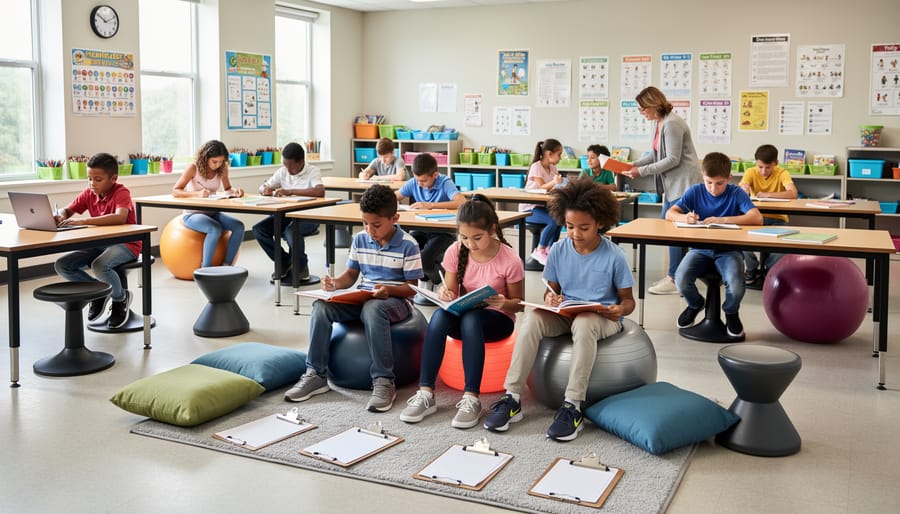
Flexible Seating and Movement Options
Introducing flexible seating options can transform your classroom into a movement-friendly environment that supports vestibular development. These alternatives allow students to shift positions throughout the day, providing the sensory input their bodies need while maintaining focus on learning tasks.
Wobble cushions are an excellent starting point because they’re affordable and easy to integrate. These inflated discs sit on regular chairs and create gentle, controlled movement that helps students stay alert without leaving their seats. They’re particularly beneficial during independent work or reading time.
Therapy balls offer similar benefits with increased movement potential. When introducing these, establish clear expectations about appropriate use. Consider starting with just a few balls for students who would benefit most, gradually expanding as the class becomes comfortable with the new options.
Standing desks or adjustable-height tables give students the choice to work while standing, which naturally engages core muscles and the vestibular system. If purchasing new furniture isn’t feasible, simple DIY solutions like book risers can create temporary standing stations.
Floor seating with clipboards or lap desks provides another low-cost alternative. Designate a specific classroom area with cushions or carpet squares where students can work in different positions—sitting cross-legged, kneeling, or lying on their stomachs.
For successful implementation, introduce one option at a time and co-create guidelines with your students. Allow a trial period where students can explore different seating choices during designated activities. Monitor which options work best for individual learners and adjust accordingly. Remember, what works for one student may not suit another—flexibility is the key to supporting diverse sensory needs.
Collaborating With Specialists for Student Success
As a classroom teacher, you’re in a unique position to observe how students navigate their learning environment every day. When you notice persistent challenges with balance, coordination, or responses to movement, it’s time to bring in the expertise of specialists who can provide targeted support.
Your role is to observe and document patterns, not to diagnose. Keep simple notes about what you’re seeing: Does a student consistently struggle during transitions? Do they avoid playground equipment? Are they seeking excessive movement or appearing unusually cautious? These observations become invaluable when shared with specialists like occupational therapists, physical therapists, or your school’s special education team.
Initiating collaboration starts with communication. Schedule a meeting with your school’s student support team to share your observations without labeling or diagnosing. Bring specific examples and any accommodations you’ve already tried. Many schools have referral processes for occupational therapy or physical therapy evaluations, and your documented observations can help determine if an assessment is warranted.
When working with families, approach conversations with curiosity and partnership. Share what you’re noticing in neutral, descriptive terms: “I’ve observed that Maya seems more comfortable when she can move during independent work time. Have you noticed similar patterns at home?” This opens dialogue without causing alarm and helps build a complete picture of the student’s needs.
Productive collaboration means regular check-ins with specialists, implementing their recommendations consistently, and providing feedback about what works in your classroom context. Remember, specialists bring clinical expertise, but you bring daily knowledge of your student’s learning patterns. Together, you create the most effective support system for helping students with vestibular processing differences thrive academically and socially.
Understanding the vestibular system opens doors to creating more inclusive and effective learning spaces for all students. When you recognize that movement and balance challenges aren’t about behavior or willpower, but about how a child’s sensory system processes information, you can respond with strategies that truly support their needs.
You don’t need to overhaul your entire classroom tomorrow. Start small. Introduce one movement break during your longest lesson. Add a wobble cushion to your reading corner. Notice what happens when students who struggle with sitting still are given permission to stand or sway. These seemingly minor adjustments can create significant positive changes in focus, engagement, and overall learning outcomes.
Your observations and experiences matter. We encourage you to explore our community forums where educators like you share successful strategies, troubleshoot challenges, and celebrate wins together. You’ll find interactive tools designed to help you identify vestibular activities that fit your specific classroom context and student needs.
Every student deserves an environment where their sensory system can support, rather than hinder, their learning. By taking these first steps, you’re making that vision a reality.