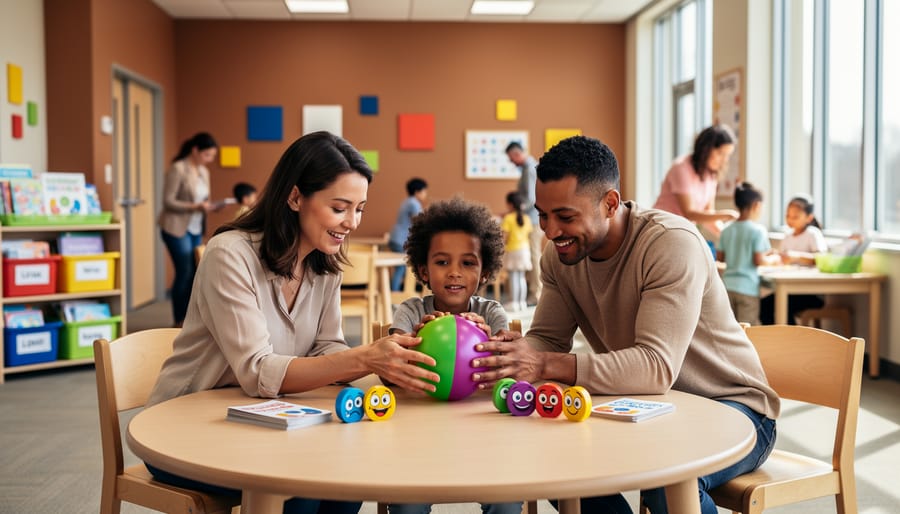
Transform traditional parent-teacher conferences into SEL conversation cafés where families rotate through stations focused on specific social-emotional skills their children are developing. Replace presentation-style meetings with hands-on activities parents and children complete together, like emotion charades or problem-solving challenges that mirror classroom practices.
Launch “SEL toolkit lending libraries” that send home curated activity kits for specific skills—managing frustration, building empathy, practicing mindfulness—complete with conversation starters and simple implementation guides. Include multilingual instructions and culturally responsive materials that honor diverse family structures and traditions.
Create digital engagement options that respect varying family schedules and comfort levels. Send brief video clips showing children using SEL strategies in action, followed by a single reflection question parents can respond to via text or email. This low-barrier approach meets families where they are rather than requiring them to come to you.
Establish family SEL champions—parents who facilitate peer-to-peer connections and share what works in their homes. These champions bridge the gap between school and community, making engagement feel less intimidating for hesitant families while building sustainable support networks.
The persistent challenge of meaningful parental engagement stems not from lack of caring but from misaligned approaches. When you shift from asking parents to attend another evening event to integrating SEL into existing family rhythms, participation naturally increases. The strategies ahead provide practical pathways to build authentic partnerships that strengthen children’s social-emotional development both at school and home.
What Makes SEL-Based Parent Engagement Different
Traditional parent engagement often follows a familiar pattern: schedule an event, send home flyers, present information, and hope families show up. While well-intentioned, this approach frequently falls short because it positions parents as passive recipients rather than active partners in their children’s growth.
SEL-based parent engagement flips this script entirely. Instead of simply delivering information about social-emotional learning, these activities create opportunities for families to experience and practice SEL skills together. The focus shifts from talking at parents to building with them—fostering genuine connections between home and school while strengthening the emotional bonds within families themselves.
This approach recognizes that parents don’t just need to know about emotional regulation or relationship skills; they benefit from developing these competencies alongside their children. When a family participates in an emotion-charades activity together, they’re not just learning vocabulary—they’re creating shared language and experiences they can reference at home. When parents practice active listening techniques during a workshop, they walk away with tools they can use that same evening.
The difference also lies in how we measure success. Traditional events count attendance numbers and survey satisfaction. SEL-focused activities evaluate deeper outcomes: Are families reporting stronger connections? Are parents feeling more confident supporting their children’s emotional development? Are students demonstrating SEL skills more consistently across settings?
Building these meaningful experiences requires effective communication strategies that invite rather than inform, that listen rather than lecture. It means designing activities where vulnerability is welcomed, diverse family structures are celebrated, and every participant—whether parent, educator, or student—learns something valuable about themselves and each other.
This fundamental shift transforms parent engagement from an obligatory school function into a genuine community-building experience.
Core Activities That Bring SEL and Parents Together
Family Emotion Check-In Workshops
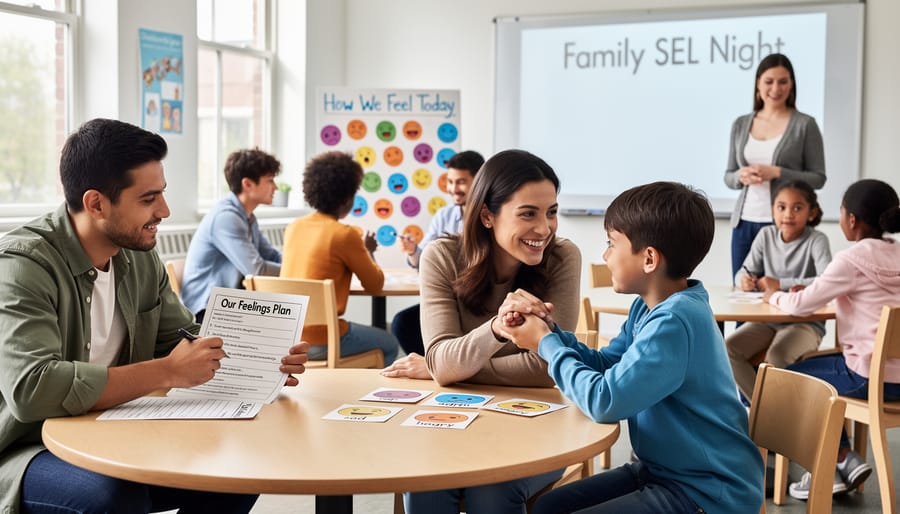
These interactive workshops create safe spaces where families explore emotions together, building essential skills that extend far beyond the classroom. Rather than presenting information lecture-style, these sessions invite parents and children to actively participate in activities that strengthen their emotional awareness and communication.
Start each workshop with simple, engaging exercises like the feelings charades game, where family members act out different emotions while others guess. This immediately breaks the ice and helps everyone—adults and children alike—recognize that talking about feelings can be fun rather than intimidating. Follow with guided discussions using emotion wheels or feeling cards, teaching families a shared vocabulary for identifying what they’re experiencing internally.
The real power lies in practicing regulation strategies together. Introduce techniques like the 5-4-3-2-1 grounding method, deep breathing exercises, or creating personal calm-down plans. When parents learn alongside their children, they model vulnerability and lifelong learning while discovering tools they can use themselves during stressful moments.
Equip families with take-home resources that keep the learning alive: emotion check-in charts for the refrigerator, feeling journals, or conversation starter cards for family dinners. Consider creating a simple digital guide or video demonstrations that parents can reference when they need a reminder.
Schedule these workshops quarterly to build momentum and allow families to report back on what’s working at home, creating a supportive community of practice.
Parent-Child Mindfulness and Connection Activities
Mindfulness activities offer powerful opportunities for parents to connect with their children while learning valuable skills they can practice together at home. Consider hosting brief mindfulness workshops where parents and children practice side-by-side, experiencing firsthand how these techniques support emotional regulation and strengthen relationships.
Start with simple breathing exercises like “balloon breathing,” where families place hands on their bellies and imagine inflating a colorful balloon with each breath. Teach “body scan” techniques where parents guide children through noticing sensations from head to toe, promoting present-moment awareness. Gratitude circles work beautifully, with families sitting together and sharing one thing they appreciate about each other or their day.
Movement-based activities like mindful walking, where pairs notice five things they see, four they hear, three they touch, two they smell, and one they taste, engage multiple senses while encouraging conversation. “Emotion charades” helps families recognize and name feelings in a playful, non-threatening way.
Provide take-home cards with simple instructions and suggested practice times, making it easy for families to continue these activities during car rides, bedtime routines, or weekend mornings. When parents experience these calming techniques themselves rather than just hearing about them, they’re far more likely to integrate them into daily family life, creating lasting impact beyond your classroom walls.

SEL Storytelling and Discussion Circles
Storytelling and discussion circles create meaningful spaces for families to connect around social-emotional themes while building community. These structured conversations help parents see themselves as partners in developing their children’s emotional intelligence, moving beyond abstract SEL concepts to shared experiences.
Start with age-appropriate prompts that invite families to share real stories. For elementary families, try “Tell us about a time your family showed kindness to someone new” or “Share a moment when you had to solve a problem together.” Middle and high school circles might explore “A time when standing up for something mattered” or “How our family navigates disagreement.”
Structure these circles with clear guidelines to ensure psychological safety. Opening rituals like passing a talking piece help establish respect, while ground rules about confidentiality and non-judgment create trust. Consider rotating facilitators among parents to distribute leadership and honor diverse voices.
Make participation accessible by offering multiple formats. Some families thrive in evening gatherings with refreshments, while others prefer virtual circles that eliminate transportation barriers. Recording sessions (with permission) allows those who couldn’t attend to engage asynchronously through online community forums.
Follow each circle with reflection activities families can continue at home—journal prompts, conversation starters, or creative projects. This extends learning beyond the event and gives parents practical tools for ongoing SEL conversations. Track which themes resonate most through informal feedback to shape future circles around genuine family interests.
Collaborative Goal-Setting Sessions
Goal-setting sessions transform abstract social-emotional learning concepts into tangible family commitments. These structured activities invite parents and children to collaborate on identifying specific areas for growth while building stronger connections.
Start by creating a comfortable environment where families can openly discuss emotions, friendships, and challenges. Provide simple goal-setting templates that break down larger aspirations into achievable steps. For younger students, use visual aids like feeling charts or scenario cards that spark conversation. Older students might benefit from reflection prompts about self-management or relationship skills they want to develop.
As an educator, your role is to facilitate rather than direct. Circulate among families, offering guiding questions like “What would success look like?” or “How can you support each other at home?” Help them identify one concrete goal—perhaps managing frustration during homework time or making new friends—and develop a realistic action plan together.
Consider offering these sessions during flexible times, including evening or weekend options. Some families might appreciate virtual participation if in-person attendance poses barriers. Provide take-home materials summarizing their goals and suggested check-in dates.
The beauty of collaborative goal-setting lies in shared accountability. When children see their parents invested in the process, they understand that social-emotional growth matters beyond the classroom. Parents gain practical strategies for supporting development at home, moving beyond simply asking “How was school today?” to meaningful conversations about progress and challenges.
Making SEL Activities Accessible to All Families
Flexible Formats for Busy Parents
Not every parent can attend daytime events or feels comfortable with large group settings, and that’s perfectly okay. The key to meaningful engagement lies in offering multiple pathways that meet families where they are, both literally and figuratively.
Virtual options have become essential tools in your engagement toolkit. Host evening video check-ins where parents can join from home to discuss SEL strategies, or create recorded mini-workshops that families can watch on their own schedule. These digital communication tools remove transportation barriers and allow parents working multiple shifts to participate meaningfully.
Asynchronous activities work beautifully for time-strapped families. Consider creating a monthly SEL challenge board in your school’s app where parents complete simple activities with their children and share photos or reflections when convenient. Weekly email prompts with conversation starters about emotions or problem-solving give parents concrete ways to engage without requiring event attendance.
Weekend workshops and Saturday morning drop-in sessions capture families who can’t make weekday commitments. Keep these informal and welcoming—coffee and conversation formats often feel less intimidating than structured presentations.
Brief hallway connections matter too. Five-minute morning meet-ups before school or quick afternoon chats during pickup create touchpoints for parents who need flexibility. These micro-engagements build relationships that support deeper involvement over time, honoring the reality that meaningful participation looks different for every family.
Culturally Responsive SEL Engagement
When designing SEL activities that truly connect with all families, start by recognizing that emotional expression, family structure, and relationship dynamics vary significantly across cultures. What feels supportive in one context might feel intrusive in another, so flexibility is essential.
Begin by learning about your families’ backgrounds through simple interest surveys or informal conversations. Ask open-ended questions about how emotions are typically discussed at home, who makes decisions about children’s wellbeing, and what family time looks like. This information helps you shape activities that feel natural rather than foreign.
Offer multiple participation formats. Some families prefer group discussions, while others are more comfortable with written reflections or one-on-one conversations. Consider activities like family storytelling circles where parents share wisdom from their own upbringing, or creating emotion vocabulary walls in multiple languages that honor different ways of naming feelings.
Implementing culturally responsive practices means adapting SEL frameworks rather than abandoning them. The core principles of self-awareness, relationship building, and responsible decision-making are universal, but their expression varies. For example, some cultures emphasize collective harmony over individual expression, which doesn’t diminish SEL—it simply shapes how you present it.
Partner with cultural liaisons or respected community members who can help translate not just language, but context. They’ll help you avoid unintentional missteps and identify authentic entry points for engagement. Remember, the goal isn’t perfect cultural competence immediately, but ongoing learning and adaptation that makes every family feel genuinely valued.
Building Your SEL Parent Engagement Program
Starting With One Activity
Starting small is often the key to building sustainable parent engagement. Instead of launching multiple initiatives at once, choose one activity that aligns with your community’s specific needs and your available resources. Consider what already works in your school environment. If families respond well to take-home materials, begin with SEL activity kits. If you have strong digital communication channels, try a virtual coffee chat about managing emotions at home.
Before rolling out your chosen activity, identify 3-5 parent volunteers willing to provide honest feedback. These early partners become invaluable in shaping future efforts. After your pilot event, create a simple feedback mechanism—a brief survey with both rating scales and open-ended questions works well. Ask what felt valuable, what barriers they encountered, and what they’d like to see next time.
Pay attention to participation patterns. Which families attended? Who was missing? What time of day worked best? This data helps you refine your approach before expanding. Don’t be discouraged if your first attempt doesn’t go perfectly. Every educator who has built successful family engagement started exactly where you are now.
Use what you learn to make one or two meaningful adjustments. Perhaps you need to offer childcare, provide materials in additional languages, or shift to weekend timing. Once you’ve refined your initial activity and see consistent engagement, you’re ready to add a second offering. This measured approach prevents burnout and builds confidence—both yours and your parent community’s—creating a foundation for long-term partnership in supporting students’ social-emotional growth.
Growing Your Program Strategically
Once your initial activities gain traction, you’ll want to expand thoughtfully rather than spreading resources too thin. The key is leveraging what’s already working in your school community.
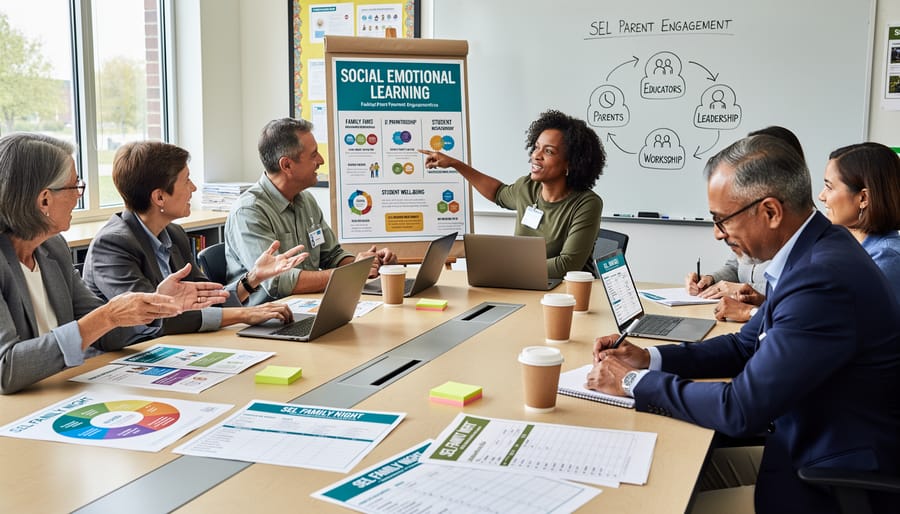
Start by identifying parent champions—those engaged families who’ve responded positively to your early efforts. These parents can become informal ambassadors, sharing their experiences with other families and helping newer parents feel welcome. Consider creating a simple parent advisory group that meets quarterly to provide feedback and generate ideas. Their authentic voices often resonate more powerfully with hesitant families than official school communications.
Collaborate intentionally with your colleagues to avoid duplication and maximize impact. When the math teacher plans family learning nights and the counselor organizes SEL workshops, coordinate schedules and themes so families aren’t overwhelmed. Staff collaboration also means sharing the workload—you don’t need to lead every initiative yourself. Different team members bring unique strengths and connections to various family groups.
Integration is your growth multiplier. Rather than creating separate parental engagement events, weave family participation into existing school functions. Add a brief social-emotional learning component to back-to-school nights, incorporate parent reflection activities into student conferences, or include family resources in your regular newsletters. Use communication channels parents already check—whether that’s text reminders, class apps, or weekly folders—to share quick engagement tips.
Remember, sustainable growth happens gradually. Focus on deepening relationships with families who are participating while gently expanding your reach. Quality connections matter more than impressive attendance numbers, and strategic integration ensures your program becomes part of your school’s culture rather than an added burden.
Measuring What Matters in Parent Engagement
Moving beyond the traditional sign-in sheet opens up meaningful insights into the true health of your parent engagement efforts. When you shift your focus from counting heads to understanding hearts, you create opportunities to strengthen the relationships that genuinely support student growth.
Start by implementing quick connection surveys after engagement activities. Ask parents simple questions about their comfort level discussing social-emotional topics with their child, or whether they feel more confident supporting their student’s emotional development. These relationship indicators reveal far more than attendance data ever could.
Consider creating a family connection tracker where teachers note positive interactions with families—phone calls, notes home, or informal conversations. This helps identify which families might need additional outreach and celebrates the strengthening bonds already forming.
Gathering parent feedback through brief, accessible formats like text message polls or one-question emails makes assessment manageable. Focus on questions that matter: Do parents feel welcomed at school? Do they know how to continue SEL conversations at home? Have they noticed positive changes in their child?
You might also track the quality of home-school communication by monitoring response rates to teacher outreach or noting how many families actively share observations about their child’s progress. When parents initiate conversations about their student’s emotional wellbeing, you know your engagement efforts are working.
Remember, meaningful measurement doesn’t require complex data systems. Simple, consistent tracking of these relationship-focused indicators will guide your continuous improvement far better than attendance rosters alone.
Meaningful parent engagement doesn’t require elaborate programs or expensive resources. What truly matters is creating opportunities where families feel emotionally connected to their child’s learning journey and walk away with practical tools they can use at home. When parents understand that their involvement directly supports their child’s social-emotional growth, they’re more likely to participate authentically and consistently.
You’ve explored a range of SEL-based activities throughout this article, from emotion check-ins to family goal-setting sessions. The beauty of these approaches is that they meet families where they are, honoring diverse backgrounds and circumstances while building genuine partnerships. Rather than feeling overwhelmed by implementing everything at once, consider starting small. Choose one activity that resonates with your school community’s unique needs and give it a try.
Perhaps you’ll launch monthly emotion charades nights, create a gratitude wall where families contribute together, or establish a simple home practice like bedtime reflections. Whatever you choose, approach it with flexibility and openness to feedback. Pay attention to what works and what needs adjustment.
We encourage you to share your experiences, challenges, and successes with fellow educators through online community forums dedicated to SEL and family engagement. Your insights can inspire others, and you’ll gain valuable perspectives from colleagues navigating similar journeys. Remember, every small step toward meaningful connection counts. The families you serve are waiting for these opportunities to engage in ways that truly matter. Take that first step today.