Metacognition – thinking about thinking – transforms ordinary classrooms into powerful learning laboratories where students take charge of their own educational journey. When students understand how they learn, they become active architects of their knowledge rather than passive recipients of information. Research consistently shows that students who develop strong metacognitive skills achieve higher academic performance, demonstrate better problem-solving abilities, and exhibit increased motivation to learn across all subject areas.
Today’s educators face the exciting challenge of building these essential thinking skills while managing diverse learning needs and increasing academic demands. By integrating metacognitive strategies into daily instruction, teachers empower students to monitor their comprehension, evaluate their learning approaches, and make strategic adjustments that lead to deeper understanding. This self-directed learning approach not only improves academic outcomes but also develops critical life skills that serve students well beyond their school years.
As we explore the powerful impact of metacognition in education, we’ll examine practical strategies that help students become more self-aware learners, effective problem-solvers, and independent thinkers. Whether you’re a veteran teacher looking to enhance your instructional toolkit or a new educator seeking to build a strong foundation for student success, understanding and implementing metacognitive practices can revolutionize your classroom dynamics and student achievement levels.
Understanding Metacognition in the Classroom

The Three Pillars of Metacognitive Learning
Metacognitive learning rests on three fundamental pillars that work together to create successful learning experiences: planning, monitoring, and evaluating. These pillars form a dynamic cycle that empowers students to take control of their learning journey.
Planning involves setting clear learning goals, choosing appropriate strategies, and allocating resources effectively. Teachers can guide students in this phase by helping them create study schedules, break down complex tasks, and identify the tools they’ll need for success.
Monitoring is the ongoing process of checking understanding and progress during learning activities. Students learn to ask themselves questions like “Am I on the right track?” and “What’s working well?” This real-time awareness helps them adjust their approach when needed and stay focused on their goals.
Evaluation comes after learning activities, when students reflect on their performance and strategy effectiveness. This final pillar helps learners understand what worked, what didn’t, and how they can improve next time. Teachers can facilitate this process through guided reflection exercises and constructive feedback sessions.
By incorporating these three pillars into daily classroom practices, educators create an environment where students develop stronger learning skills and greater academic independence.
Why Metacognition Matters for Student Success
Research consistently shows that metacognition plays a crucial role in student achievement across all grade levels. When students understand how they learn and can monitor their thinking processes, they become more effective learners. Studies indicate that students who employ metacognitive strategies demonstrate improved problem-solving abilities, better retention of information, and higher academic performance.
One of the most significant benefits is the development of self-directed learning skills. When students can reflect on their learning processes and adapt their strategies to meet diverse learning needs, they become more independent and confident learners. This self-awareness helps them identify when they need additional support and how to seek it effectively.
Furthermore, metacognitive practices enhance critical thinking skills and promote deeper understanding of subject matter. Students who regularly engage in metacognitive reflection are better equipped to transfer knowledge across different contexts and subjects. They’re more likely to recognize patterns, make connections, and apply previous learning to new situations. This not only improves academic outcomes but also prepares students for lifelong learning and real-world problem-solving challenges.
Practical Metacognitive Strategies for K-12 Teachers
Think-Aloud Protocols
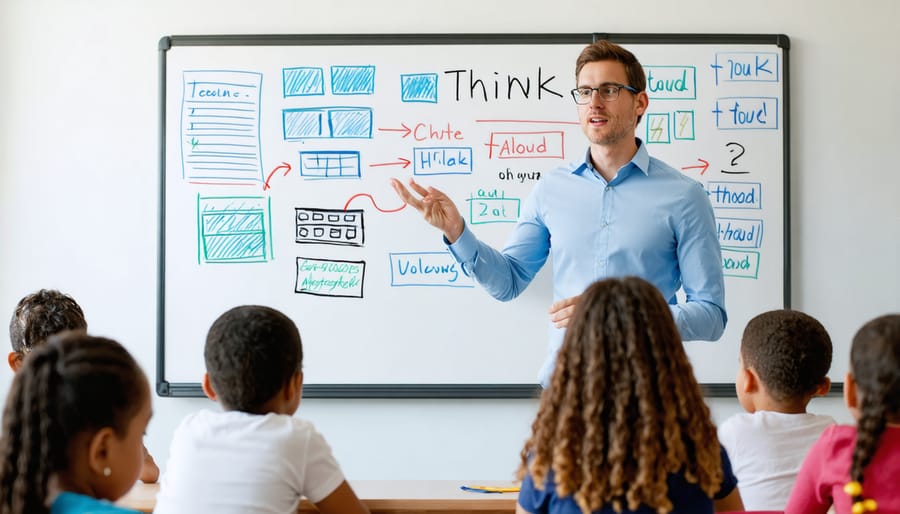
Think-aloud protocols are powerful teaching tools that make metacognitive processes visible to students. When teachers model their thinking out loud while solving problems or reading texts, they demonstrate the internal dialogue that skilled learners use. For example, a teacher might say, “I notice this word is unfamiliar. Let me look at the context clues to figure out its meaning” or “Before I solve this math problem, I need to identify what information is important.”
This strategy helps students understand that learning isn’t just about getting the right answer—it’s about the thinking process itself. Teachers can gradually release responsibility by having students practice think-alouds in pairs or small groups before doing them independently. This scaffolded approach builds confidence and develops metacognitive habits.
To implement think-alouds effectively, start with simple tasks and progress to more complex ones. Encourage students to verbalize their thoughts using sentence starters like “I’m wondering…” or “This reminds me of…” Record and analyze these sessions to help students reflect on their thinking strategies and identify areas for improvement.
Learning Journals and Reflection Tools
Learning journals and reflection tools serve as powerful instruments for developing students’ metacognitive skills. These tools create structured opportunities for students to think about their learning process and track their progress over time.
A simple yet effective approach is implementing daily learning logs where students spend the last five minutes of class answering prompts like “What did I learn today?” and “What questions do I still have?” These brief reflections help students process new information and identify areas needing clarification.
Digital portfolios offer another valuable platform for reflection, allowing students to document their learning journey through text, images, and video entries. Students can review their work over time, noting patterns in their learning style and tracking improvement.
Exit tickets provide quick reflection opportunities, asking students to summarize key concepts or identify challenging aspects of the lesson. Teachers can use these responses to adjust instruction and support individual learning needs.
For younger students, visual reflection tools like learning maps or traffic light self-assessment cards make metacognitive practice more accessible and engaging. These concrete tools help students develop the habit of thinking about their thinking in an age-appropriate way.
Self-Assessment Techniques
Self-assessment is a powerful metacognitive tool that helps students take ownership of their learning journey. Teachers can guide students through several effective techniques to evaluate their understanding and progress. Learning journals are an excellent starting point, where students regularly record what they’ve learned, what confused them, and their strategies for improvement.
The “traffic light” method is particularly effective with younger students – they rate their understanding using green (fully understand), yellow (somewhat clear), or red (need help). This visual approach helps both students and teachers quickly identify areas needing attention.
Exit tickets provide another valuable self-assessment opportunity. At the lesson’s end, students answer brief questions about their comprehension and identify concepts they’d like to review further. Additionally, rubric-based self-evaluation encourages students to assess their work against clear criteria, developing their ability to recognize quality work.
To make self-assessment meaningful, teachers should model the process and provide regular opportunities for practice. When students become comfortable evaluating their learning, they develop stronger metacognitive skills and become more independent learners.
Goal-Setting and Progress Monitoring
Goal-setting empowers students to take ownership of their learning journey while developing crucial metacognitive skills. Teachers can guide students in creating SMART goals (Specific, Measurable, Achievable, Relevant, and Time-bound) that align with their academic aspirations and personal growth objectives.
Effective progress monitoring involves teaching students to regularly assess their understanding, track their advancement, and adjust their strategies when needed. Simple tools like learning journals, progress charts, and self-assessment rubrics help students visualize their growth and identify areas needing attention.
Consider implementing these practical approaches:
– Have students maintain a weekly learning log where they record their goals, strategies used, and reflections on their progress
– Use visual progress trackers that students can update after completing specific learning milestones
– Schedule regular check-ins where students can discuss their goals and challenges with peers or teachers
– Encourage students to create action plans when they encounter learning obstacles
Remember to celebrate both small wins and significant achievements, as this reinforces the value of goal-setting and motivates students to continue their metacognitive practice. Regular feedback and guidance help students refine their goal-setting abilities and develop lifelong learning habits.

Implementing Metacognitive Strategies Across Subjects
Mathematics and Science
In mathematics and science education, metacognitive strategies play a crucial role in developing students’ analytical thinking and problem-solving abilities. Teachers can implement math problem-solving strategies that encourage students to think about their thinking process, rather than just focusing on getting the right answer.
One effective approach is the “Think Aloud” method, where students verbalize their thought process while solving problems. This helps them become aware of their reasoning patterns and identify areas where they might be struggling. Teachers can model this behavior by demonstrating their own problem-solving thought process, making their metacognitive strategies visible to students.
For science investigations, students can benefit from maintaining reflection journals where they document their hypotheses, observations, and conclusions. This practice helps them track their understanding and identify gaps in their knowledge. Additionally, using structured questioning techniques, such as “What do I already know about this topic?” and “How can I approach this problem differently?” encourages students to actively monitor their comprehension.
Visual organizers, like concept maps and flow charts, help students organize their thoughts and see connections between different concepts. These tools support metacognitive development by making abstract thinking processes more concrete and visible, enabling students to better understand and control their learning journey.
Language Arts and Social Studies
Language Arts and Social Studies classrooms offer rich opportunities for metacognitive development through reading comprehension and historical analysis. When students engage with literature or historical texts, they can practice monitoring their understanding, making connections, and evaluating different perspectives.
In reading comprehension, effective metacognitive strategies include having students pause periodically to summarize what they’ve read, predict what might happen next, and identify areas of confusion. Teachers can guide students to ask themselves questions like “What’s the main idea here?” or “How does this connect to what I already know?” These self-reflective practices help students become more aware of their reading process and better equipped to address comprehension challenges.
For Social Studies, metacognitive approaches can enhance critical thinking about historical events and cultural perspectives. Students can learn to question their assumptions, consider multiple viewpoints, and evaluate the reliability of sources. Simple techniques like maintaining a “thinking journal” or using “I used to think… Now I think…” statements help students track their evolving understanding of complex social and historical concepts.
Interactive discussions and group activities further reinforce metacognitive skills. Having students explain their thinking processes to peers not only strengthens their own understanding but also exposes them to different problem-solving approaches. Teachers can facilitate these exchanges by modeling metacognitive thinking aloud and providing structured reflection opportunities throughout lessons.
Measuring Success and Overcoming Challenges
Measuring the effectiveness of metacognitive strategies requires both quantitative and qualitative assessment approaches. Teachers can track progress through student self-reflection journals, metacognitive questionnaires, and performance rubrics that specifically evaluate students’ thinking processes. Regular check-ins using “think-aloud” protocols can reveal how students approach cognitive challenges in learning and help identify areas for improvement.
Common implementation challenges include initial resistance from students who are unfamiliar with metacognitive practices, time constraints within busy curricula, and varying levels of student engagement. To overcome these obstacles, start with small, manageable metacognitive activities and gradually increase their complexity. Create a supportive classroom environment where mistakes are viewed as learning opportunities, and students feel comfortable discussing their thinking processes.
Success indicators might include:
– Improved test scores and assignment quality
– Enhanced problem-solving abilities
– Greater student independence in learning
– More meaningful class discussions
– Increased student confidence and self-awareness
When students struggle with metacognitive strategies, consider:
– Breaking down complex tasks into smaller steps
– Providing concrete examples of successful metacognitive thinking
– Using peer modeling to demonstrate effective strategies
– Offering targeted feedback that focuses on thinking processes
– Adjusting the pace of implementation based on student readiness
Regular assessment helps teachers fine-tune their approach and ensure that metacognitive strategies are effectively supporting student learning. Keep detailed records of what works well and what needs adjustment, and share successful practices with colleagues to build a collaborative support network within your school community. Remember that developing metacognitive skills is a gradual process, and celebrating small victories helps maintain momentum and motivation for both teachers and students.
Implementing metacognitive strategies in your classroom is a transformative journey that benefits both educators and students. By incorporating these evidence-based practices into daily instruction, you create an environment where students become active participants in their learning process, developing critical thinking skills that extend far beyond the classroom.
Remember that successful implementation doesn’t happen overnight. Start small by introducing one or two strategies at a time, allowing both you and your students to become comfortable with the process. Pay attention to how different approaches work with various learning styles and be prepared to adapt methods to meet your students’ unique needs.
The power of metacognition lies in its versatility across subjects and grade levels. Whether you’re teaching mathematics, literature, or science, these strategies can enhance understanding and retention while fostering independence in learning. As you continue to explore and implement these approaches, share your experiences with colleagues and participate in professional development opportunities to refine your practice.
Your commitment to developing metacognitive skills in your students today will empower them to become lifelong learners tomorrow. Take the first step by choosing one strategy to implement in your next lesson, and watch as your students grow into more reflective, self-aware learners.