Art education in elementary grades forms the cornerstone of creative thinking, problem-solving, and self-expression that students carry throughout their academic journey. A well-designed K-5 art curriculum transcends traditional crafting activities to develop critical cognitive skills, cultural awareness, and cross-disciplinary connections that enhance overall learning outcomes.
Modern elementary art education integrates STEAM principles, digital tools, and inclusive teaching practices to create engaging experiences that resonate with diverse learners. By incorporating both traditional mediums and contemporary techniques, educators can build a foundation that nurtures artistic confidence while supporting core academic objectives.
Research consistently demonstrates that strong elementary art programs improve student performance across subjects, enhance fine motor skills, and foster emotional intelligence. Through structured yet flexible curriculum planning, teachers can create art experiences that align with grade-level standards while allowing for creative exploration and personal growth.
The most effective K-5 art curricula balance skill development with creative freedom, incorporating age-appropriate projects that build sequentially from kindergarten through fifth grade. This systematic approach ensures students develop both technical proficiency and artistic voice while maintaining the joy of creative discovery that makes art education transformative.
Building Strong Foundations: Core Art Skills for K-5 Students

Grade-Level Art Milestones
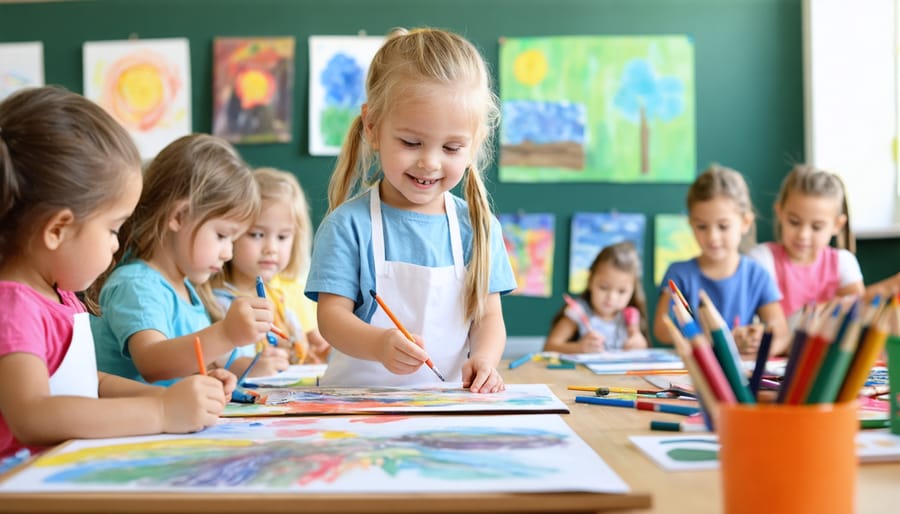
Students develop artistic skills progressively throughout their elementary education. In kindergarten, children focus on basic color recognition, simple shape drawing, and developing fine motor skills through activities like finger painting and clay manipulation.
First-grade students advance to mixing primary colors, creating basic patterns, and exploring different art materials. They begin understanding basic art vocabulary and can follow simple step-by-step instructions.
Second-grade artists start incorporating texture and form into their work, learning about art from different cultures, and developing more sophisticated color theory understanding. They begin working with various tools confidently.
In third grade, students explore perspective, proportion, and depth. They create more detailed compositions and start developing their unique artistic style while learning about famous artists and art movements.
Fourth-grade milestones include mastering techniques in multiple mediums, understanding complex color relationships, and creating artwork that conveys specific emotions or messages.
Fifth-grade students synthesize their accumulated skills to create sophisticated multimedia projects, demonstrate advanced problem-solving in their artistic process, and critically analyze artwork using proper terminology.
Cross-Curricular Integration Points
Art education offers numerous opportunities to enhance learning across multiple subjects, creating engaging collaborative learning environments. When studying history, students can create period-specific artwork or explore artistic styles from different civilizations. Mathematics naturally integrates through geometric patterns, symmetry, and proportion in art projects. Science connections emerge through color theory experiments, understanding light and shadow, and exploring natural materials in artwork. Language arts benefit from visual storytelling, illustration projects, and descriptive writing about artworks. Music appreciation pairs wonderfully with visual arts through rhythm, movement, and emotional expression in both mediums. Cultural studies become more meaningful when students create art inspired by diverse traditions and customs. These cross-curricular connections not only reinforce learning in other subjects but also help students understand art’s relevance in their daily lives and future careers. Consider planning projects that align with current units in other subjects to maximize learning impact and student engagement.
Designing Your Year-Long Art Curriculum
Seasonal and Theme-Based Projects
Incorporating seasonal and thematic art projects into your K-5 curriculum creates meaningful connections between art education and students’ lived experiences. Start by aligning projects with major holidays, cultural celebrations, and school events throughout the academic year. For fall, consider projects like leaf printing, harvest-themed mixed media, or Halloween mask-making. Winter offers opportunities for snowflake designs, holiday crafts, and cool-color studies.
Spring projects might include flower studies, garden-inspired sculptures, or Earth Day recycled art installations. Beyond seasons, integrate art projects with school-wide themes, such as multicultural awareness months, science fairs, or literary celebrations. These connections can be enhanced using digital learning tools to explore virtual museums or create digital art galleries.
Remember to maintain flexibility in your planning to accommodate diverse cultural perspectives and celebrations. Consider creating a yearly planning calendar that highlights key dates and themes, allowing for both structured projects and spontaneous creative opportunities. This approach helps students understand art’s role in celebrating and documenting important moments while developing their technical skills and creative expression. Include collaborative projects that bring together different grade levels and encourage community involvement, making art education a shared experience that extends beyond the classroom walls.
Assessment Strategies
Effective assessment in K-5 art education combines traditional evaluation methods with modern interactive assessment strategies to capture each student’s artistic development comprehensively. Portfolio development serves as a cornerstone, allowing students to collect and reflect on their work throughout the year, demonstrating growth and creative progression.
Rubrics tailored to specific projects help students understand expectations while providing clear evaluation criteria for teachers. These should incorporate both technical skills and creative expression components, ensuring a balanced assessment approach. Regular observation and documentation of student engagement, problem-solving abilities, and collaborative skills provide valuable insights into their artistic development.
Self-assessment opportunities encourage students to think critically about their work and artistic choices. Simple reflection sheets or group discussions can help young artists articulate their creative decisions and learning experiences. Peer feedback sessions, when properly structured, foster constructive dialogue and help students develop vocabulary for discussing art.
Digital documentation through photographs or videos of student work and creative processes creates a dynamic record of achievement. This approach particularly benefits process-based projects where the final product may not tell the complete story of learning and growth. Regular check-ins during project work allow teachers to provide timely guidance and support while gathering formative assessment data.
Essential Art Materials and Resources
Budget-Friendly Supply Lists
Creating an art-friendly classroom doesn’t have to break the bank. For grades K-2, start with essential supplies like crayons, washable markers, construction paper, child-safe scissors, and white glue. Consider buying in bulk during back-to-school sales to maximize savings. Add colored pencils, watercolor sets, and modeling clay to round out your basic supplies.
For grades 3-5, expand your inventory to include oil pastels, tempera paint, paintbrushes in various sizes, and drawing paper. Look for multi-pack options and teacher discounts at art supply stores. Don’t overlook everyday items that can become art materials: newspaper for papier-mâché, cardboard for sculptures, and recyclable materials for mixed media projects.
Money-saving tips:
– Partner with local businesses for material donations
– Create a classroom supply donation wishlist
– Share bulk purchases with other teachers
– Store and reuse materials properly
– Use natural materials like leaves and stones
– Request parent contributions at the start of the year
Remember to keep a small emergency supply fund for special projects or replacing frequently used items throughout the year.
Organization and Storage Solutions
Effective organization of art supplies and student work is crucial for maintaining a productive and creative classroom environment. Create designated storage zones using clear, labeled containers for different materials, making it easy for students to both access and return supplies independently. Consider implementing a color-coding system for different media types, such as blue bins for drawing materials and red bins for painting supplies.
For student artwork storage, use portable drying racks and flat files to protect works in progress. Set up a portfolio system where each student has a dedicated folder or container for storing completed works. This not only keeps artwork safe but also helps track progress throughout the year.
Establish clear routines for materials distribution and cleanup. Assign student helpers weekly roles as “art supply managers” to assist with distribution and organization. Create an efficient system for artwork display by installing adjustable hanging systems or dedicating wall space for rotating galleries.
Digital documentation can help manage physical storage constraints. Photograph student artwork regularly and create digital portfolios, which can be shared with families while reducing physical storage needs.

Making Art Accessible for All Learners
Differentiation Techniques
Successful art education recognizes that every student has unique abilities and learning styles. Implementing individualized learning approaches in your art classroom ensures all students can participate and thrive. For advanced learners, consider offering additional challenges like experimenting with complex techniques or incorporating multiple media in a single project. Students who need extra support might benefit from step-by-step visual guides, modified tools, or simplified versions of projects that maintain the core learning objective.
Create flexible project options by offering choice in materials, subjects, or scale. For example, when teaching color theory, some students might work with watercolors while others use oil pastels. Incorporate adaptive tools like ergonomic brushes or scissors for students with motor skill challenges. Use peer mentoring to foster collaboration and support, pairing students with complementary strengths.
Remember to celebrate different artistic expressions and emphasize that there’s no single “right way” to create art. This inclusive approach helps build confidence and encourages creative exploration across all ability levels.

Cultural Integration
Cultural integration in the K-5 art curriculum creates meaningful connections between students and diverse artistic traditions worldwide. By incorporating art forms from various cultures, students develop appreciation for different perspectives while building cultural awareness and respect. Teachers can introduce traditional crafts, storytelling through art, and culturally significant symbols that resonate with their student population and beyond.
Successful integration involves collaborating with families and community members who can share their cultural artistic practices. Consider inviting guest artists or cultural representatives to demonstrate techniques and share stories behind their art forms. Projects might include creating Mexican papel picado, exploring African mask-making, or studying Japanese origami techniques.
When planning cultural art activities, ensure respectful representation by researching authentic sources and providing historical context. Connect projects to contemporary artists from various backgrounds, showing students how traditional techniques influence modern art. This approach helps students understand art as a universal language while celebrating the unique expressions of different communities.
Remember to create inclusive discussions that encourage students to share their own cultural artistic traditions, making the classroom a space where diverse perspectives are valued and celebrated.
A well-structured K-5 art curriculum serves as the foundation for developing creative, confident, and culturally aware students. Throughout this guide, we’ve explored the essential components of building an engaging art program that supports both artistic development and cross-curricular learning objectives.
Remember that successful implementation requires flexibility and adaptability to meet your students’ unique needs. Start by reviewing your available resources and selecting age-appropriate projects that align with your learning goals. Consider creating a simple timeline for introducing new concepts and techniques, allowing students to build upon their skills progressively.
Connect with fellow art educators through professional learning communities and online forums to share ideas, challenges, and successes. Take advantage of available professional development opportunities to enhance your teaching strategies and stay current with best practices in art education.
Monitor student progress through portfolios, reflection exercises, and regular feedback sessions. Use this information to adjust your teaching approach and ensure all students are actively engaged and growing in their artistic journey.
As you move forward, remember that creating an inclusive, supportive environment where students feel safe to express themselves is just as important as the technical skills you teach. Your commitment to developing a comprehensive art curriculum will help nurture the next generation of creative thinkers and problem solvers.
Begin implementing these strategies gradually, celebrating small victories along the way, and don’t hesitate to modify approaches based on your classroom’s unique dynamics.